

World Cup 2026 Prize Money: How far teams go, how much they earn
.jpg)
For the 48 countries competing at the 2026 FIFA World Cup, the tournament is not only about national pride, global exposure and the possibility of lifting the most famous trophy in football. It is also about money, and in 2026, more of it than ever before.
The 2026 World Cup, hosted across the United States, Canada and Mexico, is the largest edition in the tournament’s history. It features 48 teams, a new Round of 32, more matches, more travel, larger delegations and bigger operational demands. FIFA has responded by raising its financial distribution to participating national associations to a record USD 871 million.
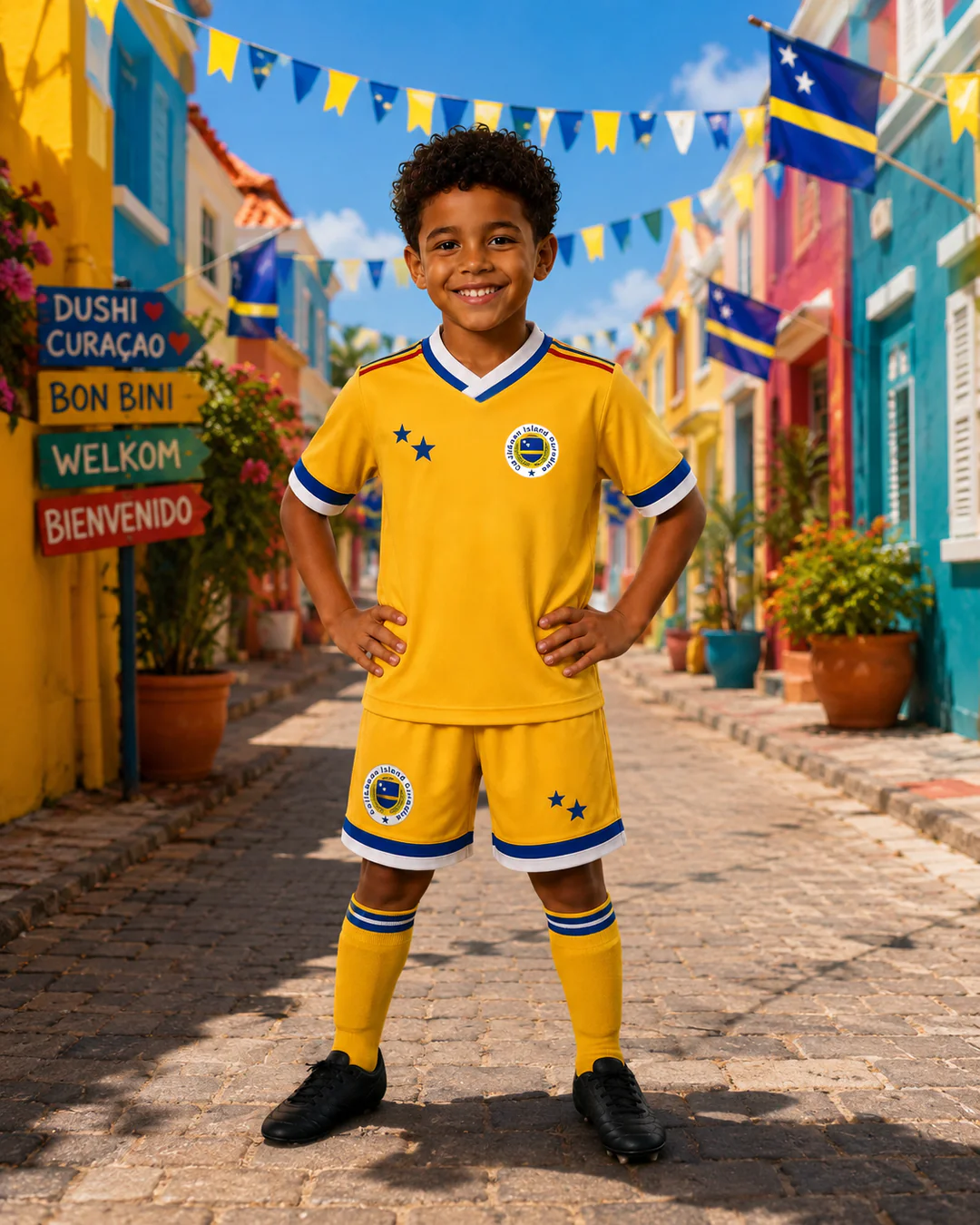
World Cup money does not simply disappear when a team is eliminated. For some countries, especially smaller football nations or associations such as Curacao, qualification itself can be transformational. A strong run can finance years of football development. Even an early exit can leave a national federation with enough money to improve training facilities, strengthen youth programs, support women’s football, professionalize coaching, fund domestic competitions or reduce long-standing administrative pressure.
The 2026 World Cup has therefore become two competitions at once. One is played on the field. The other is played in boardrooms, federation offices and national development plans, where the question is not only how far a team can go, but what it does with the money after the tournament ends.
The 2026 prize money breakdown
Under FIFA’s updated 2026 financial structure, every participating team is guaranteed significant funding before a ball is kicked. Each qualified national association receives USD 10 million in qualification money and USD 2.5 million in preparation money. That means every team at the tournament is guaranteed at least USD 12.5 million. From there, the amount rises according to performance, ending in 52.5 millions dollars for the champion.
These figures do not include additional FIFA team contributions, such as subsidies for delegation costs and increased team ticketing allocations. FIFA has said those additional contributions total more than USD 16 million across the tournament.
The result is that the World Cup now operates as a major financial injection for all participating football associations, not only for the teams that reach the final weekend.

Why the guaranteed money
The most important number for many countries is not the USD 50 million available to the champion. It is the USD 12.5 million guaranteed to every team.
For wealthy football nations, that amount may be absorbed into an already large federation budget. For smaller associations, it can be the equivalent of several years of development funding. It can cover training camps, travel, technical staff, medical support, player bonuses, scouting systems, equipment and administrative improvements. It can also help a federation clear debts, improve governance systems or co-finance long-term projects.
This is why World Cup qualification can change the trajectory of football in a country. The money creates breathing room. It gives federations the ability to plan beyond the next friendly, the next qualifier or the next emergency.
The preparation payment is particularly important because World Cup participation is expensive. Teams must organize camps, travel across large distances, house players and staff, secure training facilities, bring medical and technical support, and operate in host countries where costs can be high. For 2026, those costs are even more significant because the tournament is spread across three countries and a large geographic area.
FIFA’s increase in preparation and qualification money reflects that reality. It also acknowledges concerns that some national associations could face heavy costs simply to participate properly.
The money goes to federations, not directly to players
A common misunderstanding is that FIFA pays the players directly. It does not. FIFA pays the participating member association, meaning the national federation. Each federation then decides how the money is divided.
Some federations have pre-agreed player bonus structures. Others negotiate with players before the tournament. Some allocate a fixed amount per player for qualification, group-stage performance or knockout advancement. In other cases, bonuses can become a source of tension if the federation and players disagree on distribution.
World Cup prize money has two competing purposes. Players and coaching staff often expect a share because they earned the result on the field. Federations also have an obligation to use part of the money to strengthen the wider football system.
The best-run associations usually do both. They honor fair bonus agreements with players while protecting enough of the revenue for long-term development. The weaker associations often fail at one or both, either spending too much on short-term rewards or failing to show the public how the money was used.

How a World Cup run can fund the future
A team eliminated in the group stage leaves with at least USD 12.5 million. A team that reaches the Round of 32 is guaranteed at least USD 13.5 million. A Round of 16 team reaches at least USD 17.5 million. A quarter-finalist is guaranteed at least USD 21.5 million. For many football countries, those jumps are meaningful. Advancing one round can mean millions more for the federation.
That additional money can be used in several ways.
The first is player development. Federations can invest in youth academies, school football programs, national youth teams, scouting networks and coaching education. This is where World Cup income can have its longest life. A federation that spends part of its tournament money on under-15, under-17 and under-20 programs may not see the return immediately, but it can build the next generation of national team players.
The second is infrastructure. Many associations need better pitches, lighting, dressing rooms, gyms, recovery rooms, medical facilities and national training centers. In countries where clubs struggle financially, federation-led investment in basic facilities can raise the level of the domestic game.
The third is coaching and technical development. A national team’s success depends on more than the senior squad. It depends on the coaches working with children, teenagers and domestic clubs. Prize money can fund coaching licenses, technical director positions, goalkeeper coaching programs, sports science education and data analysis.
The fourth is women’s football. In many countries, women’s programs remain underfunded compared to men’s programs. World Cup revenue from the men’s tournament can help finance girls’ leagues, women’s national teams, coaching pathways for women and better facilities for female players.
The fifth is domestic competition. National leagues, youth leagues, women’s leagues and regional competitions require money to function. Associations can use World Cup funds to subsidize travel, refereeing, security, equipment and competition management.
The sixth is governance. This may sound less exciting than building a stadium or academy, but it is essential. Football associations need proper accounting systems, transparent procurement, audited statements, digital registration platforms, safeguarding policies and professional administration. Without these systems, money can be wasted quickly.
The difference between spending and investing
The central question for every federation is whether World Cup money will be spent or invested.
Spending is short-term. It covers bonuses, celebrations, travel, equipment and immediate obligations. Some of that is necessary. Players deserve to be compensated. Staff should be paid. Tournament costs must be covered.
Investing is different. It leaves something behind.
A new national training pitch is an investment. A coaching education program is an investment. A youth league that runs every year is an investment. A medical and performance department that supports all national teams is an investment. A scouting system that identifies talent in rural communities is an investment. A women’s football development plan with real funding is an investment.
The countries that benefit most from World Cup money are not always the ones that earn the most. They are the ones that treat the money as a national football asset.
A quarter-final appearance may bring more than USD 21 million, including preparation funds. But if that money is consumed by bonuses, travel costs and federation politics, the long-term impact may be limited. On the other hand, a group-stage team that leaves with USD 12.5 million can transform its football structure if the money is planned properly.
Why transparency is key
World Cup money belongs to football, but in many countries, the public feels a sense of ownership over it. National teams are public symbols. Fans buy tickets, wear jerseys, follow the qualifiers and celebrate the victories. When FIFA money arrives, supporters want to know how it will be used. That creates a transparency challenge for football federations.
A good federation should be able to explain how much FIFA money it received, how much went to preparation costs, how much went to player and staff bonuses, how much was used for debt or administration, and how much was placed into long-term development.
The report does not need to be complicated. It should answer basic questions. What did the federation receive? What did it spend? What remains? What projects will be funded? What timelines are attached to those projects? Who will monitor implementation?
The 2026 lesson: football success
must leave infrastructure behind
The 2026 World Cup is historic because of its size, geography and money. But the real test will come after the tournament.
When the final is over, FIFA will have distributed hundreds of millions of dollars to national associations. Some will use it well. Others may struggle. The difference will be governance, planning and accountability.
For players, the World Cup is a chance to change their careers. For federations, it is a chance to change their football systems. For smaller nations, it may be a once-in-a-generation opportunity to build something lasting.
The scoreboard will show who won and who lost. The financial legacy will show which countries understood the bigger prize.
World Cup money can pay bonuses. It can cover travel. It can reward performance. But its greatest value is what it can build after the cameras leave: better pitches, stronger youth systems, trained coaches, women’s programs, domestic competitions, national training centers and football structures that give the next generation a fairer chance.
That is the real opportunity of the 2026 World Cup. Not just to play on the biggest stage, but to use the money from that stage to make sure the next team arrives better prepared than the last.