When the reefs die
.jpg)
Imagine the next major hurricane approaching the Caribbean, its winds driving walls of water towards the islands. Beneath the surface, there is supposed to be a first line of defense, a living barrier that weakens the sea before it reaches beaches, homes, hotels, roads and businesses.
Now imagine that barrier broken, flattened and dying.
The waves no longer lose most of their force offshore. They travel farther inland. Sand is pulled from the beaches. Coastal roads flood more frequently. Buildings once considered safely behind the shoreline become exposed. Insurance losses rise. Governments are forced to spend millions on seawalls and emergency repairs, attempting to replace with concrete what nature once provided for free. This is not a distant scenario invented to frighten you as a resident of the Caribbean. It is the direction in which the region is already moving.
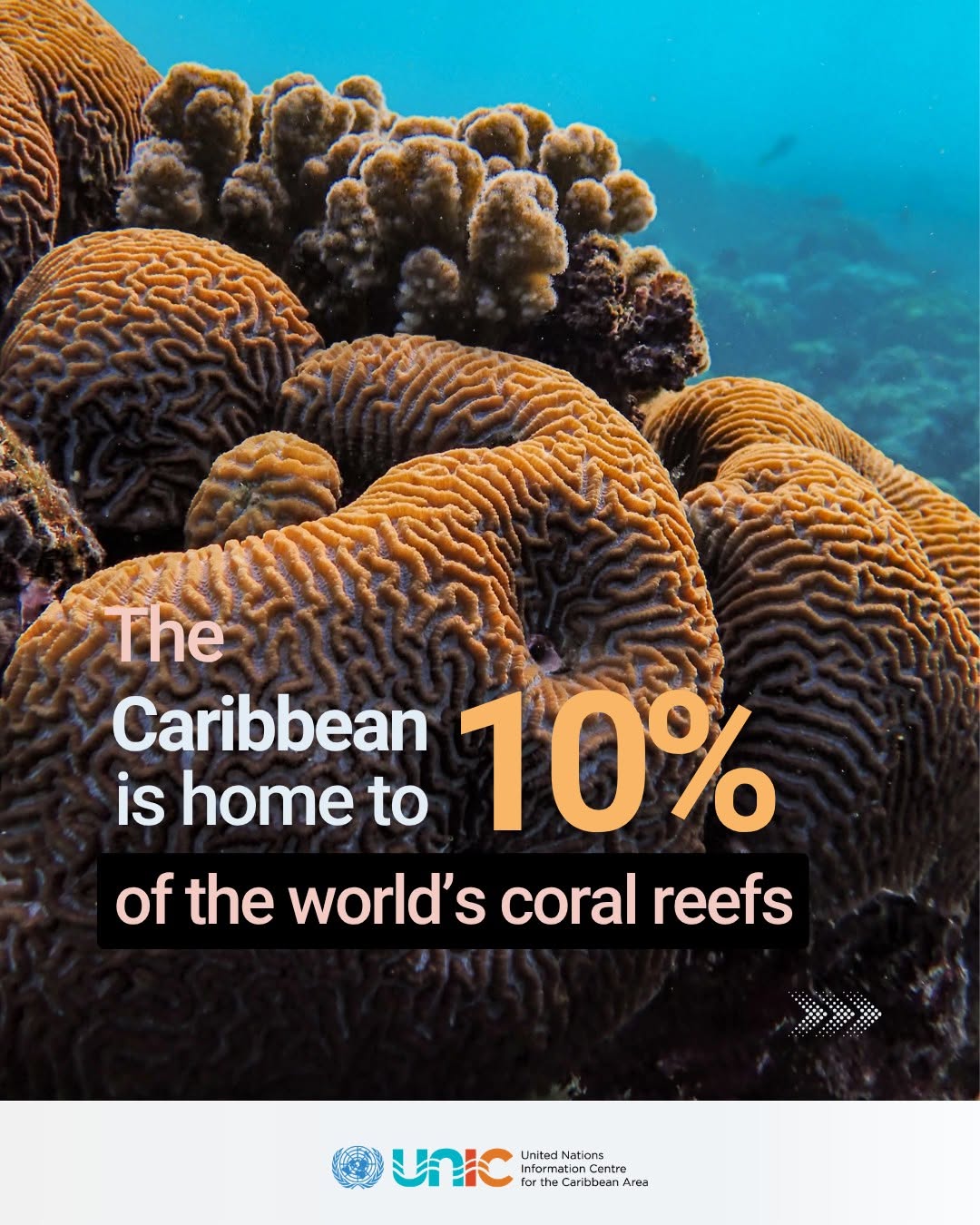
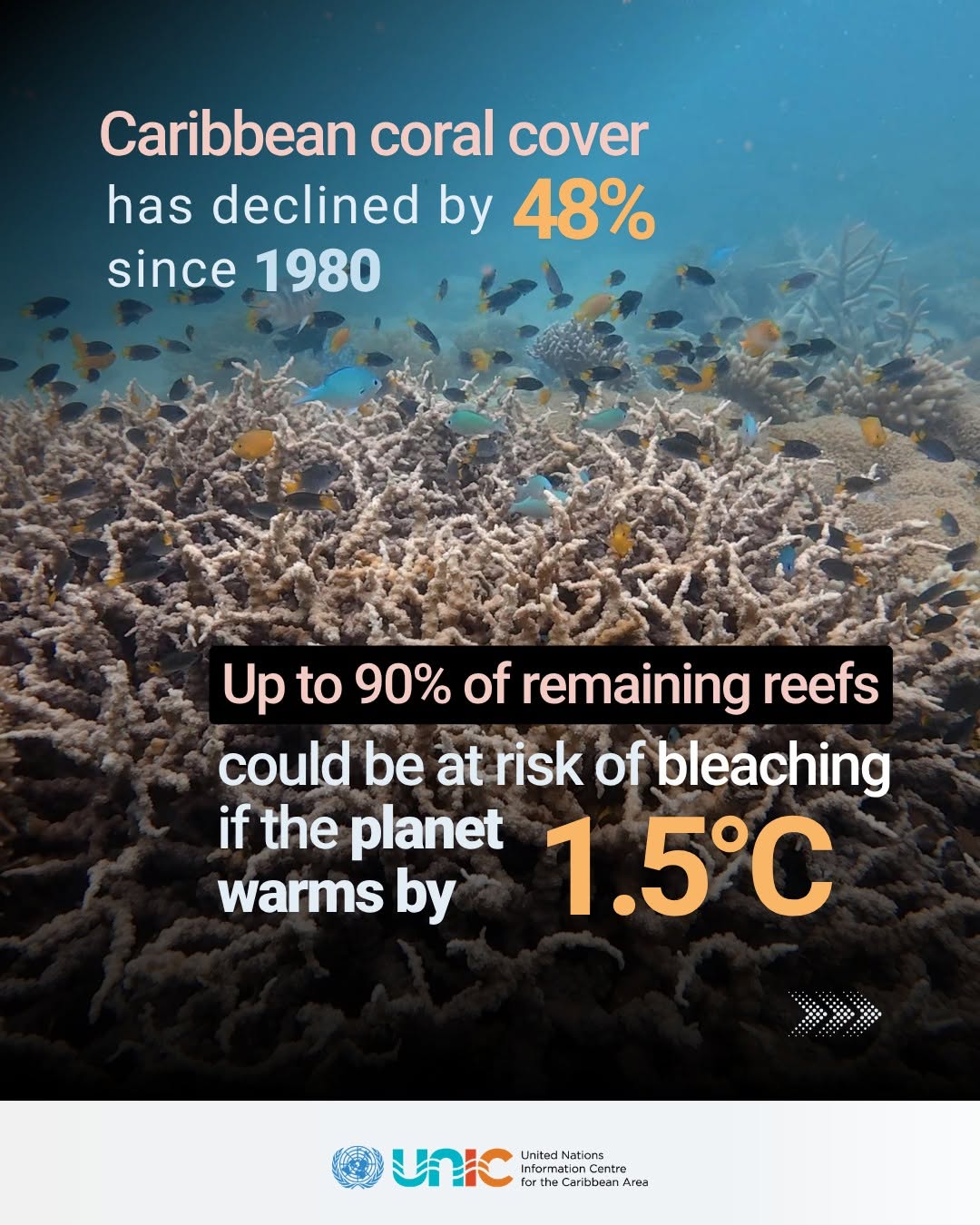
A major assessment by the Global Coral Reef Monitoring Network found that hard coral cover across the Caribbean declined by 48 per cent between 1980 and 2024. Put plainly, hard corals now occupy roughly half of the underwater space they occupied four decades ago. The report examined more than 23,000 surveys from nearly 14,000 sites across the region.
The finding is sometimes shortened to the statement that nearly half of the Caribbean’s reefs have disappeared. Technically, the measurement refers to the loss of hard coral cover, not the disappearance of every reef structure. That distinction, however, should offer little comfort. A reef can remain visible beneath the water while losing the living coral, height, complexity and strength that allow it to function.
What remains can become a reef in shape only, an eroding skeleton increasingly covered by algae and less capable of supporting fish or protecting the coastline.
The Caribbean’s underwater wall is collapsing
Healthy coral reefs can absorb as much as 97 per cent of the energy carried by waves. They operate as submerged breakwaters, reducing the force of currents, storms and flooding before the water reaches land. Coastlines protected by healthy reefs are generally more stable and less vulnerable to erosion. Take away that barrier and the Caribbean becomes more exposed.
For islands such as St. Maarten, where homes, hotels, restaurants, utilities, roads and businesses are concentrated close to the coast, reef loss is not simply an environmental concern. It is a threat to the physical and economic foundation of the country.
The Caribbean cannot continue removing, damaging or neglecting its natural coastal defenses and then act surprised when beaches retreat and flooding worsens.
The beaches can disappear with them
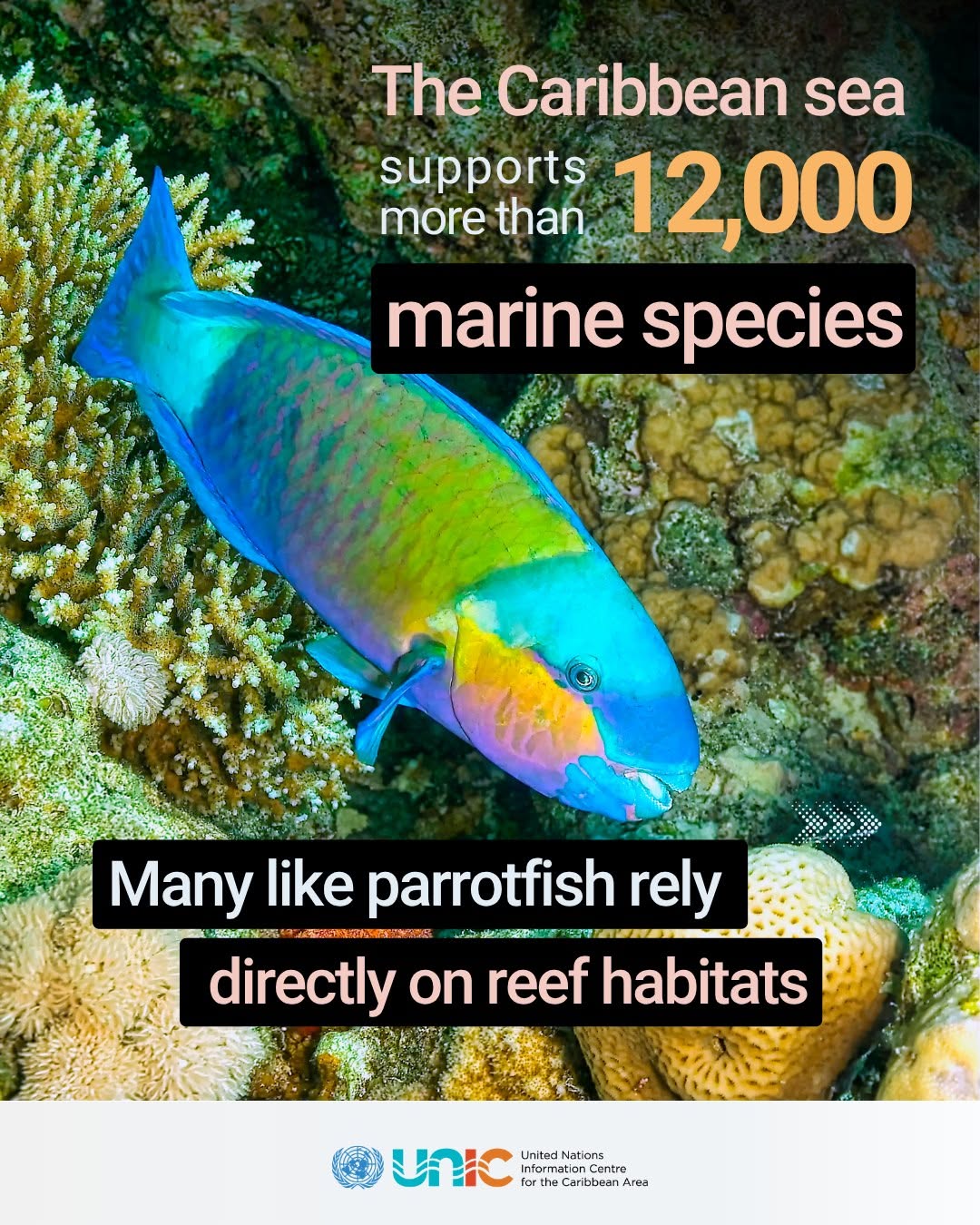
The reef and the beach are not separate worlds. Reefs reduce the wave energy that carries sand away. They also contribute to the creation and replenishment of tropical beaches. Some of the white sand associated with Caribbean coastlines comes from coral material and other calcium-rich organisms broken down through natural processes. Parrotfish, for example, scrape algae from coral surfaces, grind coral material during feeding and release fine sand.
When reefs decline, the Caribbean risks losing both the shield that protects its beaches and part of the natural system that helps produce them.
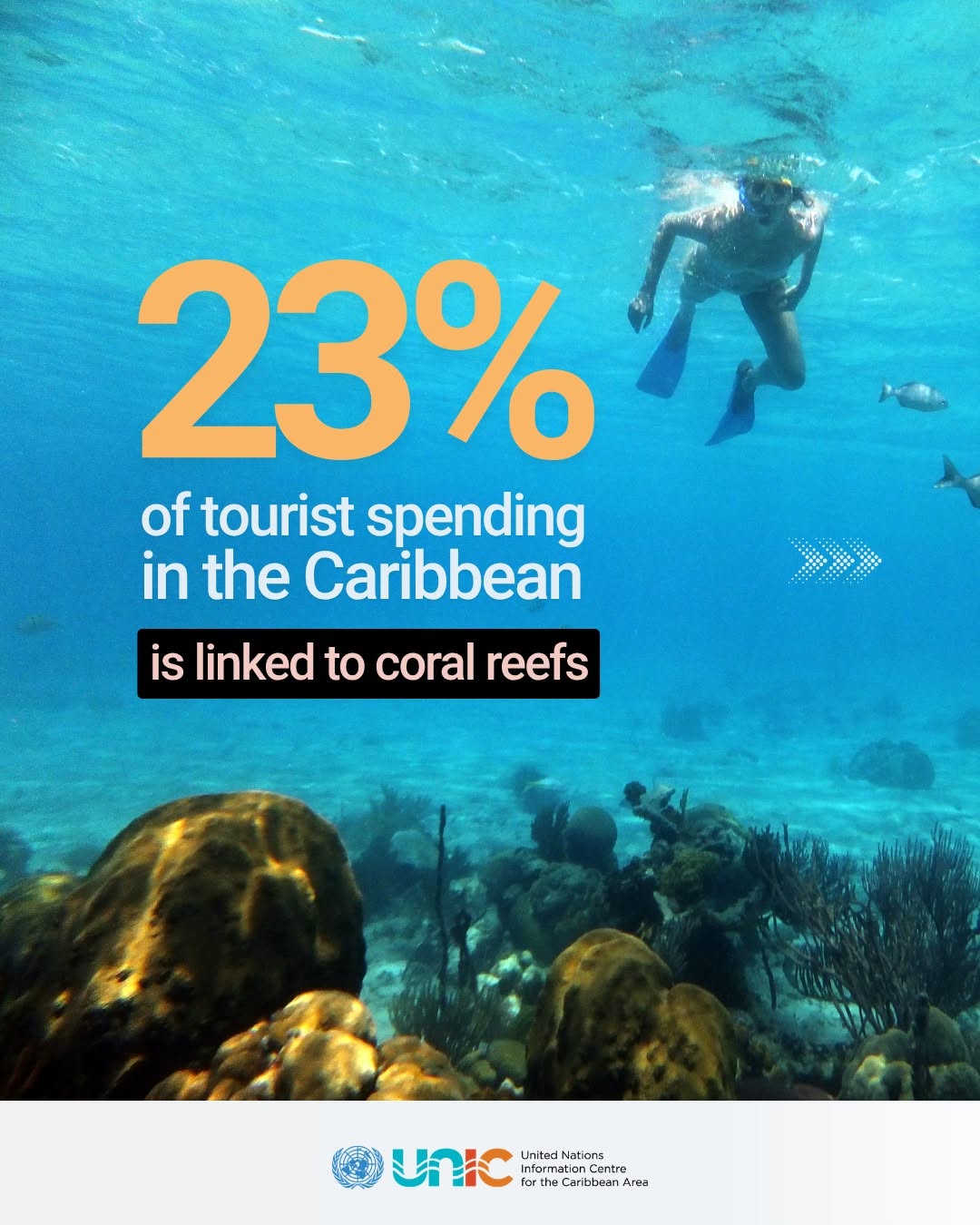
The consequences would reach far beyond the shoreline. Caribbean tourism is built heavily around clear water, white sand, snorkelling, diving, boating and the image of an intact tropical coast. Globally, coral reefs support tens of millions of tourist trips and billions of dollars in economic activity each year.
A beach does not have to disappear entirely before the economic damage begins. It only has to become narrower, rougher, more frequently flooded or less attractive than competing destinations. Hotels can rebuild a pool. Governments can repave a road. Neither can quickly rebuild a mature reef system that took centuries to form.
An empty reef can mean an emptier sea
Coral reefs cover less than one-tenth of one per cent of the ocean floor, yet they support more than one-quarter of marine biodiversity. Fish use reefs for feeding, breeding, protection and nursery habitat. When the structure of a reef declines, the marine community around it also changes.
The latest Caribbean assessment found that the region is not only losing hard coral. Macroalgae cover increased by 85 per cent between 1980 and 2024. Branching corals, which create complex habitats where fish and other organisms can shelter, have declined sharply. The shift towards flatter and less complex reefs reduces the spaces available to marine life.
At first, divers may notice fewer colors. Then fewer fish. Fishermen may have to travel farther and spend more on fuel to find the same catch. Young fish lose the shelter needed to survive. Valuable species become harder to find. Food prices rise, fishing livelihoods weaken and communities become more dependent on imports.
By the time the public notices that the sea feels emptier, much of the damage may already have taken place.
The reef is being attacked from every direction
The Caribbean reef crisis is not being caused by one threat. The regional assessment identified marine heatwaves, coral bleaching, disease, ocean acidification, hurricanes, wastewater, nutrient pollution, sediment, dredging, anchoring, maritime activity, unsustainable fishing and invasive species as major pressures. Caribbean sea surface temperatures increased by approximately 1.07 degrees Celsius between 1985 and 2024, while severe bleaching events struck in 1998, 2005 and 2023.
The 2023 event alone was associated with an estimated 16.9 per cent decline in hard coral cover. Coral disease has also killed reef-building species across large parts of the region. Climate change is the largest force pushing reefs towards conditions they may not survive, but local governments and communities are not powerless.
Untreated sewage feeds algae and increases stress on coral. Sediment from poorly managed development blocks sunlight and smothers reef surfaces. Anchors can destroy coral formations in seconds that required decades to grow. Overfishing removes herbivorous fish that control algae and help give young coral space to develop. The reef may be offshore, but much of what kills it begins on land.
Concrete will not easily replace what is being lost
Once natural coastal protection disappears, governments often turn to seawalls, rock barriers, groynes and beach replenishment. Some of these measures may become necessary, but they are expensive, require maintenance and can transfer erosion from one section of coast to another.
A healthy reef protects multiple parts of society at the same time. It weakens waves, shelters marine life, supports fisheries, produces tourism income and helps maintain beaches. A concrete wall performs only a fraction of those functions.
The loss of reefs would therefore create a chain of new expenses. Governments would face higher coastal protection costs. Property owners would face greater risks. Insurers would reassess exposure. Fishermen would bring home smaller catches. Tourism businesses would lose part of the natural product on which they depend. The public may not see the reef every day, but it benefits from its work every day.
No room for indifference
The region has already lost 48 per cent of its hard coral cover since 1980. That figure should not be received as another environmental statistic to be acknowledged for a week and forgotten.
It should be understood as a warning that the Caribbean’s underwater infrastructure is failing.
Protecting what remains will require stronger marine protected areas, sewage treatment, limits on destructive coastal development, enforcement against anchoring and pollution, protection of herbivorous fish, continuous reef monitoring and investment in restoration. The regional assessment also makes clear that reducing greenhouse gas emissions remains essential, because local conservation alone cannot protect reefs from continually rising ocean temperatures.
Restoration projects can rebuild portions of damaged reef and preserve important coral species, but planting fragments underwater cannot become an excuse to continue damaging the wider marine environment.