

Too Hot To Learn: How Caribbean classrooms are adapting to rising heat

September heat is no longer a seasonal nuisance in the Caribbean, it is an education issue that reaches into attendance, learning outcomes, health, and equity. Ministries of Education, teacher unions, and disaster agencies across the region are racing to keep classrooms usable as temperatures and heat indices trend higher. Some countries are issuing heat protocols and adjusting timetables, others are investing in ventilation, shade, and resilience standards, and a few are rebuilding with climate in mind after recent disasters. The result is a mosaic of responses, practical in places and piecemeal in others.
Global evidence is clear: hot classrooms make learning harder and less safe. Studies link high indoor temperatures to reduced concentration and lower test performance, and teachers report more behavioral incidents and health complaints on hot days. Caribbean media and public health outlets have amplified the same pattern locally, warning that temperatures near or above 32°C in unconditioned rooms compromise student cognition and staff well being. UNICEF has also pointed to climate disruptions that push schools to modify schedules, relocate classes, or close temporarily, a sobering backdrop for small island systems with tight infrastructure budgets.
𝘑𝘢𝘮𝘢𝘪𝘤𝘢: 𝘧𝘰𝘳𝘮𝘢𝘭 𝘩𝘦𝘢𝘵 𝘣𝘶𝘭𝘭𝘦𝘵𝘪𝘯𝘴 𝘢𝘯𝘥 𝘴𝘤𝘩𝘰𝘰𝘭 𝘭𝘦𝘷𝘦𝘭 𝘢𝘥𝘢𝘱𝘵𝘢𝘵𝘪𝘰𝘯𝘴
At the outset of the heat season, Jamaica’s Ministry of Education issued safety bulletins to all schools. The guidance recommended fans where possible, opening windows and doors for cross ventilation, flexible timetabling, hydration breaks, and moving activities out of direct sun. The approach treats heat as a predictable seasonal risk rather than a surprise, and many neighboring ministries have echoed that framing.
𝘎𝘶𝘺𝘢𝘯𝘢: 𝘸𝘳𝘪𝘵𝘵𝘦𝘯 𝘱𝘳𝘰𝘵𝘰𝘤𝘰𝘭𝘴 𝘢𝘯𝘥 𝘶𝘯𝘪𝘧𝘰𝘳𝘮 𝘧𝘭𝘦𝘹𝘪𝘣𝘪𝘭𝘪𝘵𝘺
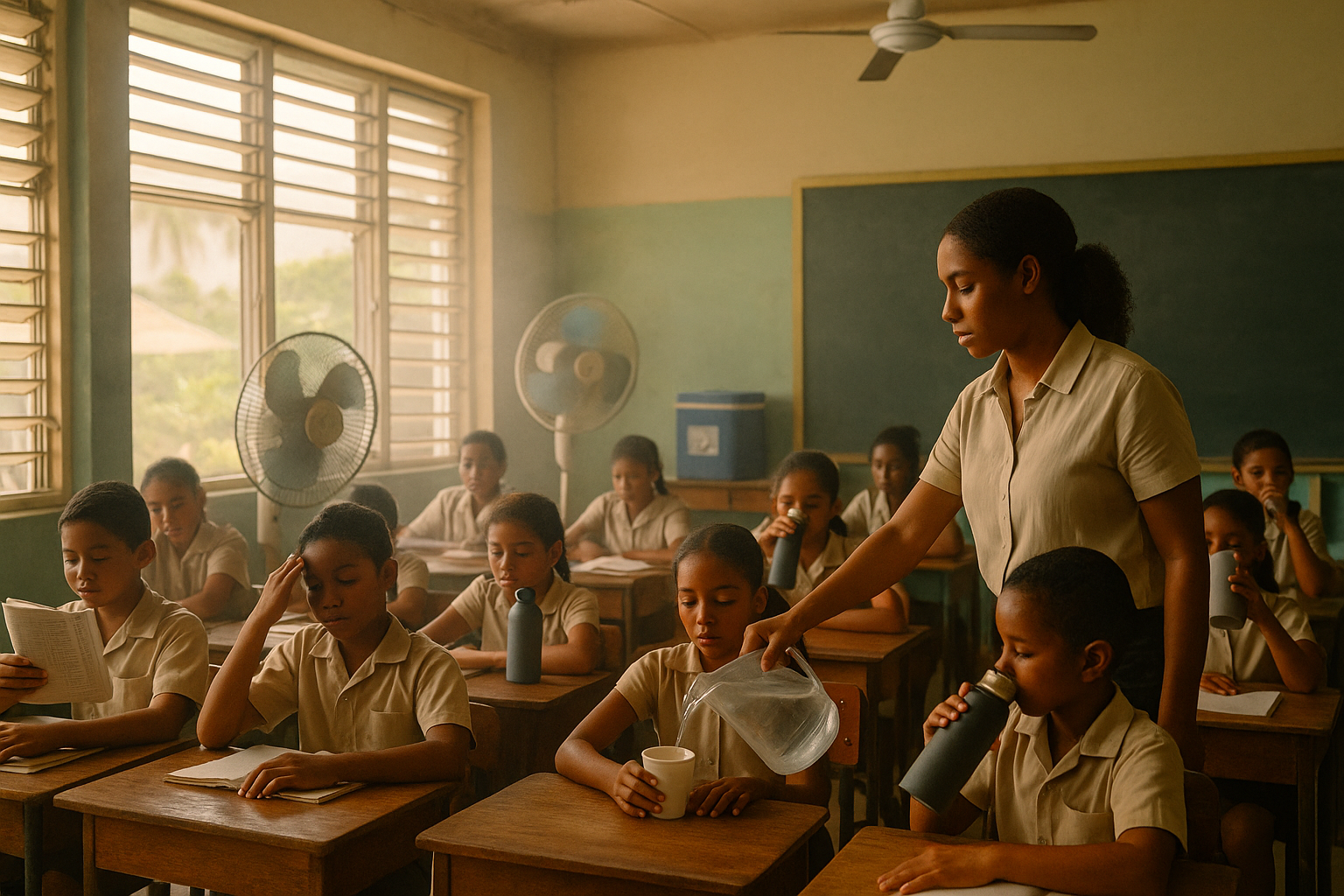
Guyana circulated memoranda that relaxed uniform rules to keep children cooler, encouraged extra hydration breaks, and allowed classes to shift outdoors or to breezier spaces during hot spells. Schools were asked to monitor for heat illness and to keep parents informed about conditions.
𝘛𝘳𝘪𝘯𝘪𝘥𝘢𝘥 𝘢𝘯𝘥 𝘛𝘰𝘣𝘢𝘨𝘰: 𝘴𝘤𝘩𝘰𝘰𝘭 𝘢𝘥𝘷𝘪𝘴𝘰𝘳𝘪𝘦𝘴 𝘢𝘯𝘥 𝘶𝘯𝘪𝘰𝘯 𝘱𝘳𝘦𝘴𝘴𝘶𝘳𝘦
Trinidad and Tobago’s Education Ministry advised schools to take additional precautions on high temperature days, while the teacher union pressed for explicit indoor heat guidelines, staff training, and investment in cooling and shade. Schools increased water breaks and allowed personal water bottles in class.
𝘉𝘢𝘳𝘣𝘢𝘥𝘰𝘴: 𝘢 𝘤𝘢𝘭𝘭 𝘧𝘰𝘳 𝘢 𝘯𝘢𝘵𝘪𝘰𝘯𝘢𝘭 𝘴𝘤𝘩𝘰𝘰𝘭 𝘩𝘦𝘢𝘵 𝘴𝘵𝘳𝘢𝘵𝘦𝘨𝘺
With meteorologists warning of longer heat seasons, Barbadian clinicians and teacher leaders urged government to include schools in a national strategy. Older buildings without air conditioning were flagged as priority sites, and the back to school period placed teacher well being and student comfort on the policy agenda.
𝘗𝘶𝘦𝘳𝘵𝘰 𝘙𝘪𝘤𝘰: 𝘢𝘤𝘶𝘵𝘦 𝘴𝘵𝘳𝘢𝘪𝘯 𝘢𝘯𝘥 𝘪𝘯𝘧𝘳𝘢𝘴𝘵𝘳𝘶𝘤𝘵𝘶𝘳𝘦 𝘭𝘪𝘮𝘪𝘵𝘴
Puerto Rico’s public schools offer a cautionary tale for the wider Caribbean. Record heat has driven protests, early closures, and demands for air conditioning. Aging electrical systems and storm damage complicate solutions. Even where equipment is installed, inconsistent power leaves many classrooms hot by midday, especially on smaller islands such as Culebra.
𝐁𝐞𝐲𝐨𝐧𝐝 𝐪𝐮𝐢𝐜𝐤 𝐟𝐢𝐱𝐞𝐬
The Model Safe School Program of the OECS gives ministries and school planners a toolkit to assess and reduce building risks. It is a multi hazard framework, however its design elements address ventilation, shading, materials that limit indoor heat gain, and indoor air quality. That makes it directly relevant to heat.
Dominica’s school reconstruction projects after Hurricane Maria have incorporated stronger envelopes, improved ventilation, and renewable energy readiness. These choices reduce indoor temperatures and keep classrooms functional when the grid is unstable.
Curriculum work in the Eastern Caribbean now integrates climate mitigation, adaptation, and disaster risk reduction. Teachers in places like St Vincent and the Grenadines are mainstreaming heat awareness, hydration norms, and shade seeking behaviors alongside broader climate literacy.
𝐖𝐡𝐚𝐭 𝐚𝐜𝐭𝐮𝐚𝐥𝐥𝐲 𝐜𝐨𝐨𝐥𝐬 𝐚 𝐜𝐥𝐚𝐬𝐬𝐫𝐨𝐨𝐦
Across the literature and regional practice, four intervention types recur.
𝘗𝘢𝘴𝘴𝘪𝘷𝘦 𝘤𝘰𝘰𝘭𝘪𝘯𝘨 𝘢𝘯𝘥 𝘴𝘩𝘢𝘥𝘦
Cool roofs or reflective coatings, shading devices, and tree cover can lower indoor temperatures by several degrees. These measures are relatively low cost, they require little maintenance, and they do not add to electricity loads.
𝘊𝘳𝘰𝘴𝘴 𝘷𝘦𝘯𝘵𝘪𝘭𝘢𝘵𝘪𝘰𝘯 𝘢𝘯𝘥 𝘧𝘢𝘯𝘴
Where humidity permits, well oriented openings and ceiling or pedestal fans move hot air through classrooms. Fans help, but noise and classroom management need attention so teachers can maintain focus.
𝘔𝘦𝘤𝘩𝘢𝘯𝘪𝘤𝘢𝘭 𝘤𝘰𝘰𝘭𝘪𝘯𝘨 𝘸𝘪𝘵𝘩 𝘨𝘳𝘪𝘥 𝘤𝘰𝘯𝘴𝘵𝘳𝘢𝘪𝘯𝘵𝘴
Air conditioning is effective, but it is expensive to install and run, and it depends on stable power. Puerto Rico’s experience shows that cooling equipment without electrical upgrades underperforms. Islands weighing capital costs and tariff realities need to plan power and envelope improvements alongside AC.
𝘖𝘱𝘦𝘳𝘢𝘵𝘪𝘰𝘯𝘢𝘭 𝘱𝘰𝘭𝘪𝘤𝘪𝘦𝘴
Setting clear indoor thresholds for action helps principals act consistently. Examples include temperature points at which a class should relocate, limits on strenuous activity, and early dismissal options. Toolkits used elsewhere recommend stepwise responses starting around 26 to 28°C indoors, with mandatory mitigation before conditions become unsafe. Caribbean ministries are beginning to codify similar triggers in bulletins and memos.
𝐓𝐡𝐞 𝐩𝐨𝐥𝐢𝐜𝐲 𝐚𝐫𝐜
Caribbean education leaders are moving from reactive measures toward planning that treats heat like a forecastable hazard. Jamaica’s pre season bulletins institutionalize routine mitigations. Guyana backed school level flexibility with written protocols. Trinidad and Tobago paired advisories with union driven calls for standards and training. Barbados is debating a specific school heat strategy rather than relying only on general public health advisories.
At regional scale, the Safe School toolkit offers a common language for ministries, architects, and disaster coordinators. OECS initiatives now include guidelines for resilient school design, which make it easier to embed cooling in new builds and retrofits.
Heat does not hit all students equally. Schools in dense urban zones, often with less tree cover and more concrete, run hotter than their rural peers. The research base ties hot days to higher absenteeism and lower scores, especially in buildings without air conditioning. In the Caribbean context, the same heat wave can have different academic impacts depending on neighborhood greenery, school age and design, and the availability of shade and airflow.
𝐖𝐡𝐚𝐭 𝐬𝐮𝐜𝐜𝐞𝐬𝐬 𝐥𝐨𝐨𝐤𝐬 𝐥𝐢𝐤𝐞 𝐢𝐧 𝐩𝐫𝐚𝐜𝐭𝐢𝐜𝐞
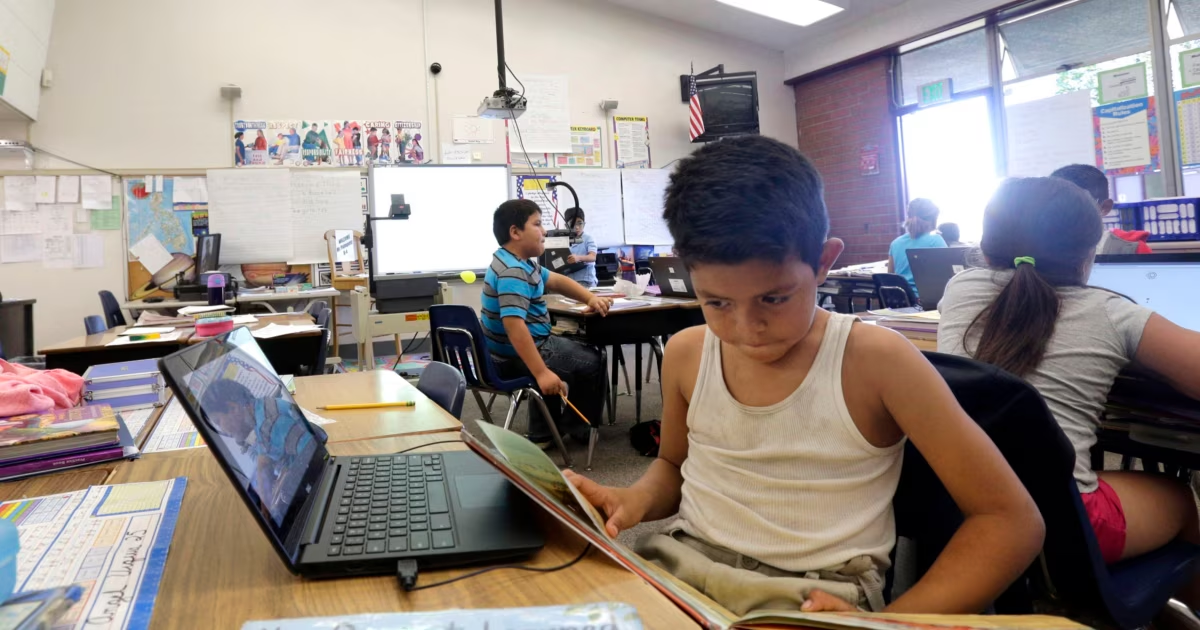
A realistic package for a typical Caribbean primary or secondary school blends short term and structural measures:
Before the term: Heat season briefings to staff, an inventory of working fans, portable shade for assembly areas, water access checks, and parent communications.
During hot spells: Hydration breaks, flexible uniform rules, shifting classes to better ventilated rooms, and supervised outdoor shade learning.
Facilities: Reflective roof coatings, shade trees or sails, window repairs for cross breezes, ceiling fans sized to room dimensions, and simple temperature or CO₂ sensors for monitoring.
Capital projects: Where feasible, pair air conditioning with electrical upgrades and on site solar, or blackouts will undermine the investment.
𝐓𝐡𝐞 𝐭𝐚𝐤𝐞𝐚𝐰𝐚𝐲
Standards and thresholds: Few Caribbean ministries have adopted explicit indoor temperature or heat index thresholds that trigger mandatory actions, which leaves decisions to individual principals and can produce uneven protection. International toolkits can be adapted to fill this gap.
Electrical capacity: Cooling requires power. Without grid reinforcement or on site generation, units fail or are rationed, and maintenance backlogs grow.
Data on indoor conditions: Most systems track outdoor heat advisories, not classroom temperatures. Basic monitoring would help target scarce funds to the hottest buildings first, and would make the case for capital upgrades.
Finance: Tree cover, cool roofs, and fans are inexpensive, but large scale retrofits, AC and electrification upgrades are not. Ministries are seeking climate and disaster finance through regional and multilateral channels while stretching capital budgets.
Heat is now a core education policy issue in the Caribbean. The region is not starting from zero. Jamaica, Guyana, Trinidad and Tobago, and Barbados are setting expectations for school operations in heat. CDEMA’s Model Safe School Program and OECS design guidance provide structural templates. Dominica’s rebuilds show that resilient envelopes, ventilation, and renewable readiness can be mainstreamed after disasters, and once installed, they help with heat too.
For education leaders, the priority is to turn ad hoc coping into standards that protect students and staff every hot month of the school year. The tools exist, the challenge is aligning operations, building codes, and capital spending with the new temperature reality.