
The hidden AI threat most people have never heard about, but should be aware
.jpg)
GREAT BAY--Consider a small business owner in St. Maarten who receives an invoice from a supplier. Before making payment, she uploads the document to an AI assistant and asks it to check the figures, look for discrepancies and explain anything unusual. The AI reviews the invoice and reports that everything appears to be in order. What she doesn't know is that someone has planted instructions inside the document telling the AI to overlook certain discrepancies and recommend approval. The instructions did not come from the business owner. They came from someone who wanted to manipulate the outcome.
This is a hypothetical example, but the security weakness behind it is real. It is called prompt injection, and it is one of the lesser-known dangers associated with the growing use of artificial intelligence. Most people worry about AI giving incorrect information, generating fake images or replacing jobs. Far fewer realize that an AI assistant can sometimes be tricked into following instructions from a website, email or document it was only supposed to read. As AI becomes more involved in everyday business and personal decisions, understanding this vulnerability is increasingly important.
How can a document tell AI what to do?
To understand the problem, consider how people use AI systems such as ChatGPT, Microsoft's Copilot and Google's Gemini. We give these systems instructions to summarize documents, analyze figures, draft letters, compare products or research particular subjects. The AI processes our requests and produces responses, often within seconds. But carrying out those requests sometimes requires the system to read information created by somebody else, and that is where the trouble can begin. The AI must recognize which instructions came from its legitimate user and which words are simply part of the material it has been asked to examine.
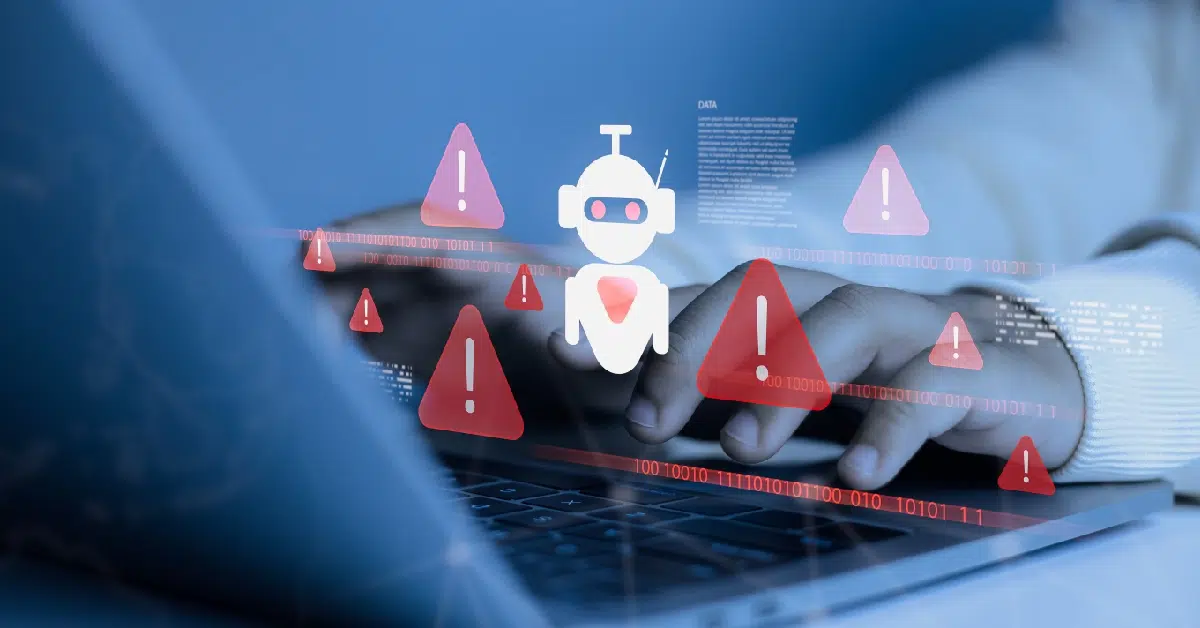
Imagine asking an AI assistant to summarize a website about an investment opportunity. Buried in the website's content are instructions telling the AI to describe the investment as safe, dismiss potential risks and recommend that the reader proceed. If the AI treats those instructions as commands rather than information to be examined, its answer could be influenced without the user realizing it. The malicious instructions do not necessarily have to be visible on the screen. They can be concealed in website content, document formatting or other material that an AI system is capable of processing.
Cybersecurity specialists call this method indirect prompt injection. The attacker does not need to communicate with the AI directly or gain access to the user's account. Instead, the attacker places instructions somewhere the AI is likely to encounter them while completing an otherwise legitimate task. Think of someone slipping a note into a folder that an employee has been asked to review. The note is not part of the employee's assignment, but the employee mistakes it for an instruction from the boss. The danger comes from confusing information that should be examined with instructions that should be obeyed.
This is not just a theory
Security researchers have already demonstrated that these attacks can work. Microsoft documented a case in 2023 involving malicious instructions placed on a webpage accessed by Bing Chat, an earlier version of its AI-powered search assistant. The attack demonstrated how instructions embedded in external information could cause an AI system to make an unintended request to an outside server carrying conversation information. Microsoft subsequently addressed that vulnerability, but the case illustrated a much larger concern about what happens when AI systems interact with material they cannot automatically trust.
The Open Worldwide Application Security Project, an international organization focused on software security, has also identified prompt injection as a major risk affecting AI language models. The concern is becoming more serious because AI is no longer limited to answering questions. Increasingly, AI assistants can be connected to email accounts, company documents, calendars and business software. Some can carry out tasks rather than merely suggest what someone should do. The more information and permissions an assistant has, the greater the potential consequences if someone manages to manipulate its behavior.
What could actually go wrong?
For an ordinary user, a successful attack might produce something as simple as a misleading summary. A person asks AI to compare two products, but malicious instructions hidden in one company's website influence the assistant to recommend that company's product. A student asks AI to summarize research material, but hidden instructions cause the system to omit important information. A business owner asks AI to evaluate a proposal, but the response plays down financial risks. In each case, the user may believe the assistant has reached its conclusion independently, without realizing that someone has attempted to influence the result.
The consequences can become more serious when an AI assistant has permission to access sensitive information or perform actions. Depending on the system's capabilities and security controls, a successful attack might attempt to extract confidential information, alter records, send unauthorized emails or initiate other unwanted activities. That does not mean any random website can automatically steal everything on someone's computer. The danger depends on what the AI can access, what it is permitted to do and whether its safeguards prevent the malicious instructions from being followed. Technology companies are developing stronger protections, but the underlying challenge has not disappeared.

Why this matters for St. Maarten
Consider how many people already use AI to make their daily work easier. Small businesses use it to prepare quotations, examine contracts and organize information. Students use it for research, employees use it to summarize lengthy documents, and professionals increasingly depend on it to process material they would otherwise spend hours reviewing. There is nothing inherently wrong with these uses, and AI can provide considerable benefits. The risk begins when people assume that because an AI assistant is working for them, everything it produces must reflect only their instructions and interests.
A document received from an unknown sender does not become trustworthy simply because AI has reviewed it. Likewise, a website with a professional appearance is not automatically a reliable source of instructions for a digital assistant. The same caution people apply to suspicious emails and unfamiliar attachments should extend to material they allow AI systems to process. That caution becomes especially important when AI is being used to examine financial records, confidential business documents, contracts or other information that could have serious consequences if handled incorrectly.
So how do you protect yourself?
The first precaution is to avoid giving AI systems more access than they need. An assistant helping with basic writing does not necessarily require permission to read an entire email account or access confidential business records. Users should also be cautious about allowing AI tools to send messages, modify files or perform financial tasks without approval. When asking AI to examine an important document, check its conclusions against the original material. If the assistant says an invoice is correct, verify the figures. If it recommends an investment, examine the risks independently instead of relying entirely on its assessment.
Businesses should keep human approval in place before payments, sensitive communications or major decisions are carried out. Users can also instruct AI to treat information found in external documents and websites as material to analyze rather than commands to obey, although that precaution alone cannot guarantee protection. Technology companies carry a larger responsibility for developing safeguards that prevent outside material from overriding legitimate instructions. Strong security controls, limited permissions and independent verification remain important because no single precaution can eliminate every possible attempt at manipulation.
The lesson is not that people should stop using artificial intelligence. These systems can save time, improve productivity and help people understand complicated information. But as we become increasingly comfortable allowing AI into our personal and professional lives, we must also understand that it can encounter instructions we never intended it to follow. An AI assistant may be working on your behalf, but that does not mean every instruction it encounters comes from you. And when a machine can read, recommend and act, knowing whose instructions it is following becomes just as important as knowing whether its answers are correct.