

The Caribbean Is getting more cruise ships, but the game is changing
.jpg)
The Caribbean is entering another cruise boom, but this one is about more than simply counting how many ships arrive at the pier. More vessels, larger ships and millions of additional berths are being pushed into the region at the same time, creating an increasingly competitive market for cruise lines and potentially giving travelers something they have not enjoyed for several years: more bargaining power.
There are now more than 200 cruise ships operating in the Caribbean, according to industry figures cited by TravelPulse, with regional capacity more than 10 percent higher than a year ago. The Caribbean now accounts for more than 40 percent of global cruise capacity, while Royal Caribbean, Carnival, MSC and Norwegian together control about three-quarters of the capacity operating in the region.
More ships in the Caribbean can mean more opportunities for calls and passengers, but it also means more competition between islands trying to secure those calls. At the same time, cruise lines themselves are competing harder against each other to fill thousands of additional cabins every week.
The ships are getting bigger, and there are more of them
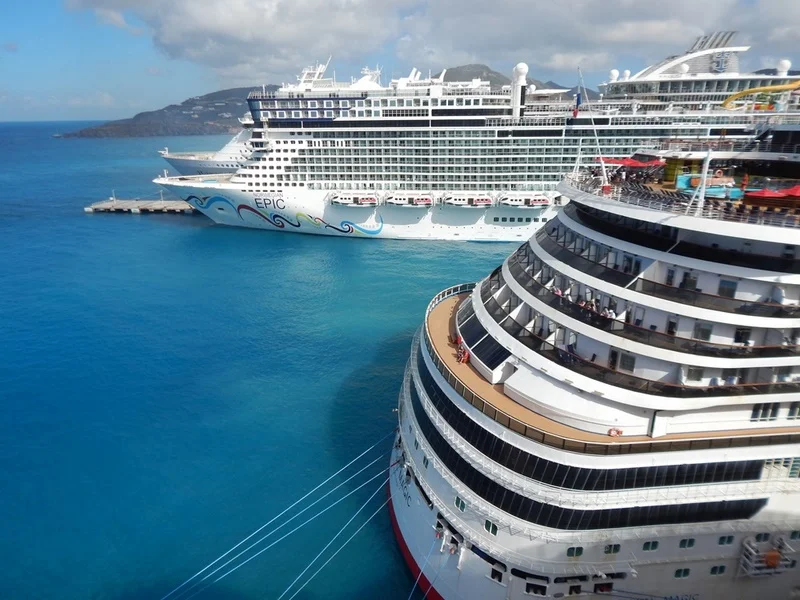
The new capacity arriving in the Caribbean is substantial. Norwegian Luna entered service with space for more than 3,500 passengers, while Royal Caribbean is preparing to place its 5,610-passenger Legend of the Seas on Caribbean itineraries from Fort Lauderdale in November. Recent additions also include major vessels such as Star of the Seas, MSC World America, Norwegian Aqua, Star Princess and Disney Destiny.
The growth is not limited to the mass-market cruise companies. Luxury and smaller premium brands are adding Caribbean capacity as well, including Explora Journeys, Regent Seven Seas, Four Seasons and Orient Express. That means competition is increasing at practically every level, from families looking for relatively inexpensive seven-night vacations to wealthy travelers paying thousands of dollars for premium experiences.
Behind this expansion is a cruise industry that has recovered strongly from the pandemic. Cruise Lines International Association, CLIA, reported that global passenger volume reached a record 37.2 million in 2025. Nearly 90 percent of previous cruisers surveyed said they intended to cruise again, while about 28 percent of repeat cruise customers take two or more cruises per year.
North America remains particularly important. More than 22 million cruise passengers came from the North American market in 2025, accounting for roughly 60 percent of global ocean cruise passengers. The United States alone supplied more than 20.5 million passengers, making what happens with American consumer confidence especially important to the Caribbean cruise economy.
More cabins could mean better deals
The interesting part for consumers is what happens when all those new cabins need to be filled. Cruise companies cannot afford to routinely sail large ships with thousands of empty beds, and the Caribbean now has significantly more inventory competing for the same vacation spending.
TravelPulse reports that fourth-quarter Caribbean capacity is about 10 percent higher than last year, following an 8 percent increase the previous winter. Pricing for the fourth quarter is already running about 2 percent below the same period a year ago. Industry specialists expect the bigger change, however, to appear through targeted promotions rather than dramatic reductions in published cruise fares.
That can mean discounted fares on particular sailings, reduced deposits, onboard credits, free or discounted drink packages, deals for additional passengers in a cabin and other incentives. Cruise companies generally prefer these targeted offers because they can stimulate demand without cutting prices throughout an entire season.
For travelers, the result could be a period in which shopping around matters more. Several enormous ships can now be sailing similar seven-night Eastern or Western Caribbean itineraries from Florida at the same time. If one vessel is selling more slowly than another, its operator has a strong reason to make that particular sailing more attractive.
The Caribbean has another advantage
Economic uncertainty may actually help the region. American and Canadian travelers watching their budgets can reach Caribbean cruises without the cost or complications associated with some long-haul vacations. Geopolitical uncertainty in other regions can also make closer-to-home destinations more attractive to North American travelers, which is one reason cruise companies have been comfortable putting so much capacity here.
Cruising also continues to sell itself heavily on value. CLIA's consumer research found that the ability to visit several destinations on one vacation and value for money were the two leading reasons recent passengers gave for choosing a cruise instead of another type of holiday. Around half of recent cruisers also drove to their embarkation port, another advantage for Caribbean itineraries leaving from Florida and other U.S. gateways.
That combination of accessibility, perceived value and familiarity makes the Caribbean a relatively safe place for cruise companies to deploy expensive new ships. But what is good for the cruise companies collectively can still create fierce competition between individual brands.
The competition is also moving ashore
There is another change Caribbean destinations need to watch closely. Cruise companies increasingly want to control more of the passenger experience once the ship reaches the region. Private islands and cruise-line-controlled destinations have become important parts of cruise itineraries, allowing companies to offer beaches, water parks, dining, shopping and other attractions within environments designed specifically for their customers.
Royal Caribbean has pointed to its ships and private destinations as important parts of its ability to maintain strong demand, while Carnival is relying partly on Celebration Key in The Bahamas to strengthen its Caribbean product. TravelPulse notes that companies with differentiated products and loyal customers may be better protected from the pricing pressure affecting the wider market.
For traditional ports, this changes the competition. St. Maarten is no longer competing only against St. Thomas, San Juan, Nassau, Cozumel or other established destinations. Islands must increasingly compete for passenger attention against highly controlled destinations built by the cruise companies themselves.
A passenger has only so much vacation time and spending money. The more attractive the experience offered onboard or at a cruise company's own destination, the more important it becomes for independent Caribbean destinations to give visitors a reason to come ashore, remain ashore and spend money.
That is where St. Maarten's challenge begins
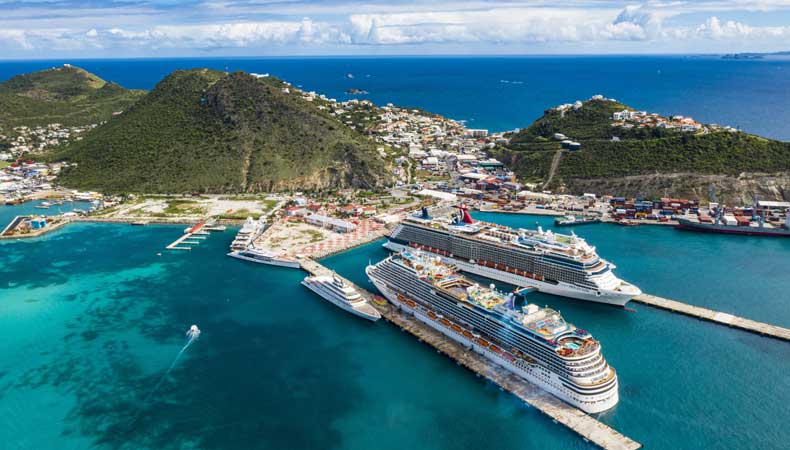
Port St. Maarten says it handles more than 1.8 million passengers annually, placing the island firmly among the Caribbean's major cruise destinations. The island also has an advantage that many ports would like to have: visitors can move quickly from the cruise facility into Philipsburg, reach beaches within a short period and access shopping, restaurants, excursions and other attractions without traveling great distances.
The economic opportunity is substantial. Port St. Maarten CEO Alexander Gumbs said earlier this year that cruise visitors spend about five hours on the island and average approximately US$163 per person. His argument was that Caribbean destinations should focus less narrowly on increasing passenger fees and more on developing experiences that encourage visitors to spend more money throughout the local economy.
That thinking becomes even more relevant during a Caribbean cruise boom. More passengers do not automatically produce more economic benefit. What matters is how many passengers actually leave the ship, what they do when they come ashore, how long they stay, how much they spend and how widely that spending reaches local businesses.
Across 33 Caribbean and Latin American destinations studied by the Florida-Caribbean Cruise Association, cruise tourism generated US$4.27 billion in direct expenditures during the most recent regional economic study. Passenger visits alone generated US$3.07 billion, while cruise lines spent another US$968.3 million in participating destinations.
More ships will not guarantee winners
The next phase of Caribbean cruising therefore creates two very different stories. For passengers, more ships and more cabins could mean greater choice, stronger promotions and better value. For cruise companies, it means fighting harder for customers while trying to distinguish increasingly similar Caribbean itineraries.
For destinations, however, the competition becomes more demanding. Having a pier capable of accommodating the world's largest ships is important, but it is no longer enough. Ports need efficient operations, destinations need fresh attractions, transportation has to work, streets and commercial areas have to be inviting, and local businesses need opportunities to capture visitor spending.
St. Maarten has spent decades establishing itself as one of the Caribbean's major cruise destinations. The latest industry expansion offers the island another opportunity to benefit from millions of travelers being directed toward the region, but the measure of success should not simply be how many passengers walk down the gangway.
In this new cruise boom, the Caribbean destinations that benefit most may be the ones that understand the difference between receiving a passenger and earning that passenger's time and money.