

Teen Times: Want better-behaved youth? Start with better lives for their parents
.jpg)
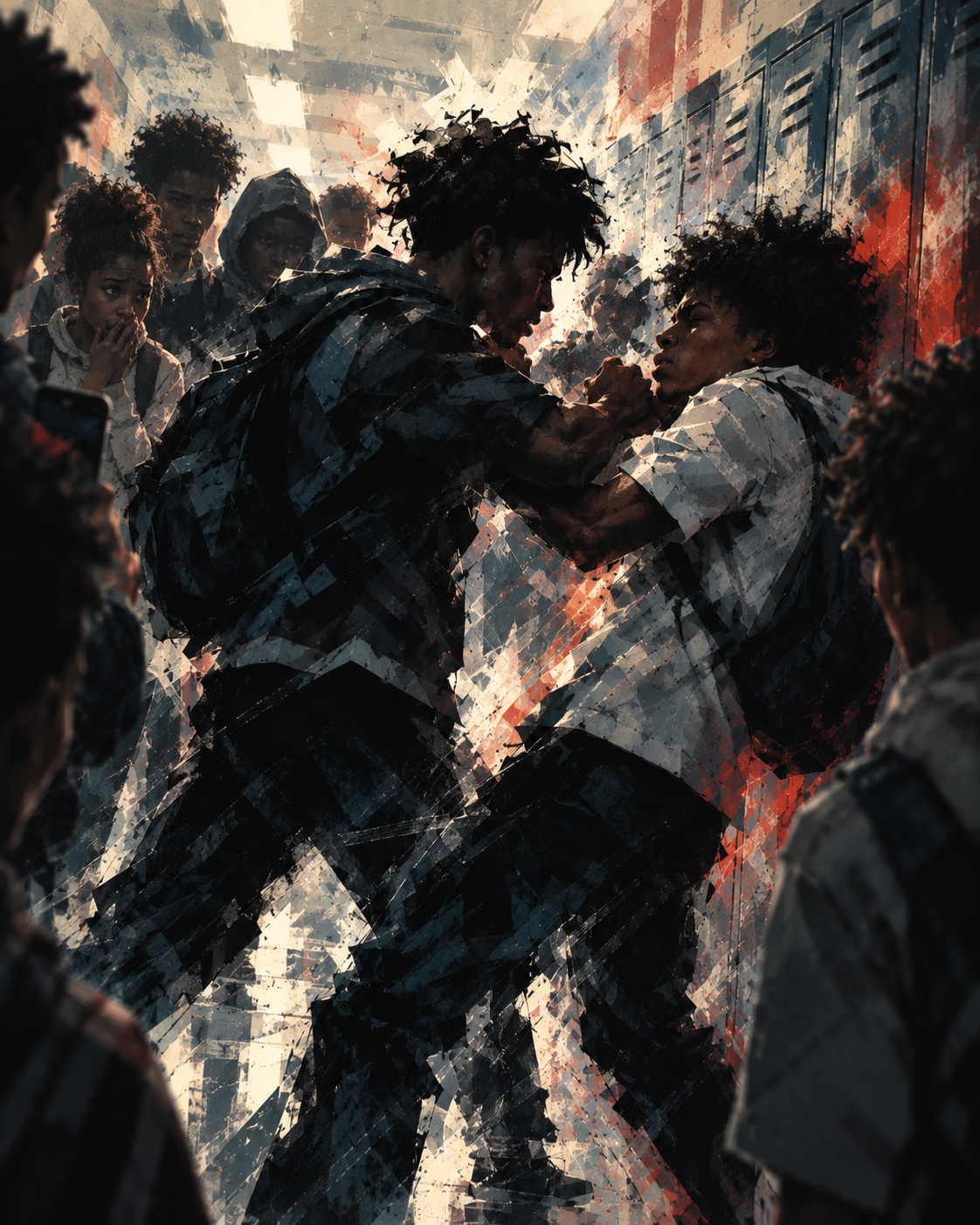
Every time another school fight makes the rounds on social media, the reaction is almost immediate. People blame the students. Others blame the parents. Some call for police officers at schools, tougher discipline, suspensions, more security and stricter rules. Then the videos fade, the outrage dies down and, eventually, another fight appears.
Youth organization Teen Times believes St. Maarten has been having the same conversation for far too long and still starts at the wrong end of the problem. "Everybody is still getting it wrong," the group wrote in 2024.
For decades, Teen Times has worked with generations of teenagers through youth summits, parliamentary exercises, public-service initiatives, discussions on juvenile delinquency and policy proposals. The group has also submitted white papers and proposals to Parliament containing recommendations aimed at some of the country's most persistent youth issues.
Throughout that time, its position on youth behaviour has remained consistent and reiterated time and time again publicly and to government: if the social condition of families continues to deteriorate, the consequences will eventually show up in the lives and behaviour of young people. "If that isn't fixed, young people will suffer," the group has warned.
That does not mean poverty automatically produces violence, or that every child involved in a school fight comes from a struggling household. It also does not remove personal responsibility from a teenager who chooses to fight. Teen Times' argument is broader and more uncomfortable: children do not grow up separately from the circumstances of the adults raising them.
If parents and caregivers are constantly worried about rent, groceries, electricity, transportation, unstable employment and whether their salary will stretch to the end of the month, that pressure does not remain inside the household budget. It affects time, patience, supervision, emotional availability and the ability to provide children with structure and opportunity.
A parent may care deeply about a child and still reach home exhausted after a long workday. Another may be working two jobs. Someone else may be holding down a temporary contract and worrying about what happens when it ends. There may be enough money for food and rent, but not enough for football, dance, music lessons, tutoring or another structured activity after school. Teen Times believes this is the part of the school-fight discussion St. Maarten continues to underestimate.
article continues below...
The research
International research supports much of that reasoning. The World Health Organization identifies low family income, unemployment, poor parental monitoring and weak parental involvement among the risk factors associated with youth violence. It also points to poverty, inequality and weak social conditions at community level. Its guidance on prevention makes clear that reducing youth violence cannot be separated from improving education, economic opportunity, social protection and family support.
The United States Centers for Disease Control and Prevention reaches a similar conclusion. Its work on youth violence stresses that violent behaviour rarely has one cause. Risk develops through a combination of personal, family, school and community conditions. Poor family functioning, low parental income, unstable housing, weak supervision, concentrated poverty and a lack of safe activities for young people can all contribute to that environment.
That is important because the debate in St. Maarten often narrows quickly to the student who threw the first punch. Yet school violence did not suddenly begin with this generation, and it certainly did not begin with social media.
School violence has been documented locally for years. A UNICEF situation analysis on children and adolescents in St. Maarten referred to a 2015 study involving six subsidized secondary schools in which 85 incidents involving 116 students were recorded in only three months. Assault was the most commonly reported form of violence, with many incidents occurring outside school grounds or in areas around schools during breaks.
By 2019, the Prosecutor's Office and KPSM had established a Youth Task Force after authorities reported an increase in both the number and seriousness of school fights. In one school term alone, schools in the South Reward and St. Peters areas had registered 41 fights. In 2020, another report counted 36 fights within 38 school days.
The technology has changed since then, but the underlying problem has not. Social media has simply given school violence a much larger audience. A fight that might once have ended when students went home can now be recorded, replayed, mocked, shared and discussed hundreds of times. Young people can gain attention from it, while others may feel pressured to retaliate. Social media did not create the conditions underneath the fight, but it has certainly amplified them.
The root
Teen Times' position over the years has been that St. Maarten repeatedly reacts to youth problems where they become most visible instead of where they begin. A fight happens at school, so the discussion becomes school security. Students gather outside a gate, so the discussion becomes police patrols. A video circulates, so the discussion becomes phones and social media.
"But the most important thing that goes ignored is the set of hard questions that people don't want to ask." What is happening inside the household? How much time do parents actually have with their children? Can families afford organized sports and other activities? Are enough community programs available after school? Do young people have places to go where there is structure, mentorship and discipline? Are parents financially stable enough to provide the attention everyone later demands from them?
Government itself continues to study the cost of living and what households require to maintain a reasonable standard of living. Previous assessments have already pointed to significant levels of poverty and economic vulnerability, including among young people. There have also been repeated discussions over the years about minimum wage levels, social assistance, pension adequacy, housing costs, food prices and the pressure of utility bills.
"The important point is not simply that life is expensive. It is what sustained financial pressure does to family life. Children live inside those circumstances even when adults try to protect them from it," Teen Times wrote in an article in 2023.
"They hear conversations. They notice what cannot be afforded. They compare themselves with classmates. They see what others have. They may not understand why there is no money for something they want, only that there is no money. None of that means a child will become violent. Most do not. But when hardship is combined with limited supervision, frustration, weak community support, exposure to violence, social pressure and few structured outlets, the risk environment becomes more difficult."
This is why Teen Times has consistently argued that the answer cannot simply be telling parents to do better. Parents absolutely have responsibilities. They must know where their children are, teach discipline, set boundaries and intervene when behaviour changes. Students also have to understand that frustration does not justify violence. But society, the group stresses, has responsibilities too.
"It is easy to tell a parent to enroll a child in sports. It is harder when fees, equipment and transportation cost money. It is easy to say parents should spend more time with their children. It becomes more complicated when someone must work long hours simply to keep the household functioning. It is easy to demand more youth programs. It is harder when organizations working with young people are themselves competing for limited funding and support," another Teen Times report pointed out last year.
That is why police officers around schools, increased patrols and stronger disciplinary policies may help without solving the larger problem. Those measures respond to behaviour when it has already reached a dangerous point. They may prevent a fight, stop one from escalating or hold a student accountable, but they do not change the conditions that may have been building long before the confrontation.
Weak social structures
Young people are growing up in a St. Maarten that is wealthier in some ways, more connected to the world and more technologically advanced than it was 20 or 30 years ago. Yet many families are also dealing with intense financial pressure, expensive housing, unstable employment and a cost of living that leaves little room beyond basic necessities.
At the same time, some of the social structures that once helped absorb those pressures have weakened. Community organizations struggle for funding. Sports and cultural activities can be costly. Parents have less time. Structured after-school opportunities are not always accessible to every family. Social media increasingly fills spaces that adults, neighbourhoods and organized activities once occupied.
Teen Times' argument, therefore, is not that St. Maarten should stop talking about discipline, parental responsibility or consequences for fighting. It is that the country cannot keep talking about youth behaviour while separating young people from the economic and social environment in which they are being raised.
The fight everyone sees on a phone is usually the most visible part of a much longer story. Teen Times has spent 30 years, almost two generations, asking St. Maarten to pay more attention to where that story begins.
If the country truly wants better-behaved young people, the group believes part of the solution has been staring St. Maarten in the face for years: improve the lives of the people raising them.