

SVT beret ceremony highlights promise of discipline, growth and second chances

The recent beret ceremony for participants of the Social Education Program, known in Dutch as the Sociaal Vormingstraject and in Papiamento as “Un Komienso Nobo,” offers more than a ceremonial moment. It offers a practical example of what can happen when young people are given structure, discipline, guidance, and a second chance through a program built around personal development and future employment.
In Curaçao, seven young people who participated in the SVT “Un Komienso Nobo” program at the Suffisant Marine Barracks recently received their berets and certificates after completing a 15-week trajectory under the guidance of Defence. The beret, in this setting, is not simply part of a uniform. It represents a turning point. It marks the completion of a demanding first phase in which participants are expected to show commitment, discipline, responsibility, resilience, and respect for themselves and others.
For young people who may have struggled with direction, confidence, structure, or access to opportunity, such a moment matters. It says they finished something. It says they were held to a standard and met it. It says they were not written off.
That is the deeper value of “Un Komienso Nobo,” which translates to “A New Beginning.” The program is built around the belief that young people can change course when the right environment, expectations, and support systems are put in place. It does not treat youth development as a slogan. It creates a pathway.
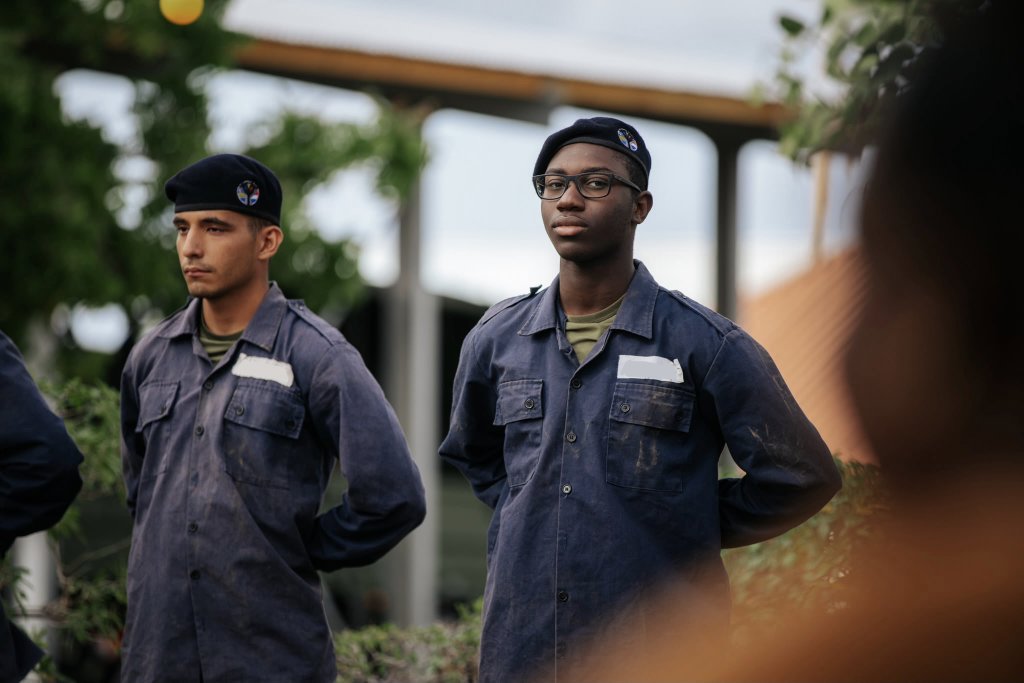
The SVT model operating in Curaçao and Aruba focuses on young people, generally in the 18 to 24 age group, who can benefit from intensive guidance and personal formation. The first phase exposes participants to military-style structure and training, with emphasis on discipline, teamwork, self-control, punctuality, responsibility, confidence, and perseverance. The second phase is aimed at preparing participants for the labor market through continued guidance, skills development, and work-oriented support.
That combination is important. Discipline alone is not enough. Training without opportunity can leave young people frustrated. Motivation without follow-up can fade quickly. The strength of the SVT concept is that it links personal formation to practical next steps. Participants are not only taught to stand straighter, march better, or follow instructions. They are expected to develop habits that can help them function better in school, at work, in their homes, and in society.
For St. Maarten, the recent beret ceremony should not be seen as something happening far away. It should be viewed as a regional example with direct relevance to the country’s own youth challenges.
St. Maarten continues to wrestle with concerns about school dropouts, youth unemployment, social disconnection, community violence, lack of structured after-school and post-school options, and young people who fall between systems. Not every young person wants a traditional academic path. Not every young person is reached by classroom learning. Not every young person who makes mistakes is beyond help.
A structured social formation program could help fill that gap.
The appeal of a program like SVT is that it offers young people something many of them are missing: routine, accountability, mentorship, physical activity, teamwork, consequences, achievement, and a sense of belonging. These are not small things. For many young people, especially those who have experienced instability, those elements can be life-changing.
The beret ceremony in Curaçao is symbolic because it shows achievement in public. Young people who may once have been doubted are recognized for completing a serious trajectory. Families see progress. Communities see potential. The participants themselves see that they are capable of more than perhaps even they believed.
That type of public recognition can have a powerful effect. It restores dignity. It reinforces discipline. It gives young people a milestone they can carry into the next phase of their lives.
St. Maarten has already started discussing whether a similar model could work locally. Member of Parliament Sjamira Roseburg has been exploring the introduction of an SVT-style program for youth and young adults on St. Maarten, including discussions connected to the Marines and local stakeholders. Her proposal frames the program not as punishment, but as guidance and support for young people who need structure and opportunity. MP Egbert Doran has also continued to advocate for structured, military-based training opportunities for St. Maarten’s youth, pointing to the need for practical responses to youth delinquency and social challenges.
The fact that these ideas have surfaced from different political corners is important. Youth development should not be trapped in partisan debate. If there is one issue on which St. Maarten should be able to find common ground, it is the need to invest in young people before they are lost to crime, frustration, hopelessness, or long-term unemployment.
A St. Maarten version of SVT would not need to copy Curaçao or Aruba in every detail. In fact, it should not. It would have to be designed around St. Maarten’s realities, its population size, its labor market, its school system, its family structures, its neighborhoods, and its institutional capacity. But the principles are transferable.
A local program could focus on youth and young adults who are no longer in school, struggling to find work, needing stronger life skills, or at risk of slipping into negative behavior. It could combine physical training, discipline, community service, career preparation, counseling, basic literacy and numeracy support, financial education, conflict management, communication skills, and job placement.
It could also connect directly to areas where St. Maarten needs workers: security, hospitality, technical services, marine services, construction, logistics, airport operations, disaster response, public works, sports, agriculture, and community care. The goal should not be to militarize youth. The goal should be to organize support around them in a way that builds confidence, skill, and purpose.
A social formation program should never be treated as a dumping ground for so-called problem youth. It should be presented as a respected opportunity for growth. Young people should not enter such a program feeling branded. They should enter it knowing they are being challenged because the country believes they still have something valuable to offer.
This is where St. Maarten must be careful. The language around youth programs can sometimes become negative, focusing only on crime, delinquency, and discipline. Those issues are real, but young people are more than the problems adults identify in them. Many are dealing with family burdens, financial stress, trauma, poor guidance, unstable schooling, limited job prospects, and a lack of safe spaces where they can build confidence.
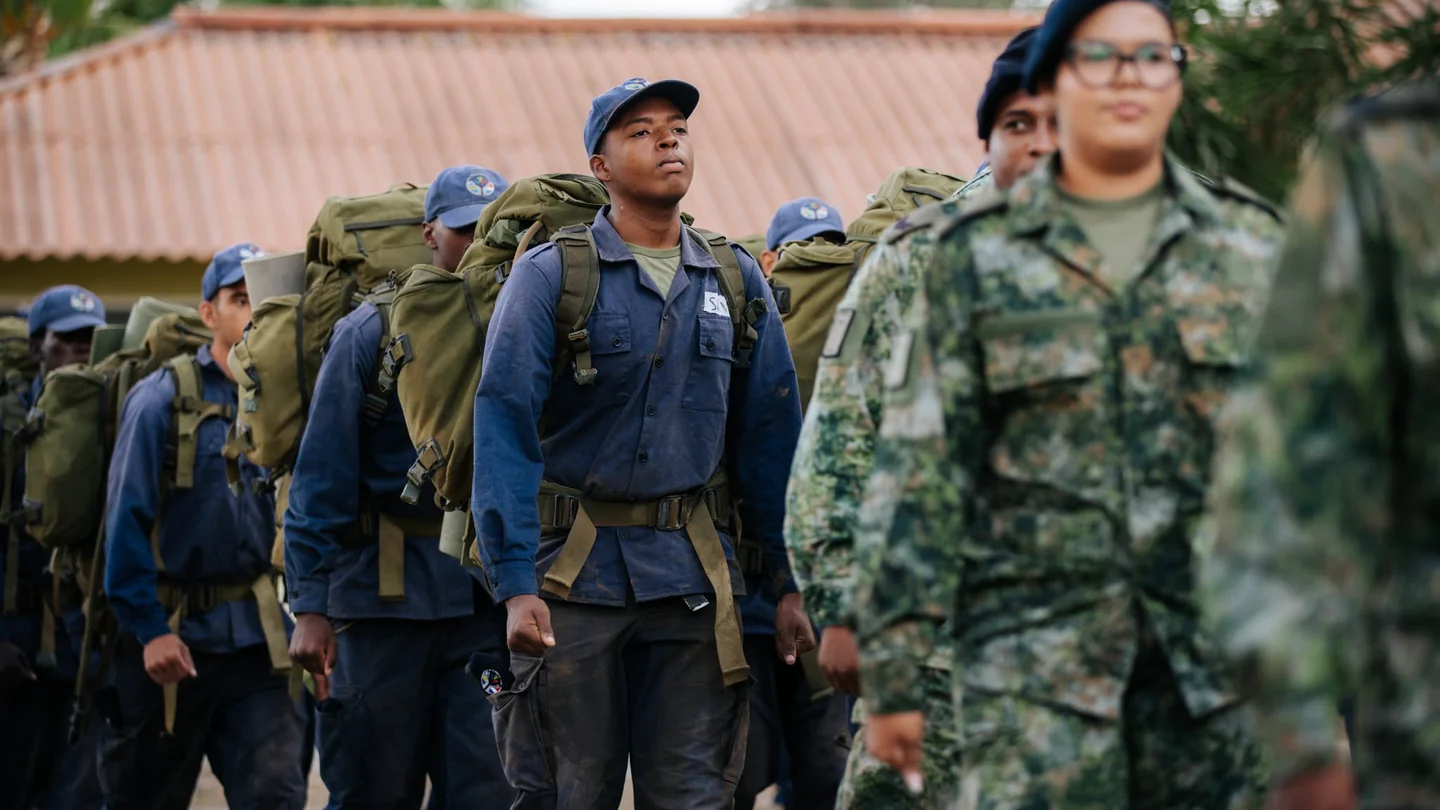
A good SVT-style program would respond to those realities with firmness and care. It would set expectations, but also provide support. It would demand punctuality, but also teach time management. It would require discipline, but also explain why discipline matters. It would challenge participants physically, but also help them grow emotionally and socially.
The next phase after the beret is just as important as the first. In Curaçao’s model, participants continue into a learning and work pathway, where they are prepared for employment suited to their abilities. That is a critical part of the structure. Without a second phase, the program risks becoming a short-term motivational experience. With a second phase, it becomes a bridge to real life.
For St. Maarten, that bridge would have to include employers. Government cannot do this alone. Schools cannot do it alone. Defence cannot do it alone. If St. Maarten is serious about a local version, the private sector would have to be involved from the beginning. Businesses could help identify labor needs, offer internships, provide mentors, create entry-level opportunities, and support participants who complete the program.
Civil society would also have a role. Churches, youth organizations, sports clubs, community foundations, counselors, educators, and neighborhood leaders often know which young people are drifting and which ones simply need someone to pull them back toward opportunity. A strong program would connect those networks instead of replacing them.
The question for St. Maarten is not whether young people need more lectures. They do not. The question is whether the country is willing to build structured pathways that meet young people where they are and help move them toward where they can be.
The recent SVT beret ceremony in Curaçao shows that such pathways can produce visible results. Seven young people completed a demanding phase and stood publicly recognized for doing so. That number may seem small, but for each participant, the impact can be large. For each family, it can mean renewed hope. For each community, it can mean one more young person moving toward purpose instead of being left idle.
St. Maarten should pay attention.
A country cannot complain about youth behavior while failing to create alternatives. It cannot keep saying young people need discipline, then provide no structured place for them to learn it. It cannot demand employment readiness without investing in the habits, skills, and confidence that make employment possible.
“Un Komienso Nobo” is powerful because the name itself carries the message. A new beginning is not automatic. It must be organized. It must be funded. It must be protected from politics. It must be connected to real opportunities. And it must be built with the understanding that youth development is not charity. It is national development.
For St. Maarten, the lesson is clear. The island does not need to wait until more young people fall through the cracks before acting. A carefully designed SVT-style program could become one of the practical tools to help youth regain direction, build discipline, enter the labor market, and feel that their country still sees value in them.
The beret ceremony in Curaçao was a milestone for those participants. For St. Maarten, it should be a reminder that young people do not only need warnings about their future. They need pathways into it.