Survey Gives Parliament and COM failing grades, but a few MPs and Ministers still stand out
.jpg)
GREAT BAY--A survey conducted by The Peoples' Tribune over the past week resulted in 512 respondents delivering an uncomfortable assessment of political performance in St. Maarten, with government (Council of Ministers) and Parliament as institutions receiving low grades across nearly every measure, from lawmaking and representation to integrity and the delivery of campaign promises.
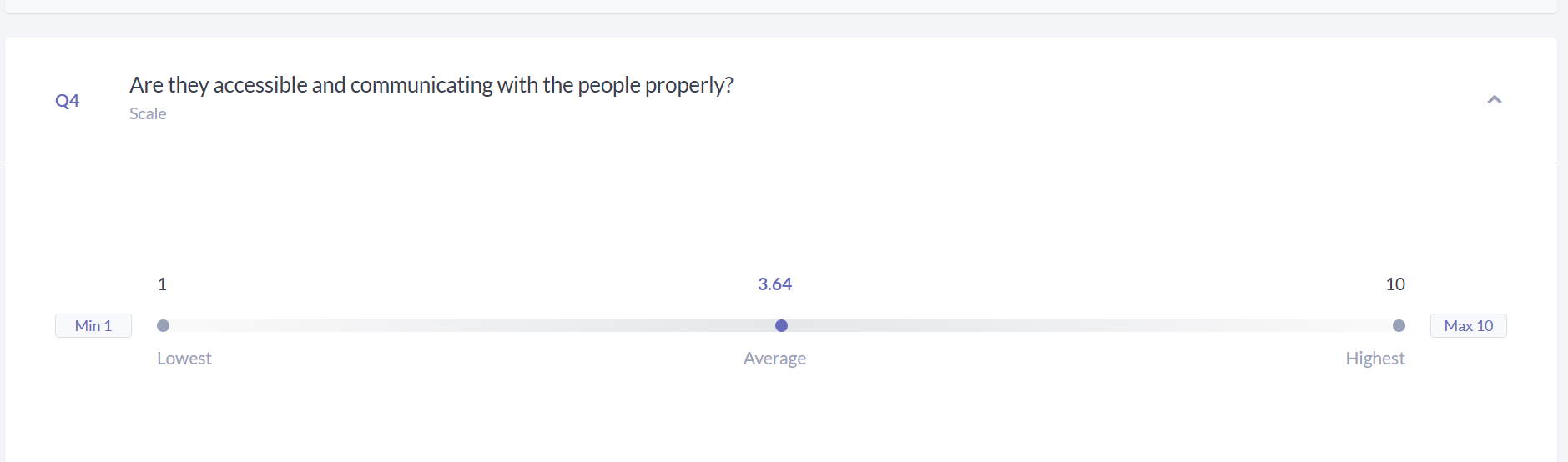
The 512 respondents consistently scored the political system at the lower end of a 10-point scale. Not one of the seven general performance categories reached an average score of 4. The highest score was 3.64. The lowest was 2.71.
Yet the survey also revealed another side of public opinion. When respondents were asked to name individual MPs and ministers they believed were performing well, a handful of political figures separated themselves from the rest.
The contrast is one of the more interesting findings of the survey: respondents can have a poor view of Parliament or the Council of Ministers as institutions while still identifying individual politicians whom they believe are doing comparatively good work. This should not be surprising considering that personality politics is historically how the electorate of St. Maarten votes.
Promises and results receive the harshest score
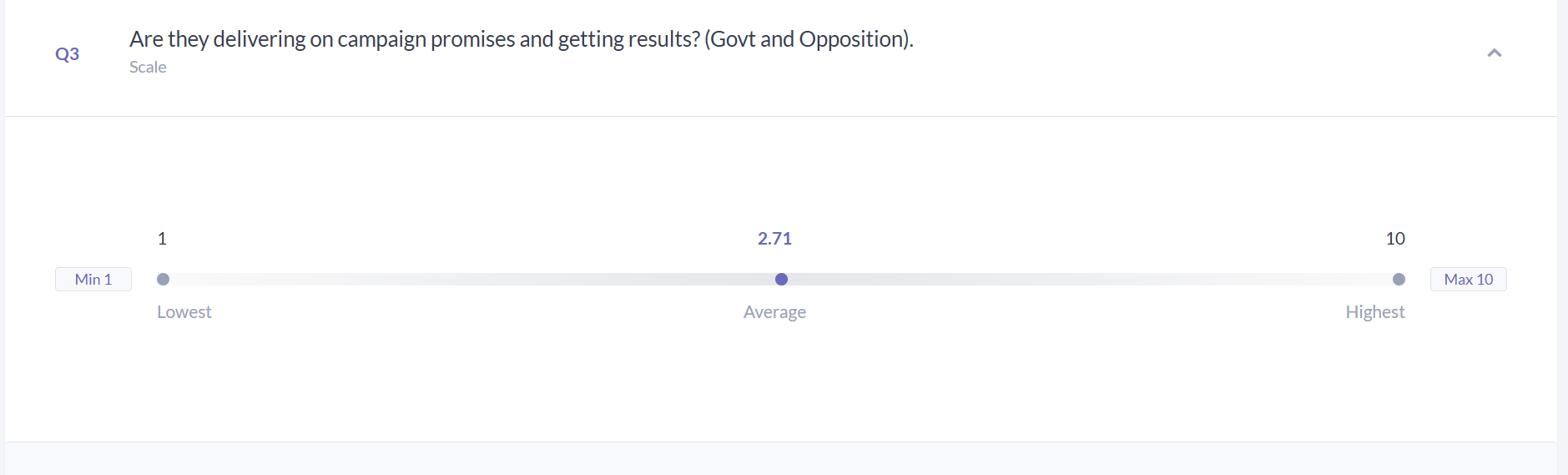
The lowest score in the survey came in response to a straightforward question: Are government and opposition delivering on campaign promises and getting results? The average was 2.71 out of 10.
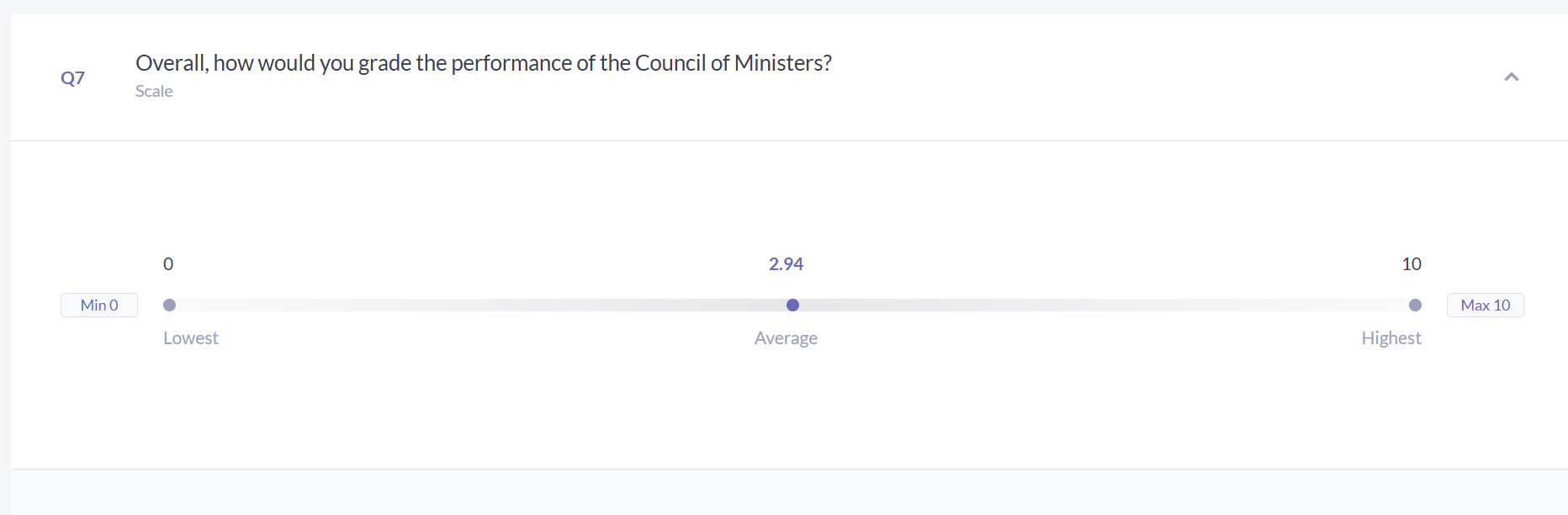
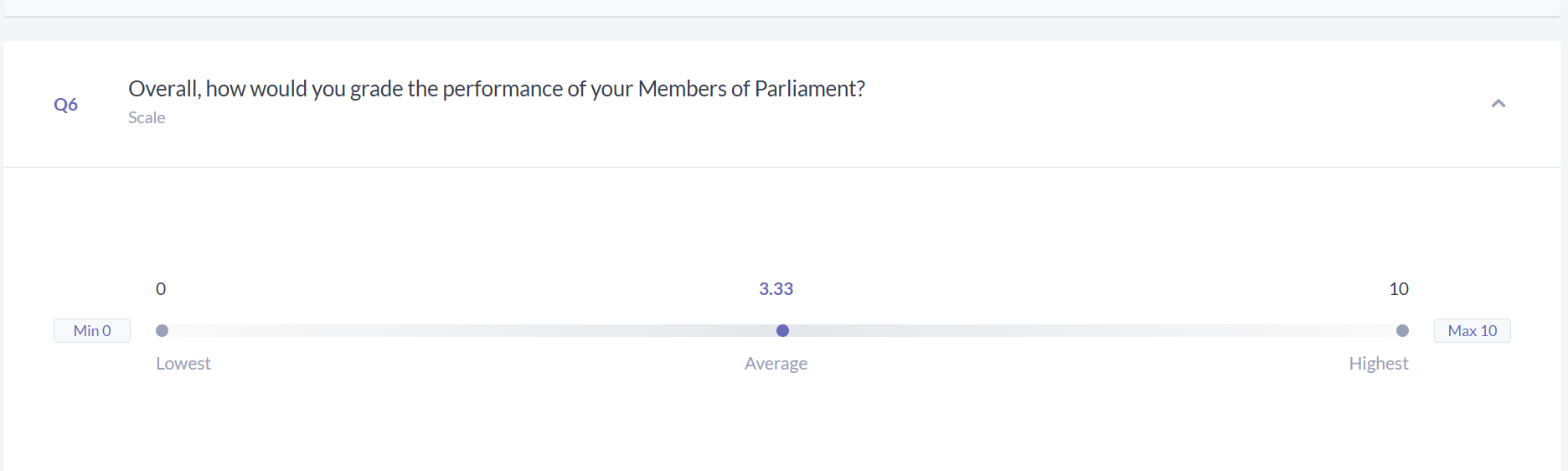
The Council of Ministers received an overall performance grade of just 2.94. Members of Parliament performed slightly better, but not by much, receiving an average grade of 3.33.
The difference between the two scores is small, but it may indicate that respondents distinguish between politicians who raise questions and debate public issues and those who carry direct executive responsibility for implementation. In practical terms, however, neither branch received anything close to a passing grade.
Lawmaking and integrity both score 3.01
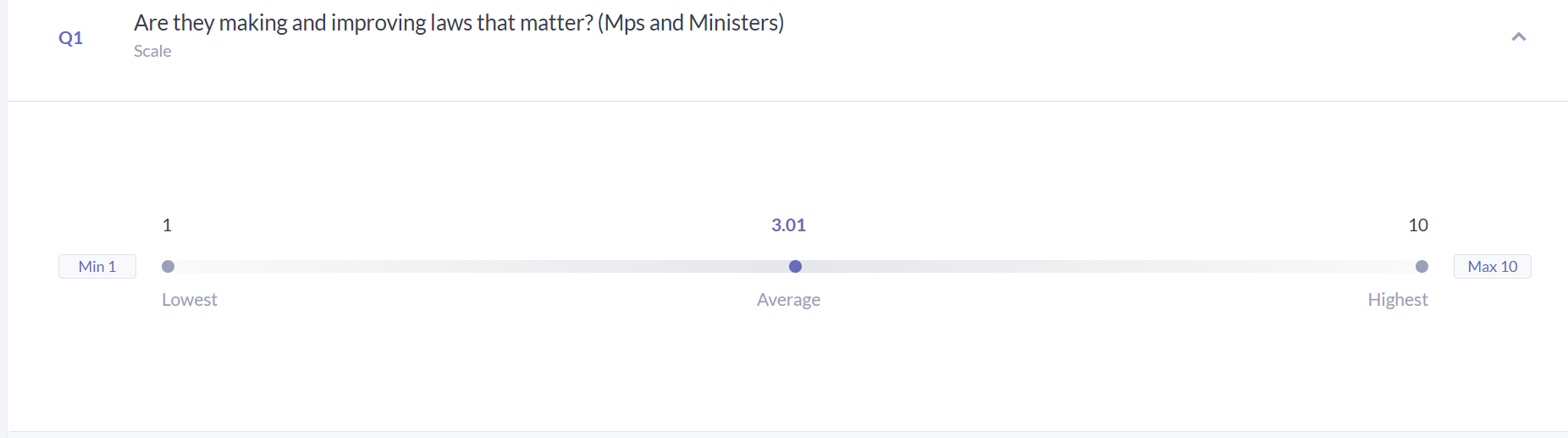
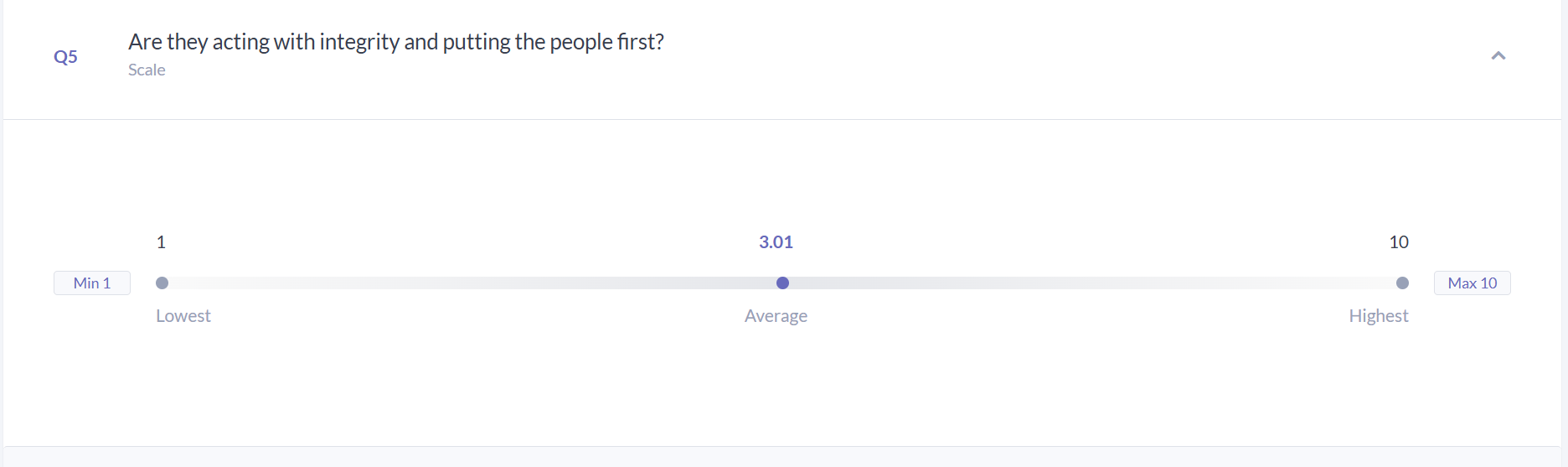
Respondents gave MPs and ministers an average score of 3.01 when asked whether they are making and improving laws that matter. The question was not simply whether laws are being passed. It asked whether the legislative work is relevant to the issues affecting people.
The same score of 3.01 was recorded when respondents were asked whether political leaders are acting with integrity and putting the people first.
Representation remains weak
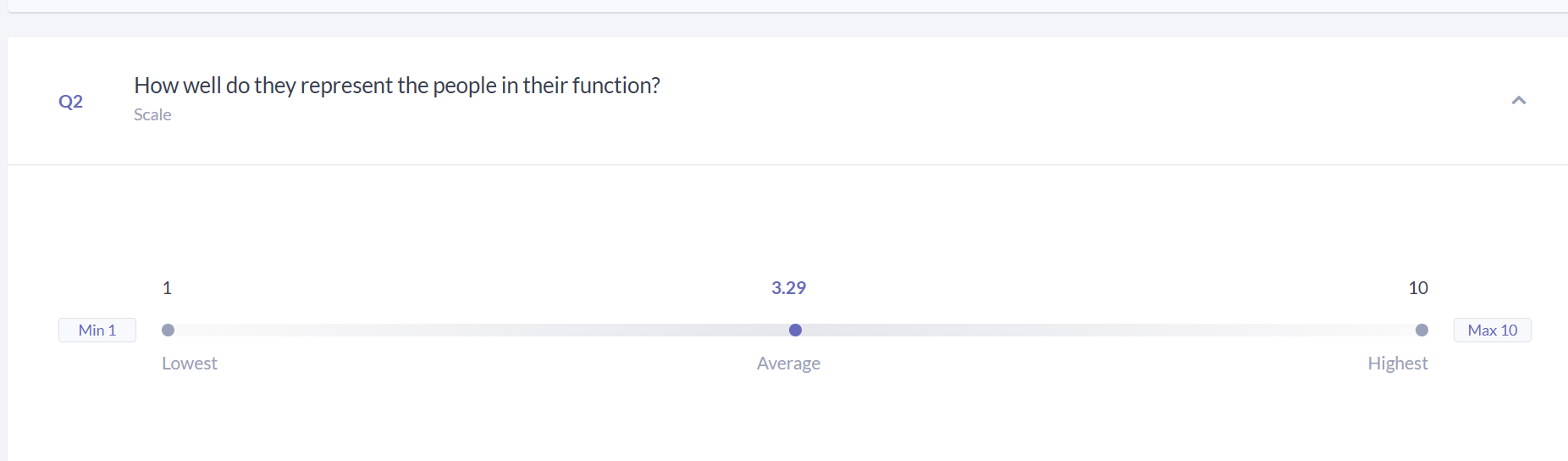
Political leaders received an average score of 3.29 when respondents were asked how well they represent the people in their respective functions.
For many people, representation is judged by whether their most pressing concerns are reflected in the political agenda and whether those concerns eventually produce action.
Communication performs "best", but still poorly
Accessibility and communication received the strongest score in the survey, 3.64 out of 10. It is the highest average of the seven performance questions, but it remains low.
The result may indicate that respondents acknowledge political leaders are visible. MPs and ministers are regularly active online, present at events, participating in interviews and speaking publicly. But visibility is not the same as effective communication.
Cost of living dominates the public agenda
Of the 512 survey participants, 454 answered the question about the issue Parliament and government should address most urgently. Cost of living led with 130 selections, or 28.6 percent of those who answered the question.
GEBE followed with 19.4 percent. Crime and safety received 14.1 percent, healthcare 10.6 percent, roads and infrastructure 10.1 percent, education 9.7 percent and housing 7.5 percent. Cost of living and GEBE together accounted for nearly half of the priority selections. That places household economic pressure at the center of the survey.
A few MPs stand apart from Parliament's poor overall grade
Respondents were asked Which MP do you believe has performed best so far?
When the individual MP responses were counted across the survey's 512 participants, Egbert Jurendy Doran led with 86 mentions (with an average grade of 7), followed by Darryl York with 80 (with an average grade of 8), Sjamira Roseburg with 77 (with an average grade of 7), Omar Ottley with 54 (with an average grade of 6) and Artwell Irion 43 (with an average grade of 6). MP Franklin Meyers came in at at 40 (avg. grade 7), Sarah Wescot-Williams at 36 (with an average grade of 6), Francisco Lacroes at 34 (avg. grade 6) and Lyndon Lewis at 17 (avg grade 5).
The nine MPs listed accounted for 467 mentions. The remaining 45 responses were distributed among other names, unclear responses and respondents who did not identify an MP.
NOTE: Not every mention included a grade. The average shown for each politician was calculated from the grades provided by respondents who rated that individual and was rounded to the nearest whole number. Clearly identifiable misspellings, surname-only entries and portfolio references were consolidated, while responses placed in the wrong category were reassigned only where the intended person was clear.
The difference between the individual scores and Parliament's overall 3.33 grade is notable. Respondents appear willing to recognize individual MPs even while remaining dissatisfied with Parliament as a whole. That may mean certain MPs are cutting through the wider public frustration because of visibility, parliamentary activity, communication or the issues they choose to pursue.
Marinka Gumbs dominates ministerial mentions
Respondents were asked which Minister do you believe has performed best so far?
When the ministerial responses were counted across the survey's 512 participants for the sitting Council of Ministers, Finance Minister Marinka Gumbs emerged well ahead of her colleagues with 155 mentions and an average grade of 8. TEATT Minister Grisha Heyliger-Marten with 107 (with an average grade of 7) Justice Minister Nathalie Tackling followed with 84 (with an average grade of 7), Education Minister Melissa Gumbs with 68 (with an average grade of 7), and Prime Minister Luc Mercelina with 50 (with an average grade of 6). VROMI Minister Patrice Gumbs received the lowest share of the sitting Ministers, with 28 mentions and an average grade of 5. Former minister Richinel Brug was named separately by 20 respondents and received an average grade of 8.
The public graded the overall performance of the government low (2.94), but individually scored the Ministers much better. The same reasoning applied to the MPs could be applied in this regard.
NOTE: Not every mention included a grade. The average shown for each politician was calculated from the grades provided by respondents who rated that individual and was rounded to the nearest whole number. Clearly identifiable misspellings, surname-only entries and portfolio references were consolidated, while responses placed in the wrong category were reassigned only where the intended person was clear.
The individual rankings must be treated carefully
The individual-name portion of the survey requires more caution than the broader scoring questions. While reviewing the responses, it became clear that some people still do not fully understand the difference between a Member of Parliament and a Minister. In several cases, respondents named MPs when asked to identify ministers. Ministers were also listed in responses intended for MPs.
Some respondents used only a surname. Others identified a portfolio rather than a person. The confusion was frequent enough to affect the individual results to some degree. For that reason, the rankings should not be presented as scientific approval ratings or a definitive measure of the popularity of every politician. They are better understood as an indication of which political figures were most often recognized positively by respondents who chose to name someone.
The confusion itself, however, may be worth noting. If some members of the public are unable to clearly distinguish between the legislative and executive branches of government, that raises its own questions about political education and government communication.
Methodology note: This was a self-selected online snap survey conducted by The People’s Tribune over the past week. A total of 512 people participated. The survey was open to voluntary participation and was not based on a random or scientifically representative sample of the St. Maarten population or electorate. As with any open online survey, the results may have been influenced by differences in who saw the survey, who chose to participate and how widely it was shared within particular political or social networks. The findings should therefore be understood as reflecting the views of the respondents who participated, rather than as a definitive measure of public opinion across the island.