

Suitcases, studies and starting over: The annual journey to the Netherlands
.jpg)
Every July and August, the scene repeats itself across the Dutch Caribbean. Suitcases are weighed, documents are checked one more time, parents offer final instructions, friends gather at departure halls and another generation of young people boards flights for the Netherlands.
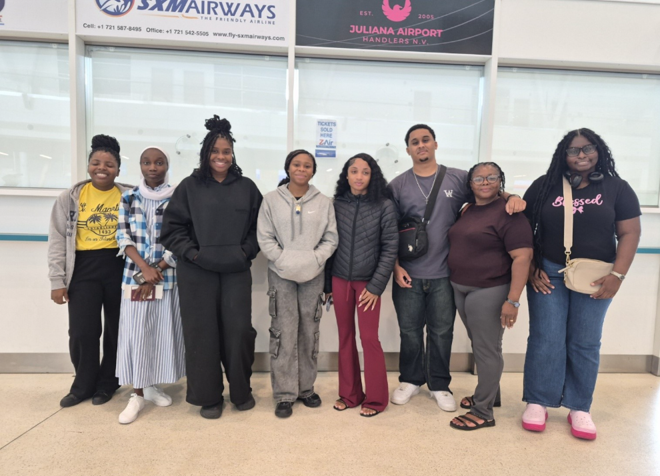
This year, at least 383 students from four Dutch Caribbean islands are making that journey: 198 from Aruba, 143 from Curaçao, 34 from St. Maarten and eight from St. Eustatius. Separate 2026 figures for Bonaire and Saba were not found in available reporting, so the actual regional total is higher. For the students, however, the numbers tell only a small part of the story.
Getting on the plane is the easy part.
For many, what follows is their first experience living without parents, managing their own money, cooking their own meals, navigating an unfamiliar bureaucracy and trying to succeed academically, all while adapting to a country thousands of kilometers from the Caribbean communities that shaped them. It is a transition that Dutch authorities themselves now acknowledge has been underestimated for years.
More than 1,600 young people from the Caribbean part of the Kingdom begin a study in the Netherlands annually, according to the Dutch government. Increasingly, governments and educational institutions are recognizing that admission to a school and financing for a plane ticket are only the beginning of what these students need to succeed.
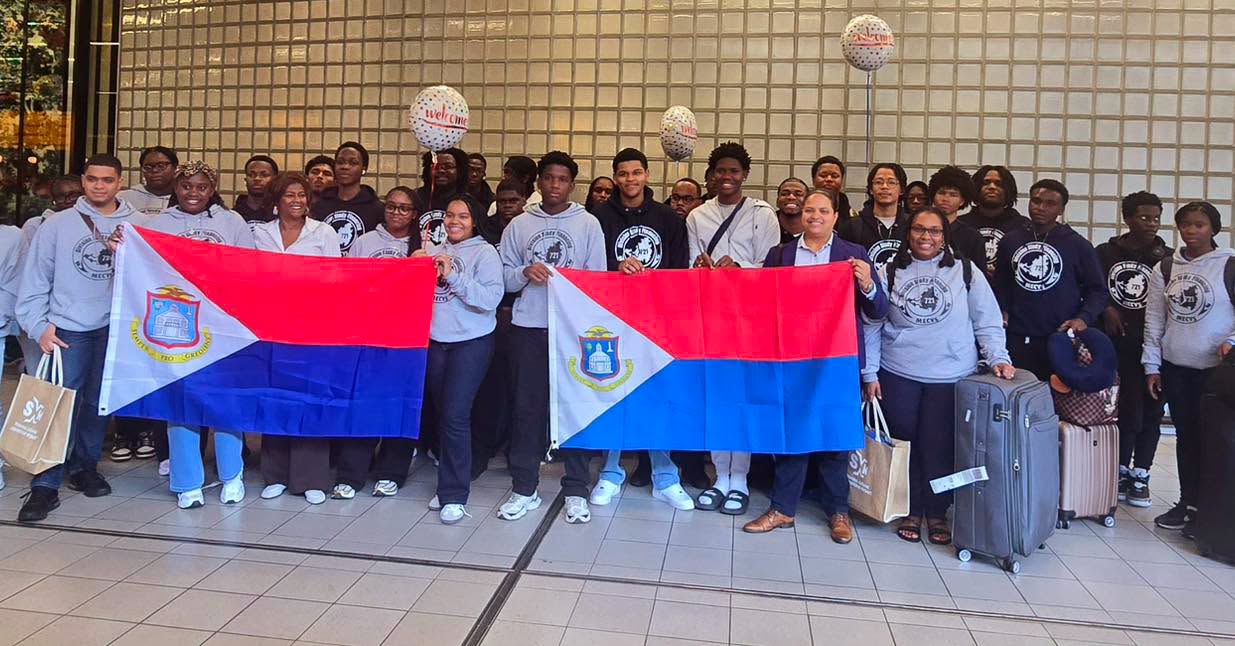
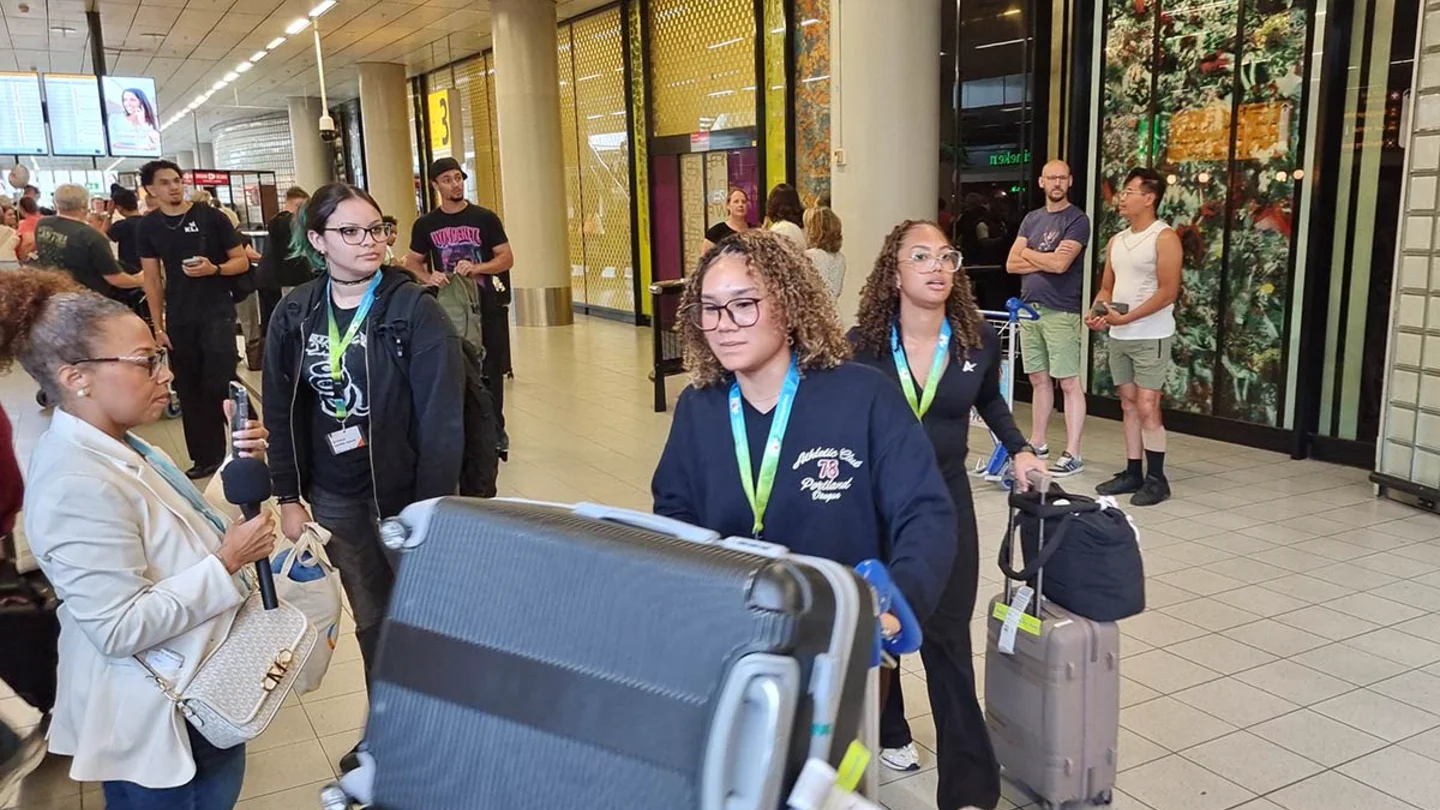
For the latest group from St. Maarten, the transition began with a familiar face at the other end of the flight. The students were met at Schiphol Airport by Minister of Education, Culture, Youth and Sport Melissa Gumbs and Minister Plenipotentiary Gracita Arrindell before beginning the process of settling into their respective cities.
Soon, however, the group will disperse. Rotterdam, Amsterdam, The Hague, Eindhoven, Utrecht and other cities will become home. Orientation will end, classes will begin and the realities of student life will take over.
article continues below...
A move within the Kingdom that can feel like migration
On paper, a student from St. Maarten, Curaçao or Aruba moving to the Netherlands is relocating within the same Kingdom. In practice, it can feel much closer to international migration.
A recent Dutch government-commissioned study into students from Bonaire, Saba and St. Eustatius described the transition as particularly demanding because several changes occur at once. Students leave small, close communities and enter a society requiring significantly more independence, while simultaneously dealing with unfamiliar systems for housing, insurance, student financing, registration and everyday administration. Researchers identified five major areas of adjustment: culture, independence, language, climate and the education system itself.
Although that particular study focused on the three Caribbean Netherlands islands, many of the experiences mirror findings from earlier Kingdom-wide research involving students from Aruba, Curaçao and St. Maarten as well.
The cultural difference can be immediate.
Many Caribbean young people come from environments in which family networks are close, somebody knows somebody who can help, and practical problems are often solved through relatives or familiar community connections. In the Netherlands, students can suddenly find themselves responsible for appointments, registrations, contracts, banking, transportation and deadlines that nobody else is going to handle for them.
Even seemingly ordinary parts of adulthood can become part of the learning curve. The recent study found that some arriving students struggle initially with cooking, grocery shopping, budgeting and maintaining their own financial administration. Asking strangers for assistance can also be uncomfortable for young people accustomed to receiving support within family and community networks.
In that sense, Dutch Caribbean students are often learning two things simultaneously: their chosen field of study and how to live independently.
Then comes the classroom
The academic adjustment can be just as significant. Dutch tertiary education generally expects students to take considerable responsibility for their own learning. Lecturers may provide the assignment and deadline but expect the student to determine how the work will be planned, researched and completed.
Researchers found that students from the islands can arrive accustomed to smaller classrooms and more structured instruction, only to discover that the Dutch system requires considerably more independent planning and responsibility. Some students told researchers they had underestimated that difference before leaving home.
Language adds another layer
This is particularly relevant for students from the English-speaking Windward Islands. A St. Maarten student may have completed most of his or her education in English before entering a Dutch-language MBO or HBO environment.
Even students who understand conversational Dutch can discover that academic Dutch is something entirely different. Reading technical material, writing reports, defending an argument and understanding specialised terminology require a level of proficiency that everyday conversation does not.
The latest research examining Caribbean Netherlands found that this can be particularly difficult for students from Saba and St. Eustatius, where English dominates education and daily life.
For St. Maarten students entering Dutch-language programs, the issue is familiar even though the island does not fall under that particular study.
The first winter can change everything
Then there is something no preparatory workshop can fully reproduce: November. The excitement of August has faded. Orientation is finished. Schoolwork has become serious. The temperature has dropped. Daylight disappears earlier. Christmas is approaching and home is an eight or nine-hour flight away.
The 2025 government-commissioned study found students reporting greater loneliness during the darker winter months, particularly when academic pressure, disappointing first results and homesickness arrive at roughly the same time.
Mental health is consequently part of the transition. Students interviewed for the study identified stress from academics, finances, culture shock and loneliness, with researchers finding a need for accessible support from people who understand their cultural background.
The National Ombudsman had reached similar conclusions several years earlier after surveying 624 current and former Caribbean students. That investigation identified difficulties ranging from housing and healthcare administration to cultural adjustment, study choices and debt.
Housing might be the most immediate challenge
For many students, academics are not the first problem they have to solve. Housing is.
The Netherlands has a national student housing shortage. The Dutch government estimated a shortage of approximately 21,500 units across 19 major student cities for the 2024-2025 academic year. Although 5,000 student homes were added during 2024, the private rental supply simultaneously declined significantly.
A student already living in the Netherlands can spend months searching for a room. Someone trying to do the same thing from St. Maarten or Curaçao faces the added disadvantage of being thousands of kilometres away.
Curaçao provides a particularly clear example of the problem. SSC arranges initial accommodation for many first-year Curaçao students, but those rooms generally provide only temporary security. Students moving into their second year must make way for the incoming group and find housing independently. SSC has identified that transition as one of its major concerns.
Recent Dutch research also found that one-year housing arrangements create instability for Caribbean students just as they are becoming accustomed to their new environment. Students interviewed for the study said stable accommodation was important not only practically but also for having the sense of safety and calm necessary to study.
The statistics are uncomfortable, but they require context
There is no value in pretending these challenges do not affect academic performance. They do. ResearchNed found that among first-year Caribbean students in the 2018-2019 academic year, 48 percent in HBO and 43 percent in university education switched programs. Among students without a migration background, the comparable figure was 21 percent in both sectors.
That statistic is often interpreted as evidence that Caribbean students are simply failing. The research tells a more complicated story. First-year outright dropout was not dramatically different from other student groups. The striking difference was switching. Caribbean students were much more likely to discover after arriving that their original course was not right for them and start another.
Changing from law to business, engineering to ICT or one HBO course to another does not necessarily mean a young person has abandoned higher education. It may mean that the student made a study choice thousands of kilometres away, with limited exposure to the institution or profession, then corrected that choice once in the Netherlands.
Older completion figures illustrate the difficulty. Among Caribbean students who began an HBO bachelor's program in 2013-2014, slightly more than 20 percent had completed the degree within five years. In university education, slightly more than 40 percent completed a bachelor's degree within four years. Those rates were significantly below comparison groups.
There is an important qualification.
Those statistics measure completion within the normal duration of a degree plus one year. They do not tell us how many students eventually graduated after taking six, seven or more years, particularly after switching programs. Dutch authorities themselves cautioned that longer-term data would be necessary to determine how many Caribbean students ultimately leave higher education with or without a diploma.
A government-commissioned report published in 2025 stated that there are still no sufficiently recent figures tracking enrolment, switching, dropout and completion by Caribbean island group. As a result, there is currently no sound statistical basis for claiming that most Dutch Caribbean students fail, or alternatively that most ultimately graduate.
article continues below...
But the story cannot end with failure
Statistics can identify where a system is struggling. They do not describe every student living inside that system. For decades, young people from St. Maarten and the other Dutch Caribbean islands have made the same journey and emerged as doctors, nurses, engineers, teachers, accountants, lawyers, entrepreneurs, researchers, civil servants and professionals across virtually every sector.
Some graduated exactly on schedule. Others changed courses. Some required an extra year or two. Some struggled badly in the beginning before finding their footing. There is a danger in discussing Caribbean student performance only through dropout percentages and debt.
If every conversation before departure tells a student that Caribbean students struggle in Holland, eventually the warning intended to prepare them can begin sounding like an expectation that they will fail.
Many of the skills students initially struggle with are, by definition, skills that can be learned. The student who cannot cook in August can be preparing meals without thinking about it by December. The teenager who has never used Dutch public transportation can eventually navigate trains across the country. The student intimidated by DigiD, DUO and municipal registration eventually learns the system. The first difficult examination can lead to a different approach to studying. A stranger in a new city can become part of a new circle of friends.
Independence develops through practice
So does resilience. The system is also beginning to change There are indications that governments have learned from years of warning signs.
In 2025, Dutch authorities introduced a central online preparation tool for Caribbean students covering the practical requirements of studying in the Netherlands. Students applying for Dutch student financing can also now receive a BSN before departure, allowing them to arrange a DigiD and begin completing administrative requirements while still at home.
The Caribbean Academic Foundation Year, CAFY, has also expanded. The preparatory year was established to strengthen academic, personal and study skills before students enter tertiary education. The program has been introduced for St. Maarten, Saba and St. Eustatius as part of a wider Kingdom effort to improve the transition into further study.
Eleven Dutch universities of applied sciences are also cooperating through the Strategic Education Alliance to improve the experience of Caribbean students. Their approach increasingly treats the transition as a process with three stages: preparing and choosing a study, managing the move and first 100 days, and receiving support during the study itself.
The SEA initiative was extended in late 2025 through December 31, 2028. Dutch authorities say more institutions are introducing dedicated orientation days, mentoring and other support for Caribbean students.
DUO also travelled through Aruba, Bonaire, St. Maarten and Curaçao in March this year to provide prospective students with information on Dutch student financing, DigiD, insurance and the administrative requirements they will face.
There is still room for improvement. A recent evaluation recommended extending formal guidance for Caribbean Netherlands students from one year to two, arguing that assistance frequently ends just when students have gotten through their initial culture shock and begin facing second-year issues such as new housing and academic decisions.
It is an argument worth considering across the Kingdom.
From 383 departures to 383 individual stories
Aruba's 198, Curaçao's 143, St. Maarten's 34 and St. Eustatius' eight can easily become another annual set of statistics.
But each number represents a young person.
Someone will miss home terribly.
Someone will discover a career they had never considered.
Someone will fail an exam for the first time.
Someone will change courses.
Someone will call home saying they want to return.
Someone will eventually graduate.
And for some, the young person who comes back to the Caribbean several years from now will bear little resemblance to the teenager who left. That may ultimately be the part of this annual migration that is easiest to overlook.
The Netherlands does not only provide Dutch Caribbean students with an education. The experience forces many of them into independence at extraordinary speed. They learn how to advocate for themselves, recover from mistakes, operate outside their comfort zone and build lives in places where little initially feels familiar.
The challenges facing Caribbean students should not be romanticized. The research shows that they are real, structural and serious enough to have affected generations of students. But neither should those challenges become the only story told about them.