

Ongoing budget debate isn’t really about the budget, govt has an execution problem
.jpg)
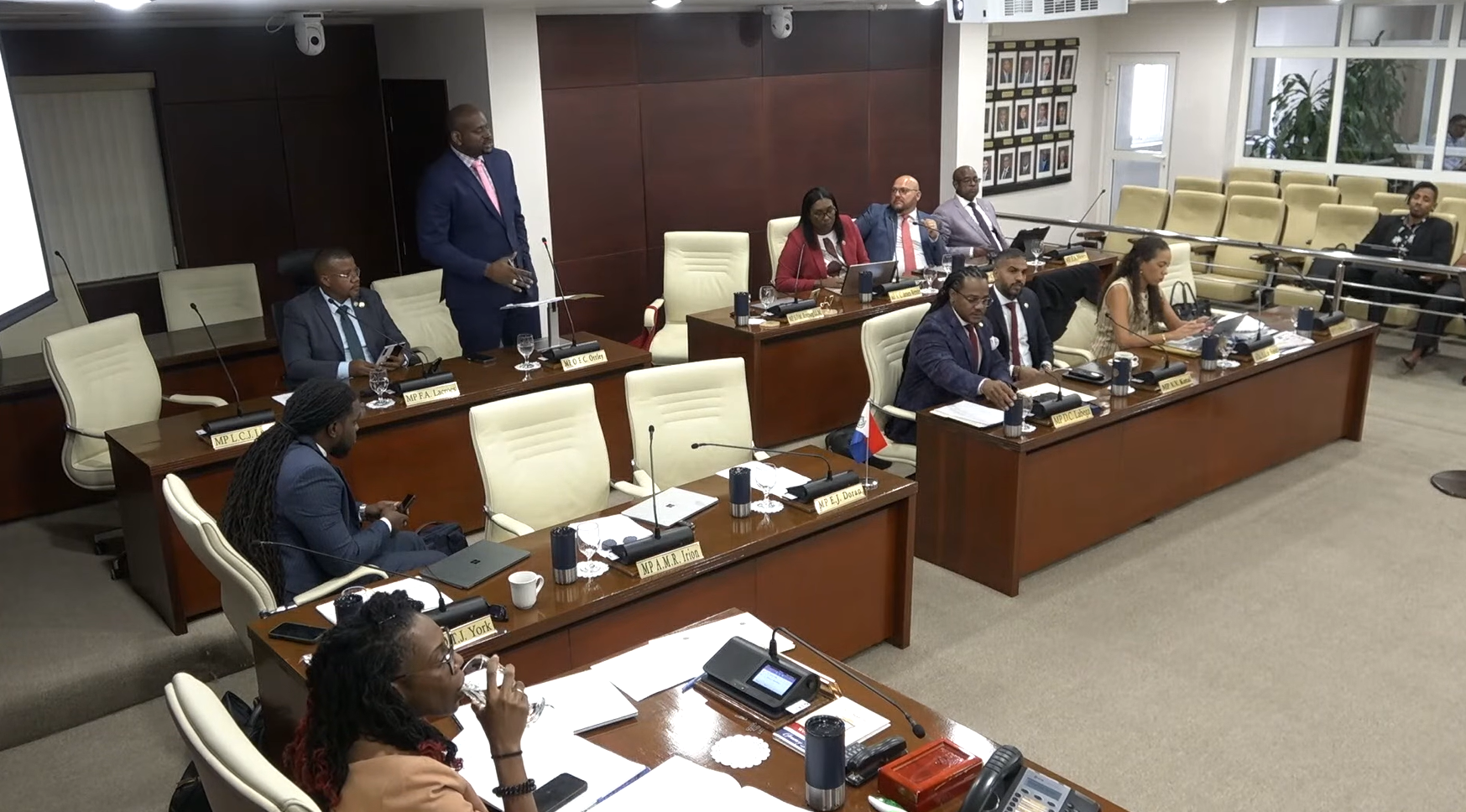
MP Omar Ottley was the first to put his finger on it. As Friday’s Budget 2026 debate unfolded, the usual coalition-versus-opposition lines began to look a little less clear. Ottley described what was happening as something closer to “country above coalition,” with coalition MPs openly questioning and, at times, sharply criticizing ministers they support. Some of those questions were the kind that, under normal political circumstances, one might expect a coalition MP to raise privately with a minister by phone or during an office visit. Instead, they were being asked publicly on the floor of Parliament.
Strip away the party colors, the occasional political jab and the grandstanding that comes with any budget debate, and MPs from very different sides kept returning to roughly the same concern: St. Maarten does not have a shortage of plans, studies or policy ideas. The growing concern is whether government is able to turn those plans into results at a pace residents can actually see and feel. That theme surfaced repeatedly, regardless of which MP had the floor or which ministry was being discussed.
The 2026 budget remains the formal matter before Parliament, with debate continuing next week. But eight months into the year, much of Friday sounded less like a discussion about what government wants to do and more like an examination of what it has actually managed to complete. The question hanging over government was no longer simply whether its intentions are good, but whether it can execute on them before another year slips by.
The Coalition-Opposition Divide Became Surprisingly Blurry
Opposition MPs criticizing government is nothing unusual, and nobody should interpret Friday as the coalition suddenly turning against the Council of Ministers. What made the debate interesting was how often MPs connected to the governing side raised concerns that sounded remarkably similar to those coming from the opposition benches. The political distance between the two sides did not disappear, but on the issue of government performance it narrowed enough to become one of the clearest features of the day.
Parliament President Sarah Wescot-Williams called for a government “course correction,” arguing that St. Maarten cannot keep doing things the same way and expect better results. MP Ludmila de Weever questioned whether government is putting too much time and energy into long-term plans while residents continue struggling with immediate problems. MP Sjamira Roseburg went beyond identifying the longstanding shortage of legislative lawyers and proposed moving unused funds to bring in the legal drafting capacity government says it needs.
Then opposition MP Egbert Doran put the wider frustration into perhaps its simplest form, arguing that in some areas government does not have a money problem, it has an execution problem. Different MPs reached that conclusion through different issues, but the destination was strikingly similar. For the Council of Ministers, the significance should be obvious: dissatisfaction with the pace of government is no longer coming only from the benches expected to criticize it.
article continues below...
Parliament Is Losing Patience With “We’re Working On It”
Another theme became increasingly difficult to miss as Friday wore on. Parliament appears to have far less patience for the familiar language governments use to demonstrate progress. A study is underway, a policy is being drafted, consultations are taking place, a committee is working, information has been requested or legislation is being prepared. None of those explanations are meaningless, but MPs increasingly appeared to view them as signs that an issue remains unresolved rather than proof that enough progress has been made.
That frustration was especially visible when MPs dealt with problems that have been on the national agenda for years. Traffic remains difficult, roads still need repair, GEBE bills continue to hurt households, important legislation is delayed, permits are backed up and reforms discussed across several budget cycles remain somewhere between preparation and implementation. When the same issues return year after year, the explanation that work is ongoing becomes less convincing to Parliament.
The political standard appears to be changing. It is becoming less important for government to explain what it is working on and more important to demonstrate what actually changed because it worked on it. That is a tougher standard, particularly for an administration dealing with staffing shortages, limited legislative capacity and an already crowded agenda, but eight months into a budget year MPs clearly believe it is a fair one.
Everything Eventually Comes Back to the Cost of Living
Nearly every major discussion on Friday eventually found its way back to household finances. GEBE was not discussed simply as a government-owned company facing operational and financial challenges, but as a bill landing in someone’s home every month. Tax reform was not treated only as an exercise in restructuring the country’s revenue system, but in terms of whether any eventual reform would actually leave ordinary people with more money in their pockets.
Roseburg’s proposal concerning the BBO, the Belasting op Bedrijfsomzetten or Turnover Tax, made that point clearly. She raised the possibility of adjusting the tax and expanding relief on essential goods, but paired that proposal with an equally important warning: reducing a tax means very little if the saving never reaches the supermarket shelf. Her call for stronger price monitoring reflected the broader mood of the debate, where MPs repeatedly measured government action by whether residents would actually feel the difference.
Doran gave perhaps the most striking example when he said someone he personally knows took out a 10,000 loan simply to settle a GEBE account. His argument was that when people considered middle class have to borrow money just to pay utility bills, the country risks pushing households into a deeper cycle of financial difficulty rather than helping them out of one. Whatever one thinks of the political rhetoric around GEBE, the example captured why broader economic statistics alone are unlikely to satisfy residents.
Government may point to economic growth, stronger revenues or major capital projects, and those things matter. But residents use a much more personal scoreboard when deciding whether life is getting better. They measure progress at the supermarket, when the GEBE bill arrives, when their vehicle hits another pothole, when they need health care and when they need government to process a permit, license or other service. If improvement at the national level never reaches that level of daily life, government will struggle to convince people that conditions are improving.
Lack of Capacity Is Still a Problem
Nobody seriously disputes that government has capacity problems. Ministries have vacancies, legislative lawyers are in short supply, technical expertise is limited in several areas and government is trying to manage a crowded agenda with fewer people than it needs. MPs did not dismiss those realities on Friday, but they appeared much less willing to accept lack of capacity as the end of the discussion.
The response increasingly seems to be that if capacity is the problem, government must explain what it is doing differently because of that problem. That could mean outsourcing certain work, recruiting specialists, adjusting compensation where necessary to attract qualified professionals, narrowing the number of priorities government is trying to tackle at once or moving money from areas where it remains unused to areas where it can produce results.
Roseburg’s proposal concerning legislative lawyers is a useful example because it attempts to turn the capacity complaint into a budgetary solution. Instead of simply repeating that Legal Affairs does not have enough drafters, she proposed identifying funds and using Parliament’s budget powers to address the shortage. That kind of intervention suggests MPs are becoming less interested in hearing why something cannot be done and more interested in what government intends to do around the obstacle.
This may become an important shift in parliamentary oversight. Lack of capacity can explain why something is difficult, but it becomes a weaker explanation when the same difficulty remains unresolved year after year. At some point, managing limited capacity becomes part of governing, and Friday suggested Parliament is increasingly prepared to judge government on how well it does exactly that.
article continues below...
MPs Are Starting to Move From Questions to Solutions
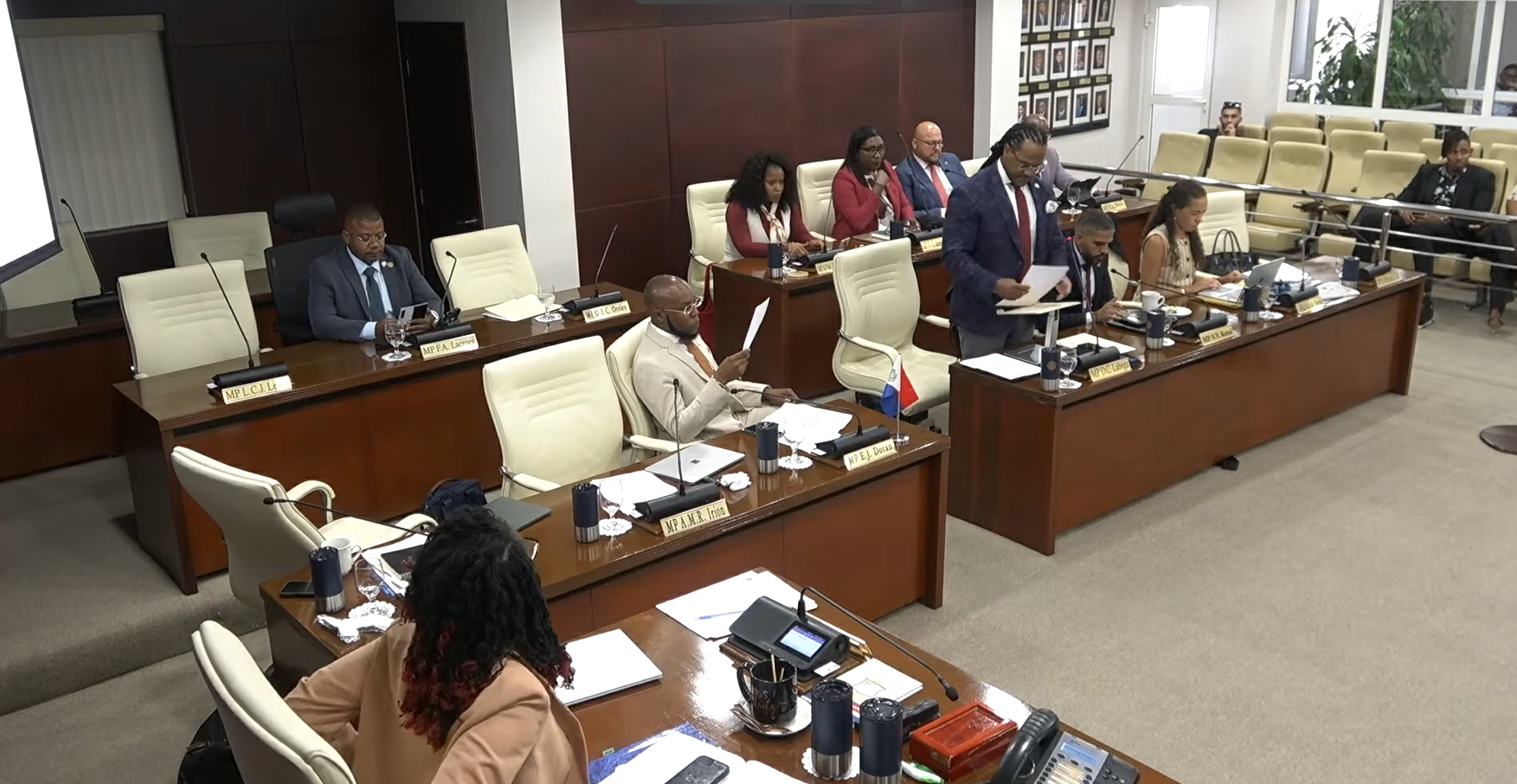
Another development worth watching is that some MPs appear increasingly willing to move beyond questioning ministers and start using Parliament’s own powers to force changes. The budget debate offered several examples of MPs proposing actual reallocations, amendments or legislative action instead of simply asking ministers when something would be done.
Roseburg proposed redirecting approximately XCG 230,000 toward legislative lawyers and raised possible amendments involving BBO exemptions and government service fees. Franklin Meyers said he wants part of Parliament’s travel allocation redirected toward work on the proposed Ryan Gumbs Law. Other MPs have floated dedicated funds, different fee structures, changes to price controls and legislation aimed at gaps they believe government has taken too long to address.
That matters because Parliament is not only a place where ministers appear to answer questions. MPs are legislators, they can amend the budget, bring initiative laws and use motions to push government in specific directions. Friday offered signs that some members may be more willing to use those powers when they believe asking ministers for updates is no longer producing enough movement.
For the Council of Ministers, that creates another political challenge. If MPs begin to believe that repeatedly asking “when?” only produces another version of “we’re working on it,” they may increasingly try to shape the solution themselves. That would make future budget debates about much more than approving the numbers government places before Parliament, and could gradually shift more policy initiative toward the legislature.
Just Five Out of 155
One of the more astounding revelations of the debate came through MP Viren Kotai’s questions about VROMI’s building permit backlog. Of 155 building permit applications received in 2026, only five had moved out of pending status when the figures were provided to Parliament. Put another way, approximately 97% of the applications submitted this year were still pending, an extraordinary figure for a process directly connected to construction, housing and private investment.
Kotai made an important distinction that should not be overlooked. Those five cases should not automatically be described as five permits granted because an application can leave pending status after being approved, denied, withdrawn or otherwise closed. The number of permits actually granted could therefore be five or even fewer. What the figures clearly establish is that only five of the 155 applications submitted this year had reached some form of conclusion.
The trend over previous years makes the situation more concerning. Roughly 33% of applications remained pending in 2022, rising to about 39% in 2023, 65% in 2024, 79% in 2025 and approximately 97% so far in 2026. That is not simply an administrative backlog. Behind those applications are homeowners, developers, contractors and businesses waiting for government to make a decision before they can move forward.
For an economy where construction and private investment play major roles, delays of that scale can have consequences far beyond VROMI’s offices. A permit sitting in a queue can mean a project sitting still, workers not being hired, financing remaining unused and investment being postponed. When MPs talk about government’s execution problem, the permit figures provide one of the clearest examples of what that problem can look like in practice.
The Awkward Reality of an August Budget
There was also no escaping the strange timing of the entire exercise. Parliament is debating the 2026 budget in August 2026, which gave much of Friday’s discussion an unusual quality. Ministers were still explaining plans and priorities for a year that is already more than halfway over, while MPs increasingly asked questions that sounded more appropriate for an execution review than the opening stages of a budget year.
By August, the nature of the conversation inevitably changes. Parliament is less interested in hearing what government hopes to start and more interested in knowing what has already been completed, what is actively underway and what is unlikely to happen before the year ends. Several lines of questioning reflected that frustration, particularly when ministers referred to processes still being drafted, studied or prepared.
That may ultimately be the most important takeaway from Friday’s proceedings. The debate revealed a Parliament that seems increasingly impatient with plans that never become projects, studies that never become decisions, legislation that remains in preparation and announcements that fail to produce visible relief for residents. Government still has political support, but support is not the same thing as unlimited patience.
St. Maarten clearly has ideas, plans, committees, proposals, policies and projects on paper. What MPs increasingly want to see is evidence that those ideas are turning into completed work, better services and measurable improvements in people’s lives. Friday suggested that the question of execution may become one of the defining political tests facing the government for the remainder of 2026.
And that was only day two.