

MP Peterson presumed innocent with a pending day in court, and “what if” conviction questions
.jpg)
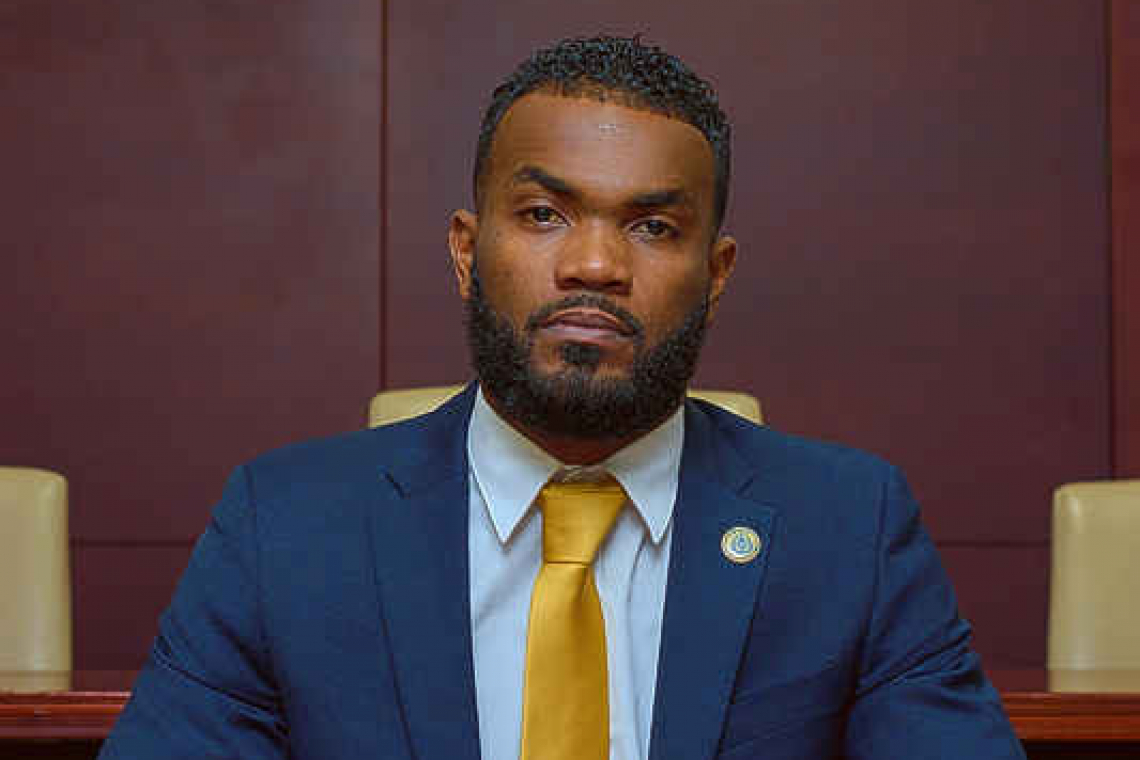
Member of Parliament Raeyhon Peterson of the Party for Progress, PFP, is due before the Court of First Instance on August 19 in a criminal case arising from a physical altercation that became the subject of a National Detectives investigation.
August 19 is a hearing date, not a date for a verdict. Peterson enters the proceedings presumed innocent, as required by St. Maarten’s Constitution. If he is acquitted and that decision is not successfully challenged, there is no conviction to trigger the constitutional rules governing suspension or removal of an MP. He continues serving in Parliament.
If he is convicted, however, the situation becomes more complicated. Even then, a guilty verdict does not automatically mean Peterson immediately loses his seat.
The National Detectives announced in June 2025 that they were investigating a video circulating online showing an individual believed to be a St. Maarten MP and others involved in a physical altercation. The investigation began in April 2025. Local reporting later said the court authorized Peterson’s prosecution, and his August 19 appearance has been reported in connection with allegations of public violence and assault.
The exact charges before the court, the legal provisions applied, any sentence imposed and whether there is an appeal will all matter. All of that, and what we are about to get into, will all be moot if MP Peterson prevails.
PFP may stand with Peterson through the process
The public should probably expect PFP to stand with Peterson while the judicial process remains active, unless the party decides otherwise. If he is convicted and chooses to appeal, that process would continue beyond the proceedings in the Court of First Instance. Party support, however, is a political matter. It cannot determine whether Peterson remains active as an MP.
That question is governed principally by Article 50 of the Constitution. St. Maarten has unfortunately dealt with this before. The case of former MP Claudius “Toontje” Buncamper demonstrated an important distinction that is sometimes lost in public discussion: suspension from Parliament and permanent loss of a parliamentary seat are not the same thing.
Not every conviction removes an MP
Article 50 does not say that every MP convicted of a criminal offence loses his or her seat.
Permanent loss of membership occurs automatically only when a qualifying conviction becomes irrevocable, meaning final. One route involves a prison sentence of at least one year for an offence for which the law allows the court to deprive the person of electoral rights. Article 50 also separately identifies a number of offences and covers certain offences connected to abuse of public office.
Suspension can happen earlier. If a court imposes a custodial sentence for one of the qualifying Article 50 offences, the MP is automatically suspended, even though the judgment may still be appealed. The Constitution also provides for suspension when an MP is held in pre-trial detention for one of those qualifying offences.
That means an appeal does not necessarily allow an MP to keep sitting. If Article 50 applies, suspension can take effect while the judicial process continues.
Do Peterson’s reported charges trigger Article 50?
This is where particular caution is needed. The case has been publicly described as involving public violence and assault. Public violence is covered by Article 2:82 of the Criminal Code, while assault offences fall under Title XX.
On the face of those ordinary provisions, a conviction does not appear automatically to fit the Article 50 route involving deprivation of electoral rights. The Criminal Code identifies the electoral right separately as the right to vote for representative bodies or be elected to them. For assault offences, the Code specifies certain rights that may be taken away following conviction, but the electoral right is not among them. Public violence under Article 2:82 is also not among the offences specifically listed in Article 50 of the Constitution.
It would therefore be premature to state that a conviction on the publicly reported allegations automatically removes or suspends Peterson.
The actual indictment, the precise offence on which any conviction is based and the sentence imposed would have to be compared with Article 50. If Peterson is convicted but Article 50 is not triggered, he does not automatically lose his parliamentary seat simply because a conviction exists.
The Buncamper precedent
Buncamper’s case shows what happens when Article 50 does apply. Buncamper was sentenced in December 2021 to 32 months’ imprisonment in the Ruby case and was suspended from Parliament while pursuing his appeal. Chanel Brownbill was subsequently brought in to serve in his place.
The lesson from that case is not that every convicted MP is suspended. It is that a qualifying conviction can remove an MP from active parliamentary duties before the conviction becomes final.
If Peterson’s place has to be filled
PFP currently has two MPs, Peterson and Ludmila de Weever. If Peterson were suspended under Article 50, the Constitution provides for someone to serve in his place. If a qualifying conviction eventually became final, Peterson would lose his membership and would be replaced.
The Electoral Ordinance ranks candidates on the same party list according to the personal votes they received. When a place has to be filled, the Central Voting Bureau moves to the highest eligible candidate on that list.
The August 19, 2024 election results are therefore important. De Weever received 690 votes and is already an MP. Melissa Gumbs received 348, Peterson 310, Patrice Gumbs 225, Solange Duncan 88 and Luciano Nicholls 71.
Melissa Gumbs is consequently the highest-ranked PFP candidate not currently in Parliament. She is currently Minister of Education, Culture, Youth and Sport.
For this scenario, assuming she intends to remain ECYS Minister, she would not take the parliamentary seat. Being a minister does not automatically remove her from consideration. She would either have to decline if declared elected or already have a written declaration on file with the Central Voting Bureau stating that she does not wish to be considered. The Electoral Ordinance specifically provides for such candidates to be passed over.
Once she is passed over, Patrice Gumbs becomes next in line.
Patrice Gumbs would have a choice
He is currently VROMI Minister. He could decline the parliamentary seat and remain minister, allowing the succession process to continue.
He could also accept the seat.
The Constitution allows a minister who is elected to Parliament to combine both positions for a maximum of three months after being admitted as an MP. If Gumbs chose Parliament permanently, he could therefore enter Parliament and leave VROMI within that period. PFP and its coalition partners would then have to find a replacement candidate for VROMI, although ministers are formally appointed by national decree.
If he chooses to remain VROMI Minister and declines the seat, Solange Duncan is next with 88 votes.
If Duncan declines, Luciano Nicholls follows with 71 votes. Nicholls currently serves as VROMI Chief of Staff. Article 51 of the Constitution bars an MP from simultaneously serving as an active civil servant, so his precise employment status would have to be addressed if the succession reaches him.
August 19, therefore, is not the day on which Peterson’s parliamentary future is automatically decided. It is the next stage in a criminal case.
An acquittal means there is no conviction-based Article 50 consequence. A conviction requires examination of the exact offence and sentence. An appeal can extend the judicial process. Suspension depends on whether Article 50 applies, while permanent loss of the seat requires a qualifying conviction to become final.
Only after those questions are answered does the PFP succession chain become decisive.
Politics
Internally, the PFP will likely have had, or will soon have, serious discussions about its future in the event Peterson is convicted. The coalition of which the PFP forms part will also have to determine its position, whether publicly or behind closed doors. Beyond that, much will depend on what happens next.