

UNODC: The Caribbean locks up people at more than twice the global rate
.jpg)
The Caribbean is locking up people at more than twice the global rate, placing the region among the highest-incarcerating subregions in the world. According to the United Nations Office on Drugs and Crime, about 329 people per 100,000 population were imprisoned in the Caribbean in 2024, compared with a global rate of 143. That alone should force a serious question across the region: if Caribbean societies are relying so heavily on prison, what are they getting in return?
The answer becomes even more uncomfortable when the report's other findings are considered. Nearly four in every 10 prisoners in the Caribbean were being held without a sentence, while overcrowding remains a widespread problem and rehabilitation is still uneven across many prison systems. For St. Maarten, where the prison debate often centres on Point Blanche, capacity and security, the UN report suggests that the bigger issue is not simply how many people can be locked up, but what happens to them while they are there and what condition they are in when they return to society.
Prison Cannot Be the Only Answer
The United Nations Office on Drugs and Crime, UNODC, says countries should look beyond imprisonment itself and make greater use of non-custodial measures in appropriate cases, particularly where alternatives could reduce reoffending while avoiding the social and financial costs of incarceration.
The report also warns against excessive reliance on pre-trial detention, a practice that contributes heavily to overcrowding and places people who have not yet been convicted inside prison systems that are already under strain.
That argument is especially relevant for the Caribbean, where the figures on pre-trial detention are difficult to ignore.
Approximately 39 per cent of prisoners in the Caribbean were unsentenced in the latest data presented by UNODC. In practical terms, nearly four out of every 10 people being held in Caribbean prisons had not yet received a first-instance decision determining guilt or innocence. Globally, the proportion stood at about 31 per cent. Among women imprisoned in the Caribbean, the proportion awaiting sentence was approximately 41 per cent. (The report does not break that roughly 39 per cent Caribbean pre-trial detention figure down far enough to show how much is attributable to the Dutch Caribbean.)
Pre-trial detention is not supposed to amount to punishment before conviction. UNODC stresses that it should generally be used where there is an established risk that an accused person may flee, commit another offence or interfere with the course of justice. Yet the agency says excessive use or excessive duration of pre-trial detention remains a problem in many countries and can undermine access to justice, particularly for poorer defendants who lack legal assistance and the resources necessary to prepare a defence.
Point Blanche Is Only Part of the Discussion
For St. Maarten, the report provides an opportunity to broaden a prison discussion that often begins and ends with the physical institution at Point Blanche. Cells matter. Security matters. Staffing matters. But the UN report essentially asks countries to consider whether a prison system should be measured only by its ability to keep people behind walls, or also by what happens to those people while they are there and what condition they are in when they return to society.
That is especially relevant in a small community. Prisoners do not disappear. Most will eventually complete their sentences and return to neighbourhoods, families and workplaces. A system that releases someone with the same problems, limited prospects and broken social connections that existed before incarceration may have succeeded at confinement without accomplishing much else.
UNODC's Prison Matters 2026 examines prison populations, overcrowding, pre-trial detention, staffing, deaths in custody and rehabilitation around the world. Its central theme this year is the role communities can play in preparing prisoners for reintegration. The report draws on the United Nations Survey of Crime Trends and Operations of Criminal Justice Systems, national sources and additional research conducted by UNODC.
article continues below...
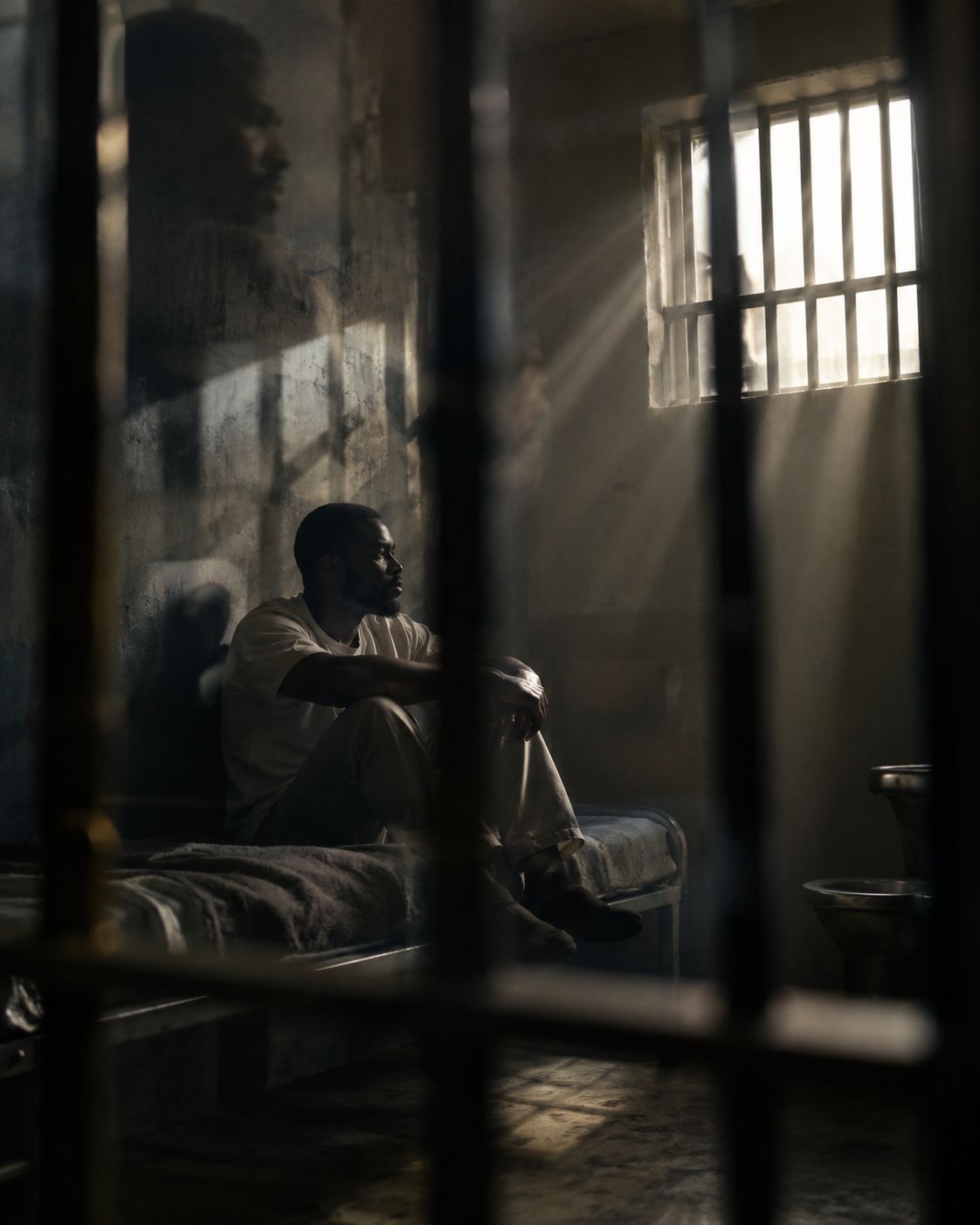
The World Is Still Locking Up Millions
The numbers show just how large the global prison system has become. An estimated 11.6 million people were incarcerated worldwide at the end of 2024, an increase of 4.9 per cent compared with a decade earlier. Nearly 11 million were men, accounting for almost 93 per cent of the prison population, while approximately 771,000 were women.
Of those 11.6 million people, about 3.6 million were being held in pre-trial detention. UNODC lists that as one of the principal findings of the report.
The Caribbean stands out for another reason. Its imprisonment rate is substantially higher than the global average. UNODC estimated that 143 people per 100,000 population were imprisoned worldwide in 2024. For the Caribbean, the figure was approximately 329 per 100,000.
Northern America was higher at 486, but the Caribbean nevertheless sits among the subregions with the world's highest rates of imprisonment. UNODC specifically identifies Northern America, the Caribbean, South America and Central America as subregions where incarceration exceeded 200 people per 100,000 population.
This does not mean every Caribbean country has the same prison policy, crime profile or justice system. The report also does not separately identify St. Maarten, Curaçao, Aruba, Bonaire, Saba or St. Eustatius in its country-level analysis. The Netherlands appears only in a separate comparison of prison and general homicide rates.
The Caribbean statistics are therefore best understood as a regional warning rather than a direct measurement of conditions at Point Blanche.
What Is the Region Getting in Return?
Still, the regional picture raises uncomfortable questions. If Caribbean societies incarcerate people at more than twice the global rate, what are they getting in return?
Are offenders emerging less likely to commit another crime? Are prisoners receiving education, skills training, counselling and preparation for release? Are minor offenders being incarcerated when another sanction might be more effective? And are people being held before trial longer than is truly necessary? Those questions become even more urgent when overcrowding enters the picture.
Across the 183 countries for which UNODC had prison-capacity information, roughly two-thirds were operating above their intended capacity. More than one-quarter were operating at above 150 per cent of capacity.
The UN does not describe overcrowding simply as a matter of too many people sharing too little space. It says overcrowding affects nutrition, sanitation, healthcare, infectious disease, violence, mental health, security, access to activities and the ability of prison authorities to provide meaningful rehabilitation.
That creates a cycle which governments can struggle to break. More prisoners place greater pressure on facilities and staff. Overcrowding then reduces opportunities for rehabilitation. Prisoners eventually return to society with fewer tools to rebuild their lives, increasing the possibility that some will return to crime and ultimately to prison.
Alternatives to Prison
UNODC argues that one part of the solution lies outside prison walls.
For certain offences and offenders, the report says non-custodial measures can be more effective at reducing reoffending because rehabilitation can take place within the community. Alternatives can also be less expensive than imprisonment, allowing government resources to be used for social, health and welfare services.
UNODC is not suggesting that serious or dangerous offenders should simply be released. Its argument is that imprisonment should be used where imprisonment is necessary, rather than becoming the automatic answer to every offence.
That is important for any Caribbean society dealing with public anger over crime. Calls for tougher punishment are easy to understand, particularly where victims and communities feel unsafe. But punishment and effective criminal justice are not always the same thing.
If an alternative sanction can hold someone accountable while reducing the likelihood that the person commits another offence, the question becomes whether prison is always the smartest tool available.
Rehabilitation Cannot Start at the Prison Gate
The report's second major argument is that rehabilitation should involve the community long before a prisoner is released.
It examined how community organisations, faith-based groups, education and training providers, legal-aid organisations, former prisoners and other actors can work inside prison systems. Of 46 jurisdictions surveyed, 33 had explicitly included community participation in national penal or criminal justice strategies.
Respondents reported benefits in prisoner wellbeing, education, skills development, preparation for release and reintegration. Improvements were also reported in prison environments and relationships between prison staff and prisoners.
Yet only 24 of the 46 jurisdictions surveyed said they systematically monitored the impact of these activities, suggesting that even countries that embrace rehabilitation do not always measure whether it works.
What Community Involvement Can Look Like
The report's Kenyan case study shows what community involvement can look like in practice.
Civil-society organisations provide legal assistance, education, psychosocial support and other services inside prisons. Prison paralegals help detainees understand court procedures, seek bond reductions, explore dispute resolution and prepare appeals. Community groups also provide basic supplies, books and access to technology.
That model cannot simply be copied and dropped into every Caribbean jurisdiction. UNODC itself acknowledges that systems differ and that governments ultimately carry responsibility for delivering prison services on a scale that voluntary organisations cannot sustain alone. But the principle is important.
A prison system does not become rehabilitative simply because a government uses the word rehabilitation. It requires programs, trained personnel, access to education and mental-health support, legal assistance where needed, connections with employers and community organisations, and structured preparation for the day a prisoner walks through the gate.