

How NSI is rebuilding sports and strengthening communities in St. Maarten

For National Sports Institute (NSI) Director Jisk Goslinga, the future of sports in St. Maarten is about much more than producing talented athletes, winning championships or constructing modern facilities. It is about creating a society where physical activity becomes part of everyday life, where children find opportunities for personal development and where communities take greater responsibility for the spaces built for them.
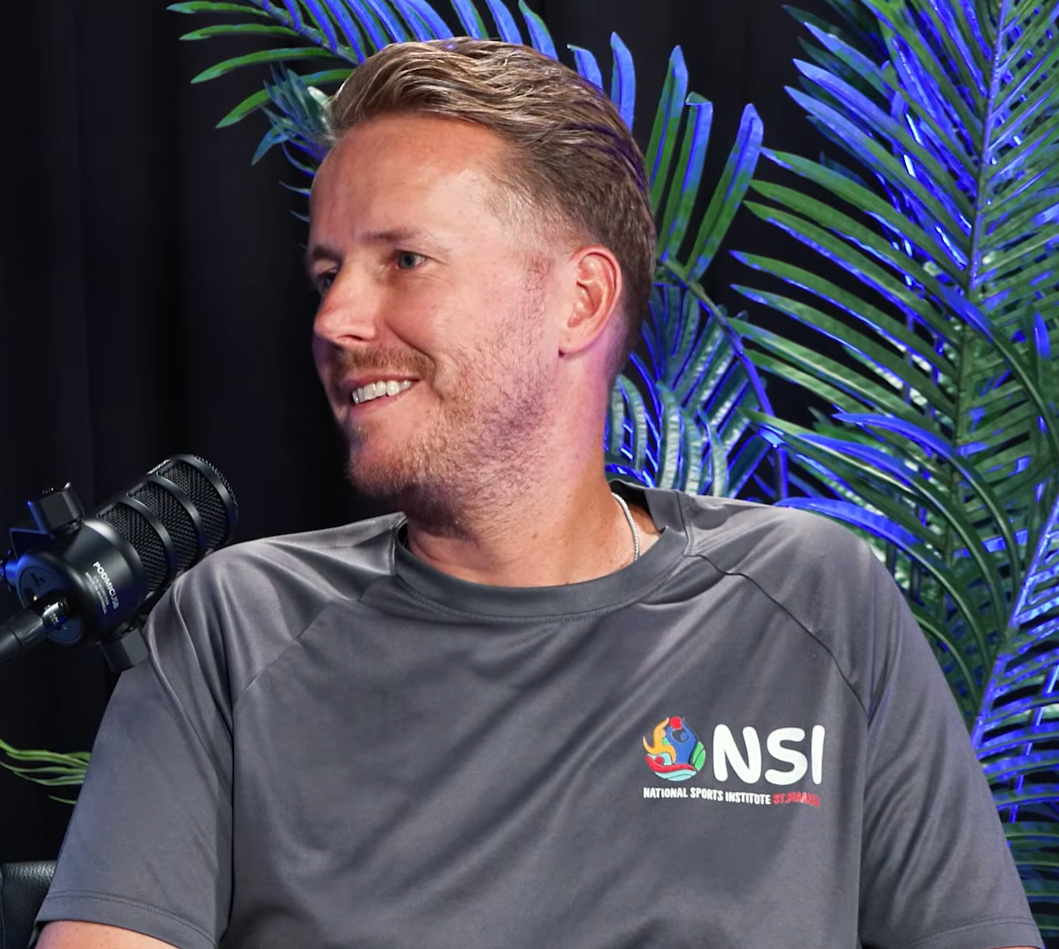
In an interview on Know Your Sports, St. Martin, Goslinga offered a comprehensive look at the work being undertaken by NSI, the financial challenges behind upgrading sports infrastructure and a broader vision that places community development at the center of the country's sporting future. His message was that rebuilding facilities is only one part of the assignment, while the greater challenge is ensuring those investments translate into lasting opportunities for the population.

Rebuilding what was lost
NSI, a government-subsidized foundation responsible for managing public sports facilities and supporting community programs, oversees approximately 70,000 square meters of sporting infrastructure. Its responsibilities include the Raoul Illidge Sports Complex, the sports auditorium, Melford Hazel Sports Complex, José Lake Ballpark, Belvedere Sports Park and the Boardwalk Sports Park, along with district courts in communities such as Cay Bay, Cole Bay, Simpson Bay, Dutch Quarter and St. Peters.
The scale of that responsibility is significant, particularly for an organization operating within the financial limitations of a small country. Goslinga explained that much of NSI's attention in recent years has been directed toward repairing facilities damaged by hurricanes and bringing infrastructure closer to international sporting standards, requiring substantial planning, funding and coordination.
The organization adopted a three-year strategic approach that prioritized rebuilding and renovation, temporarily placing less emphasis on expanding community programs. The reasoning was practical, since opportunities for organized sports remain limited without suitable facilities, and NSI needed to address the condition of existing infrastructure before placing greater emphasis on participation.
Goslinga described infrastructure as the hardware of sports development, while community programs represent the software that makes those facilities meaningful. He expressed hope that, as major repairs are completed, NSI will be able to devote considerably more attention to programming, participation and initiatives that bring sports directly into communities.
The reality of limited funding
Perhaps the most revealing part of the interview concerned the financial decisions behind sports development, particularly the compromises required when ambitions exceed available resources. Renovating facilities to international standards can require substantial investments, and Goslinga acknowledged that NSI does not always have the funding necessary to achieve the ideal outcome.
Major projects, including improvements to the athletics track and football field, were made possible through government's capital investment funding, while other improvements have depended on cooperation with private companies. Goslinga highlighted Windward Islands Bank's contribution to the playground at Raoul Illidge Sports Complex and the port's financing of new lighting infrastructure at the sports auditorium as examples of how corporate support has helped advance projects.
Private sector involvement has become increasingly important, with Goslinga explaining that some companies now approach NSI directly to participate in projects. Nevertheless, funding shortages continue to force difficult decisions about priorities, materials and the standards that can realistically be achieved within available budgets.
Using improvements to a baseball and softball infield as an example, Goslinga explained that purchasing specialized materials could cost approximately US $200,000, while the organization might have only $10,000 available. Under those circumstances, NSI must explore alternatives that may fall short of international standards but still allow improvements to be made rather than leaving facilities unattended.
His comments illustrate the difficult balance between sporting ambitions and financial reality, particularly when St. Maarten wants facilities capable of supporting competitive athletes and hosting higher-level events. Achieving and maintaining those standards requires consistent investment rather than occasional funding, especially when facilities must also remain accessible to the wider community.

Protecting the investment
Goslinga also raised concerns about vandalism and the treatment of public sports facilities, explaining that upgrading infrastructure is only worthwhile if the improvements can be properly maintained. This has led NSI to introduce stricter regulations governing the use of certain facilities, including footwear requirements for the athletics track and indoor courts, to prevent unnecessary damage.
The challenge becomes more complicated at facilities that remain freely accessible to the public, where supervision and enforcement are not always possible. Goslinga described the satisfaction of seeing children enjoying a newly installed multi-court, but also the frustration of witnessing youngsters climbing on basketball equipment and fencing without understanding the costs involved in obtaining and installing those structures.
His concern is not about discouraging children from using public facilities, but about developing a stronger sense of community ownership and responsibility. Without that understanding, resources that could finance additional programs or improvements may instead be repeatedly spent repairing damage that could have been avoided.
Sports as a tool for social development
Beyond infrastructure, Goslinga's vision places considerable importance on the social benefits of sports, which he believes should not be measured exclusively through competitive results or international achievements. Instead, the objective should be to create an active society, beginning with young children and extending through adulthood and senior citizenship, where physical activity contributes to healthier lifestyles and stronger communities.
For Goslinga, that means children having access to playgrounds, adults maintaining active lifestyles and elderly residents participating in organized physical activities that encourage movement and social interaction. He believes broader participation can contribute to improved public health while helping address social challenges, particularly among young people who benefit from structured activities and positive guidance.
One initiative reflecting that philosophy is Sports Unite, developed in cooperation with the St. Maarten Sports Federation to support the personal and social development of children, particularly those from vulnerable communities. The program offers activities including basketball, boxing, netball, tennis and athletics, providing opportunities for youngsters who might otherwise face financial or social barriers to participation.
However, the emphasis extends beyond teaching sporting techniques, with coaches receiving specific training to help children develop accountability, respect, teamwork and other important life skills. The program seeks to provide structure and guidance to youngsters who might otherwise spend considerable time without organized activities or positive supervision, while offering participation free of charge to remove an additional obstacle for families.
The underlying philosophy is that lessons learned through sports can influence how young people approach school, family responsibilities and relationships within their communities. By combining physical activity with personal development, NSI aims to demonstrate that sports can contribute to social progress rather than serving only as a recreational activity.
Building leaders, not just athletes
Another initiative highlighted during the interview was the Cruyff Court Heroes project, which trains young participants to organize their own community sporting events rather than concentrating exclusively on athletic performance. With guidance from coaches, youngsters learn how to prepare budgets, create promotional materials, communicate with organizations and coordinate activities, gaining practical experience in leadership and responsibility.
Goslinga explained that the coach's role is primarily to guide the process while allowing the youngsters to make decisions and carry out the work themselves. The approach recognizes that sports development also requires future coaches, administrators, volunteers and community leaders who understand the responsibilities involved in organizing activities.
He pointed to the St. Peters Ballers basketball program as another example of how structured sporting activities can positively influence young lives. According to Goslinga, feedback from the initiative indicates improvements in the personal development of participating children, including youngsters who previously lacked structure or were moving toward negative influences.
Goslinga acknowledged that not every child experiences the same outcome, but emphasized the importance of providing constructive activities, guidance and something positive to anticipate. NSI's community involvement also extends to senior citizens through exercise and swimming activities, along with organized walking sessions supported by Pro Physio, reflecting the organization's commitment to encouraging participation across different age groups.
A different future for sports
Among the accomplishments Goslinga highlighted was the renovation of the sports auditorium, a building that some believed should be demolished entirely because of its deteriorated condition. Instead, NSI's maintenance team worked alongside contractors to improve the facility while controlling costs, demonstrating that restoring existing infrastructure can sometimes be more practical than replacing it.
Goslinga acknowledged that St. Maarten may eventually need an additional sports auditorium, but questioned whether that should automatically require demolishing the existing building. His assessment points to a larger issue confronting sports development: how to expand opportunities without abandoning infrastructure that can still serve the public through proper maintenance and targeted investment.
Ongoing National Recovery Program Bureau projects, improvements to district courts and schools, and plans for additional sporting facilities offer further opportunities to strengthen the country's sporting infrastructure. However, Goslinga's interview suggests that the success of these investments will ultimately depend on how effectively facilities are managed, maintained and used to create opportunities for residents.
Modern facilities are important, but their value is determined by what happens inside them, who has access and whether they contribute to healthier and stronger communities. For NSI, the next stage of sports development will therefore be as much about people as infrastructure, with greater emphasis on participation, personal development and the role sports can play in improving everyday life.
The real measure of success may not be how many new courts, fields or sporting venues St. Maarten develops, but how many lives are improved because those facilities exist.
