

Focus: Angelique Remy wants St. Maarten to talk honestly about money
.jpg)
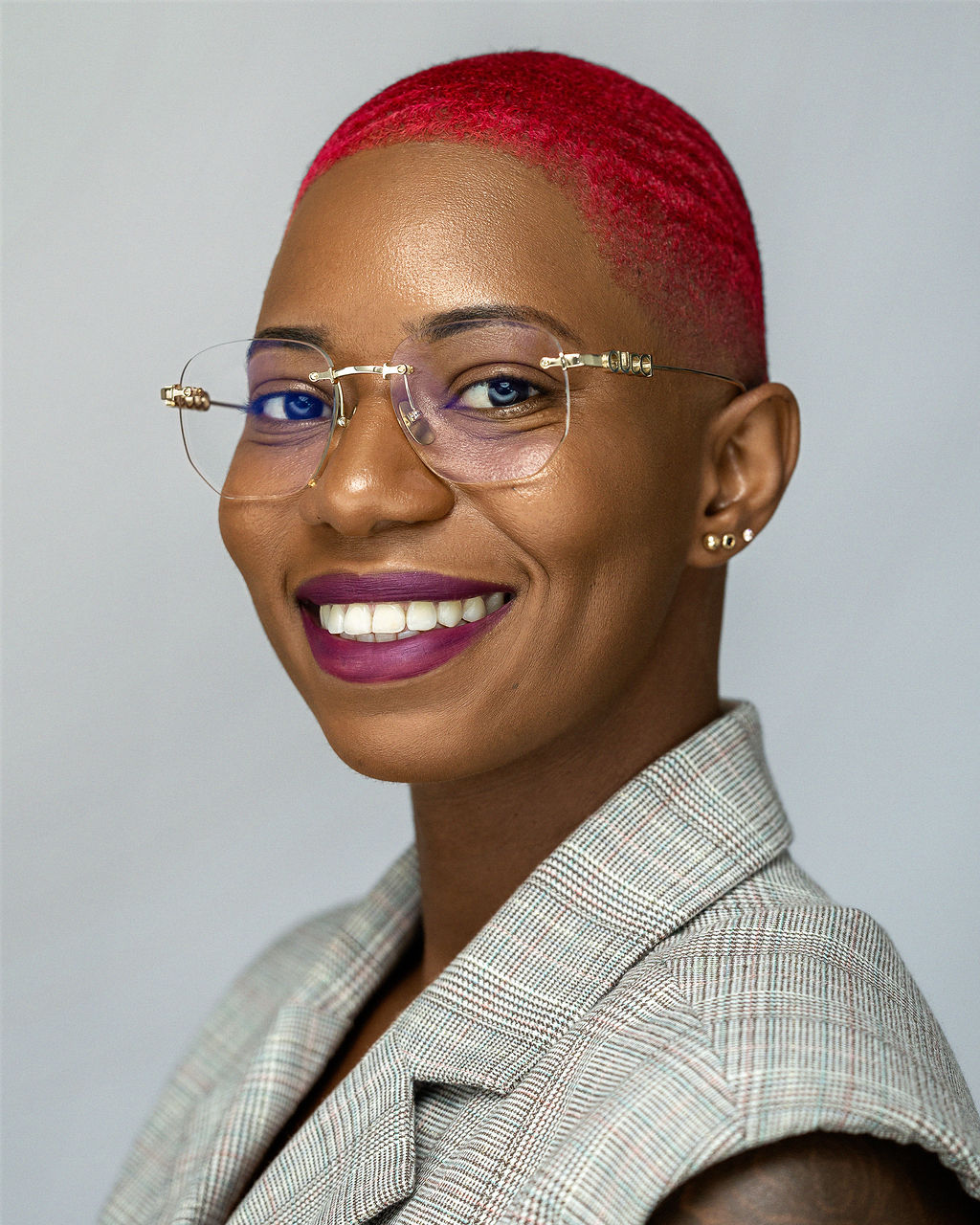
Angelique Remy understands the distance between knowing finance professionally and knowing how to manage it personally. She graduated with a degree in finance, entered the corporate world and still found herself facing consumer debt, multiple monthly obligations and the quiet anxiety that comes with watching a salary disappear in several directions.
That experience did not weaken her credibility. It shaped it. Through Financial.ish, Angelique is building the kind of financial education she believes Caribbean people have long been missing, practical guidance rooted in the realities of St. Maarten, where imported advice often fails to account for seasonal income, high living costs, limited financial products, family obligations and an economy exposed to forces far beyond the control of the average household.
Angelique’s earliest lesson about money did not come from a textbook, classroom or financial institution. It came from her grandfather, a man the family affectionately called “Mr. Cheapskate.”
He paid cash, avoided unnecessary spending and, as far as Angelique can remember, never owed anyone. His advice was repeated across generations of the family: if you make one dollar, save fifty cents. “Money in my home was loud about principles and quiet about the numbers,” Angelique recalled.
Her first job also came from her grandfather. He owned an Oldsmobile that he washed using water and kerosene, and Angelique negotiated a deal to clean it for fifty cents. Before allowing her to begin, he trained her to do the job properly.
The price was not insignificant to the young Angelique. Fifty cents was exactly what a pack of rainbow bubble gum cost at the neighbourhood shop. She understood, in a direct and practical way, what her labour could purchase.
She later expanded the small car-washing venture to other relatives and increased her rate to five dollars. At that point, the calculation changed. Five dollars could buy something immediately, or it could be saved and moved closer to the price of a pair of sneakers.
Although the family discussed discipline, saving and responsibility, Angelique said the actual numbers remained private. She did not know what the adults earned, how much they saved or what the family’s vacations and household expenses cost. Money was discussed through principles, jokes and coded language rather than open conversations about income, debt and financial planning.
“I learned the values without ever seeing the arithmetic,” she said.
Finance was always in the room
Finance remained present throughout Angelique’s childhood, even before she recognised it as a possible profession. Her mother worked in finance, while her parents operated a car rental business. Angelique helped with administrative duties, filed contracts and washed vehicles. She was not formally taught how the business worked, but she absorbed lessons by watching the adults around her.
She also saw the independence that entrepreneurship could provide. “I watched what being your own boss made possible, the freedom in it, and I understood early on that money was the thing standing behind that freedom,” she said.
Angelique attended Jack and Jill Preschool in Point Blanche, M. Genevieve de Weever Primary School and Sundial School, where she entered the business administration stream.
In 2007, she left St. Maarten for the Netherlands to study International Hotel Management at ROC Mondriaan, graduating in 2011. Her interest in hospitality did not compete with her interest in finance. For Angelique, the two were always connected.
A restaurant may begin with food, service and creativity, but its survival depends on money. Understanding how to open the doors was one challenge. Understanding how to keep them open was another.
In 2016, she graduated from The Hague University with a bachelor’s degree in international financial management and control. She later became a Certified Financial Education Instructor in 2025 and completed a master’s degree in Public Financial Management in July 2026.
Her education gave her the ability to understand companies, budgets and large financial systems. Her personal life, however, exposed a gap in what she had been taught.
A finance graduate in debt
Shortly after completing her finance degree, Angelique sat down and added up her own obligations. The result was uncomfortable: she had graduated with financial qualifications and personal debt at the same time.
The debt did not come from a single crisis. It was ordinary consumer debt, accumulated through credit cards, an overdraft on her student account, furniture financing and student allowances that were later reassessed and had to be repaid. Money she had treated as income turned out to be a loan.
The anxiety was not dramatic, but it was persistent. After receiving her first permanent job, Angelique grew tired of watching her salary divided among numerous payments each month. She knew what she owed and had kept the obligations organised, but the number of separate debts made the situation feel heavier than it was.
“If somebody had sat me down and said, Angelique, a credit limit is not a spending target, I would have listened,” she said.
Angelique eventually consolidated approximately 17,000 euros into one loan and repaid it within two years, faster than originally planned after starting her business and increasing her income.
The experience taught her that the total amount of debt is not always what makes it feel impossible. The confusion surrounding it can be equally damaging.
“Twelve obligations in twelve directions felt unbeatable; the same amount in one line was something I could fight,” she said.
Angelique describes herself as process-oriented. Her first response to a difficult situation is to examine why it has become complicated and how it can be made clearer. “People think I love spreadsheets. I actually love clarity,” she said.
Her financial recovery also raised a larger question. If someone with a finance degree could enter adulthood without understanding essential parts of personal money management, how many other young people were beginning their adult lives in the same position? Corporate finance, she concluded, teaches people how companies survive. Financial literacy teaches people how individuals and families survive.
Those are not the same lesson.
Why Financial.ish?
The name Financial.ish is partly inspired by the television series Black-ish.
Angelique was working with a business coach when she began discussing the need for financial education that reflected Caribbean people, their experiences and the financial systems available to them. Much of the advice she encountered was produced for European or North American audiences. The principles were often useful, but the examples, products and instructions did not always apply to St. Maarten.
Financial.ish became her way of signalling that the conversation would be rooted in the realities of the people she wanted to serve. The name also carries a second, more playful meaning. Money is often treated as something intimidating, shameful or too complicated to discuss openly. Angelique wanted a name that reduced some of that fear and allowed people to get into the “financial ish” affecting their lives.
Her concern is not that mainstream financial advice is always wrong. The problem is that much of it was not written with the Caribbean in mind. American financial education, for example, frequently recommends maximising contributions to a 401(k), taking advantage of employer matching and allowing retirement savings to grow through compounding.
That advice may be sound for someone with access to the system. For a person in St. Maarten, it may provide no practical step to take. “Somebody reads a whole chapter, follows every word, and reaches the end with nothing they can actually do on Monday morning,” Angelique explained.
Advice about using low-cost credit to purchase income-producing property can also become dangerous when imported without context. Borrowers in St. Maarten may have fewer lenders, less negotiating power and different consumer protections than borrowers in larger markets.
The strategy may reach the Caribbean without the safeguards that made it manageable elsewhere. Investment advice presents another difficulty. People are often told to make their money grow before they have been taught how money moves, how interest works or how to stabilise their finances. Even standard recommendations, such as moving savings into a high-yield account or maintaining three to six months of expenses, require adjustment.
Comparable high-yield savings products may be limited, while income in a tourism-based economy may fluctuate throughout the year. A household in St. Maarten must also consider hurricane preparedness, which Angelique believes should be treated separately from a general emergency fund.
Advice designed for St. Maarten must recognise high import costs, family support as a genuine household expense and the continued importance of cash in the local economy. “Financial advice isn’t universal,” Angelique said. “The principles travel. The instructions don’t.”
When the household budget is not the whole story
Angelique’s work now moves between personal finance and public financial systems.
Her master’s studies in Public Financial Management helped her connect household struggles to macroeconomics, government policy, energy production, taxation and access to banking.
A family may have two working adults, avoid unnecessary spending and follow a budget carefully, yet still end each month with less financial security.
St. Maarten’s dependence on tourism means that many residents work in sectors where income can change with the season. Traditional budgeting advice often assumes 12 equal months of earnings, even when workers do not receive income in that pattern.
Banking access also affects household stability. People unable to qualify for conventional credit may have limited options when a vehicle breaks down, a medical expense arises or an appliance must be replaced. Some are forced toward informal or high-cost lending.
Electricity is another example of a household expense driven partly by forces beyond the household. St. Maarten’s electricity generation depends heavily on fossil fuel, making production costs vulnerable to changes in global energy markets. Older generating equipment can require more fuel to produce the same amount of power, adding another layer to the cost.
Families do not control global oil prices, generating capacity or national energy policy, but those factors appear on their monthly bills. Angelique compares the situation to a ceiling. A household controls how it uses the space underneath, but it does not determine the height.
Discipline remains important, and Angelique continues to teach it. What she rejects is the belief that every financial struggle can be explained by poor individual choices. “Pretending it is the whole story is how we end up blaming people for arithmetic they didn’t write,” she said.
Taxation, trust and who carries the burden
Angelique has also used her public work to examine taxation and unrecorded economic activity. In her piece “Who Counts the Cash?”, she questioned the impact of transactions and businesses that operate outside formal reporting systems.
When income and commercial activity go unrecorded, compliant businesses and salaried workers may be left carrying a larger share of the burden. Angelique understands why many residents distrust government’s ability to manage public funds. She does not believe that trust can be created through speeches about civic responsibility.
Residents must see public money reflected in cleaner communities, reliable services and fair enforcement. They must also see that politically connected people, large industries and businesses operating outside the rules are held accountable. “You can’t ask a wage earner to carry the load willingly while others walk past the collector untouched,” she said.
While researching the issue, Angelique went into communities and documented economic activity neighbourhood by neighbourhood, including small supermarkets and other businesses that may be overlooked in official discussions. The exercise allowed her to move beyond assumptions and examine how much activity existed outside the most visible parts of the economy.
She believes government must first demonstrate fairness by enforcing compliance across the board, addressing corruption and closing gaps in tax collection. Residents also need to understand that avoiding taxes does not eliminate the government’s need for revenue. The money will eventually be recovered through a heavier burden on compliant taxpayers, increased borrowing or reduced public services.
“The person avoiding what they owe isn’t beating the government,” Angelique said. “The government still needs the same money. It just comes from you.” She also places part of the responsibility on voters. Electing people to manage public resources requires more than supporting familiar personalities or political organisations.
Citizens must consider whether candidates have the competence to perform the work expected of them. “The citizens put people in place, which means we hold more power over this than we act like we do,” she said.
Psychology before spreadsheets
Although Angelique is a trained finance professional, her work with individuals often begins with behaviour rather than calculations. One of the most common and costly behaviours she encounters is avoidance. She worked with a person who refused to open bills or read emails about outstanding balances. The person believed avoiding the information would reduce the fear, sadness and anxiety connected to the debt.
Instead, the bills continued to accumulate while the emotional burden remained. The first step was not creating a budget. It was opening the envelopes. “The first thing that changed wasn’t a budget. It was courage,” Angelique said. The next step was a monthly review using a simple sheet showing what was owed and what income was expected. The purpose was to replace guessing with a clear picture.
After several months, the client began opening bills independently and completing the financial review without assistance. The person also started reconsidering career options after recognising that the existing income would not be enough to reach the desired financial goals. Angelique does not believe everyone can solve financial difficulty by cutting expenses.
Some people have unnecessary spending that can be reduced. Others may need additional training, a new career path or another source of income. For some households, there is simply nothing meaningful left to cut. She prefers to say that plainly rather than offer advice that sounds encouraging but cannot work.
Financial improvement also does not have to feel like constant punishment. For Angelique, the goal is not restriction for its own sake. It is clarity. Uncertainty, ignored bills and incomplete information often make financial fear worse. Seeing the numbers may not immediately change them, but it can reduce the anxiety created by not knowing. “That’s why I say psychology before spreadsheets,” she said.
Keeping the door open
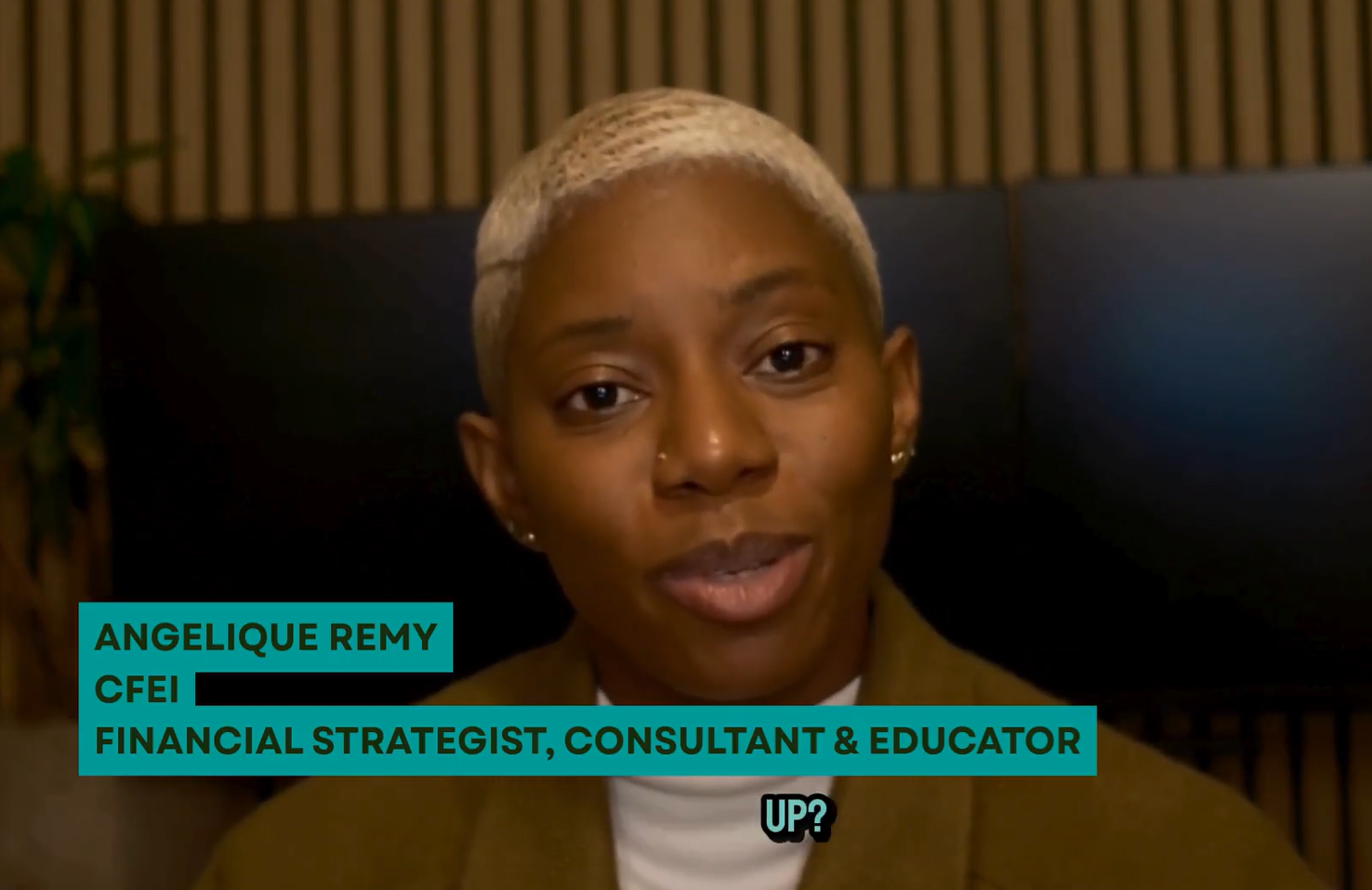
Angelique could have limited her work to companies, boardrooms and private clients. She continues to work professionally in those environments, but Financial.ish exists because many of the people who need financial education will never be able to hire a consultant. Mainstream financial education is often either culturally disconnected or placed behind a price that makes it inaccessible.
Angelique’s free videos and public content are intended to keep the door open. Paid coaching, courses and financial tools remain part of the business, but she does not want payment to be the only way people can receive useful information.
The free material focuses on practical questions: how credit cards work, what debt really costs, why a budget based on equal monthly income may fail in St. Maarten, what someone should do when already behind and how national financial decisions connect to a household bank account.
These are the lessons Angelique needed as a young graduate and had to learn through experience. She also views financial education as a form of nation-building. People do not stop making decisions because accurate information is unavailable. They make decisions based on whatever information reaches them, including misleading claims from people who sound confident.
Residents who understand financial systems are better able to evaluate advice, recognise manipulation and make informed decisions in their homes, businesses and communities. Angelique regularly meets people in St. Maarten and the Netherlands who recognise her from her videos. The recognition matters less to her than the conversations that follow.
Strangers often share personal financial struggles they have not discussed with relatives or friends. Those conversations show her where the gaps remain. They also remind her that her own experience was not unusual. “Everything I struggled through became something my people could use,” she said.
Building something that lasts
Over the next five years, Angelique wants Financial.ish to become a trusted source of financial education for St. Maarten people, whether they live at home or abroad. She intends to develop the work carefully before expanding into the wider Dutch Caribbean.
The current foundation consists of free educational content, workshops and individual coaching. A new platform is also being developed, with courses, tools and printed materials. Angelique does not want the project to depend entirely on screens, laptops or reliable internet access. Different people learn in different ways, and the delivery must reflect that.
Bringing financial education into schools is another ambition, but she is not interested in making occasional guest appearances that disappear when the presentation ends. Her preferred model would train teachers and place the knowledge permanently within schools. “The version that lasts is the one that stays in the building, whether I am there or not,” she said.
Angelique also believes St. Maarten needs a nationally representative study measuring the population’s current level of financial literacy. Without a clear baseline, it is difficult to determine whether public education initiatives are improving financial knowledge or changing behaviour.
Before building solutions, she said, the country must understand where people are starting. For Angelique, financial literacy is not limited to saving, budgeting or debt. It affects how people operate businesses, evaluate government decisions, plan for emergencies and choose political leaders. “People who understand money make better decisions in their homes, businesses and at the ballot box,” she said. “That’s the five-year goal. Everything else is delivery.”