

Ebola’s New Warning: Why health authorities are racing to contain a rare strain before it spreads further

The latest Ebola outbreak has moved from a local health emergency to a global warning.
What began with a suspected case in the Democratic Republic of the Congo in late April has grown into one of the largest Ebola outbreaks ever recorded. Health authorities are now investigating possible cases outside Africa, raising concern that the rare Bundibugyo strain of the virus may have crossed continents through international travel.
The situation remains under investigation, but the concern is serious enough to have triggered a major international response. The World Health Organization has declared the outbreak a Public Health Emergency of International Concern, while vaccine developers and health agencies are moving quickly to strengthen surveillance, speed up detection and prevent wider spread.
At the center of the outbreak is the Bundibugyo strain of Ebola, a rare form of the virus that has been responsible for only a small number of previous outbreaks. Most Ebola outbreaks have involved the Zaire strain, which is more widely known and has been linked to higher fatality rates. Bundibugyo is considered less deadly than Zaire, but it remains dangerous, capable of causing severe illness, death and disruption to already strained health systems.
Ebola is not a virus that spreads casually through the air like influenza or COVID-19. It is transmitted mainly through direct contact with the bodily fluids of an infected person, including blood, vomit, feces and other secretions. That means close caregiving, unsafe burial practices, inadequate protective equipment and delayed diagnosis can become major drivers of transmission.
Early symptoms can resemble many other illnesses. A person may first develop fever, fatigue, headache, body pain or sore throat. Those symptoms can easily be confused with other infections, especially in areas where malaria, typhoid, respiratory illnesses and other diseases are common. In more severe cases, Ebola can lead to vomiting, diarrhea, abdominal pain, rash, breathing difficulty, seizures and bleeding.
That early confusion is part of what makes the current outbreak so difficult to contain.
By the time an outbreak is formally recognized, the virus may already have moved through families, health facilities and communities. In this case, experts believe the virus may have been circulating for weeks or months before the alarm was fully raised. That is one of the most worrying features of the outbreak. It means authorities are not only trying to stop known chains of transmission, but also trying to find hidden ones.
article continues below...
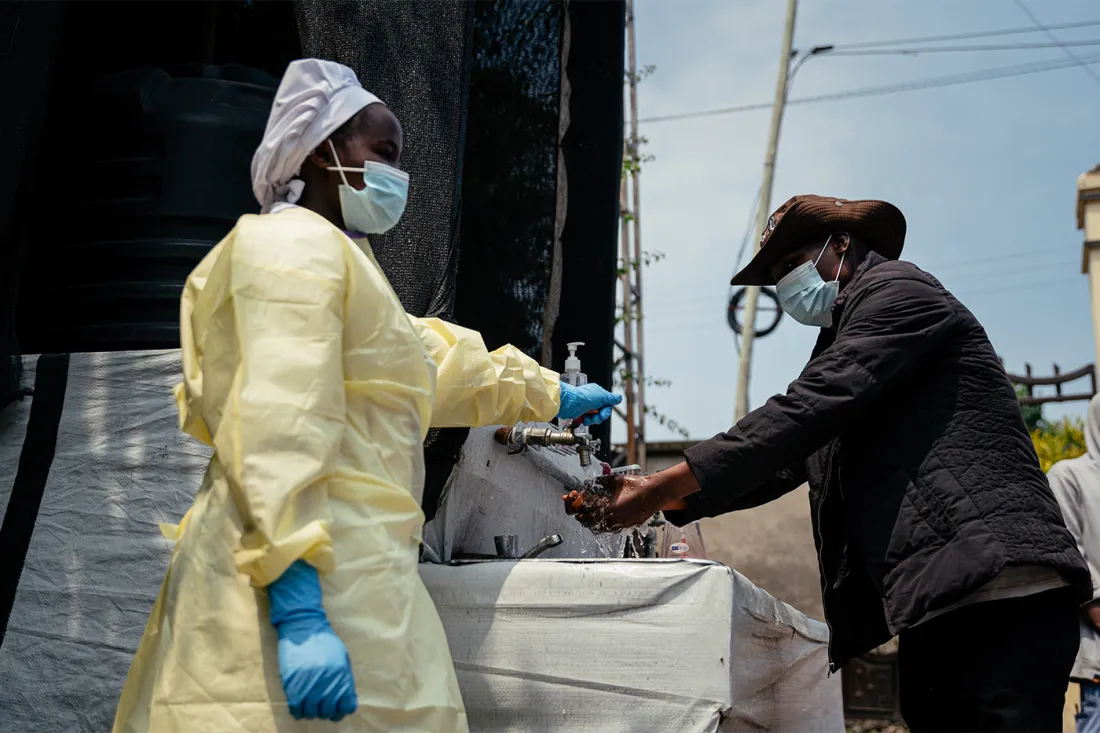
The Democratic Republic of the Congo has long experience with Ebola. The country has faced repeated outbreaks since the virus was first identified in humans in 1976. But experience does not make containment easy. Some of the affected areas are dealing with insecurity, population movement, limited health infrastructure and community mistrust. These conditions can slow contact tracing, delay testing and make it harder for health teams to reach patients safely.
The outbreak has also been linked to Uganda, and possible cases are being investigated in other countries. Health authorities have reportedly been looking into a suspected case in Italy and two possible cases in Brazil, involving travelers who had returned from either the DRC or Uganda. An American man who tested positive for Ebola has also been treated in Germany.
These cases do not automatically mean widespread international transmission. Ebola outbreaks can be contained, and they often are, when cases are identified quickly, isolated properly and followed by aggressive contact tracing. But even suspected international spread changes the level of urgency. It reminds the world that infectious diseases do not respect borders, especially when travel connects outbreak zones with cities thousands of miles away.
That is why the response now has two fronts.
The first is inside the affected African countries, where health teams must identify patients, isolate cases, trace contacts, improve testing, support safe burials and build public trust. The second is international, where countries must be prepared to identify imported cases quickly and prevent hospitals or communities from becoming sites of further transmission.
The tools are familiar, but they require discipline.
Contact tracing remains one of the most important parts of Ebola control. When someone tests positive, health workers must identify every person who may have been exposed, then monitor them for symptoms. This is difficult work even in stable settings. It becomes far more complicated where people are displaced, where roads are poor, where communities distrust authorities or where health workers face threats.
Safe burial practices are another critical part of the response. Ebola can remain highly infectious after death, and traditional burial rituals that involve washing or touching the body can increase transmission. This has been a painful issue in past outbreaks because burial practices are tied to grief, family, faith and dignity. Public health teams must therefore work with communities, not against them, to create safe practices that still respect local customs as much as possible.
Hospitals and clinics are also central to containment. If health facilities are not prepared, they can unintentionally amplify the outbreak. A patient with early symptoms may arrive seeking care for what appears to be malaria or another common illness. Without proper screening, isolation and protective equipment, health workers and other patients may be exposed.
This is why infection prevention and control measures are so important. Health workers need training, supplies and clear protocols. Patients need rapid testing. Suspected cases need to be separated safely while results are confirmed. Communities need accurate information about when and where to seek care.
article continues below...

The challenge with the Bundibugyo strain is that the medical countermeasures are more limited than they are for some other forms of Ebola. Vaccines and treatments have been developed for the Zaire strain, especially after the devastating West African outbreak of 2014 to 2016, which killed more than 11,000 people. But those tools do not automatically apply to Bundibugyo.
That is why the Coalition for Epidemic Preparedness Innovations has committed major funding to accelerate the development of vaccine candidates targeting the Bundibugyo strain. The move reflects a broader lesson from recent global health crises: waiting until a disease spreads widely before investing in vaccines can cost lives.
But vaccine development takes time. Even with emergency funding and scientific urgency, authorities cannot rely on vaccines alone to stop this outbreak in the immediate term. The near-term response still depends heavily on surveillance, testing, isolation, contact tracing, protective equipment, safe burials, clinical care and community cooperation.
Public trust may prove as important as any medical tool.
Ebola outbreaks often create fear. Fear can lead people to hide symptoms, avoid clinics, reject health workers or spread rumors. In some communities, outside intervention may be viewed with suspicion, especially if people have experienced conflict, poor governance or neglect. Public health messages must therefore be clear, honest and locally grounded. Communities are more likely to cooperate when they understand what is happening, when they trust the messengers and when response teams respect local realities.
The global concern is not that Ebola will suddenly behave like a respiratory pandemic. It does not spread that way. The concern is that delayed detection, weak health systems, travel, misinformation and gaps in response could allow the outbreak to grow larger and harder to control.
History shows both the danger and the solution.
The West African Ebola epidemic demonstrated what happens when early warning systems fail and the world responds too slowly. But it also showed that Ebola can be brought under control through coordinated action, community engagement, better surveillance, international support and determined frontline work.
The current outbreak is another test of whether those lessons have been learned.
For African health authorities, the response is not only about stopping one outbreak. It is also about strengthening long-term health security. Surveillance systems, laboratories, trained personnel, emergency coordination and local manufacturing capacity are not luxuries. They are the foundation of outbreak control. Every delayed test, every missed contact and every unsafe burial can give the virus more room to move.
For countries outside Africa, the lesson is preparedness. Airports, hospitals and public health agencies must know how to respond if a suspected case arrives. Clinicians must ask the right travel questions. Laboratories must be ready. Isolation systems must work. The public must receive accurate information without panic.
The possible cases beyond Africa should not lead to fear, but they should lead to seriousness.
Ebola is dangerous, but it is not unstoppable. The world knows how to contain it when the response is fast, organized and trusted. The problem comes when the virus is given time, when communities are left uncertain, when health systems are overwhelmed and when global attention arrives late.
The current outbreak is a reminder that infectious disease threats are no longer distant events. A virus detected in one region can become a concern for health authorities around the world within days. That does not mean every outbreak will become a global crisis, but it does mean every outbreak must be treated with urgency.
Health authorities are now racing to close the gaps: finding cases, tracing contacts, monitoring travelers, preparing hospitals, funding vaccine research and working with communities to stop transmission at its source.
The outcome will depend on speed, trust and coordination.
Ebola has issued another warning. The question is whether the world responds quickly enough to contain it.
Source credit: Based on reporting and analysis by Abrar Chughtai, Holly Seale and Md Saiful Islam, originally published by The Conversation.