

Cuba was there for the Caribbean, the Caribbean has abandoned Cuba
.jpg)
HAVANA--When hurricanes tear off roofs, when hospitals run short, when a new virus hits a small island and the ICU is already full, the Caribbean has learned to call on help that arrives fast, quietly, and without a press conference. For decades, that help has often worn a Cuban white coat.
Cuban doctors have treated our people, staffed our wards, and filled gaps that many of our systems could not fill on their own, whether after disasters or during slow-burning shortages. By June 2020, more than 600 Cuban health care professionals were working across the Caribbean in support of COVID-19 response efforts, according to a Pan American Health Organization report.
Now Cuba is the one in visible distress, and the region’s public voice has been hesitant, fragmented, and, in many capitals, cautious to the point of silence. That speaks volumes because Cuba’s crisis is rotting in the open air.
Contnies below..
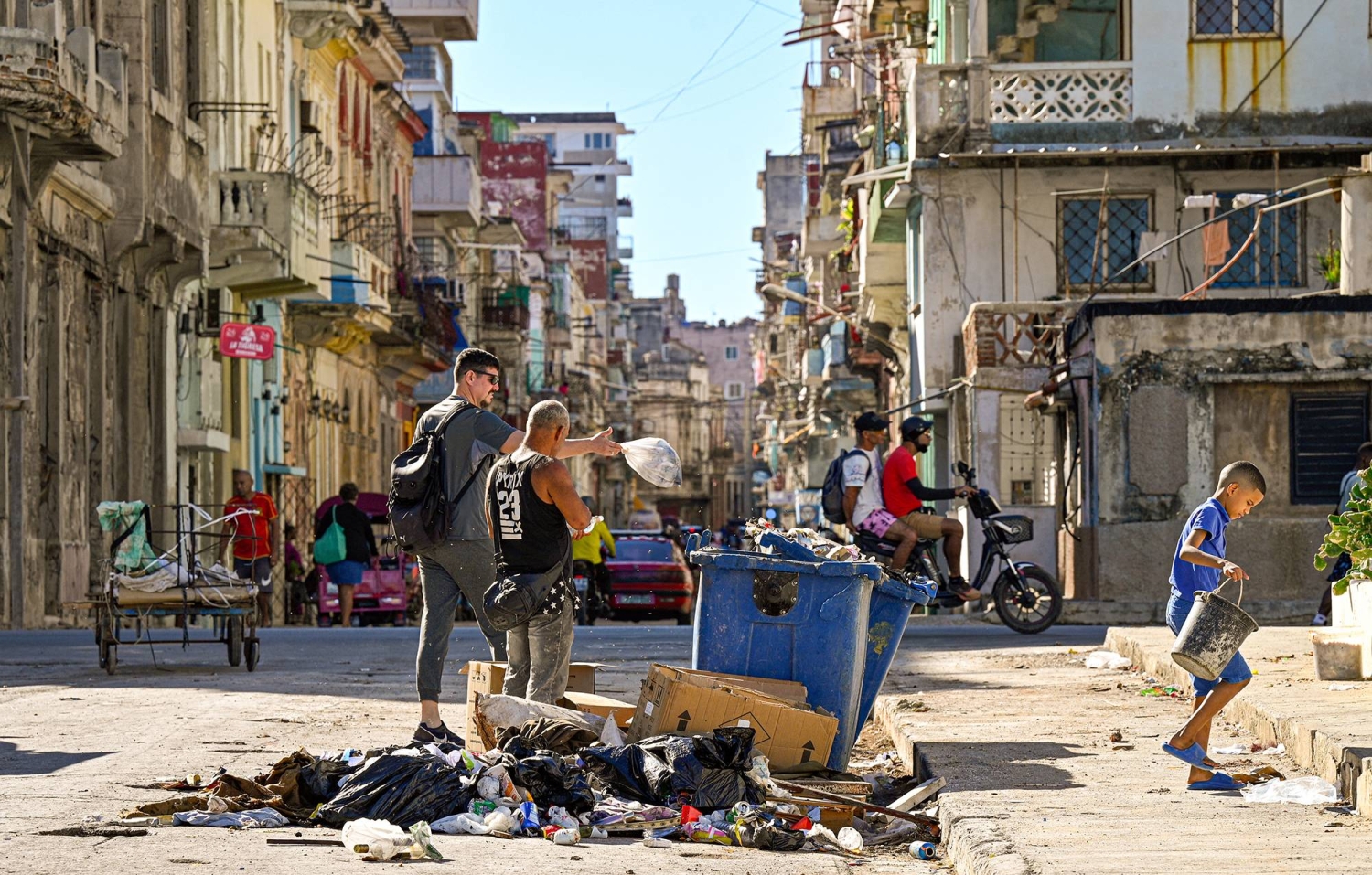
The Cuba people are seeing right now
Life in Havana is starting to look like the kind of breakdown that islands usually associate with war zones, not neighbors. Rubbish is piling up on street corners because sanitation trucks do not have fuel, with state media reporting that only 44 of Havana’s 106 garbage trucks are operating.
The trash is not just an eyesore, it is a public health warning sign, and it sits on top of a deeper collapse in basic services. Cuba’s fuel shortages are feeding blackouts, strangling transport, and disrupting food supply and essential services, including water and sanitation systems and hospitals, according to reporting tied to recent United Nations warnings.
This is not a “hard times” story anymore, it is a “systems failing at once” story.
The new squeeze: a fuel blockade by tariff threat
Cuba’s crisis this month is being sharpened by a very specific tool: U.S. pressure aimed at cutting off oil imports by threatening punishment on third countries that send fuel. A January 29, 2026 White House executive order authorizes tariffs tied to oil shipments to Cuba.
In practice, that tariff threat has had an immediate chilling effect, because even countries that might want to help have to calculate what U.S. retaliation could do to their exports, financing, and broader diplomatic relationships. Recent reporting shows oil flows tightening and governments openly weighing reprisal risk. Mexico’s president, Claudia Sheinbaum, has said Mexico’s oil shipments to Cuba are currently halted while her government seeks to support Cuba without triggering reprisals from Washington.
Cuba can argue, with some justification, that Washington is using extraterritorial pressure, and Office of the UN High Commissioner for Human Rights notes that the fuel blockade threatens essential services and raises serious international law concerns.
From the Cuban street-level view, the politics are not theoretical. If there is no fuel, there is no collection, no transport, and no normal commerce. That is how a “policy” turns into garbage and darkness.
The uncomfortable truth: Cuba’s own system helped build this fragility
Any honest Caribbean commentary has to hold two truths at once.
Cuba’s history of communism and long isolation has come with hard edges: centralized control, political repression, limited civic freedom, and an economy that has struggled to reform quickly enough to protect ordinary people from scarcity. Those realities are not inventions of Washington, and they have driven frustration and migration for years.
At the same time, Cuba’s political system does not erase Cuba’s record of regional solidarity. In Caribbean hospitals, that solidarity has had names, shifts, and bedside manner. The Henry Reeve International Medical Brigade was created for disaster and epidemic response, and Cuban medical teams have repeatedly deployed across the region, including during COVID-19 and after major shocks.
Caribbean people are not wrong to remember who showed up, and they are not wrong to ask why that memory is not shaping today’s diplomacy.
Contnies below..

Why so many Caribbean governments are not speaking loudly
Regional leaders are not ignorant. The quiet is not because they do not see what is happening, it is because the region is living under overlapping vulnerabilities that make confrontation with Washington feel dangerous.
1) Economic exposure to U.S. pressure is real.
Many Caribbean economies are deeply services-based and tourism-dependent, with tourism representing a large share of GDP for many states. That dependence creates caution because diplomatic conflict can quickly become travel advisories, investment hesitation, and reputational damage.
2) Remittances and financial channels are a pressure point.
Remittances remain a major lifeline across Latin America and the Caribbean, and shifts in U.S. policy can raise costs, choke channels, or trigger bank “de-risking” behavior.
3) Washington has already been signaling, “We are watching who cooperates with Cuba.”
The U.S. expanded visa restriction policies tied to Cuba’s overseas labor and medical programs in 2025, framing Cuban medical deployments as “forced labor,” and Reuters reported visa actions affecting officials beyond Cuba, including Caribbean-linked cases.
Even if Caribbean governments reject that framing, the message is still received: alignment with Cuba can come with personal and political consequences.
4) The tariff mechanism is designed to scare third parties, not just Cuba.
This is the point of extraterritorial pressure. It makes every potential helper do the math, and the smaller you are, the more frightening the math becomes.
So yes, many Caribbean governments are choosing caution, and some are likely calculating that staying quiet buys safety for their own people. That logic is understandable, but it is also how solidarity dies: one reasonable calculation at a time.
Even the small cracks in silence show what’s missing
It is telling that some of the strongest recent statements have come from former leaders, not always from sitting governments. Former Caribbean Community heads have urged repeal of the January 29 executive order and described the fuel squeeze as “economic warfare,” warning of humanitarian destruction.
That matters, but it also highlights the gap. When former leaders are the loudest voices, it raises a blunt question: where is the united regional front from those currently holding power?
Contnies below..

What solidarity could look like without pretending Cuba is perfect
The Caribbean does not have to romanticize Cuba to act like a region with a spine. A principled approach can acknowledge Cuba’s political shortcomings while still rejecting collective punishment that lands on civilians.
Solidarity could be practical and calibrated, including:
• A unified CARICOM-level humanitarian stance centered on civilians, health systems, water, sanitation, and food distribution.
• Regional support for humanitarian corridors routed through trusted institutions, including faith-based and relief partners already operating on the island.
• Clear messaging that the Caribbean rejects extraterritorial coercion as a tool used against any small state, because today it is Cuba, tomorrow it can be anyone.
If Caribbean governments can speak firmly when their own sovereignty is threatened, then they can find language to speak when a neighbor’s basic services are being choked into failure.
The moral debt is not symbolic, it is human
Cuba’s medical diplomacy has never been purely charity. It has always mixed humanitarianism, geopolitics, and economics. Still, ask Caribbean families who sat beside a Cuban nurse during COVID-19, or who watched Cuban clinicians fill hospital rosters when staffing was thin, and they will not talk about ideology first. They will talk about care.
That is why this moment feels like abandonment. The Caribbean benefited from Cuba’s willingness to show up, even with Cuba’s flaws, and now the region is hesitating while Cuba’s streets fill with garbage and its lights flicker under a policy designed to squeeze.
History will remember who spoke, who acted, and who stayed quiet because the powerful looked unpredictable.