

Caribbean Oil Dreams Return: what opportunities Jamaica and Barbados may be sitting on

Across the Caribbean, oil has always carried the promise of transformation. For small island economies that import most of their fuel, depend heavily on tourism, and remain vulnerable to external shocks, the possibility of offshore petroleum can sound like a national turning point. It raises visions of lower energy costs, new industries, public revenue, stronger foreign reserves, and a different place in the regional economy.
That is why recent developments in Jamaica and Barbados deserve attention.
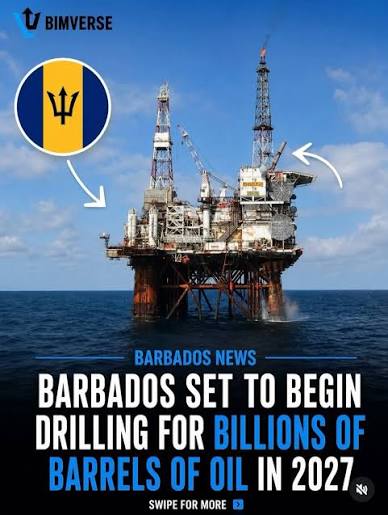
Both countries are now being discussed in connection with large offshore petroleum potential. Jamaica’s story centers on the Walton-Morant licence, an offshore area south and southeast of the island that has been the focus of renewed exploration interest. Barbados’ story has moved quickly into regional headlines after government officials opened a new offshore licensing process and spoke publicly about seismic indications pointing to potentially large oil and gas resources beneath the island’s waters.
The numbers being reported are large enough to attract attention. Jamaica’s Walton-Morant area has been described by the licence holder, United Oil & Gas, as containing more than 7 billion barrels of unrisked prospective resources. Barbados officials have spoken of the possibility of more than 13 billion barrels of oil in place and more than 40 trillion cubic feet of natural gas.
The key word is “potential.” Neither Jamaica nor Barbados has announced a commercial offshore oil discovery. Neither has moved into offshore production. The public reporting points to exploration prospects, seismic interpretation, geochemical signals, licensing activity, investor outreach, and government positioning. It does not yet point to proven reserves that can be booked, financed, developed and produced.
Still, the possibility alone is significant. It places Jamaica and Barbados within a broader Caribbean energy conversation that has changed dramatically because of Guyana. Less than a decade ago, Guyana was not treated as a global oil power. Today, its offshore discoveries have reshaped its economy, drawn major international companies to the region, and forced Caribbean governments to look again at their own offshore geology.
Guyana’s success does not mean every Caribbean country is sitting on a Stabroek-style oil province. It does mean that exploration risk in the wider region is being looked at differently. Areas once considered too uncertain, too costly, or too frontier may now receive a second look, especially if companies see encouraging data, improved technology, favorable licensing terms, and governments willing to structure partnerships.
For Jamaica, the story is not new. The country has searched for oil and gas for decades, both onshore and offshore, without establishing a commercial industry. The difference now is that United Oil & Gas has been advancing technical work on the Walton-Morant licence and has reported evidence it says strengthens the case for an active petroleum system.
The recent 2026 update was important because it involved seabed geochemical work. Piston core samples collected from the seabed were analyzed, and the company reported the identification of C4 and C5 hydrocarbons, including butanes and pentanes, in select samples. According to the company, these types of hydrocarbons are not typically associated with purely biogenic gas systems and are therefore consistent with a possible thermogenic contribution.
In simple terms, the company is saying the samples may point to hydrocarbons generated from deeper source rocks, the kind of process associated with oil and gas systems.
That does not prove there is a commercial field offshore Jamaica. But it does add another layer of evidence to what United Oil & Gas has described as a wider case, including satellite slick anomalies, oil seeps, geochemical information from earlier wells, outcrops, seismic data and petroleum systems modeling.
The company’s public material also emphasizes that the Walton-Morant licence benefits from 3D seismic data and multiple identified prospects and leads. It has framed the area as a high-impact frontier opportunity, the kind of acreage where one successful well could change the national conversation.
But the next step is the expensive one. Exploration drilling offshore can cost tens of millions of dollars per well. Frontier drilling is risky, even when the data looks promising. A company must decide where to drill, raise or secure the funding, satisfy regulatory and environmental requirements, and then accept the reality that the well may still fail.
That is why Jamaica’s search for a partner is central to the story. United Oil & Gas has been pursuing farm-out discussions, meaning it is seeking another company, likely one with stronger financial and technical capacity, to help carry the project toward drilling. For Jamaica, the arrival of a credible partner would be a major signal. It would mean that another company has reviewed the data and is willing to put real money behind the prospect.
Until then, Jamaica remains in the zone between promise and proof.
Barbados is at a different stage, but the public language has been more sweeping. The government has launched its 2026 Offshore Petroleum Direct Negotiations process, offering 19 offshore blocks to international energy companies. The available acreage includes shelf and deepwater areas, with attention being paid to ultra-deepwater capability.
The Barbadian government has presented the process as part of a broader energy strategy. Officials have said the country wants qualified companies with legal, technical and financial strength, as well as strong environmental and climate credentials. Public reporting also says the process includes health, safety, environmental and local content requirements.
That framing is politically important. Barbados is internationally associated with climate advocacy. Prime Minister Mia Mottley has become one of the world’s most recognizable voices on climate finance, vulnerability and the debt burden faced by small island developing states. For Barbados to pursue offshore oil and gas, the government has to explain how that fits with its climate leadership.
The answer from officials appears to be energy security, economic resilience, technological improvement, methane management, local benefit and the role of natural gas as a transition fuel. In other words, Barbados is not presenting oil exploration as a rejection of renewable energy. It is presenting it as part of a multi-energy strategy that seeks to reduce vulnerability while still pursuing cleaner systems.
That is a delicate argument. It may be practical, but it will not convince everyone.
Environmental groups and climate advocates could reasonably ask whether new offshore oil and gas exploration locks small islands into the same fossil fuel system they have spent years criticizing. They may also ask whether ultra-deepwater drilling introduces risks that islands with tourism-dependent economies cannot easily absorb.
Those concerns are not theoretical. A major offshore accident near a small island could have consequences for fisheries, coastlines, beaches, public health, tourism branding and government finances. Even with modern technology and stronger standards, offshore exploration carries risk. Small islands have limited response capacity compared to larger petroleum-producing states.
At the same time, governments face another reality. Imported fuel is expensive. Electricity costs remain a burden across the Caribbean. Foreign exchange leakage from energy imports is real. Tourism economies are exposed to global shocks. Public debt limits room for investment. Young people need jobs. Governments need revenue. In that context, the possibility of domestic oil and gas, especially natural gas, is hard for policymakers to ignore.

For Jamaica, an offshore discovery could be transformative. It could reduce dependence on imported energy, support industrial development, improve fiscal space, attract foreign investment, and create technical jobs. But the pathway would be long. Discovery would have to be followed by appraisal, development planning, financing, infrastructure decisions, environmental review, production agreements, revenue management systems and local workforce development.
The first barrel, if it ever comes, would likely be years away.
For Barbados, the same applies. A licensing process is not a discovery. Seismic indications are not reserves. Oil in place is not recoverable oil. Recoverable oil is not automatically commercial oil. Commercial oil still depends on depth, pressure, reservoir quality, distance from infrastructure, global prices, development cost, fiscal terms and the technical demands of drilling.
That is why the comparison to Guyana should be handled carefully. Guyana’s offshore success was not simply the result of having oil. It required major discoveries, world-class operators, massive capital investment, rapid development decisions and a global market environment that supported production. It also brought governance challenges, political debate, environmental concerns and questions about how quickly a country can absorb such large revenues.
Jamaica and Barbados would have to learn from that experience before any major discovery, not after. The biggest risk for both countries is not only geological failure. It is political overpromising.
When governments speak about billions of barrels, public expectations rise quickly. Citizens begin to imagine lower taxes, cheaper electricity, more jobs, new roads, bigger budgets and national prosperity. But exploration is uncertain. Many promising basins never become commercial. Many prospects look better on paper than they do after drilling. Even discoveries can be too small, too deep, too complex or too costly to develop.
Responsible leadership must therefore communicate clearly. It should explain the difference between prospective resources, oil in place, recoverable resources and proven reserves. It should explain the cost of exploration and the timeline from data to drilling to possible production. It should also be honest that there may be no commercial discovery at all.
If Jamaica and Barbados pursue offshore oil and gas, they will need strong institutions before the money arrives. That includes transparent licensing, clear fiscal terms, independent environmental oversight, emergency response planning, public disclosure, beneficial ownership checks, local content rules that are realistic, and safeguards against political capture.
They will also need to think carefully about revenue management. The Caribbean has seen enough examples, inside and outside the region, of natural resource wealth becoming a source of conflict, waste or dependency. Oil can build a country, but it can also distort one. It can create a rush for contracts, weaken other sectors, and encourage governments to delay difficult reforms.
For tourism-based economies, there is also a branding question. Jamaica and Barbados sell culture, beaches, music, hospitality, heritage and natural beauty. Offshore oil does not automatically damage that brand, especially if operations are far offshore and well managed. But the public image of oil must be handled carefully, especially in countries that promote themselves as clean, blue, green and climate-conscious destinations.
This is where natural gas becomes part of the argument. If gas is found in commercial quantities, governments may argue that it can support lower-emission power generation, reduce fuel imports and stabilize energy supply while renewable energy grows. That argument has some practical weight, especially in small island grids where reliability and storage remain challenges.
But even gas is not a magic solution. Infrastructure would be needed. Markets would have to be identified. Domestic demand may be limited. Export options can be complex. If the resource is mainly oil, the transition-fuel argument becomes harder. If the resource is mainly gas but too remote or costly to develop, commercial viability may still be difficult.
The next two years will therefore matter.

In Jamaica, the key questions are whether United Oil & Gas can secure a credible partner, whether the technical work continues to reduce risk, and whether a drilling decision becomes realistic. A farm-out agreement with a capable company would move the story from speculation toward action.
In Barbados, the key questions are whether the 19-block process attracts serious international bidders, whether companies with ultra-deepwater experience enter negotiations, and whether the government can maintain its climate credibility while advancing hydrocarbon exploration.
For both countries, the issue is no longer whether oil is an interesting possibility. It clearly is. The issue is whether possibility can survive contact with geology, capital markets, environmental scrutiny and public expectations.
The Caribbean has entered a new energy moment. Guyana has changed the regional imagination. Trinidad and Tobago remains a major energy player, though one facing mature-field challenges. Suriname continues to attract attention. Barbados is now inviting companies into its offshore acreage. Jamaica is trying to move from technical promise to drilling.
Oil and gas could help fund development, improve energy security and create new industries. But they could also distract from renewable energy, expose fragile coastlines to risk, and create political narratives that run ahead of facts.
Jamaica has encouraging offshore indicators and a large frontier licence that could become important if drilling confirms the model. Barbados has launched a major offshore licensing effort based on seismic work and a clear attempt to attract serious companies under environmental and local content conditions.
Both stories are worth watching. Neither should yet be treated as a discovery story. For now, Jamaica and Barbados are not oil powers. They are Caribbean countries standing at the edge of a possibility, looking out at deep water, hoping that what the data suggests is actually there.
The promise is large. The proof is still beneath the seabed.