

AFKA: A Festival Built to Remember, Reclaim and Reframe

GREAT BAY--When the inaugural Afro-Karibe Festival, AFKA, opens in St. Maarten from June 25 to 28, 2026, organizers say it will not simply add another cultural event to the Caribbean calendar. It will attempt something more deliberate: to use art, music, film, food, dance, workshops and public dialogue to help Caribbean people confront historical memory, affirm African heritage, and take control of how their identity is presented to the world.
AFKA is organized by Art Agency Foundation, known for operating as Axum Art Café. The name itself carries the festival’s purpose. “AF” stands for Africa and “KA” stands for Karibe, placing the connection between Africa and the Caribbean at the center of the experience. The four-day festival will take place across St. Maarten and was announced as a multidisciplinary cultural event rooted in three commitments: restoring historical memory, transferring knowledge across generations, and affirming Caribbean identity through culture and creative expression.
For Menelik Arnell, Project Manager and Creative Director of AFKA, the need for such a festival comes from a deeper concern about how Caribbean people understand themselves, how slavery is remembered, and how modern society continues to carry traces of the colonial era.
“AFKA was created to bring awareness to the history of slavery and how it continues to impact us today,” Arnell said. “As a people, we have fought so hard to move on from this traumatic past, but we often fail to understand how modern society still has its roots in the colonial era.”
That concern forms the foundation of the festival. AFKA is not being presented only as a commemoration of the past, but as an effort to help Caribbean descendants of enslaved people understand what their ancestors endured, what they fought for, and why that history still matters in the present.
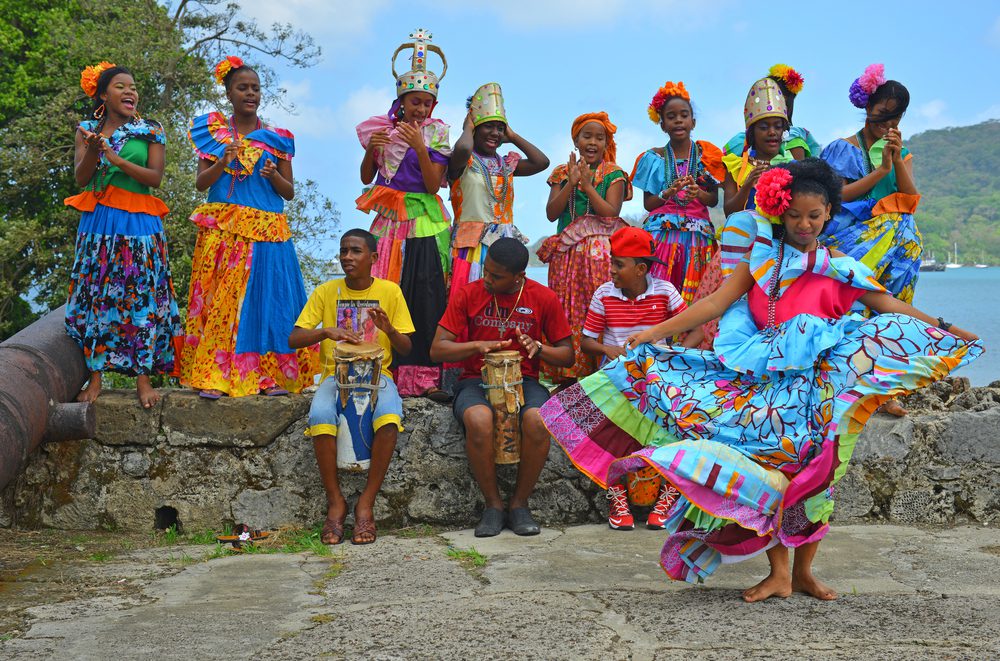
“AFKA is a way for us to reaffirm who we are as Caribbean descendants of enslaved people, and to remember what our ancestors had to fight for so that we could be born free,” Arnell said.
The festival also comes at a time when the Dutch Caribbean and the wider Kingdom have been engaged in renewed reflection on slavery, cultural memory and reparation. The original launch announcement noted that AFKA emerges amid increasing regional and Kingdom-wide attention to slavery commemoration, including funding initiatives connected to awareness, education and cultural programming around that history.
But AFKA is also forward-looking. Its organizers want to reshape how Caribbean culture is understood, both at home and abroad. Arnell said many Caribbean people are frustrated by the way their culture is often showcased internationally, especially when it is reduced to entertainment, color, rhythm and spectacle without the deeper story behind it.
“We believe it is time we control the narrative and offer a broader, richer perspective of who we are as a people,” he said.
That wider perspective begins with the festival’s name. AFKA is a statement about the Caribbean’s African roots, but also about the Caribbean’s layered identity. Arnell said Caribbean culture is rich, complex and sometimes difficult to fully express because of the many historical, linguistic, religious and cultural forces that shaped it.
“The focus of the festival is the connection between the Caribbean and Africa,” he said. “Our Caribbean culture is so rich and unique that we often struggle to fully express it, given its complexity and multi-layered nature.”
He described AFKA as a first attempt to better grasp what it means to be born in the Caribbean, while giving African heritage its own clear space in that conversation. The Caribbean, he said, contains many nationalities, languages, ideologies and religions, yet outsiders often see it as one place. Arnell said he does not necessarily reject that broad view, because it also reflects a regional kinship.
“Personally, I do not mind that, because whether you are from St. Maarten, Anguilla, Curaçao, or Guadeloupe, you are my brother, you are my sister,” he said.
Still, he emphasized that the Caribbean’s diversity is one of its greatest strengths. The region stands at the crossroads of many cultures, and that has shaped an identity that is vibrant, layered and deeply attractive. But for Arnell, that beauty must not cause people to forget where the story began.
“All of this beauty and culture should not make us forget where and how it all started,” he said.
That is why AFKA is being designed differently from many popular Caribbean festivals. The organizers are not rejecting music, performance or celebration. In fact, they want people to enjoy all four days. Curaçao jazz icon Izaline Calister will headline the festival on June 27 at Emilio Wilson Park, and the program includes live performances from local and regional artists, open-air cultural activations, artisan and food markets, and experiences for residents and visitors.
But Arnell said AFKA must be understood as more than leisure.
“When you hear the word festival, especially in the Caribbean, you automatically think of music and parties,” he said. “We are known for some of the most exciting and entertaining festivals in the world, and we wanted to make sure people can enjoy all four days.”
The difference, he said, is that AFKA also places visual art, education and heritage at the center. According to Arnell, AFKA will host the first-ever international art fair in St. Maarten, with 20 international and local visual artists displaying work intended to bring deeper perspective to the history of slavery.
The festival will also feature film and documentary screenings, along with workshops for both children and adults. Those workshops are intended to meet participants at different stages of awareness, giving people multiple ways to engage with the themes of history, identity and remembrance.
“The entire concept of AFKA goes beyond leisure and entertainment, crossing into heritage and education by bringing the things that truly matter to the forefront,” Arnell said.
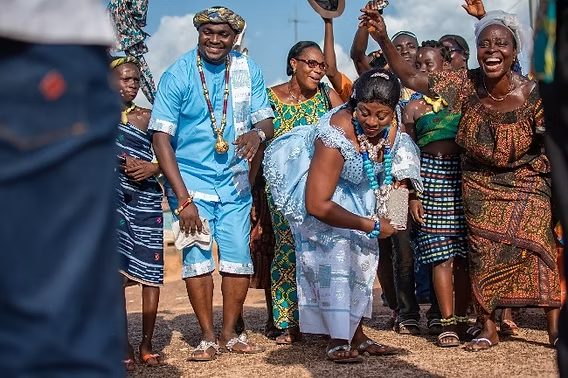
The mission of restoring historical memory is one of the strongest parts of the festival’s message. Arnell said the history of what Black people endured is too often dismissed as something distant, outdated or irrelevant. AFKA, he said, exists to push back against that attitude.
“Bringing awareness to the history of what Black people endured is probably the most important aspect of this festival,” he said. “People often dismiss it as something that happened so long ago, and treat the conversation as irrelevant in this day and age. We are here to do the exact opposite. We are here to remind people that it does matter, and to make clear why it must be remembered.”
To support that mission, AFKA is being presented in partnership with the St. Maarten National Heritage Museum and the Slavery Memorial Committee Fund. The original launch announcement identified the St. Maarten National Heritage Museum and the Slavery Memorial Committee Fund as key partners, with supporting partners including the Legacy to Future Fund, an initiative of the Ministry of the Interior and Kingdom Relations implemented by the Ministry of Social Affairs and Employment, and the DNB Fund Subarea Caribbean, a named fund managed by the Cultuurfonds Caribisch Gebied.
Arnell said the Slavery Memorial Committee is the primary enabler of the event, describing AFKA as the result of a newly formed collaboration. He sees the partnership as an ambitious step toward increasing awareness of the slavery past across the Caribbean.
“We see this partnership as one of the most ambitious solutions to increasing awareness of the slavery past across the Caribbean,” Arnell said. “Together, we are working toward a sharper and more engaged artistic and cultural landscape that has a lasting impact.”
The National Heritage Museum, he added, brings depth, credibility and direction because of its longstanding work in heritage preservation and its connection to the broader network of Caribbean museums.
“The Museum has always strived to preserve our heritage and maintain a voice in the broader network of Caribbean museums,” Arnell said. “Heritage preservation has always been at the core of their mission. Their insight is fundamental to delivering the right message and enabling people of all ages to engage with the slavery past in a meaningful way.”
Through AFKA, he said, the organizers are adding modern Caribbean art and new tools to that heritage mission.
The launch announcement also emphasized that AFKA is designed as a family-friendly and accessible experience, with dedicated family activities and kid-friendly spaces so people of all ages can participate. That aspect is important to the festival’s broader ambition. AFKA is not only speaking to artists, historians or cultural workers. It is meant to create an entry point for families, young people, residents and visitors who may be approaching these conversations from different places.
The organizers also hope AFKA becomes more than a one-time event. Arnell said success will not only be measured by attendance, but by the festival’s impact on identity, memory and cultural pride.
“We hope that this milestone sparks public interest in more experiences that elevate us rather than bring us down,” he said. “We do not expect a paradigm shift overnight, but with the support of our partners, we hope to make this an annual experience that brings more pride, love, and confidence to all people of the Caribbean who aspire to a better life.”
For St. Maarten, the inaugural AFKA festival adds another layer to ongoing discussions about heritage, slavery remembrance, identity and the role of art in public education. It also positions the island as a meeting place for a wider Caribbean conversation about African ancestry, cultural ownership and the need to tell the region’s story with more depth.
The first edition of AFKA will take place from June 25 to 28, 2026. Tickets will be available through www.afrokaribefestival.com. For sponsorship, interviews or accreditation, persons may contact Outreach and Sponsorship Coordinator R. Bowers at bowersryanne@gmail.com or +1 721 554 0448. For general inquiries, persons may contact Menelik Arnell at axumartcafe@gmail.com or +590 690 28 76 26.