

A generation trapped between ambition, reality and adulthood becoming unaffordable

They are more educated and connected than any generation before them, yet millions of young people cannot afford independence, struggle to find secure employment and feel excluded from decisions about their future. A major United Nations report reveals a troubling contradiction: Young people are preparing for adulthood, but the world is making it increasingly difficult for them to get there.
Somewhere in the world, a young university graduate is still sleeping in the bedroom where they grew up, unable to afford a home of their own. Another is postponing marriage because a stable job remains out of reach, while someone else is wondering whether having children will ever be financially possible, despite wanting to start a family.
These are not necessarily stories about young people unwilling to accept responsibility or a generation that has lost interest in traditional milestones. According to a major new United Nations report, they are increasingly the consequences of a world in which education, ambition and opportunity are no longer moving in the same direction.
The United Nations Population Fund's State of World Population 2026, titled Succeeding Generations: Empowering Young People to Chart the Future, offers a sobering examination of the circumstances confronting today's youth. Drawing on international research, consultations and survey responses from more than 100,000 young adults, it reveals a generation that remains ambitious about the future but faces growing obstacles to achieving the lives it wants.
Perhaps the most unsettling conclusion is that young people are not simply struggling to find their place in society. They are increasingly unable to obtain the economic security, independence and influence that previous generations associated with becoming adults, while being expected to inherit the consequences of decisions they had little opportunity to shape.
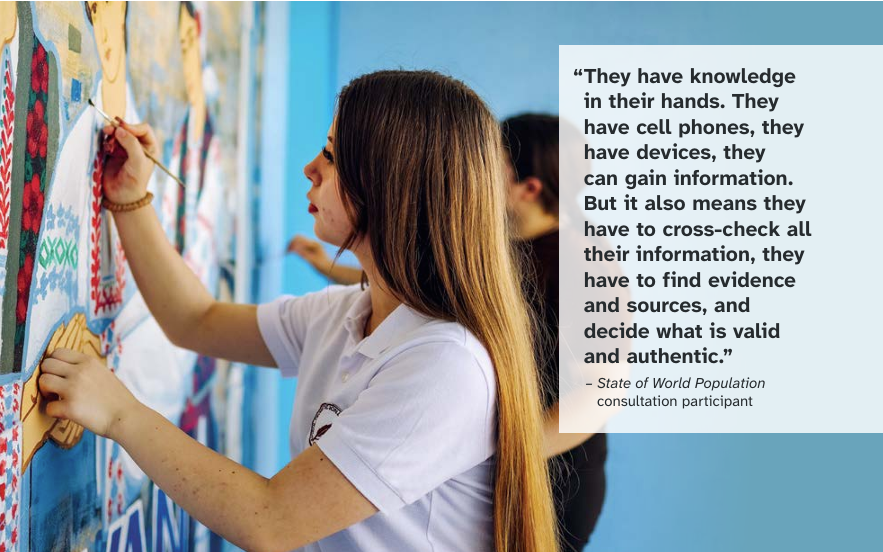
The dream of adulthood is becoming unaffordable
The report challenges the familiar suggestion that young people have become less interested in marriage, children and establishing independent households. Among 108,926 internet-connected adults aged 18 to 39 surveyed across 73 countries and territories, more than 90% said they wanted at least one child, while 70% identified marriage as their ideal relationship arrangement.
The obstacle, for many, is not desire but affordability. Financial security was considered important to becoming a parent by 88% of respondents, stable employment by 87%, and economic and housing constraints were identified as significant barriers to parenthood by 72%.
The findings reveal a painful contradiction between what people want and what they believe they can responsibly afford. A generation frequently accused of postponing adulthood may, in many cases, be postponing the financial commitments that adulthood requires because the economic foundation is simply not there.
The report offers a revealing picture of how major life milestones are being pushed further into adulthood. Among the survey respondents, at least half were living independently from their families only by ages 25 to 29, while the same threshold for being in a stable relationship was reached at ages 30 to 34 and for parenthood at ages 35 to 39.
Education, once widely regarded as a reliable route to independence, no longer offers the same assurance. Although approximately 78% of children worldwide now complete lower secondary school and 44% of young people enter higher education, labour markets have struggled to provide sufficient secure employment for an increasingly educated generation.
Globally, approximately one in five young people is neither employed nor participating in education or training, with young women facing particularly high rates of exclusion. Even those who secure employment may find themselves in temporary jobs, informal arrangements or digital work without the stability, benefits and income needed to establish independent lives.
The survey is not nationally representative, since it reached internet-connected respondents and cannot fully account for those without access. Nevertheless, its findings reinforce a central concern raised throughout the report: the widening gap between young people's aspirations and the circumstances available to fulfill them.
Some must grow up too early, others cannot move forward
While many young adults struggle to achieve independence, others are forced into adult responsibilities long before they are ready. The report examines girls pushed toward early marriage and motherhood, children entering employment prematurely and young people whose education is disrupted by poverty, conflict and displacement.
One of the stories comes from Malawi, where Catherine Mkandawire narrowly avoided marriage at thirteen after village elders intervened. She later became an entrepreneur and community advocate, opening her home so local girls without electricity could study under her lights, an initiative that grew from five participants to more than thirty.
Her story demonstrates how a single intervention can change the direction of a young person's life and create opportunities for others. It also illustrates the report's warning that millions of young people are being pushed into adulthood before they are prepared, while millions more remain unable to achieve independence despite having reached adulthood legally.
War and insecurity make these circumstances considerably worse. The report estimates that 340 million young people aged 10 to 24 were living within fifty kilometres of active conflict in 2022, more than double the 164 million recorded in 1990.
For young people living in these conditions, conflict can destroy schools, interrupt healthcare, eliminate employment opportunities and force families to relocate. Climate change adds another layer of uncertainty, threatening livelihoods and leaving younger generations to confront environmental consequences that will continue long after today's decision-makers have left office.
The report also raises serious concerns about violence and the safety of young women, citing global estimates that nearly 32% of women aged 15 to 49 have experienced intimate partner violence or sexual violence by someone other than a partner. Among young women aged 15 to 19, almost 23% have experienced intimate partner violence during their lifetime, demonstrating how early exposure to abuse can affect the transition into adulthood.
A future decided by people who will not live through it
Perhaps the most politically significant finding concerns the lack of influence young people have over decisions affecting their futures. The report cites a United Nations youth survey in which 76% of respondents under thirty believed politicians were not listening to young people, a perception reinforced by their limited representation in elected institutions.
People aged 18 to 30 account for approximately 19% of the world's population but occupy only 2.8% of parliamentary seats globally. This imbalance means that decisions involving housing, employment, climate change, education and public spending are overwhelmingly made by people from older generations.
The problem is not that older leaders are incapable of understanding young people's concerns, but that understanding is no substitute for meaningful participation. When young people are repeatedly invited to consultations without receiving any real influence over decisions, participation risks becoming a ceremonial exercise rather than a means of improving public policy.
The report describes growing frustration with political systems that appear disconnected from everyday struggles and slow to address problems with consequences extending decades into the future. Young people are being asked to trust institutions that, in many cases, have failed to provide the employment, affordable housing and economic security necessary for them to establish independent lives.
Yet the report also finds evidence of determination rather than resignation. Young people are organizing communities, establishing businesses, confronting online abuse, campaigning for rights and developing solutions to problems that established institutions have struggled to resolve.
The invisible crisis growing alongside economic hardship
Beyond the financial struggles and political frustrations lies another deeply troubling development: the deteriorating mental health of young people. The report warns that anxiety, depression and other mental health conditions have become major contributors to illness and disability during adolescence, with the COVID-19 pandemic significantly worsening an already concerning trend.
According to the figures cited, approximately 14% of children aged 10 to 14 and 15% of adolescents aged 15 to 19 are living with a mental health condition. Suicide is now the third leading cause of death globally among people aged 15 to 29, making mental health one of the most urgent areas requiring stronger prevention and treatment.
The report also examines the growing influence of digital technology, which provides opportunities for connection and learning while exposing young people to harassment, exploitation, surveillance and harmful content. In Indonesia, it documents the experience of activist Mariana Yunita Hendriyani Opat, whose former partner used digital access to monitor her activities before the situation escalated into coercive control and blackmail.
Her experience reflects a wider concern about the ability of technology to carry abuse beyond physical spaces and into almost every part of a person's daily life. Young people involved in the report's consultations called for stronger online protections, clearer accountability for technology companies, safeguards against intrusive surveillance and greater investment in digital literacy.
The mental health and digital safety findings reinforce the report's wider argument that young people are confronting pressures that previous generations did not experience in precisely the same way. Greater access to information and technology has expanded opportunity, but it has not eliminated vulnerability, particularly when healthcare, education and protective institutions struggle to keep pace.
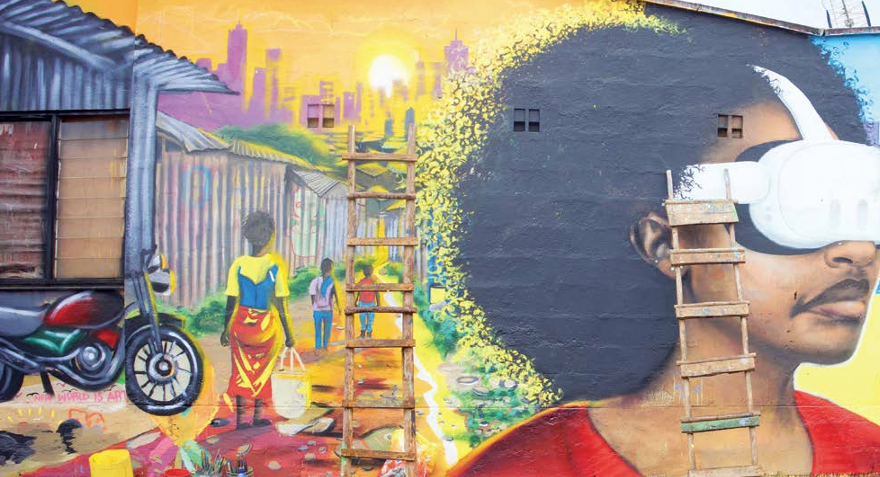
What the next generation is asking for
Importantly, the United Nations report does not stop at describing the difficulties. Consultations involving more than 300 young people from over forty countries produced recommendations addressing education, employment, healthcare, political representation and the distribution of decision-making power.
Among the proposals are stronger connections between schools and employers, paid internships, apprenticeships and practical training that prepares students for changing labour markets. Young people also called for education systems to address artificial intelligence, digital literacy and emerging technologies rather than preparing graduates for employment conditions that may no longer exist.
They want stronger protections for workers in temporary and digital employment, expanded opportunities for entrepreneurship and access to financing that allows young people to turn ideas into sustainable businesses. On healthcare and personal wellbeing, they advocate accessible services, protection from violence and the ability to make informed decisions about relationships and parenthood.
Perhaps most significantly, they are demanding more than invitations to participate in discussions. Recommendations include youth representation in decision-making bodies, meaningful involvement in public budgeting, greater support for youth-led organizations and mechanisms for holding governments accountable when commitments remain unfulfilled.
The report's most important message is ultimately about responsibility across generations. Young people should be expected to prepare themselves through education, effort and personal choices, but governments and institutions must also create conditions in which preparation can lead to opportunity.
A society cannot continually encourage its children to study hard, work diligently, become independent, build families and contribute to national development while allowing the pathways toward those achievements to become increasingly inaccessible.
The generation preparing to inherit the future is not asking for adulthood to be handed to it. It is asking for a fair opportunity to build a life, participate in decisions and believe that tomorrow can offer something more than an extension of today's struggles.
And that leaves an uncomfortable question for those already holding the power to shape tomorrow: What kind of future are we preparing for the young people who must live in it, and how much longer can we expect them to remain on hold?