

A Father's sacrifice, a mother's advice and the making of a Court President
.jpg)
WILLEMSTAD, Curaçao--Every morning at five o'clock, Sigmar Carmelia's father would wake up and begin preparing his children for school before leaving for work at the oil refinery. His mother worked as a cleaner, and together they raised their family with the conviction that their children deserved opportunities beyond what their circumstances might otherwise allow. There was nothing particularly grand about their daily routines, but decades later, those ordinary sacrifices would become central to the story of how a young boy from Curaçao rose to the presidency of the Joint Court of Justice.
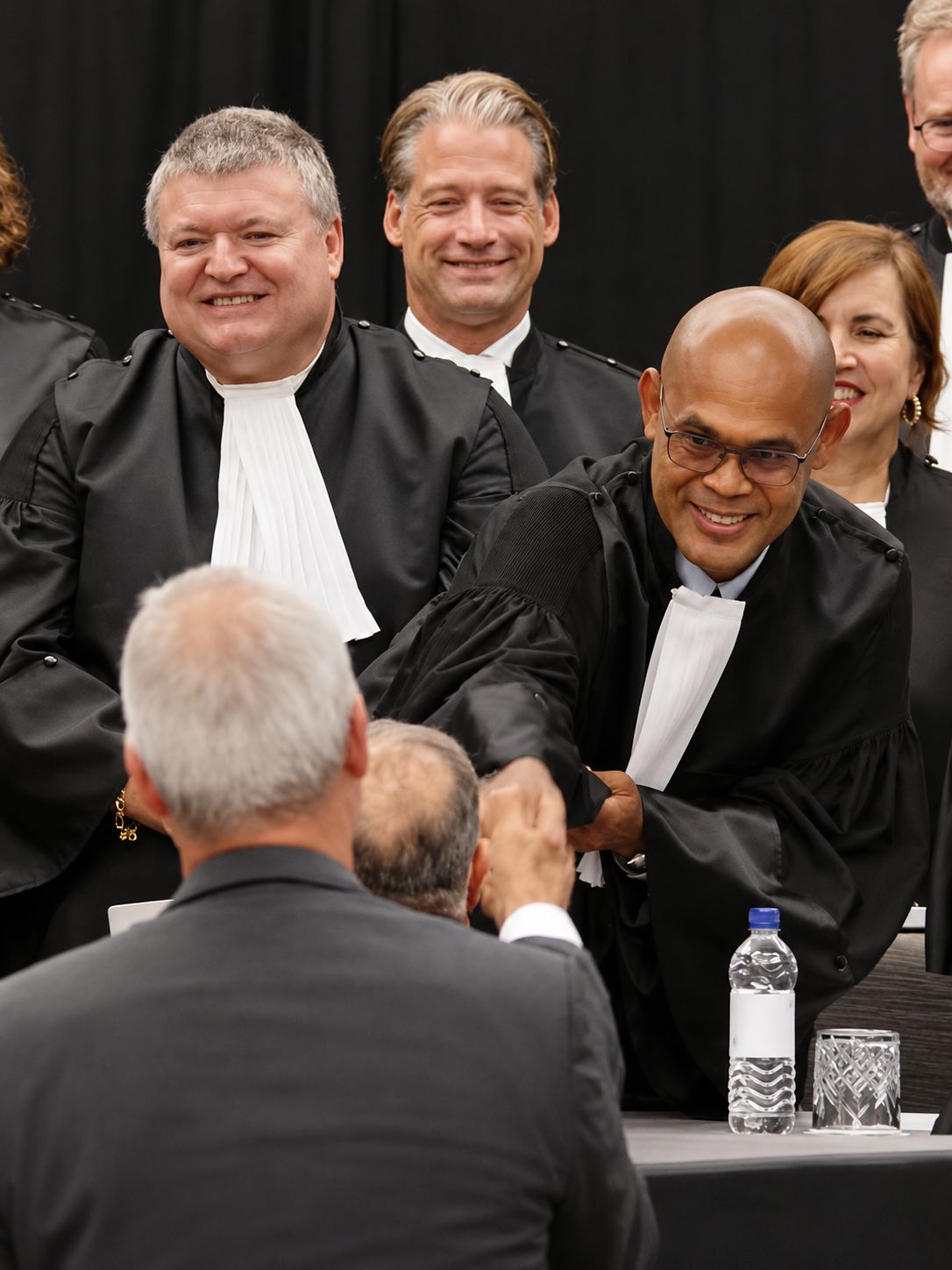
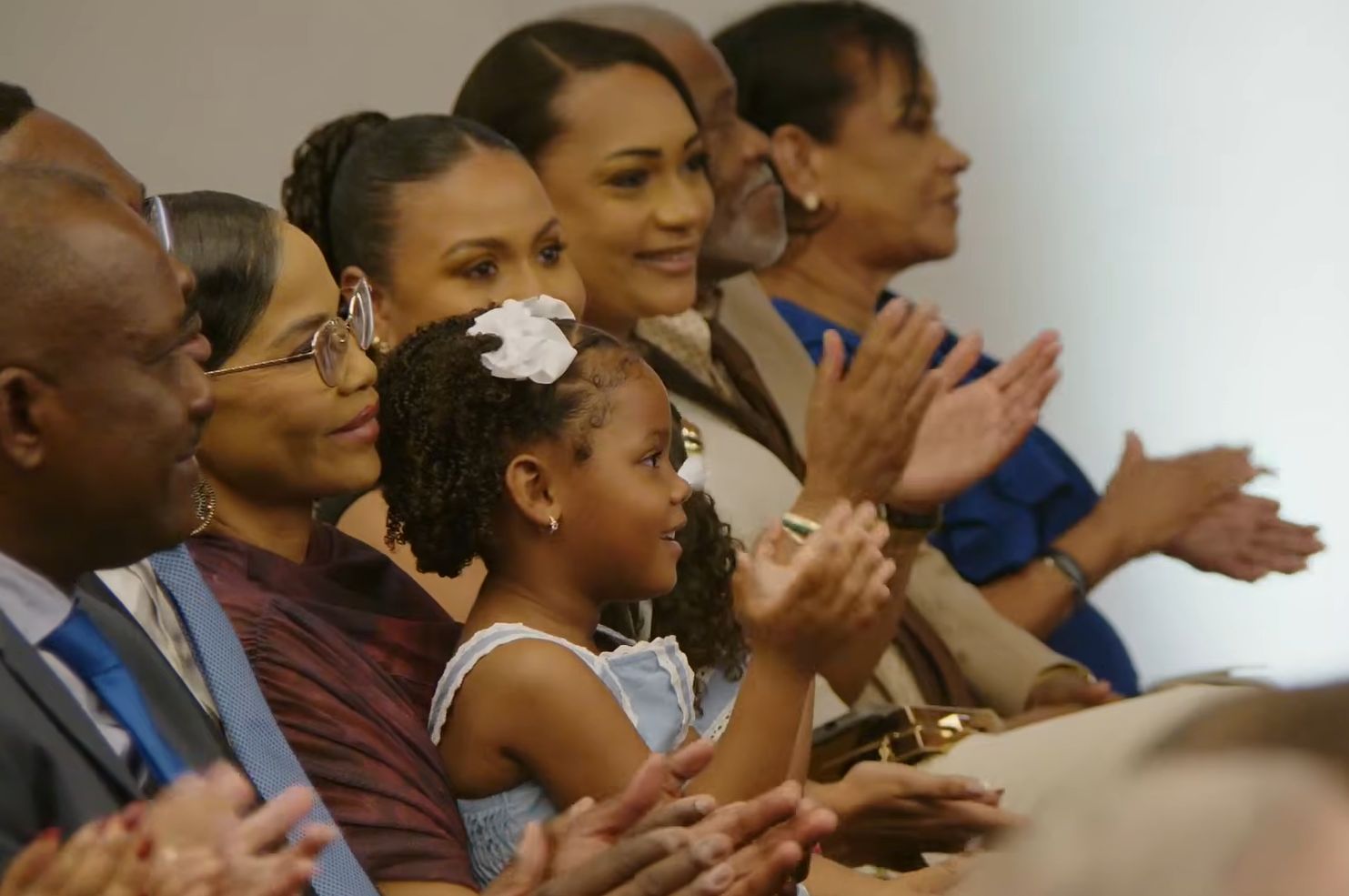
On Friday, October 16, 2026, Carmelia was ceremonially installed as the 26th President of the Joint Court of Justice, which serves Aruba, Curaçao, St. Maarten, Bonaire, St. Eustatius and Saba. Surrounded by judicial colleagues, government representatives, family and friends, the 49-year-old reflected on a journey spanning nearly 25 years in the legal profession. But rather than concentrating exclusively on his accomplishments, he devoted much of his installation address to the people, experiences and values that had shaped his understanding of justice.
His speech offered something beyond the formalities usually associated with judicial appointments. It was a personal account of family sacrifice, unexpected career decisions, friendships, marriage and the responsibility that comes with leadership. At its center was a message about the relationship between justice and society, particularly the importance of ensuring that ordinary people, regardless of language, background or economic circumstances, can trust the institutions responsible for protecting their rights.
The Parents Who Helped Shape a President
Carmelia was born in Curaçao in 1977 and grew up in a household where hard work and responsibility were part of everyday life. He recalled accompanying his mother by bus to Punda and Otrobanda to purchase school supplies, and visiting reading rooms where he developed an enthusiasm for books. Among his childhood favorites was the Dutch children's series Pietje Puk, an interest that would eventually find an unexpected connection with his experiences as a student in the Netherlands.
His father also played an important role in nurturing an early fascination with the law. Every Thursday and Saturday, he brought home copies of the newspapers Vigilante and Extra, allowing his son to read reports about criminal cases heard in court earlier that week. What may have seemed like a small gesture at the time helped introduce Carmelia to the legal profession long before he imagined himself presiding over the region's highest joint judicial institution.
Family responsibility extended into practical arrangements. Shortly after turning 18, Carmelia obtained his driver's license and was permitted to use his father's car to take his brother and sister to school. His father would then travel to work by bus. If Carmelia wanted the vehicle on a Saturday, he had to wake up early enough to take his father to work before accompanying his mother on her shopping errands.
Looking back, Carmelia said these memories had gained greater meaning with time. His parents had provided more than school supplies and transportation. Through their daily sacrifices, they taught their children discipline, respect, responsibility and the importance of pursuing opportunities. Those lessons, he explained, became part of the foundation upon which he built both his personal and professional life.
His parents remain closely involved in that life today. His father continues to follow newspaper reports about cases he handles and even keeps track of his table tennis results, occasionally reminding him when he has lost a match. His mother remains curious about his work, regularly asking whether he still personally hears cases now that he has become president.
A Career That Began With His Mother's Suggestion
Interestingly, Carmelia did not originally intend to become a lawyer. After attending Kolegio Chaya Williams and completing his secondary education at Radboud College, he considered pursuing medicine. His mother, however, was reluctant to see him leave Curaçao for further studies in the Netherlands and suggested an alternative: Why not become a lawyer and study closer to home?
That suggestion changed his professional direction. Carmelia began studying Antillean law in Curaçao, completing his first year before eventually moving to Nijmegen in the Netherlands to continue his education. His mother's original hope of keeping him on the island had not quite materialized, but her influence had already placed him on the path that would define his career.
Adjusting to life in the Netherlands was not easy. Carmelia recalled the arrival of autumn, the increasingly cold weather, the falling leaves and the unfamiliar experience of days becoming dark much earlier than in Curaçao. Overwhelmed by the change, he telephoned his mother and told her he wanted to return home. Although she had initially preferred that he remain in Curaçao, she now encouraged him to stay and give the experience a chance.
He did, and the decision proved important. Carmelia supported himself through several part-time jobs, including delivering mail and Christmas cards, packaging frozen bread products and working as a doorman at a bank in Nijmegen. Those experiences exposed him to different working environments while he continued his legal studies and gradually adapted to life outside the Caribbean.
It was also in Nijmegen that he met Thaisa, the woman who would become his wife and one of the most influential people in his professional development. Their introduction came through another student from Curaçao, and their relationship developed as both pursued legal studies and began planning a future together.
After completing his degree, Carmelia worked as a legal adviser in Utrecht before returning to Curaçao in 2004 to practice law. Eight years later, he began judicial training, eventually joining the Joint Court. His professional development also included experience at the Gelderland District Court and a placement in the criminal division of the Supreme Court of the Netherlands.
During the installation ceremony, Carmelia credited his wife with encouraging him to pursue a judicial career. Both had trained as lawyers, and when the possibility of judicial education arose, each initially encouraged the other to take the opportunity. Thaisa eventually persuaded him that he should pursue it, expressing confidence in his legal writing and command of Dutch.
Her support continued throughout his career, sometimes in memorable ways. Carmelia recalled attending a job interview in Maastricht while Thaisa waited nearby, having brought a needle and thread in case something went wrong with his suit. He did not get the position, but the story illustrated the practical and emotional support that accompanied his professional journey.
Justice Must Be Nourished Like Society Itself
The date of Carmelia's installation coincided with World Food Day, and he used the occasion to develop the central theme of his address. Just as human beings require food, water and oxygen to survive, he argued, societies require law and justice to remain healthy and capable of development.
A just society, he explained, does not emerge automatically. It must be cultivated, maintained and strengthened through continued attention and responsibility. Laws and judicial decisions are essential, but so are honesty, respect, trust and the willingness of individuals and institutions to accept responsibility for their actions.
That understanding of justice also shaped his description of the relationship between the judiciary, government and Parliament. Each institution has a role in maintaining the rule of law, and each must respect the responsibilities and independence of the others. Governments and legislatures establish laws through democratic processes, while courts interpret and apply those laws, resolve disputes and provide legal protection.
For Carmelia, however, the foundations of a just society are established long before anyone enters a courtroom. They begin in homes and schools, where children learn fairness, responsibility, mutual respect and how to live alongside people whose experiences and beliefs may differ from their own.
He also emphasized that the justice system must make itself accessible to the communities it serves. That includes educational visits, open days, opportunities for students to experience court operations and initiatives such as the annual Summer Court, which introduces local legal talent to judicial work.
A Court That Must Belong to All Six Islands
One of the most important aspects of Carmelia's address concerned the diverse societies served by the Joint Court. Although the six Caribbean islands operate within a shared judicial structure, each possesses its own history, cultural traditions, languages and social circumstances.
Carmelia argued that those differences should be recognized as strengths rather than obstacles. Whether citizens speak Papiamentu, English, Spanish or Dutch, they should be able to approach the courts with confidence that they will be heard and protected.
He highlighted efforts to improve interpretation services, including a pilot initiative intended to ensure that people appearing before the courts can properly express themselves. Improvements to the publication of judgments and the accessibility of court facilities also form part of the institution's continuing development.
The Joint Court has already established dedicated courthouse facilities on Saba and St. Eustatius, while work continues on appropriate accommodation in St. Maarten, Aruba and Bonaire. In Curaçao, preparations are advancing for the institution's return to the historic town hall in Punda.
Another priority is the continued development of Caribbean legal professionals within the judiciary. Carmelia wants more locally trained lawyers and other qualified professionals to have opportunities to enter the Court, gain experience and advance into senior positions.
He emphasized, however, that developing Caribbean talent does not mean excluding colleagues from the Netherlands. Their knowledge and experience remain welcome, with cooperation across the Kingdom contributing to the overall quality of judicial work.
For small island societies, the issue carries significance beyond employment opportunities. Building a judiciary that reflects the communities it serves can contribute to public confidence while strengthening the region's ability to develop and retain its own legal expertise.
The Family Behind the Judicial Robe
Although Carmelia's appointment represents a professional achievement, the most emotional moments of his address concerned his family. He thanked his parents, siblings, relatives and friends, acknowledging that the occasion was also marked by the absence of a loved one who could not be there to celebrate with them.
He reserved particular gratitude for his wife, Thaisa, whose support had accompanied him from their student years in the Netherlands to the responsibilities of judicial office. Their two daughters, Zina and Zeli, also featured prominently in his remarks, bringing humor to an otherwise formal occasion.
Before the installation, one daughter had insisted that she deserved a seat in the front row because she was a special guest. Carmelia recalled the exchange with affection, explaining that wherever his daughters sat, they would always be his special guests.
He also referred to a ceremonial gavel his daughters had given him, assuring them that he would use it with integrity and the necessary care. The moment connected the symbolism of judicial authority with the personal values he had spent much of the ceremony describing.
For all the responsibility associated with presiding over the Joint Court, Carmelia made clear that being a father remained among the most meaningful roles in his life.

A Presidency Built on Responsibility
Carmelia succeeds Mauritsz de Kort, who became Governor of Curaçao. In his address, he praised his predecessor's commitment to bringing people together and expressed his intention to continue strengthening cooperation within the judiciary and across the societies it serves.
His installation also marked a notable moment of institutional unity, with Jane Jansen, Vice President of the Court's Aruba branch, conducting the ceremony. Carmelia described that arrangement as a meaningful reflection of the shared character of the Joint Court.
The new president assumes responsibility at a time when judicial institutions across the Caribbean face continuing expectations to remain independent, accessible, efficient and responsive to the communities they serve. His plans to strengthen local talent, improve communication and modernize court facilities will ultimately be measured by how effectively those ambitions are implemented.
But perhaps the central message of his installation address was that justice cannot be sustained by judges alone. Courts require the confidence of society, the support of other institutions and a continuing commitment to fairness that begins with the values taught in ordinary homes.
For Sigmar Carmelia, those values began with a father rising before sunrise to prepare his children for school, a mother who encouraged her son to pursue the opportunities before him and a family that understood the importance of education, sacrifice and responsibility.
Nearly half a century after his birth in Curaçao, that young boy now leads the judicial institution serving six Caribbean islands. His journey illustrates what opportunity, family support and personal determination can make possible, while his new responsibilities will test how those same principles translate into institutional leadership.
The significance of his presidency will ultimately be determined not by the ceremony that installed him, but by whether the courts under his leadership become more accessible, more representative and more responsive to the people who depend upon them. His personal story may explain how he reached the presidency. His commitment to ensuring that justice serves everyone will help define what he accomplishes there.