

Shouldn’t we simply “retire” September from the calendar?
.jpg)
Each year, at least, since 1995, when September comes around, we do not merely turn a page on our calendar; we also turn on our anxieties, our fears, our insecurities whether consciously or unconsciously. Somehow, September has become a recurring season of reckoning. It certainly is on back to back anniversaries of Hurricanes Luis and Irma.
For a 37 square miles island of shared land, shared bloodlines, shared hopes and aspirations and yes, even of shared homes, the ninth month of the year has long ceased to signify the gentle transition from summer into autumn. Instead, it looms as a season of quiet dread, a month etched into the island’s soul by howling winds, shattered concrete, and the menacing roar of the Atlantic Ocean.
When meteorologists officially retire the names of devastating cyclones - striking Luis, Marilyn, Lenny, Maria, or Irma from future hurricane lists out of respect for the dead and destroyed - it prompts a provocative, almost existential question for those who inhabit this Rock: Shouldn’t we “retire” September itself from our own calendar?
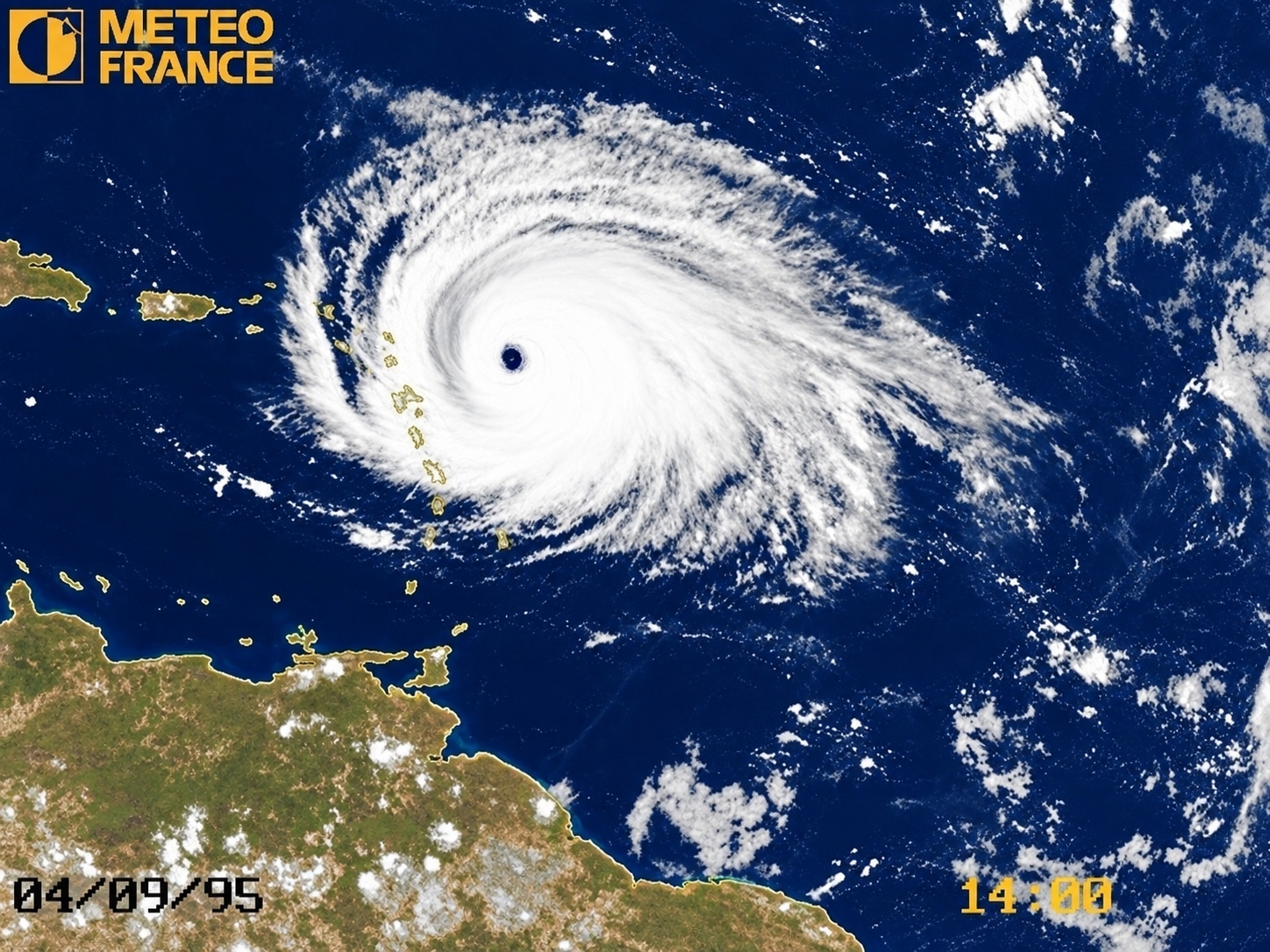
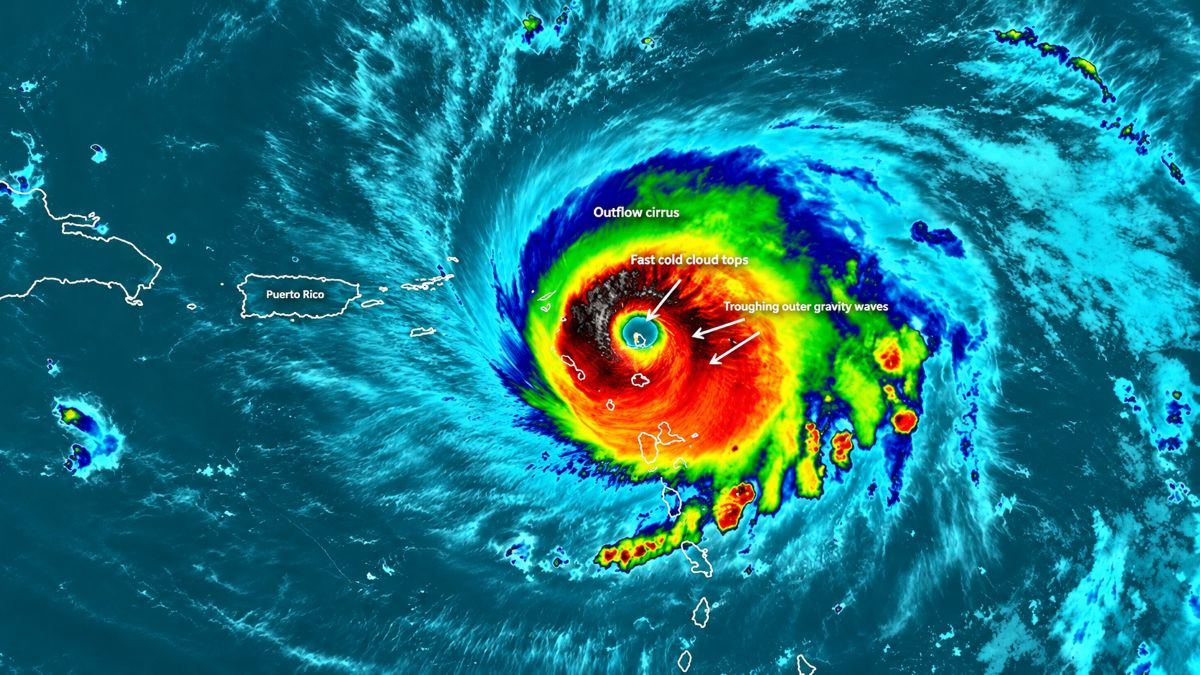
I think if such a temporal erasure were possible, many people in St. Martin would not hesitate to remove the month from the calendar. For it is in September that the island’s recent history was split open: first on September 5, 1995, when Hurricane Luis tore away the illusions of our modern Caribbean development, and again twenty-two years later, on September 6, 2017, when the monster Hurricane Irma marched across both north and south, leaving an entire society gasping for air.
To understand St. Martin today - its politics, its economy, its social fractures, its psychological baggage, and its cultural durability - one must examine the profound transformations wrought by these major September tempests.
1. The Political Impact
On an island split between two distinct European constitutional frameworks - the Dutch territory of Sint Maarten (a so -called autonomous country within the Kingdom of the Netherlands) and the French Collectivité de Saint-Martin (an overseas collectivity of France) - major hurricanes act as brutal stress tests for political governance.
When Hurricane Luis struck in 1995, it exposed the profound limitations of local disaster management and ignited years of political re-engineering with the fall of government, which was already under “Higher Supervision” and the formation of “the Purple Coalition” - the coming together of the two major parties, which were until then considered“sworn” political enemies, in a pseudo-national government.
Hurricane Luis rendered the entire island incommunicado for a while, during which period the local leadership took on-the-spot decisions that did not sit too well with the central government in Curacao. The crisis expectedly triggered intense scrutiny from The Hague, accelerating administrative reform processes. And even though St. Martin (South) became an autonomous country in 2010, yet its constitutional autonomy has repeatedly clashed with the reality of post-disaster intervention.
Hurricane Irma in 2017 brought these political friction points into sharp, dramatic relief. In the immediate aftermath, as communications went dark and civil infrastructure collapsed, both sides of the island experienced moments of institutional paralysis. The arrival of French military forces and Dutch Marines highlighted an enduring paradox: while local populations share a seamless everyday existence, geopolitical responses remain rigidly bifurcated along colonial lines.
In the Dutch south, aid funds managed via the World Bank Trust Fund became a lightning rod for constitutional debates over the territory’s autonomy versus conditionality from The Hague. In the French north, administrative decisions dictated directly from Paris often collided with the nuanced realities of local socio-economic life.
This duality was exemplified in the decision of the French authorities to station its troops at the regular border crossings, resulting in a general disenchantment among the people on both halves of the island whose mobility was consequently impaired, especially those persons who worked on one side of the island but lived on the other.
On the ground, however, the political necessity of cross-border collaboration forced local leaders to realize that the island's survival demands a unified, island-wide disaster management cooperation that bypasses traditional colonial bureaucracy imposed from the metropoles.
article continues below...
2. The Economic Impact
Economically, major September storms have repeatedly exposed the fragile foundations of St. Martin’s main economic pillar: tourism.
Prior to Hurricane Luis in 1995, the island enjoyed an era of unprecedented rapid growth, driven by mega-resorts, a bustling cruise port, and a booming time-share sector. Luis shattered this momentum overnight.
The destruction of major hotel properties sent shockwaves through the labor force, wiped out government revenues, and forced thousands of workers into sudden financial insolvency. It took years for key properties to reopen, and some historic resort sites were permanently abandoned or re-purposed.
Twenty-two years later, Hurricane Irma delivered another economic blow of catastrophic proportions, causing estimated damages exceeding three billion dollars in the South alone, according to some estimates. Princess Juliana International Airport was severely damaged, diminishing long-haul tourism in its tracks, while the port infrastructure and luxury hotels in Marigot, Orient Bay, Terres Basses, and Simpson Bay were also gutted.
The Dutch responded with a 500 million dollar Trust Fund - less than 20% of the estimated damage - which it engaged the World Bank to manage on its behalf out of distrust of the local authorities. This resulted in the establishment of the National Recovery Project Bureau, charged with the execution of reconstruction projects.
World Bank policies and procedures, however, have been blamed for the slow progress of the recovery efforts in certain sectors, with some schools and even the public library still not rebuilt almost a decade after Irma destroyed them.
The economic consequence of these storms cannot be calculated therefore merely in terms of immediate loss; but rather in the disruptive "reconstruction economy" that follows. In the wake of both Luis and Irma, traditional tourism jobs vanished, replaced temporarily by construction and supply-chain activity. Insurance payouts flooded the island, but sky-rocketing building material costs, insurance flight, and massive labor shortages created inflation that hit lower-income families hardest.
Small locally owned businesses, lacking capital reserves, were frequently replaced by foreign investor groups capable of absorbing multi-year disruptions, subtly reshaping business ownership across the island.
3. The Social Impact
Needless to say, the social architecture of St. Martin undergoes a violent reset every time a Category 4 or 5 hurricane sweeps across our hills.
Disaster, of course, does not affect all citizens equally. In both 1995 and 2017, the most devastating structural losses occurred in informal settlements and vulnerable neighborhoods - areas where low-income residents, immigrant workers, and working-class families resided in housing that could not withstand 180+ mph winds.
The immediate post-storm weeks always witness a wave of migration. Following Irma, thousands of residents - particularly mothers, children, and elderly individuals - were evacuated to Guadeloupe, Martinique, mainland France, Curacao, Aruba, the Netherlands, North America and other Caribbean islands. While many returned, a significant portion was permanently displaced, altering the demographic landscape.
Furthermore, the social friction that emerges in the absence of electricity, running water, and secure communications tests communal cohesion. In 1995, rumors and actual incidents of looting in the initial days of Luis highlighted deep-seated social inequities.
Yet, alongside these ruptures emerged profound displays of community solidarity: neighbors clearing roads with machetes, communal kitchens feeding entire districts, and shared cistern water keeping families alive. The storms revealed the proverbial resilience of the people in both the vulnerabilities of social division and the incredible strength of neighborhood-level mutual aid in the best spirit of what is locally known as Jollification.
4. The Psychological Impact
Perhaps the most insidious damage inflicted by September storms is invisible to the naked eye. The psychological baggage dragged along by the people of St. Martin is immense, culminating in a collective phenomenon known as "storm anxiety."
When the calendar turns to August and September, an ambient tension settles over the island. The simple act of a tropical wave forming off the coast of West Africa sends heart rates spiking. The sound of wind howling through galvanized roof sheets, the sudden drop in barometric pressure, or even a sudden overcast afternoon can trigger hyper-vigilance in both children and adults who lived through Luis or Irma.
Decisions such as government-mandated closure of schools at the alert of even a Tropical wave that may have left our vicinity, can be traced to the lingering subconscious effects of past storms. The reasoning being, better be safe than sorry. Add to that the phenomenon of panic buying and the psychological profile of a people reeling from the persistent effects of being battered by vicious winds emerges.
Post-Traumatic Stress Disorder (PTSD) remains widespread but obviously underdiagnosed on both halves of the island. Children who spent hours holding down bedroom doors while roofs peeled away above them in 2017 carry those memories into adulthood.
For older generations who remember 1995, the compounding trauma creates a perpetual state of seasonal emotional exhaustion. The failure to fully integrate mental healthcare and community-based trauma counseling into long-term disaster management remains one of the greatest oversights not only in St. Martin but regretfully also in the wider Caribbean post-disaster planning.
5. Cultural Resilience
If September represents the island’s trial by fire (or rather by supersonic winds), St. Martin’s culture is the anchor that prevents it from blowing away completely. Through literature, music (calypso in particular), comedy, oral histories, storytelling and folk traditions, St. Martiners have documented their storm encounters not as mere victims, but as an indomitable and resilient people.
The island's writers, poets, and musicians have captured the hurricane experience in a language of survival that serves as both historical record and catharsis. Tamara Groeneveldt (After the Storm), unofficial poet laureate, Lasana Sekou (Hurricane Protocol) and yours truly, Fabian Badejo (Season of Storms) are among the poets who have written about their storm experiences.
Calypsonians have also chronicled the politics of relief distribution, while The Philosopher of Humor, Fernando Clark gave us a welcome Hurricane Relief in the wake of Luis in 1995 while other artists have dived into the eerie silence inside the eye of the storm and the smell of stripped vegetation the morning after, giving us an aesthetic perspective into a very traumatic experience.
Culturally, the hurricane has no doubt reshaped the concept of a St. Martin identity. The shared experience of clearing debris together, sharing the last bucket of clean water, breaking bread together and rebuilding roof by roof reinforces an unwritten truth: despite the various flags, two administrations, and two official languages, the people of St. Martin share one single, indivisible destiny. As the patriot Felix Choisy famously said: the gale does not stop at the frontier.
The island’s traditional architectural wisdom - hip roofs, timber framing designed to flex with the wind, and deep cisterns - represents a historical culture of adaptation that modern development often ignored to its own detriment. Those old homes generally survived Hurricane Luis while most of the “modern” buildings standing next to them did not.
article continues below...
Strategies for the Future
Granted, we may not be able truly strike September from the calendar, nor stop the ocean waters from warming. However, we can transform how we live alongside the constant threat of major hurricanes in a similar fashion as the Eskimos endure snow storms. Preparing for the future therefore requires moving beyond emergency response and toward systemic, climate-resilient adaptation. This means taking specific steps such as:
A. Unified Cross-Border Disaster Governance
• Establish a Joint St. Martin Disaster Management Agency: Disaster does not respect the border at Bellevue or Quartier d'Orléans. The Collectivité in Marigot and the Government in Great Bay must establish a legally binding, joint operational command center for hurricane preparedness, logistics, and emergency communications.
B. Infrastructure Modernization and Building Code Enforcement
• Mandatory Underground Utility Networks: Accelerate the complete underground placement of electricity, fiber optics, and water infrastructure across both sides of the island. GEBE, under Julius Lambert, embarked on this following Hurricane Luis and has most of its high tension cables underground.
• Strict Building Code Enforcement with Local Adaptation: Move away from glass-heavy, flat-roof commercial designs. Enforce strict building codes requiring hurricane-rated shutters, reinforced concrete structures, and steep hip roofs designed to shed high wind loads. Where possible cisterns should be built with new structures to store rainwater to use for cleaning (not drinking or cooking) after storms.
• Microgrids and Decentralized Power: Equip all critical public infrastructure, schools, and community centers with independent solar microgrids and battery storage systems, reducing reliance on central power plants that can be knocked offline for months.
C. Community-Based Resilience and Psychological First Aid
• District-Level Resilience Hubs: Transform neighborhood schools and community centers into self-sustaining shelters equipped with off-grid power, water filtration, satellite communications, and medical supplies. Neighborhoods must be equipped to operate self-sufficiently for the first 72 to 96 hours post-landfall.
• Institutionalized Trauma and Mental Health Support: Integrate year-round mental health services and community counseling into public health systems, specifically targeting "storm anxiety" in schools and community centers before the peak of each hurricane season.
D. Economic Diversification and Climate Finance
• Catastrophe Reserve Funds: Establish dedicated, contingency funds in the national budget funded during high-tourism months to ensure immediate liquidity for emergency payouts without relying exclusively on international aid or slow-moving loan approvals. I am aware that government is taking steps in this direction (including participating in a regional disaster insurance scheme) but it must seek innovative approaches to augment such reserve funds.
• Incentivize Green Reconstruction: Offer tax incentives such as eliminating Turn Over Tax for eco-resilient building materials, rainwater harvesting systems, and renewable energy technology used in residential and commercial construction.
Conclusion
There is no doubt that September will return every year, bringing with it the warm waters and low-pressure systems that have tested St. Martin for decades. We may not be able to retire the month, but we can reduce the vulnerability, the administrative fragmentation, and the cycle of unpreparedness that turns natural phenomena into human catastrophes.
By honoring the lessons learned from Hurricane Luis in 1995 to Hurricane Irma in 2017, St. Martin can stand as a model of Caribbean resilience - a single island community bound by history, strengthened by culture, and fully prepared to face whatever wind the Atlantic blows its way.