

Financial Transaction Tax: More questions than answers?

Tax reform in Sint Maarten is necessary. Simplifying taxation, improving compliance and broadening the tax base are worthwhile objectives. However, the introduction of a Financial Transaction Tax (FTT) raises several important questions.
Revenue neutrality and fiscal sustainability
Using the 2024 government revenue collection figures presented by TEATT to Parliament on November 25, 2026, the illustrative reform scenario proposes the following:
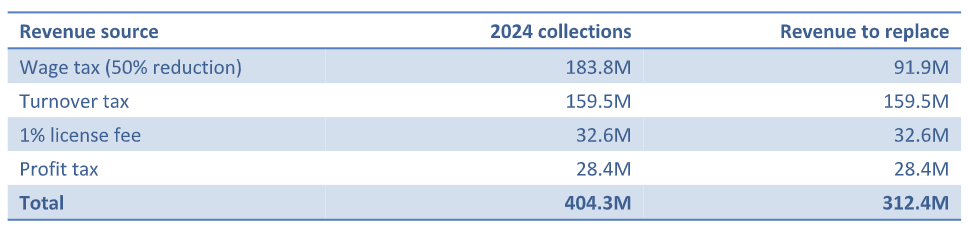
The FTT would therefore need to generate approximately XCG 312.4 million annually to replace existing revenue, based on 2024 collections.
According to CBCS statistics, reported payment transaction values have fluctuated considerably:
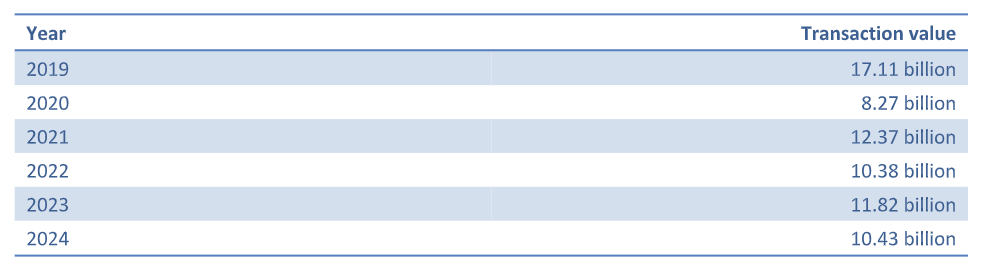
Reported transaction volumes, however, cannot automatically be equated with taxable transactions.

At a 5% FTT rate, a reduction exceeding approximately 40% of the reported transaction base would result in a revenue shortfall.
How much of the reported transaction volume actually qualifies for taxation, and how sustainable would government revenue be during an economic downturn?
Existing tax exemptions
Our current turnover tax legislation exempts, among others, essential consumer goods, residential rentals, healthcare, prescription medication and qualifying hotel accommodation.
Will these exemptions be maintained? When a supermarket customer purchases both taxable and exempt products, the bank sees the total payment, not the individual products.
How will exemptions be identified and administered? Would this simplify taxation or merely shift administrative responsibilities? What would be the impact on the cost of living if exemptions were abolished?
Income disparity and social equity
Reducing progressive income taxation and replacing lost revenue with a flat transaction tax could disproportionately benefit higher-income earners.
Even if everyone experiences an increase in disposable income, would someone earning XCG 3,000 per month benefit proportionately as much as someone earning XCG 20,000? Could the reform widen the socioeconomic gap between the rich and the poor?
Revenue neutrality for government does not guarantee an equitable distribution of the tax burden.
Income tax deductions and annual returns
What will happen to existing deductions for mortgage interest, pension contributions, medical expenses and other qualifying expenditures?
Reducing wage tax withholding by 50% does not automatically reduce final income tax liability by 50%. Will income tax legislation be amended accordingly? Will annual income tax returns, deductions and refunds remain applicable?
The cost of doing business
Our existing turnover tax already creates cascading effects. An FTT could extend taxation to loan repayments, intercompany transfers and other financial movements that do not currently constitute taxable turnover.
What would be the cumulative tax burden throughout the supply chain, and how much would ultimately be passed on to consumers?
In 2024, approximately XCG 712 million, representing 76% of reported local point-of-sale payment values, originated from foreign-issued bank cards. How will these transactions be captured? Would businesses using local banks be disadvantaged compared to those processing payments abroad?
Changes in financial behaviour
An FTT could encourage increased cash usage, foreign banking and alternative payment methods. The growing international adoption of cryptocurrencies, digital wallets and stablecoins deserves particular attention.
How will payments made outside traditional banking systems be identified, monitored and taxed? Could an FTT accelerate their adoption and consequently erode the taxable base?
How sustainable is a tax system dependent on traditional banking infrastructure in an increasingly digital financial world?
IMF recommendations and alternatives
In its 2021 report, Sustainable Tax Reforms, the IMF explicitly recommended: “Do not introduce any Financial Transaction Tax in Sint Maarten.” In 2025, the IMF again cautioned about its potentially distortionary and regressive effects.
These concerns, together with the formal advice of the CBCS once available, deserve consideration. Alternative models, including an Algemene Bestedingsbelasting (ABB) and a 15-15-15 tax structure, should also be assessed.
Tax reform is more than revenue collection
Tax reform is not merely an accounting exercise. It is an economic and social policy decision affecting virtually every household and business in Sint Maarten.
The question is not simply whether an FTT can generate sufficient government revenue, but whether it can do so in a manner that is equitable, economically sustainable and conducive to improving the quality of life of our population.
Sources: CBCS Yellow Book Statistics 2024; TEATT parliamentary presentation, November 25, 2026; IMF Country Reports 21/231 and 25/254; Turnover Tax Ordinance, Articles 8 and 9. Revenue scenarios are illustrative calculations. All monetary figures are expressed in guilders.