

Aruba’s Status Aparte: 40 Years After - Part 1: Historical Background
.jpg)
(𝘛𝘩𝘪𝘴 𝘪𝘴 𝘵𝘩𝘦 𝘧𝘪𝘳𝘴𝘵 𝘪𝘯 𝘢 𝘵𝘩𝘳𝘦𝘦-𝘱𝘢𝘳𝘵 𝘴𝘦𝘳𝘪𝘦𝘴 𝘰𝘯 𝘈𝘳𝘶𝘣𝘢’𝘴 “𝘚𝘵𝘢𝘵𝘶𝘴 𝘈𝘱𝘢𝘳𝘵𝘦”)
His Majesty King Willem-Alexander of the Netherlands was in Aruba on Wednesday, March 18th - Aruba Day - on what has been described as a “working visit.” However, the royal visit has less to do with “work” (since when do monarchs work?) and more with the official celebration of 40 years of Aruba’s separate status (status aparte).
Indeed, it was on January 1, 1986, that the island territory of Aruba achieved a "Separate Status" (Status Aparte) within the Kingdom of the Netherlands. This transition ended decades of administrative subordination to the central government in Curaçao and established Aruba as a self-governing, autonomous country en route to political independence. It meant the realization of the Dr. Eric Williams-kind mathematical reductive prophesy made by former Prime Minister of the Netherlands Antilles, Juancho Evertz that 6-1 =0. In other words, that the exit of one island from the six-island constellation of the Netherlands Antilles would result in the demise of the latter.
Today, 40 years later, the "Aruban Model" remains a cornerstone of the political identity of the Dutch colonies in the Caribbean having set the blueprint for the eventual dissolution of the Netherlands Antilles in 2010.
The Historical Struggle: From Petition to Protest
The seeds of Aruba’s “Status Aparte”
were sown long before the 1980s. As early as the 1930s, Aruban leaders expressed dissatisfaction with the "centralism" of Willemstad, Curaçao. They complained vociferously about being subordinated in every sense of the word to Curacao. The movement gained its first organized momentum under Jan Hendrik "Henny" Eman, who in 1947 presented a petition with over 2,000 signatures to Queen Wilhelmina, demanding "Separacion” (Separation” from Curaçao).
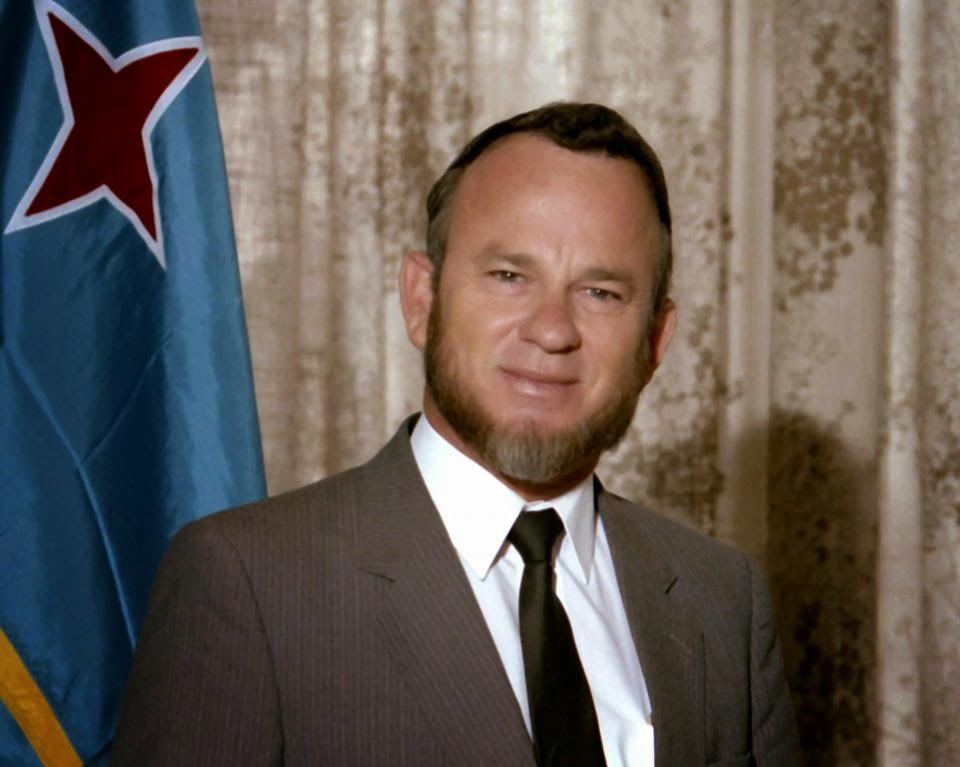
However, the modern era of the struggle was captained by Gilberto "Betico" Croes, the charismatic leader of the Movimiento Electoral di Pueblo (MEP). In the 1970s, Croes revitalized the movement, framing it not just as a quest for efficiency, but as an assertion of Aruban national identity.
The 1977 Referendum: A Mandate for Independence
The turning point came in 1977. Up against resistance from both the Netherlands and the Netherlands Antillean government, Betico Croes organized a consultative referendum on March 25, 1977. The choice presented to the Aruban people was simple: Independence, YES or NO.
Contrary to what some commentators have claimed, “Status Aparte” (autonomy without full independence) was not on the ballot because the Netherlands maintained that the only "exit" from the Netherlands Antilles was through total sovereignty. The result of the referendum was overwhelming: 82% of voters chose independence.
Betico Croes used this as a mandate to prove that Arubans wanted "out.” There are those who maintain that his campaign for political independence was a “strategic ploy” to negotiate for a middle ground—a separate country status within the Kingdom. Proponents of this argument are usually those who themselves are not in favor of independence. They seem to have an uncanny ability to read Bético Croes’ mind and consequently cast him as a deceitful leader who lied to his people about wanting independence. The verifiable historical facts, however, point to a totally different story.
Bético Croes and MEP were active members of the Socialist International - a worldwide organization of socialist parties whose agenda was strongly in favor of decolonization. Betico Croes couldn’t have gambled away this fundamental ideological position by dishonestly asking the people to vote for independence while he secretly wanted something else.
That “something else” was not even known or defined in 1977 when the referendum was held. “Status aparte” wouldn’t enter our political lexicon until the Round Table Conference of 1983. It was at this meeting that it was agreed that Aruba would embark on its road to independence starting from January 1, 1986. The meeting also importantly reaffirmed each island’s inalienable right to self-determination.
The journey was supposed to take 10 years from that date on and begin with Aruba separating itself from the so-called Antilles of Six in a self-governing mode as preparation for full political independence. This was clear to Bético Croes and to the people of Aruba who voted massively for independence. There was no ambiguity in the question put to them at the referendum and their choice was unequivocal: 82% said YES to independence.
To argue that Bético Croes was only playing political poker and that the people of Aruba didn’t really want independence is to deliberately misinterpret, manipulate, distort and even undermine the results of the 1977 referendum. We saw a similar attempt after the 1994 constitutional referendum in the Netherlands Antilles when Option A, which was to maintain the STATUS QUO was wrongfully interpreted as a “Restructured Netherlands Antilles,” an option that was clearly not on the ballot! No wonder the “restructuring” attempt failed woefully. Nobody voted for it.
The St. Maarten Connection: The Role of Dr. Claude Wathey
While Aruba led the charge, it did not act in a vacuum. The political landscape of the Netherlands Antilles was a tiresome balancing act between six disparate islands, and Aruba’s departure threatened the stability of the remaining five. In this high-stakes environment, Dr. Albert Claudius "Claude" Wathey, the legendary political leader of St. Maarten, played a decisive role.
The "Ole Man," as he was often called, was a pragmatic politician who shared Betico Croes’s distaste for the bureaucracy of the central government in Curaçao. While he did not initially seek a Status Aparte for St. Maarten — preferring to focus on the island’s explosive tourism growth—he was nevertheless a vital ally for Aruba in the "Round Table Conferences" (RTC). He would, in fact, call for St. Maarten’s independence in the closing years of the decade of the 80s.
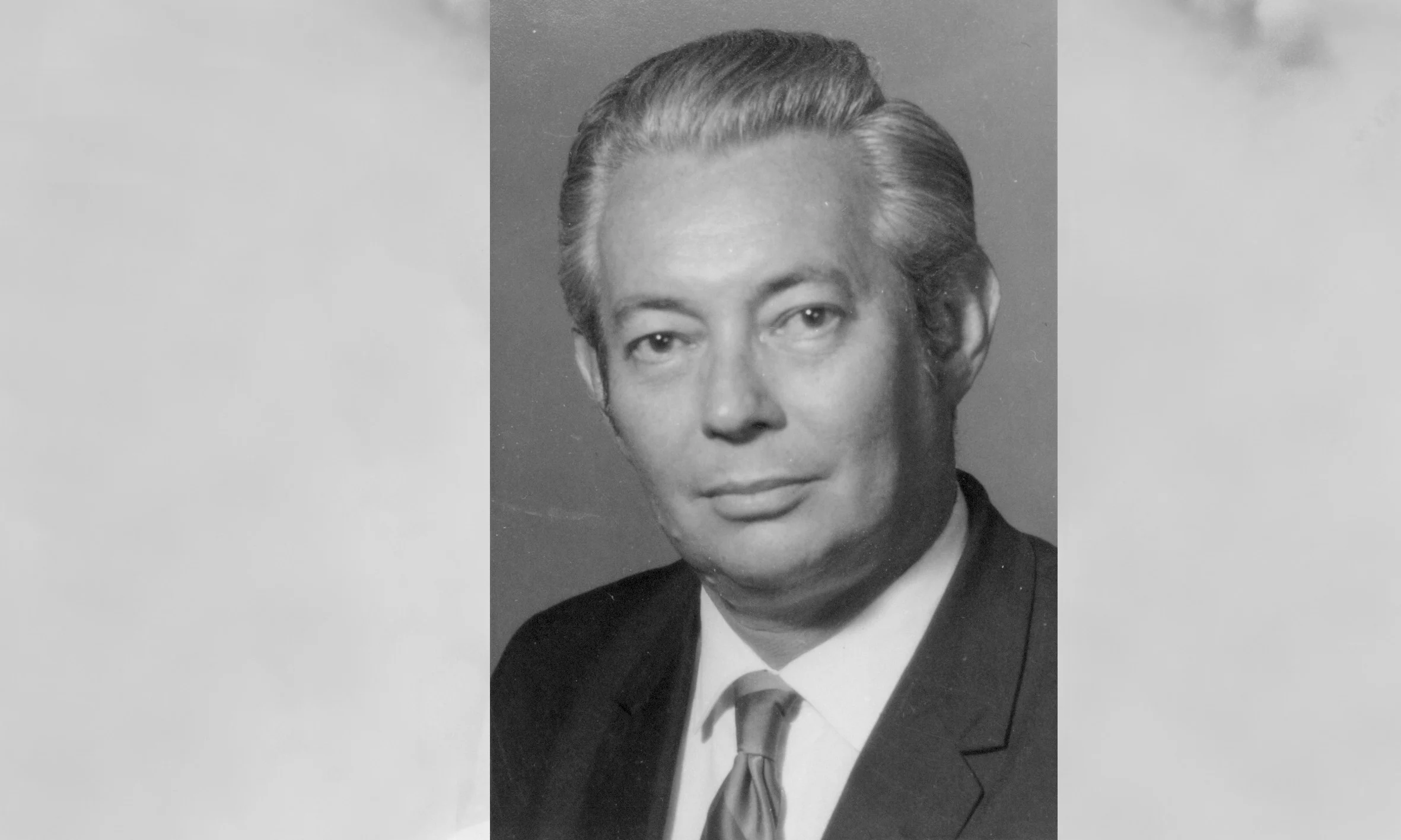
Wathey - the centenary of whose birth will be celebrated this year - understood that if Aruba succeeded in breaking away, it would create a precedent for St. Maarten’s own constitutional future. He famously supported Aruba’s right to self-determination during the pivotal 1981 and 1983 RTCs. By refusing to join a "united front" of the island territories of the Netherlands Antilles that wanted to force Aruba to stay, Wathey effectively weakened the central government’s leverage. His "Live and let live" philosophy paved the way for Aruba to step out of the Netherlands Antilles.
His alliance with Betico Croes was later cemented in the Mullet Bay Accord of 1995. This agreement was critical because it broke the unified front of the remaining islands against Aruba's departure. It effectively signaled the beginning of the end for the "Antilles of Six", as St. Maarten’s support paved the way for Aruba to officially become a separate country within the Kingdom of the Netherlands on January 1, 1986.
Some historians often cite this meeting as the moment that established the "six minus one" precedent, which eventually led to the complete dissolution of the Netherlands Antilles in 2010.
Unfortunately, Betico Croes, who almost single-handedly took Aruba to the mountain top where it could see independence only a decade away, did not live to see the actual separation of Aruba from the rest of the Netherlands Antilles. On the very eve of the attainment of “Status Aparte”, Betico Croes was killed in a mysterious car accident. The cause he had dedicated his whole life to would undergo a dramatic change from then on.