

A Tale of Two Visits: An Analysis of the Dutch and British Royal Visits to the United States
.jpg)
It is rather unusual for two European monarchs to embark on a trans-Atlantic journey to visit someone who has been described as a “wannabe King.”
Yet, that is exactly what we witnessed during the month of April.
In the spring of 2026, as the United States approaches the monumental 250th anniversary of its independence, the streets of Washington D.C. have witnessed a rare and obviously well-choreographed "Royal Spring." The back-to-back visits of King Willem-Alexander of the Netherlands and King Charles III of the United Kingdom offer a fascinating study in modern royal diplomacy.
While both monarchs represent ancient European institutions, their approaches to the American republic in 2026 reveal starkly different philosophies of soft power, economic pragmatism, and historical reckoning.
The Merchant Monarch of the Kingdom of Four “Countries”
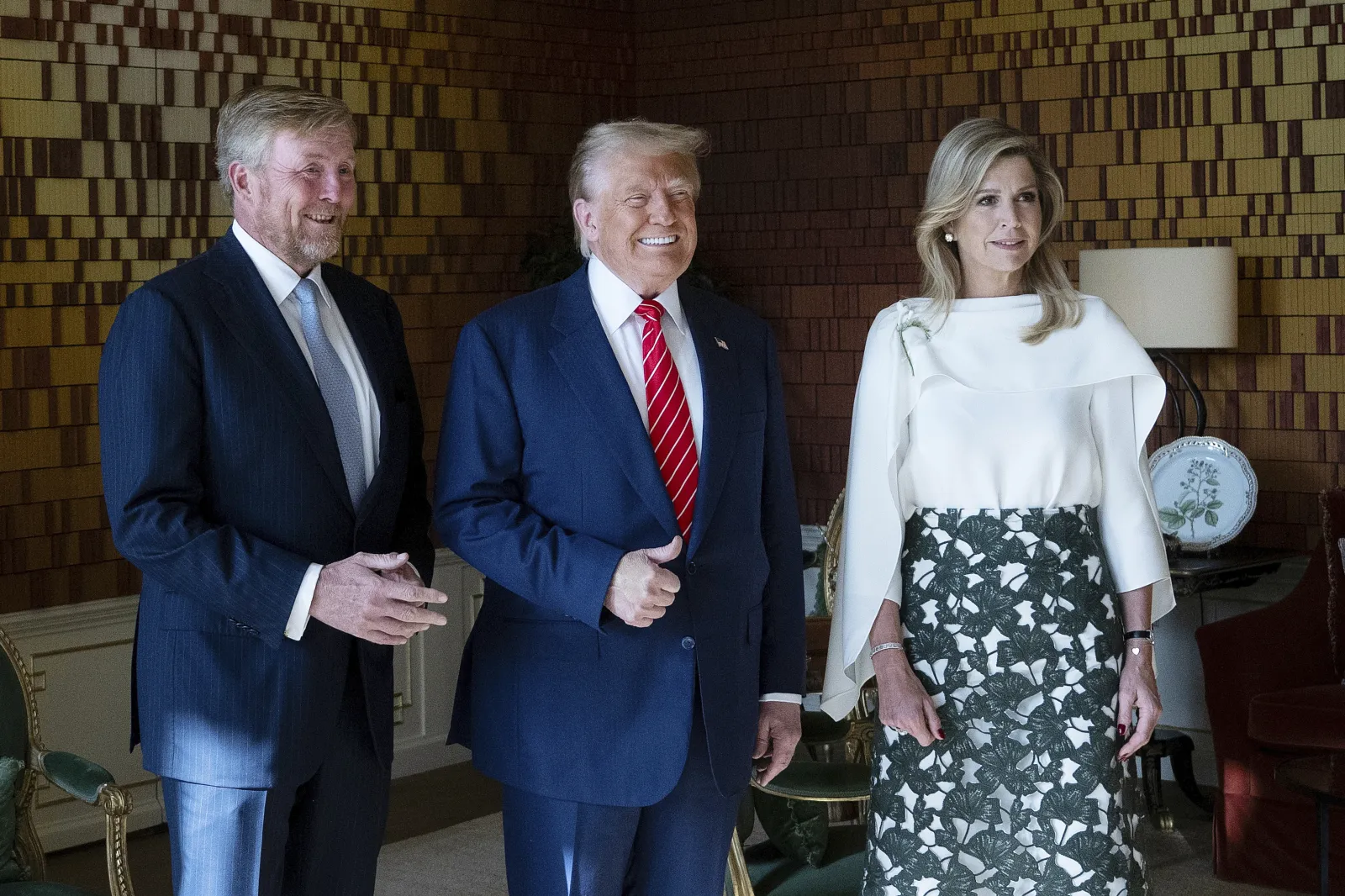
The Dutch royal visit in April 2026 followed a successful precedent set in 2024. However, the 2026 tour—spanning Pennsylvania, Washington D.C., and Florida—distinguished itself by its unapologetic focus on "The Kingdom of the Netherlands" as an entity made up of four so-called “autonomous countries”. Unlike many state visits that focus solely on the European mainland, King Willem-Alexander and Queen Máxima arrived with a clear objective to represent not just one country, the Netherlands, but also Aruba, Curaçao, and Sint Maarten.
The tone of the Dutch visit was distinctly "pragmatic" rather than "ceremonial." While King Willem-Alexander was received at the White House by President Trump, the atmosphere was described as one of "business-like candor." The Dutch monarch is famously approachable, and his interactions in Philadelphia and Savannah (during the 2024 visit) focused on shared challenges like water management, sustainable logistics, and maritime innovation.
Contracts and Economic Interdependence
The results of the Dutch visits are often measured in ledger lines rather than just photo ops. In March 2025, a landmark joint launch of a Tomahawk missile by the Royal Netherlands Navy and U.S. forces served as a prelude to the 2026 royal visit, cementing a massive defense procurement deal involving F-35s and Patriot missiles.
In Florida, last month, the focus shifted to the Caribbean territories, with the King facilitating trade dialogues for St. Maarten and Curaçao, emphasizing that for these nations, Florida remains the most vital economic partner in the hemisphere.
The primary challenge for the Dutch, however, remains the delicate balance of politics. For starters, the current Dutch government is a minority coalition. Secondly, public opinion in the Netherlands in 2026 has been divided; many citizens urged the King to address "fundamental differences" with the U.S. administration regarding climate policy and international law (read the war in Iran).
King Willem-Alexander’s strategy was one of "honest disagreement"—admitting to the press that he made his differences clear to the U.S. President while maintaining that "you don’t get anywhere in the world if you burn bridges."
Besides, the Dutch ace card might be its former Prime Minister, now NATO Secretary-General Mark Rutte whose very cozy relationship with President Trump is well known. In fact, Rutte had visited the White House shortly before the royal visit. Coincidence?? I would wager NO.
The British Approach: Rekindling the “Special Relationship”
In contrast to the Dutch "Royal Working Visit," King Charles III’s visit in April 2026 was a full-scale State Visit—the first for a British monarch since his mother’s visit decades ago. If the Dutch came as partners in trade, the British came as partners in history.
The tone of King Charles’s visit was deeply symbolic, designed to project the "Special Relationship" through the lens of shared democratic values. The highlight was his address to a joint session of Congress on April 28, 2026. His speech was a masterful exercise in linguistic diplomacy, acknowledging the "times of great uncertainty" while celebrating the maturation of a relationship that began in rebellion and evolved into an unbreakable alliance.
While the Dutch deal in missiles and water pumps, the British deal in "atmospherics." The results of Charles’s visit were measured in the reinforcement of the Atlanticist consensus. By appearing alongside the U.S. President at the National Mall—the very heart of the American capital planned by Pierre L’Enfant—King Charles signaled that the UK remains the US’s indispensable European ally.
The visit also touched on the King’s lifelong commitment to environmental stewardship, though this was framed more as a moral imperative rather than a commercial opportunity.

The Ghost of 1776
The timing of the visit of the British monarch presented a unique psychological hurdle. Visiting during the 250th-anniversary preparations for the American Revolution meant the King had to navigate the irony of being the descendant of George III. Charles addressed this head-on, using humor and humility to bridge the gap between the imperial past and the cooperative present.
Moreover, like his Dutch cousin, Charles III faced the challenge of colonial legacy, particularly from Caribbean Commonwealth nations watching closely for more than just ceremonial words on reparatory justice.
He steered clear of this, even though he would go on a historical and “memorable” tour of Bermuda immediately after his US visit.
Colonial Reckoning and Modern Relevance
Both monarchs face a shared existential challenge: how to represent ancient dynasties in a post-independence, hyper-democratic world. For King Willem-Alexander, this has meant visiting the Martin Luther King Jr. Center in Atlanta and acknowledging and apologizing for the Dutch role in the Trans-Atlantic Slave Trade.
However, this rings hypocritical given the fact that, despite the Dutch apologies (by both the Crown and the Government), the same Kingdom government abstained from voting on a critical UN Resolution that called Slavery the “most grievous crime against humanity.”
Furthermore, what use is a mea culpa without penance? The Dutch made it abundantly clear that they were not going to entertain any discussion about Reparations and Reparatory Justice, which was included in the UN Resolution.
For King Charles, who is yet to apologize for the British Crown’s involvement in Slavery, it involves navigating a Commonwealth that is increasingly vocal about the financial and moral costs of empire.
The "results" of these visits in 2026 suggest that the relevance of monarchy today lies in its ability to serve as a "bridge." The Dutch King successfully used his platform to elevate the economic interests of the Dutch Caribbean, a move that provides tangible value to his subjects across the Atlantic. Meanwhile, King Charles used his presence to provide a sense of stability and historical perspective to a U.S. political landscape often characterized by volatility.
What did St. Martin Get Out of the Dutch Royal Visit?
The visit to Miami was the functional heart of the trip for the Caribbean delegates accompanying the Dutch Monarch.
As far as I know, none of the delegates has publicly disclosed any concrete favorable results derived from the royal visit.
Although there was a reaffirmation of Florida (specifically Miami) as the primary logistics and transit hub for Aruba, Curaçao, and St. Maarten, the fact is the relationship between Miami and St. Martin was never a result of any direct Dutch assistance.
Trade, transport, education and culture have turned Miami into the “unofficial capital of the Caribbean,” as is the popular belief in some quarters. But this is as a result of geographical proximity and long-established individual and official government relationships. Suffice it to point to the “Sister City” relationship between St. Martin (South) and Tallahassee, Florida.
Kingdom “Unity”: The main reason, in my view, for the inclusion of the Caribbean territories in the Dutch Royal delegation, especially in its visit to Miami, is to present a facade to the world of “One big happy family.” This is exactly the same reason the Dutch Kingdom delegation to the annual UN General Assembly includes the Prime Ministers of Aruba, Curaçao and St. Martin. It is a ritual that has been developed to make the world believe that the Dutch no longer have colonies while in actual fact, they do.
The UN Resolution on Slavery
The atmosphere of both visits was heavily influenced by the UN General Assembly Resolution A/80/L.48, adopted on March 25, 2026. This resolution declared the Trans-Atlantic Stave Trade the "gravest crime against humanity" and called for reparatory justice.
The "Diplomatic Gap":
The Ghana-sponsored Resolution passed by 123 countries just weeks before the royal visits, created an awkward backdrop because:
The U.S. voted "No" (one of only three countries to do so), alongside Israel and Argentina.
The UK and the Netherlands abstained. Both nations cited legal concerns regarding "non-retroactivity" and the financial implications of reparations, even while acknowledging the "abhorrent nature" of the trade.
These positions - obviously a coordinated European Union stance- lack historical legitimacy (for example, only in 2015 did the UK finally finish paying up the loan it took to compensate its slave- owners for the loss of their “property” at Abolition!). Their legal “argument” is also baseless because there is no statute of limitations for crimes against humanity.
Impact on the Visits:
• King Charles III faced intense pressure from campaigners and some members of Congress to issue a formal apology. He acknowledged the "suffering" but adhered to the UK government's stance that reparations are off the table.
• King Willem-Alexander found himself in a slightly different position, having already issued a formal apology in 2023. However, the Dutch abstention at the UN was criticized by some Caribbean leaders as being at odds with the spirit of that apology.
The contrast was sharp: while the Kings spoke of "shared values," the UN vote highlighted a deep divide between the "Old World" monarchs, their Caribbean territories, and the U.S. host regarding how to morally and legally account for the past.
Conclusion:
The timing of these royal visits wasn't a coincidence, but rather a carefully organized "Royal Spring" designed to coincide with the 250th anniversary of American independence. One might ask though why the European monarchs chose to visit in April rather than wait for the actual official celebrations on July 4? But that would be a different debate.
What is beyond debate is that while both visits were handled by their respective governments—the UK’s Royal Visits Committee and the Dutch Ministry of Foreign Affairs—they both used the 2026 milestone as the primary diplomatic anchor.
The Kinship of the Crowns
Despite their different titles and distinct diplomatic missions, King Charles III and King Willem-Alexander are actually cousins. Their family trees intertwine at several historical junctions. So, it would not be far-fetched to assume that there was some level of coordination between both of them.
The "results" of these visits in 2026 suggest that the relevance of monarchy today lies in its ability to serve as a "bridge." The Dutch King used his platform to focus on the economic interests of the Dutch and its Caribbean colonies. Meanwhile, King Charles used his presence to provide a sense of stability and historical perspective to a U.S. political landscape often characterized by volatility.
King Willem-Alexander provides the blueprint for a "pragmatic, utilitarian monarchy" while King Charles III provides the "ancestral anchor," reminding the American republic of its roots even as it charts an uncertain future. Both visits confirm that while the U.S. may have rejected the crown two and a half centuries ago, it still finds immense value in the stability and diplomatic reach that these modern sovereigns provide.