.jpg)


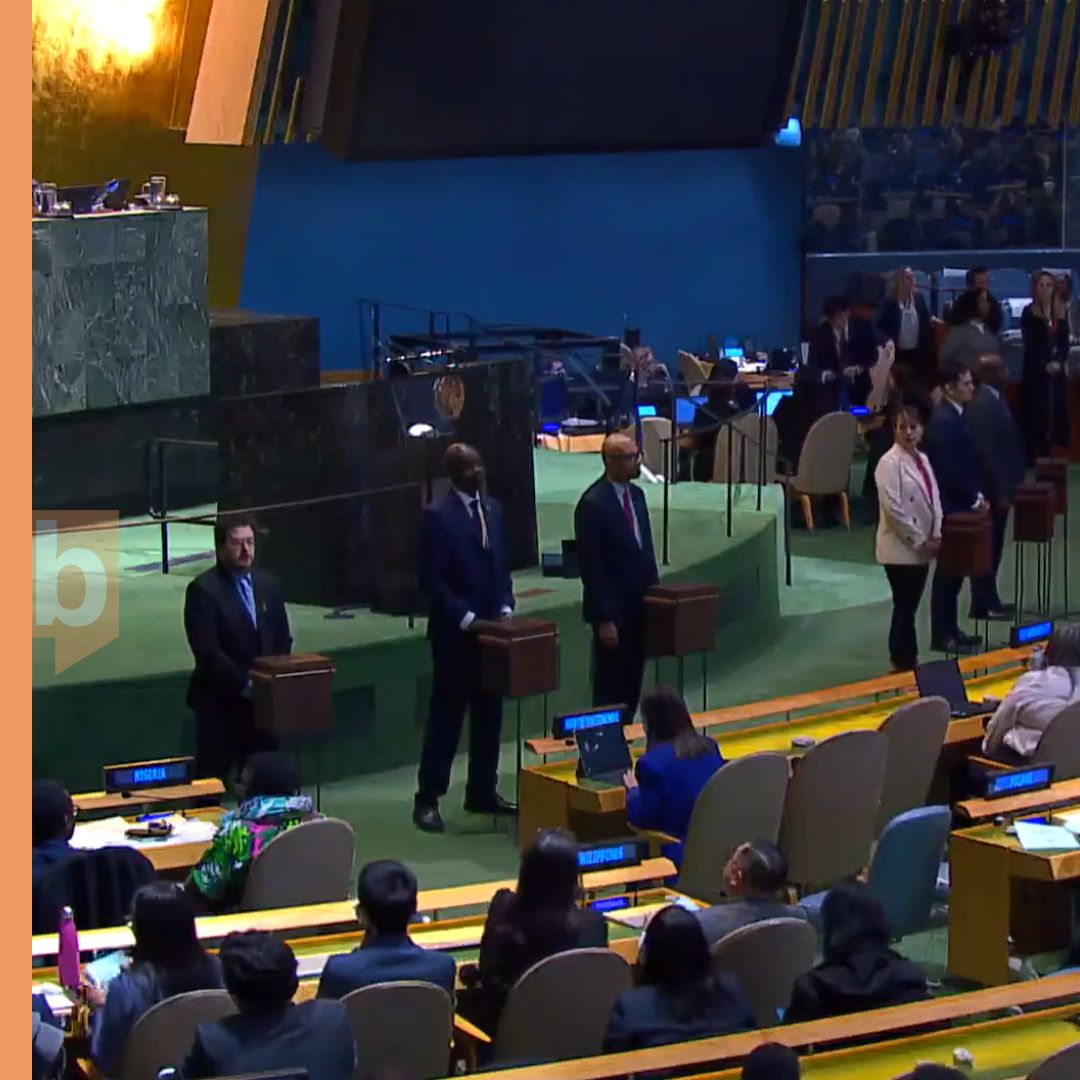
NEW YORK--The United Nations General Assembly on Wednesday adopted a historic Ghana-led resolution declaring the trafficking of enslaved Africans and the racialized chattel enslavement of Africans "the gravest crime against humanity," with France and the Netherlands among the 52 member states that abstained from the vote. The United States, Israel and Argentina voted against.
The resolution, listed as Item 119 - A/80/L.48, was adopted on March 25, 2026, the International Day of Remembrance of the Victims of Slavery and the Transatlantic Slave Trade. The final vote stood at 123 in favour, 3 against, and 52 abstentions.

Before the vote, Ghana had described the measure as a historic initiative aligned with a pledge made by President John Mahama during his address to the UN General Assembly last year. Acting in its capacity as the African Union champion on reparations, Ghana tabled the resolution in collaboration with the African Union, the Caribbean Community, and people of African descent worldwide.
According to the text and Ghana’s earlier explanation, the resolution declared that the trafficking of enslaved Africans and the racialized chattel enslavement of Africans constituted a crime against humanity because of their scale, duration, systemic nature, brutality, and enduring consequences, which continue to shape socio-economic realities and structural inequalities around the world.
Among its key points, the resolution recognized that for roughly 400 years, millions of African men, women, and children were forcibly captured, commodified, and transported across oceans in what it described as the largest forced migration in history and one of the longest-running systems of organized mass human exploitation ever recorded. It also acknowledged longstanding legal and moral traditions affirming the dignity of all human beings, including African jurisprudence such as the Kouroukan Fouga (Manden Charter) of 1235, which established the sovereignty of life over property.

The measure further affirmed the importance of addressing the historical wrongs suffered by Africans and people of African descent in a way that promotes justice, human rights, dignity, healing, and reparatory justice. It noted that reparations and other forms of redress had been provided in other historical contexts involving grave crimes against particular groups, while expressing concern that no comprehensive reparatory framework had yet been realized for the trafficking and enslavement of Africans despite its scale, duration, and continuing effects.
Ghana had said ahead of the vote that the resolution would be the first comprehensive UN resolution on slavery and the transatlantic slave trade in the organization’s 80-year history. It argued that its adoption would help preserve historical truth as a foundation for justice and reconciliation while responding to longstanding calls for meaningful engagement on reparatory justice, accountability, and healing.
The vote took place after activities organized in the lead-up to the resolution’s consideration, including a wreath-laying ceremony at the African Burial Ground in New York on March 24 and a high-level event on reparatory justice at UN Headquarters the same day.
With the measure now adopted, Ghana signaled that it would continue pursuing reparatory justice within the framework of the African Union’s Decade of Action on Reparations and African Heritage (2026-2036), while urging member states to remain, in its words, on the right side of history and justice.
Join Our Community Today
Subscribe to our mailing list to be the first to receive
breaking news, updates, and more.