.jpg)


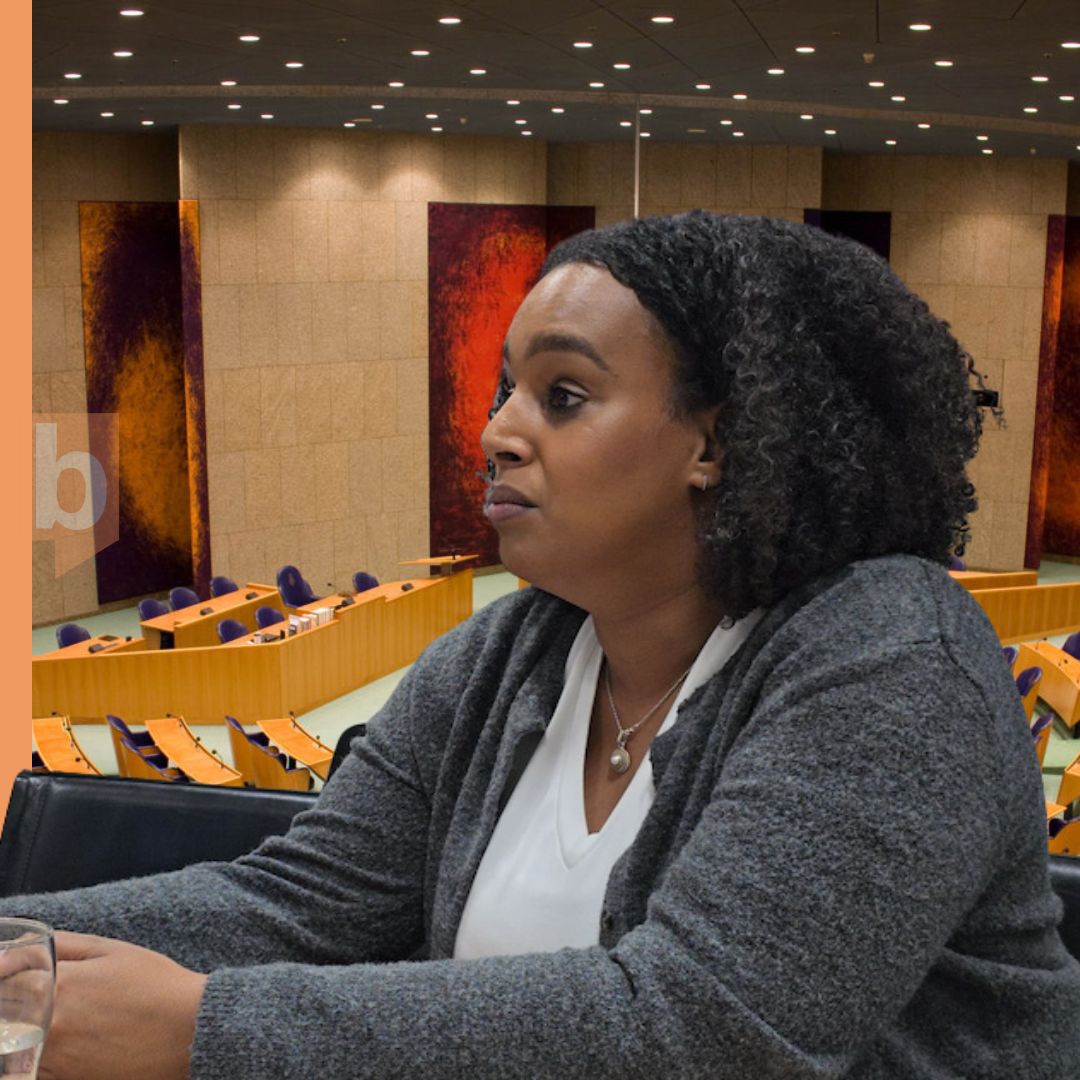
THE HAGUE--A recent push by Caribbean Members of Parliament during the Interparliamentary Kingdom Consultation, IPKO, to keep slavery, its legacy and reparatory justice on the Kingdom agenda was reflected this week in the Tweede Kamer, where Dutch MP Mikal Tseggai questioned the Dutch Cabinet on its handling of the issue.
Tseggai raised questions to Minister of Interior and Kingdom Relations Pieter Heerma about the Netherlands’ position on Ghana’s United Nations resolution on the transatlantic slave trade, the lack of involvement of St. Maarten, Curaçao and Aruba in the Kingdom’s position, and the Cabinet’s approach to the continuing effects of slavery in present-day society.
Her line of questioning followed the recent IPKO in the Netherlands, where MP Sjamira Roseburg of St. Maarten and other Caribbean MPs were adamant that the matter remain on the agenda. Roseburg has previously argued that IPKO should not be dismissed as a “snoepreis,” or a travel exercise without substance, but should be recognized as a platform that can lead to tangible discussion and follow-up on issues affecting the people of the Dutch Caribbean.
Roseburg also stressed the importance of open communication among MPs across the Kingdom to advance difficult topics, monitor progress and lend support where necessary. The fact that the issue was subsequently raised in the Tweede Kamer underscored the relevance of those exchanges and the importance of continued parliamentary dialogue within the Kingdom.
Tseggai opened her questions by referring to the story of Elisabeth Samson, a free-born Black woman from Paramaribo, Suriname, born in 1715, who challenged the refusal to allow her to marry a white man. Tseggai said Samson’s story showed that even when a Black person was born free in that era, true freedom to make personal choices did not exist.
She connected that history to the upcoming Ketikoti commemoration of the abolition of slavery and said her faction found it painful that the Netherlands did not vote in favor of Ghana’s resolution at the United Nations. She also noted that St. Maarten, Curaçao and Aruba were not involved in the Kingdom’s position.
Tseggai questioned why the Dutch Cabinet was not represented at the Ghana conference that followed the resolution, noting that France participated online through President Emmanuel Macron. She asked what the Cabinet’s approach says about its view of the colonial past and relations within the Kingdom, and whether the Minister sees concrete consequences of slavery’s legacy in today’s society.
Minister Heerma responded that since the Dutch government’s apologies in late 2022 and July 2023, steps have been taken to strengthen awareness, recognition and attention to the continuing effects of the slavery past. He pointed to the establishment of a slavery commemoration committee, education, research and subsidy arrangements for social initiatives in European Netherlands and the Caribbean.
Heerma said the Netherlands recognizes that slavery was a crime against humanity and that its effects continue across generations. He also said the Cabinet remains committed to remembrance, education, research, dialogue and the fight against racism and discrimination.
However, the Minister said the Netherlands could not support certain elements of Ghana’s UN resolution. According to Heerma, the concerns included references that the Cabinet viewed as implying retroactive application of international law, as well as objections to what he described as the introduction of a hierarchy among crimes against humanity.
He said the Netherlands, together with European Union member states and a broader group of countries, abstained from the vote because consensus could not be reached. He also said the Kingdom did not join the outcome document of the Ghana conference for similar reasons.
At the same time, Heerma said the Cabinet takes the calls from Ghana and other countries seriously and will study them carefully. He said the Netherlands had been in contact with the Caribbean parts of the Kingdom about the conference, participation and the Dutch position.
Tseggai pressed further, saying the Cabinet could still have chosen to participate in the conversation in Ghana, even if it did not agree with the conference’s outcome. She said that with France represented by its President, the Netherlands appeared to be on the sidelines.
She asked whether the Minister would commit to discussions with countries relevant to the issue, as well as with communities in European Netherlands and the Caribbean Netherlands, specifically Curaçao, Aruba and St. Maarten.
Heerma responded that the Netherlands was represented at the conference through its ambassador in Accra, who spoke about the return of cultural heritage unlawfully acquired during the colonial period. He said similar discussions are also taking place with countries such as Indonesia, Sri Lanka and Nigeria.
The Minister also said contact had taken place with the Caribbean parts of the Kingdom ahead of the Ghana conference, after earlier criticism that communication had not taken place before the UN vote.
Tseggai then asked the Minister to provide feedback to Parliament before the budget on discussions with Ghana and other relevant parties. Heerma said he would provide a letter before the planned committee debate on the slavery past, which he said is scheduled for October.
Tseggai also returned to the issue of discrimination and racism, noting that the Minister had acknowledged them as consequences of the slavery past. She questioned why the Cabinet had not allocated additional money to address discrimination and racism and asked whether concrete plans with the necessary resources would be presented ahead of the budget.
Heerma said he could not promise extra money, stating that requests for additional funding are being made in many debates and that he does not have more funds than are available. He said several measures are already being worked on, including expanding equal treatment legislation, strengthening anti-discrimination facilities, introducing a discrimination test, advancing a national approach to discrimination and racism, and legally embedding the National Coordinator against Discrimination and Racism.
Tseggai closed by saying that measures without money will not be properly implemented. She said spending money in The Hague is a political choice and urged the Minister to think carefully about those choices ahead of the budget.
Other MPs also entered the discussion.
FVD MP Russcher questioned how the Netherlands would handle the outcomes of the Ghana conference, saying more than 80 countries had gathered to discuss slavery, reparations, climate damage payments and other forms of compensation. He asked whether the Netherlands would cooperate with a reparations fund, engage on climate-related payment claims, or other reparations demands. He also asked whether the Netherlands had already committed to returning more than 2,000 objects to Ghana.
Minister Heerma responded that discussions with Ghana on cultural restitution are ongoing, as they are with other countries. He said questions about legal obligations flowing from the UN resolution were among the reasons the Netherlands abstained from the vote.
50PLUS MP Struijs asked the Minister to include Suriname in the letter to Parliament ahead of the committee debate on the slavery past. He said his faction receives many questions about the colonial and slavery past in Suriname and asked for a status update on insights and future steps.
Heerma called the request justified and said Suriname would receive attention in both the letter and the debate.
DENK MP Van Baarle criticized the way the Netherlands abstained from the UN vote without prior consultation with the other countries in the Kingdom. He said many people living today with the consequences of the slavery past are asking what the government is willing to do in concrete terms. He questioned why the Cabinet was not coming with something more specific to show that it takes the matter seriously.
Heerma responded that the Cabinet has already taken steps since the apologies, including commemoration, education, research and subsidies for social initiatives. He also acknowledged that the communication with the Caribbean parts of the Kingdom before the UN vote should have been better. He said the Minister of Foreign Affairs and the Prime Minister had already indicated that future communication within the Kingdom should receive more attention.
ChristenUnie MP Ceder asked whether the Minister’s letter could also address issues related to Suriname’s independence and the Toescheidingsovereenkomst, noting that there are unresolved matters connected to that agreement.
Heerma said he was unsure whether that issue belongs at the same table, but committed to addressing it in the letter, while leaving open which debate would be the most appropriate place to handle it.
The session ended with the Minister’s commitment to send Parliament a letter before the planned October committee debate on the slavery past. For St. Maarten and the wider Dutch Caribbean, the exchange showed that issues raised through IPKO can move into the Dutch parliamentary process, especially when MPs across the Kingdom maintain communication and follow-up on shared concerns.
Join Our Community Today
Subscribe to our mailing list to be the first to receive
breaking news, updates, and more.