.jpg)


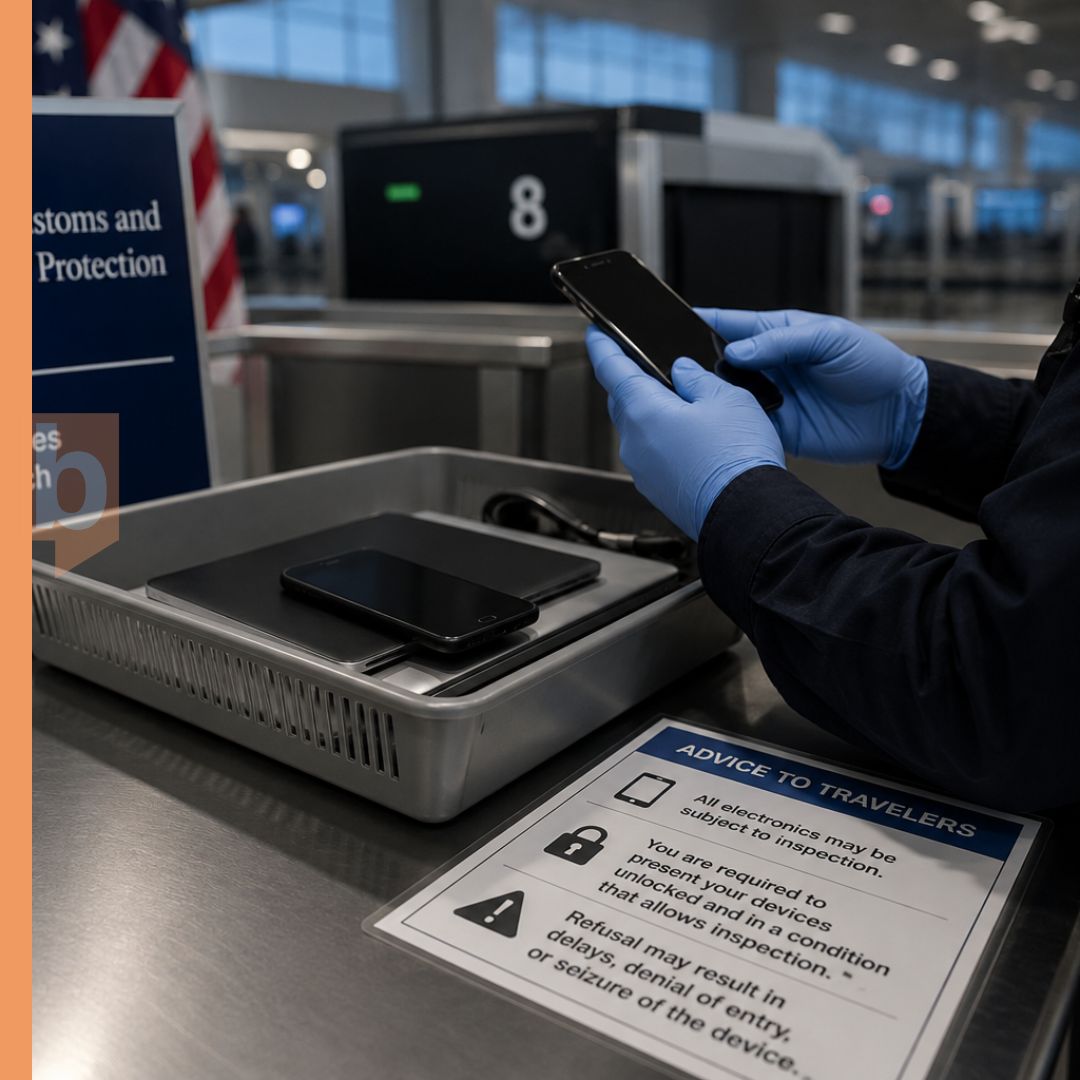
WASHINGTON--International travelers entering the United States can have their phones, laptops and other electronic devices searched by border officers without a warrant under an updated U.S. Customs and Border Protection policy now in effect. The revised CBP directive, effective January 1, 2026, sets out procedures for the search, review, retention and sharing of information found on electronic devices at U.S. ports of entry, including airports, seaports and land borders.
Under the policy, CBP officers may conduct what the agency calls a "basic search" of an electronic device without a warrant and without individual suspicion. This can include manually reviewing content stored on a phone, computer, camera or other electronic device.
For Caribbean travelers, including residents of St. Maarten who frequently travel to Puerto Rico, Florida and other U.S. destinations, the policy means personal electronic devices may be subject to examination during the U.S. border inspection process. Refusing to unlock or present a phone in a condition that CBP can examine can have real consequences, especially for a foreign visitor entering the United States.
CBP says a passcode-protected or encrypted device that cannot be inspected may be detained, excluded from entry with the traveler, or otherwise subjected to further action. The traveler can also face a longer inspection while officers attempt to resolve access to the device.
For a non-U.S. citizen seeking admission, refusal could also become part of the wider admissibility process. CBP officers are deciding whether the traveler may enter the country, so a refusal can lead to extended questioning, secondary inspection and potentially being denied admission, depending on the circumstances and immigration status. CBP's published guidance does not say that every refusal automatically results in denial of entry.
A more extensive "advanced search" involves connecting external equipment to a device to copy, review or analyse its contents. CBP policy states that such searches require reasonable suspicion of a violation of law enforced or administered by the agency, or a national security concern, as well as approval from a senior manager.
The directive also limits searches to information stored on the device. CBP policy requires officers to disable network connectivity before conducting a search so that the examination does not intentionally access information stored only in the cloud.
Travelers may be asked to present a device in a condition that allows it to be examined. The directive provides procedures for handling passcodes and other information used to gain access to a device, as well as rules governing the detention of devices for further examination.
The consequences of refusing to cooperate can differ depending on a traveler's status. U.S. citizens cannot be prevented from entering the United States solely because they refuse to unlock a device, but a device may be detained and the traveler may face additional inspection. Foreign visitors seeking admission face greater consequences because CBP officers are also responsible for determining whether a person is admissible to the United States.
The issue has drawn renewed attention as electronic-device searches at U.S. borders continue to increase. CBP says it processed more than 419 million travelers during fiscal year 2025 and searched the electronic devices of 55,318 international travelers. While representing less than 0.01 per cent of travelers processed, the figure reflects tens of thousands of device examinations in a single year.
CBP maintains that electronic-device searches are used to support border security, enforce U.S. laws and determine the admissibility of travelers. The agency's authority applies to devices crossing the U.S. border and can include mobile phones, computers and cameras.
Join Our Community Today
Subscribe to our mailing list to be the first to receive
breaking news, updates, and more.