.jpg)


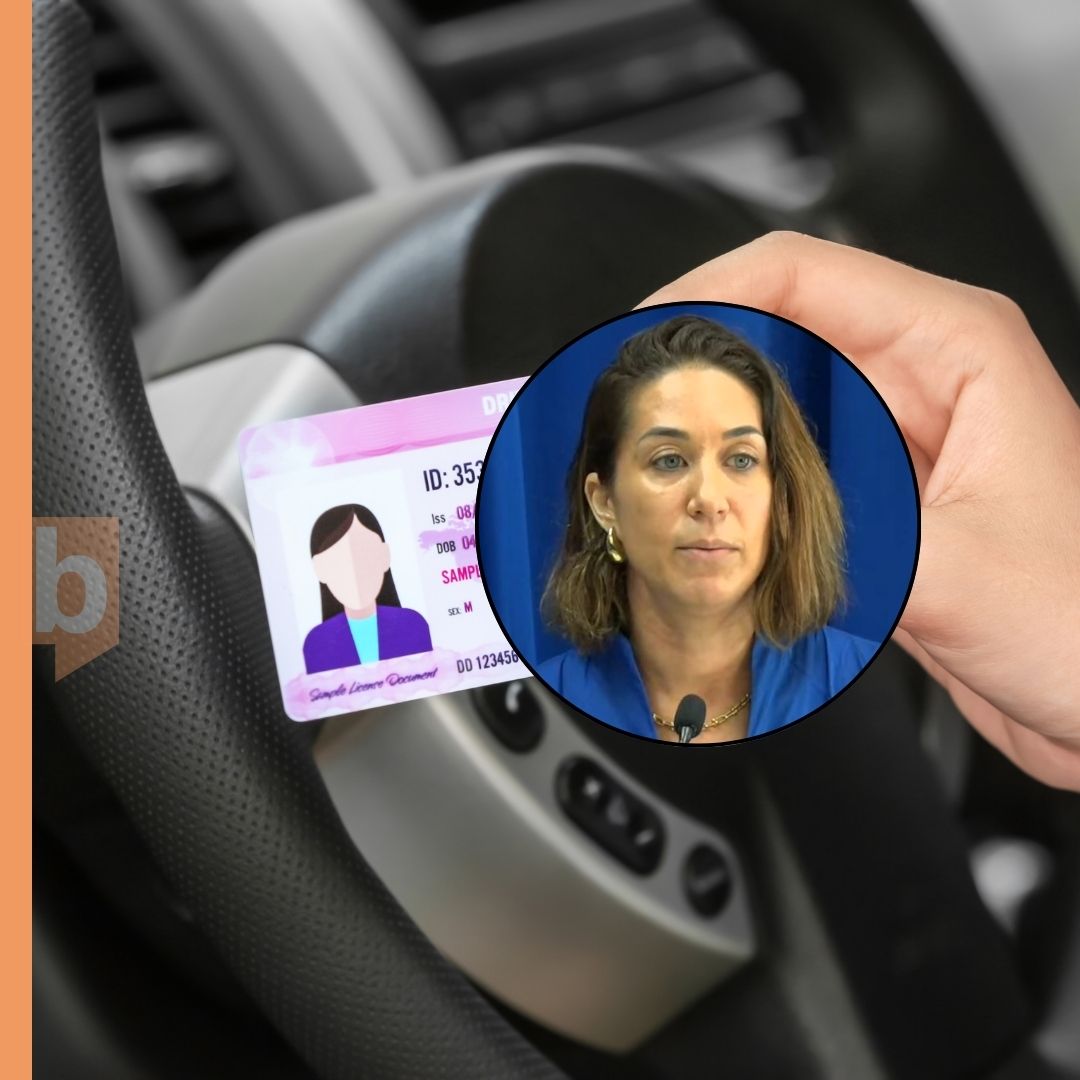
GREAT BAY--Minister of Justice Nathalie Tackling told Parliament that St. Maarten cannot simply require visitors who already possess a legally recognized foreign or international driver’s license to purchase an additional local driving permit, saying such a measure could conflict with the country’s obligations under the 1949 Geneva Convention on Road Traffic.
Responding to questions during the 2027 budget deliberations, Tackling explained that the Convention applies to St. Maarten and is reflected in the country’s Road Traffic Ordinance, which provides for the recognition of qualifying foreign and international driving licenses.
Visitors who satisfy those requirements are therefore already legally entitled to drive in St. Maarten without obtaining an additional local license simply because they are tourists.
Tackling said this means Government cannot treat a paid visitor’s driving permit primarily as a revenue-generating measure if doing so effectively places another licensing requirement on people whose right to drive St. Maarten is already obligated to recognize.
“For the sake of clarity, I want to mention that this question has been examined legally before,” Tackling told Parliament.
She pointed Parliament back to 2014, when Government attempted to introduce a temporary driving permit for visitors through draft legislation.
According to the legal review conducted at the time, the proposed measure effectively amounted to an additional tourist driver’s licence. The Council of Advice concluded that visitors whose foreign or international driving permits were already recognized could not simply be forced to purchase another permit as a condition for driving in St. Maarten.
Such a requirement, Tackling explained, would run contrary to the country’s treaty obligations.
The earlier advice is significant because it separates two different issues: Government’s authority to regulate who may legally operate a vehicle and Government’s desire to raise revenue from visitor activity.
The legal problem does not necessarily mean Government cannot generate revenue connected to rental vehicles or visitors who drive. Rather, it means a revenue measure cannot simply be presented as an additional driving licence if international and local law already grants the visitor the right to drive.
The Council of Advice previously pointed Government toward taxation as a possible alternative if revenue generation was the real objective.
The Road Traffic Ordinance also contains provisions dealing with temporary driving authorization in specific circumstances. Those provisions could potentially apply to visitors whose foreign licences do not qualify for automatic recognition, but that is different from imposing a blanket paid permit on every visitor renting or operating a vehicle.
The issue returned to Parliament as MPs explored additional revenue streams and questioned whether St. Maarten could introduce a visitor driving permit similar to systems used elsewhere in the Caribbean.
MP Darryl York specifically raised Barbados, asking Tackling to examine how that jurisdiction had structured its visitor driving system while operating within international road traffic arrangements.
The Barbados comparison, however, has developed further. Barbados historically required visitors to obtain a paid Visitor’s Registration Certificate, commonly referred to as a visitor’s permit. That system was changed in October 2025, when Barbados eliminated the visitor driving permit and replaced the charge with a daily car rental levy, capped at a maximum amount.
That change could provide a different model for St. Maarten to examine if the objective is primarily revenue rather than determining whether tourists are legally permitted to drive.
Under such an approach, Government would not necessarily be charging someone for recognition of a foreign driving licence. Instead, a levy could potentially be connected to the rental transaction or use of the rental vehicle, subject to St. Maarten’s own tax laws and any required legislative changes.
York told Parliament that he was not prepared to abandon the idea simply because the earlier version encountered legal objections, arguing that Government should examine how other jurisdictions have structured comparable measures.
His request essentially shifts the discussion from whether St. Maarten can impose a “tourist driver’s licence” to whether Government could legally design another type of visitor or rental-car charge that achieves the revenue objective without conflicting with the Geneva Convention.
Tackling indicated that Government could look further into the approaches used elsewhere, but maintained that any proposal must first withstand scrutiny under St. Maarten’s Road Traffic Ordinance and international obligations.
Join Our Community Today
Subscribe to our mailing list to be the first to receive
breaking news, updates, and more.