

.jpg)


“𝘞𝘩𝘦𝘯 𝘢 𝘱𝘦𝘳𝘴𝘰𝘯 𝘩𝘰𝘭𝘥𝘪𝘯𝘨 𝘱𝘶𝘣𝘭𝘪𝘤 𝘰𝘧𝘧𝘪𝘤𝘦 𝘵𝘢𝘬𝘦𝘴 𝘮𝘰𝘯𝘦𝘺 𝘵𝘩𝘢𝘵 𝘣𝘦𝘭𝘰𝘯𝘨𝘴 𝘵𝘰 𝘵𝘩𝘪𝘴 𝘤𝘰𝘶𝘯𝘵𝘳𝘺, 𝘵𝘩𝘦 𝘩𝘢𝘳𝘮 𝘪𝘴 𝘯𝘰𝘵 𝘢𝘣𝘴𝘵𝘳𝘢𝘤𝘵 𝘢𝘯𝘥 𝘪𝘵 𝘪𝘴 𝘯𝘰𝘵 𝘭𝘪𝘮𝘪𝘵𝘦𝘥 𝘵𝘰 𝘢 𝘭𝘦𝘥𝘨𝘦𝘳. 𝘌𝘷𝘦𝘳𝘺 𝘨𝘶𝘪𝘭𝘥𝘦𝘳 𝘵𝘢𝘬𝘦𝘯 𝘸𝘢𝘴 𝘢 𝘨𝘶𝘪𝘭𝘥𝘦𝘳 𝘵𝘩𝘢𝘵 𝘵𝘩𝘪𝘴 𝘤𝘰𝘶𝘯𝘵𝘳𝘺 𝘩𝘢𝘥 𝘢𝘭𝘳𝘦𝘢𝘥𝘺 𝘥𝘦𝘤𝘪𝘥𝘦𝘥 𝘵𝘰 𝘴𝘱𝘦𝘯𝘥 𝘰𝘯 𝘪𝘵𝘴 𝘰𝘸𝘯 𝘱𝘦𝘰𝘱𝘭𝘦, 𝘢𝘯𝘥 𝘪𝘵 𝘸𝘢𝘴 𝘵𝘢𝘬𝘦𝘯 𝘣𝘺 𝘴𝘰𝘮𝘦𝘰𝘯𝘦 𝘵𝘩𝘰𝘴𝘦 𝘱𝘦𝘰𝘱𝘭𝘦 𝘩𝘢𝘥 𝘤𝘩𝘰𝘴𝘦𝘯 𝘢𝘯𝘥 𝘵𝘳𝘶𝘴𝘵𝘦𝘥 𝘵𝘰 𝘴𝘱𝘦𝘯𝘥 𝘪𝘵."
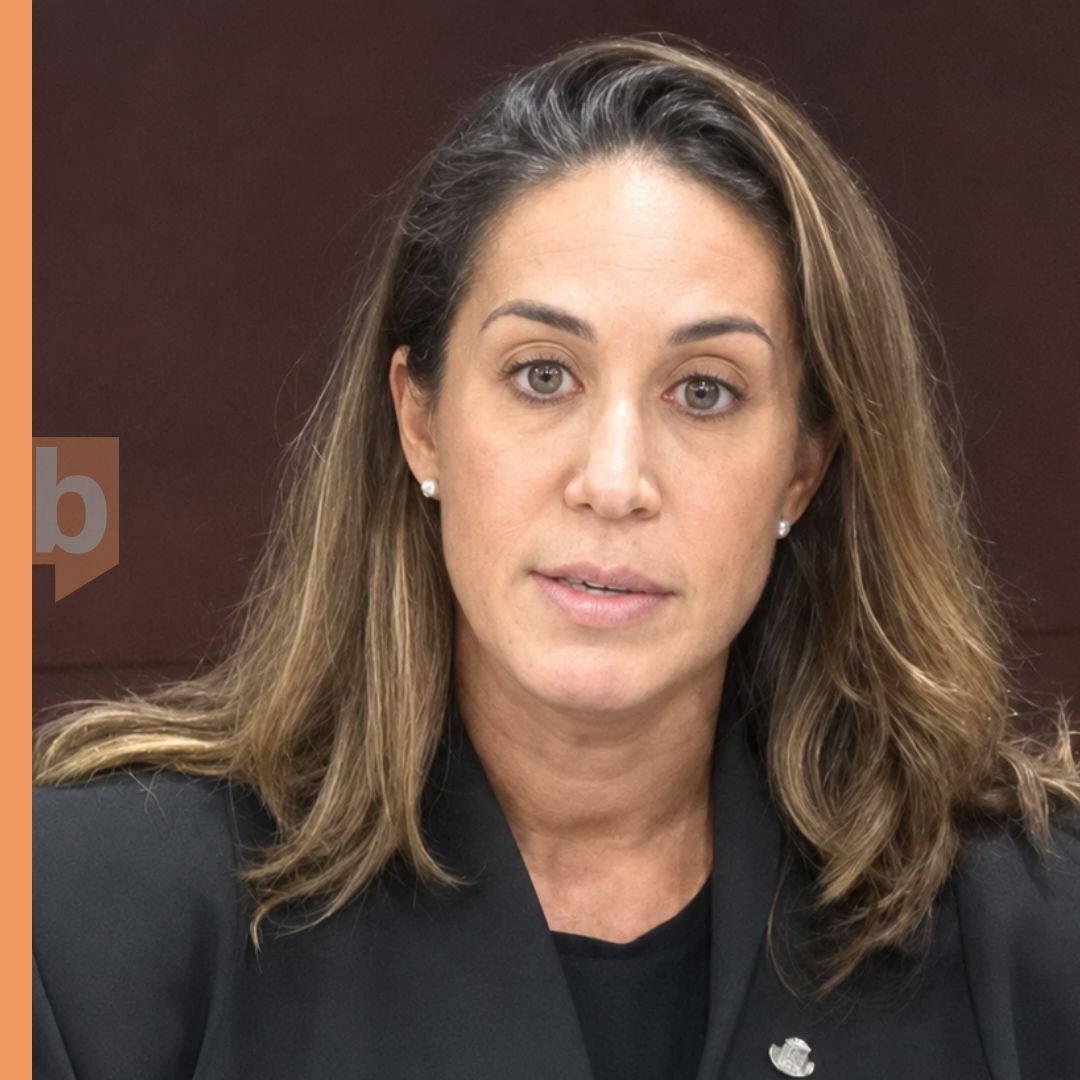
GREAT BAY--Minister of Justice Nathalie Tackling delivered her strongest public response yet to questions surrounding detention capacity and the continued incarceration of persons convicted of financial and integrity offences, rejecting suggestions that prison cells occupied by such offenders should automatically be made available for violent criminals and firmly denying that any personal issue involving the Prosecutor’s Office or her ministry is influencing the treatment of individual inmates.
Responding Wednesday during the second round of the 2026 budget debate to questions from MP Viren Kotai, Tackling did not mention Theo Heyliger by name. However, Kotai’s questions had specifically referenced Heyliger and asked whether there was a personal issue involving the Prosecutor’s Office, the Ministry of Justice or another authority that could be affecting his continued incarceration.
Tackling first addressed what she described as the central premise behind several of Kotai’s questions, namely that persons convicted of financial and integrity offences are occupying prison cells that should instead be reserved for violent offenders.
“A good deal has been said about persons convicted of financial and integrity offenses occupying cells that should hold violent offenders,” Tackling said. “It has been put as though it describes a choice made by this minister. It does not.”
She pointed Parliament to the published position of the Prosecutor’s Office, referring to its 2020 annual report in which the Chief Prosecutor stated that prison capacity must also be available for public officials and civil servants who misuse public funds or exploit their positions for personal enrichment.
Tackling stressed that this policy was established by the Prosecutor’s Office, which is legally responsible for executing criminal judgments, and that it existed long before her tenure as Minister of Justice.
“The stated purpose is that despite limited resources, crime will not go unpunished in this country,” Tackling said. “That is a published policy position of the Public Prosecutor’s Office. It was taken by the authority the law charges with taking it. It was not taken by me.”
The Minister then went further than she previously has publicly when addressing the consequences of financial and integrity crimes, rejecting the suggestion that such offences should be considered less serious simply because they do not involve physical violence.
“When a person holding public office takes money that belongs to this country, the harm is not abstract and it is not limited to a ledger,” Tackling told Parliament.
She said the consequences are reflected in services government cannot provide and investments that cannot be made.
“It is a school roof that we did not repair. It is a road that we did not fix. It is a police force that we could not staff and a prison we could not build, which is a large part of why we are having this conversation about detention capacity today,” she said.
Tackling also connected financial misconduct involving public resources to the cost of living, pointing to throughput fees at the harbor and the way such costs ultimately move through importers and wholesalers before reaching supermarket shelves.
“The pensioner in Sucker Garden paid for that,” Tackling said. “She has never even seen a courtroom and she does not know the file, but she has been paying every week at the cash register.”
The Minister said every guilder misappropriated from the country represents money that had already been intended for the people of St. Maarten.
“Every guilder taken was a guilder that this country had already decided to spend on its own people, and it was taken by someone those people had chosen and trusted to spend it,” Tackling said.
She described public trust as fundamental to the functioning of a small country.
“That trust is not a soft thing. It is the working capital of a country this size. When it is spent, we do not get it quietly back.”
Tackling then addressed Kotai’s question about whether there is currently a shortage of prison cells. She answered unequivocally that there is.
“No, I cannot concur,” Tackling said in response to the suggestion that there was no shortage. She said St. Maarten has experienced insufficient detention capacity for more than 15 years.
The Minister pointed to the new Point Blanche prison project, saying approximately Cg 53 million is being invested in construction precisely because additional capacity is needed. She also referred to sentenced persons being housed outside St. Maarten because sufficient space is unavailable locally.
Tackling rejected the reasoning that the existence of a prison shortage should automatically compel her to use Article 137 to release prisoners earlier.
She explained that Article 137 permits a minister to establish an earlier conditional release percentage when there is an acute shortage of detention space, but does not require the minister to do so merely because a shortage exists.
“A shortage is a necessary condition. It is not a sufficient one, and it is not a command,” she said.
Tackling described early release as a last-resort mechanism rather than the first response to overcrowding.
“Advancing a release date means a sentence imposed by our own court is served in part rather than full,” she said. “It is a relief valve, and a relief valve is the last thing that you open, not the first.”
She said government is instead responding to the shortage by constructing additional prison capacity, recruiting and training corrections officers and housing sentenced persons abroad so that imposed sentences can continue to be executed.
“Early release is the option we work to avoid needing, not the one that we reach for to prove a point,” Tackling said.
The Minister also expanded on questions surrounding the use of ankle bracelets, rejecting the suggestion that electronic monitoring could simply be used to remove selected inmates from Point Blanche and free prison cells.
“An ankle bracelet is not an alternative to a cell,” Tackling said.
She explained that the legal basis allowing someone to leave detention must already exist before electronic monitoring can be imposed. A detainee does not become eligible for release simply because an ankle bracelet is available.
“The person who qualifies, qualifies with or without the ankle bracelet. The person who does not qualify does not become eligible because we have a piece of equipment sitting in a box,” she said.
According to Tackling, electronic monitoring improves supervision of persons who have already legally qualified to leave detention, but does not itself create additional prison capacity.
“What it does is it improves supervision of persons who are already going out. That is, again, control, not capacity,” she said.
Tackling also clarified the respective responsibilities of the prison administration, the Prosecutor’s Office and the Minister of Justice.
She said the prison director is responsible for management of the facility, including order and safety inside the institution, the daily regime and occupancy records. The Prosecutor’s Office is responsible for executing criminal judgments, determining which sentences are called up and when, and holding the relevant detention titles.
As Minister of Justice, Tackling said she is responsible for the prison as an organization within her ministry, including staffing, budget, policy and development of the new prison facility.
On the backlog of people awaiting execution of their sentences, Tackling explained that the Prosecutor’s Office measures the backlog in total outstanding years of imprisonment rather than simply counting individuals.
She said a headcount is not readily available from the case-registration system and would not necessarily accurately reflect the detention backlog because one person can have multiple judgments while sentences can range from weeks to years.
Tackling indicated that the outstanding backlog remains in excess of 300 years of imprisonment.
She then directly addressed Kotai’s question about whether a “personal issue” exists involving the Prosecutor’s Office or Ministry of Justice in relation to a particular inmate.
“The honorable member has named a person, but I’m not going to follow him there,” Tackling said. “I do not discuss individual detainees on the floor of Parliament and I do not make an exception because the name is said out loud on the floor of Parliament.”
She said doing so would undermine the same protection owed to any other detainee whose name might later be raised publicly.
However, Tackling said she would answer the underlying allegation because it concerned the integrity of the Prosecutor’s Office and her ministry.
“There is no personal issue,” she said.
Tackling said her answer does not depend simply on Parliament accepting her assurance because Article 137 itself establishes a mandatory ranking system governing who is considered when an earlier release percentage is applied.
Under that system, she explained, the detainee proportionately closest to the statutory release date comes first. Every eligible detainee is ranked using the same reference date and percentage, including persons serving St. Maarten sentences outside the country.
“No one ranking higher may be passed over by somebody below them,” she said.
The Minister said the system contains no mechanism for factoring in the inmate’s name, former political office, type of conviction, political connections or the identity of persons advocating either for or against the inmate.
“There is no field in that calculation for the name of the inmate, nor for the office that that person once held, for what they were convicted of, for who speaks on their behalf or for who would prefer that they were to remain there,” Tackling said.
She added that the framework prevents a Minister of Justice from manipulating the ranking either to keep a specific person incarcerated or to secure that person’s earlier release.
“A minister who wished to keep a particular person in a cell could not do it through this article. A minister who wished to move one out could not do it either,” she said.
Tackling said that limitation is deliberate and intended to prevent precisely the type of political or personal interference suggested in Kotai’s question.
“I have no discretion to favor and I have no discretion to punish,” she said. “That is not a limitation I resent. It is the entire protection of the law.”
The Minister further pointed to judicial oversight as another safeguard. She said Article 139 of the Criminal Code allows a sentenced person to file a reasoned objection within 14 days against a decision or the absence of one.
Anyone who believes personal considerations have influenced a decision therefore has a legal avenue to challenge it before the court, Tackling said.
“That court is not in my ministry and the court does not answer to me,” she told Parliament.
For Tackling, this means the release framework does not depend on trusting the minister or the Prosecutor’s Office at face value. It rests on statutory criteria applied across inmates and ultimately remains subject to review by an independent judge.
“The framework does not rest on my good face. It does not require the honorable member to take my word for anything,” Tackling said. “It is a statutory ranking applied to everyone at the same percentage, subject to the review of a judge.”
While Tackling deliberately declined to discuss Heyliger’s individual circumstances, her response represented her clearest rejection to date of suggestions that his continued incarceration could be driven by a personal dispute, political considerations or selective treatment.
Her wider message was equally direct: financial and integrity offences involving public funds cannot be dismissed as secondary crimes simply because they are non-violent. In Tackling’s view, the damage from the misuse of public money is ultimately borne by every resident through services not delivered, infrastructure not built and costs that continue to fall on households.
Join Our Community Today
Subscribe to our mailing list to be the first to receive
breaking news, updates, and more.
