


.jpg)


CAY HILL--St. Maarten’s unfinished new General Hospital is no longer just a local story about one delayed construction project. Viewed against FINSO’s publicly traceable healthcare record since 2016, it increasingly looks like part of a wider pattern: major hospital developments that stretch over years, face revised timelines, encounter higher costs, and require financial adjustments to keep moving.
Of six major post-2016 hospital and medical-center projects publicly tied to FINSO, or to its direct corporate continuity from INSO, only one can be clearly verified as completed. The others remain unfinished, delayed, or have moved forward only after revised funding frameworks, cost escalation, or public concern over rising construction expenses.
In that context, St. Maarten’s hospital project appears less like an isolated setback and more like a familiar case. The project began under INSO, later continued under FINSO, and over the years the explanation has barely changed: construction delays, rising material costs, supply-chain disruptions, and the need to revisit the original financial terms.
The island’s new General Hospital is one of its most important public infrastructure projects, yet nearly 10 years after procurement began, the country is still waiting for completion while hearing many of the same explanations that have surfaced in other FINSO-linked healthcare developments abroad.
Continues below...
A small project record, and only one clear completion
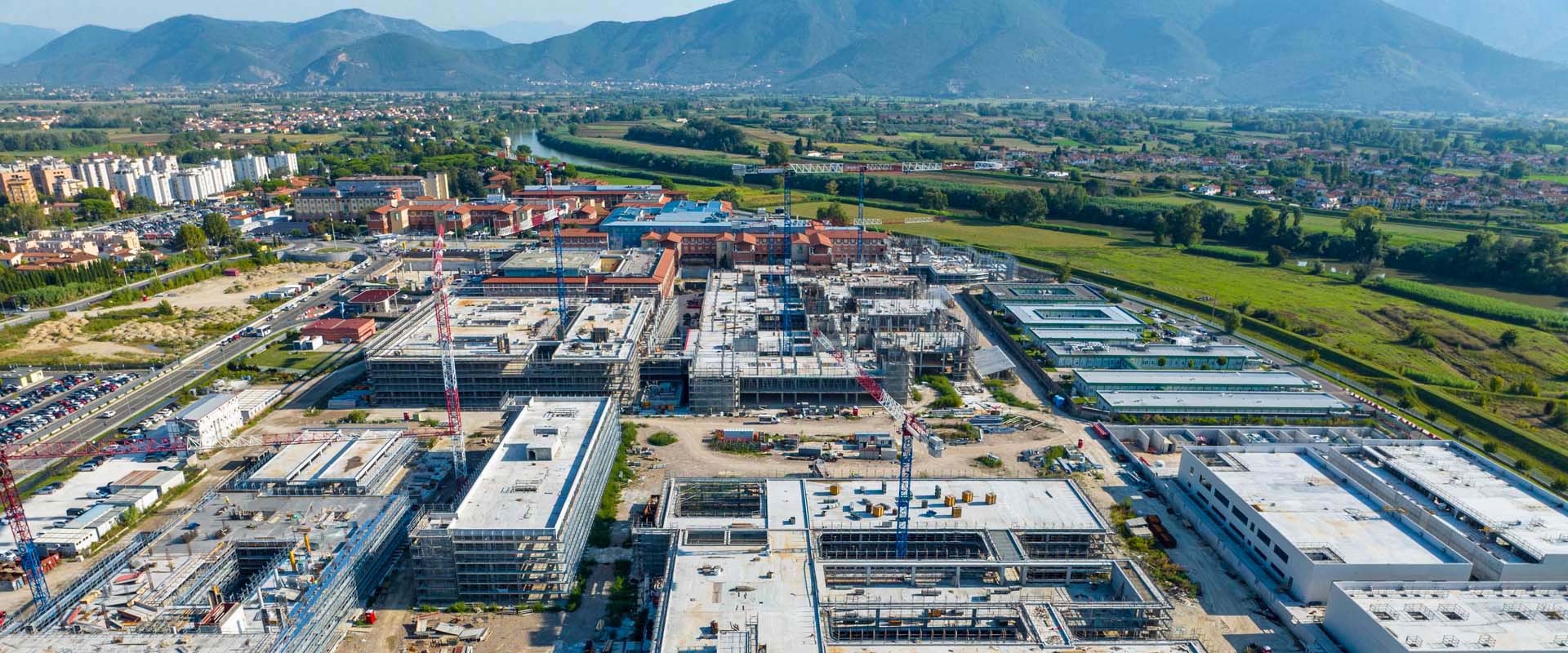
Based on publicly identifiable projects since 2016, six major healthcare developments stand out in connection with FINSO or its corporate continuity from INSO:
• St. Maarten General Hospital, St. Maarten
• Nuovo Santa Chiara, Pisa, Italy
• Hospital Regional de Ñuble, Chile
• Nuovo Ospedale di San Gavino, Sardinia, Italy
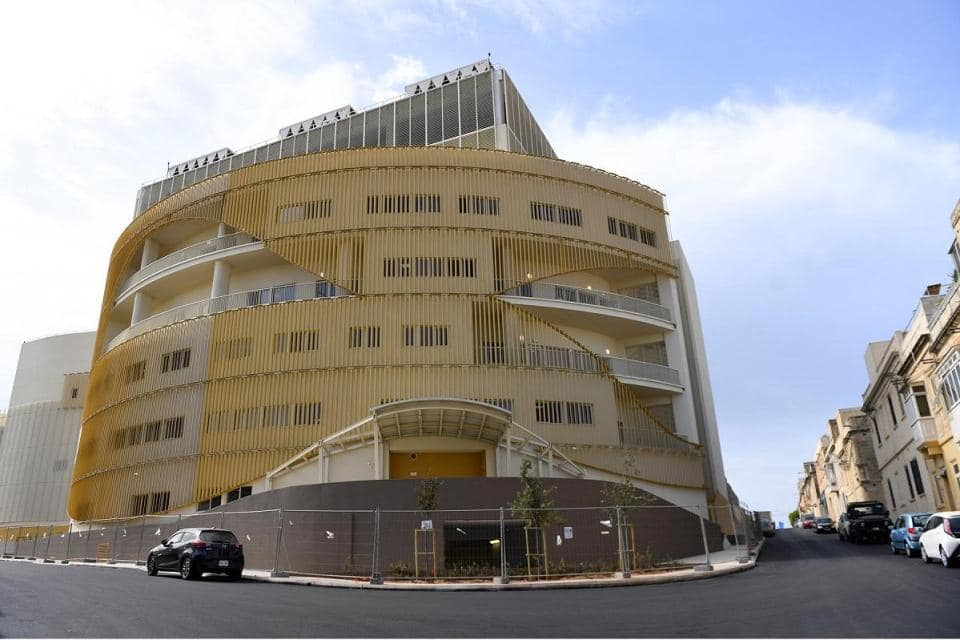
• Paola Regional Health Care Hub, Malta
• Città della Salute e della Ricerca, Sesto San Giovanni, Italy
Of those six, only one, the Paola Regional Health Care Hub in Malta, can be clearly verified in public reporting as completed. That does not automatically mean the others will not be finished. But it does mean that, based on the public record, completion has been the exception rather than the norm in this period.
St. Maarten fits the pattern
The St. Maarten General Hospital project traces back to procurement decisions made in 2016. Public reporting and project updates show that the development was first tied to INSO, the contractor associated with the original contract signed in September of that year. In 2019, SMMC publicly announced the handover of the building site to INSO and presented that moment as the start of visible construction. At the time, the expectation was that the main building would be completed by the end of 2022, with additional works continuing into 2023.
Those targets came and went.
As the timeline slipped, the contractor name in public updates shifted from INSO to FINSO. The public record elsewhere, particularly in Italy, shows that this was tied to a corporate transition in which INSO’s core business was transferred into Fincantieri Infrastrutture Sociali, FINSO, allowing FINSO to continue in INSO’s contractual place. The name changed, but the problem did not.
In St. Maarten, the explanations have remained remarkably consistent across the years. Early reporting pointed to financial turbulence affecting the contractor’s parent company. Later updates shifted to inflation, global supply-chain disruption, shipping delays, the effects of the pandemic, and price shocks linked to the war in Ukraine. By 2022, public statements were already acknowledging that the project could not reasonably be completed under the original 2016 contract conditions.
That is the central issue. Nearly 10 years after procurement began, St. Maarten is still dealing with an unfinished hospital, while the public continues to hear different versions of the same underlying explanation: the original price and schedule no longer held.

The strongest international parallels
The reason the St. Maarten case deserves closer attention is that similar themes appear in multiple FINSO-linked healthcare projects abroad.
Pisa, Italy - The Nuovo Santa Chiara hospital in Pisa is one of the clearest examples.
Public records show the project was originally awarded under the INSO structure and later carried forward under FINSO’s corporate continuity. More importantly, official records show that the project’s economic framework had to be revised, and additional public funding was allocated to keep the works moving.
A formal adjustment to the project’s finances was approved, and records show that an additional €15 million was added through national and regional sources. Public reporting in Italy also described the project as suffering significant delay, while cost escalation became part of the broader political and administrative debate around the hospital.
That closely resembles the public logic heard in St. Maarten: the original conditions did not hold, the economics had to be revised, and extra money became necessary.
Sesto San Giovanni, Italy - The Città della Salute e della Ricerca project in Sesto San Giovanni presents an even more dramatic version of the same pattern.
Construction only formally got underway in 2026 after years of slowdowns and repeated delay. Public reporting tied those interruptions to inflation, the pandemic, the war in Ukraine, and design-related changes. It also described a major increase in the project’s value, with figures rising from about €280 million to roughly €560 million.
Ñuble, Chile - The Hospital Regional de Ñuble in Chile also carries strong similarities.
Public documents show that FINSO was awarded the concession for the design and construction of the hospital. Separate local reporting stated that Grupo Inso Chile warned that unless a mechanism was made effective to account for extraordinary increases in labor and construction-material costs, the company would not be able to continue under the contract.
Here again, cost escalation was at the center of the issue. Construction prices had changed so sharply that the contractor’s continued ability to move forward was publicly linked to financial adjustment. The hospital remains unfinished, with public updates projecting an opening in the second half of 2026.
The reporting uses Grupo Inso Chile in some instances rather than the exact FINSO name, but the project linkage still places it within the same broader corporate line.
One completed project, but not a clean success story
If Paola in Malta is the only clearly completed project in the six-project group, it is still not a simple counterexample.
The Paola Regional Health Care Hub was inaugurated in 2025 and is operational. But Maltese reporting describes a project that was long delayed, politically contentious, and burdened by dispute before it finally opened. Reports referenced arbitration, fines, payment issues, and controversy over the additional costs associated with getting the facility across the finish line.
That reporting does not make Paola a clean direct example of FINSO itself being publicly blamed for those issues, and the contractor publicly cited in much of that reporting is not always FINSO. Still, the broader point remains: the only clearly completed project in this group was itself marked by delay and public concern before completion was achieved.
A quieter case in San Gavino - The San Gavino hospital project in Sardinia is a weaker comparison.
It is clearly an active FINSO-linked project and remains unfinished. However, unlike Pisa, Sesto, or Ñuble, the accessible public material reviewed does not show the same degree of visible controversy over cost overruns, revised funding demands, or broader public dispute about the project’s economics.
Why St. Maarten should pay attention
None of this proves wrongdoing by FINSO. That is not the point, even though the company and the project has been beset with reports that local workers and companies had to go public to get payment and reports of embezzlement that was never fully explained, among other things.
The point is that St. Maarten’s new General Hospital appears to fit into a broader pattern visible in a small but significant group of publicly traceable healthcare projects since 2016: long timelines, unfinished works, revised financial structures, inflation-driven cost increases, and repeated explanations centered on changed conditions.
The new General Hospital is central to the country’s healthcare future. It is tied directly to national capacity, service delivery, and long-term public confidence in the island’s health infrastructure. When a project of that scale approaches the 10-year mark from procurement and remains unfinished, public concern is not unreasonable.
It is the natural result of delay without closure.
This article is based on a review of public reporting and official project records, including local media coverage and other St. Maarten outlets on the history, delays, and cost escalation surrounding the new General Hospital; Times of Malta, Newsbook, and MaltaToday on the delayed and disputed Paola Regional Health Care Hub; official updates from AOUP Pisa on revised financing for the Nuovo Santa Chiara project; reporting by ANSA, Il Giorno, and Edison on delays and major cost adjustments tied to the Città della Salute project in Sesto San Giovanni; public updates from Chile’s Servicio de Salud Ñuble and project references linked to FINSO’s own portfolio; and FINSO’s published project listings used to identify and cross-check the company’s healthcare developments since 2016.
Join Our Community Today
Subscribe to our mailing list to be the first to receive
breaking news, updates, and more.
