

.jpg)


THE HAGUE--Netherlands: St. Maarten’s Parliamentary delegation used the IPKO platform in the Netherlands to challenge not only the Kingdom’s position on a recent United Nations vote concerning the enslavement of Africans, but also the lack of meaningful consultation with the Caribbean countries before that vote was cast.
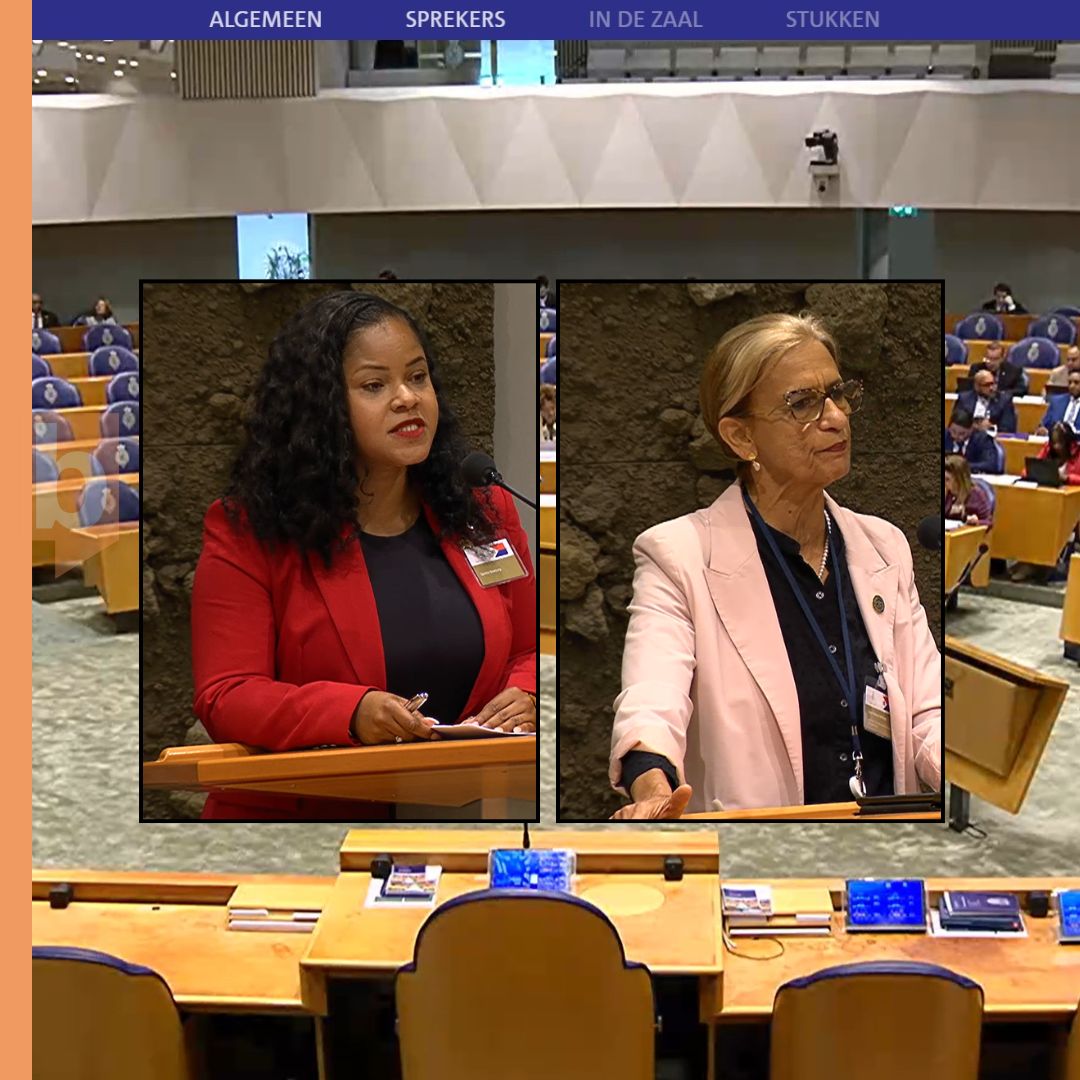
Chairlady of the Committee of Kingdom Affairs and Interparliamentary Relations, CKAIR, MP Sjamira D.M. Roseburg, and Chairlady of the Parliament of St. Maarten, MP Sarah Wescot-Williams, both addressed the subject during their presentations, stressing that the issue goes beyond history and speaks directly to communication, respect, representation and the functioning of the Kingdom relationship.
The controversy stems from the March 25, 2026 vote in the United Nations General Assembly on the “Declaration of the Trafficking of Enslaved Africans and Racialized Chattel Enslavement of Africans as the Gravest Crime against Humanity.” The resolution formally recognized the trafficking of enslaved Africans and racialized chattel enslavement of Africans as the gravest crime against humanity.
It was adopted by 123 countries, while three voted against and 52 abstained. The Netherlands, voting with the European Union position, abstained. For St. Maarten’s delegation, the concern raised at IPKO was not only the abstention itself, but the apparent lack of meaningful consultation with the Caribbean countries of the Kingdom before a vote on a matter so deeply connected to their history, identity and collective memory.
During her country update, Roseburg reminded IPKO that during the previous meeting in Aruba, it was agreed that slavery and the legacy of slavery would be placed on the IPKO agenda. She said St. Maarten could not overlook the fact that the Kingdom of the Netherlands, together with 51 other countries, abstained from voting on a United Nations General Assembly resolution that recognized the transatlantic slave trade and the enslavement of Africans as crimes against humanity and called for reparatory justice.
For St. Maarten, Roseburg said, the matter has already triggered parliamentary attention. Members of Parliament have questioned Government both informally and formally, and a request has been made for a Central Committee meeting with the Prime Minister on the issue. The Committee of Kingdom Affairs and Interparliamentary Relations has also requested a Central Committee meeting to further discuss slavery and its legacy.
Roseburg said the concern is not limited to the outcome of the vote, but also to the apparent breakdown in communication, or lack of communication and consultation, in preparation for the vote. She linked this directly to the main theme of IPKO: cooperation within IPKO and within the Kingdom.
According to Roseburg, the legacy of slavery affects the community of St. Maarten and the people Parliament serves. For that reason, she said, the topic should not be treated as a one-time discussion, but should remain a continuing subject on the IPKO agenda. She called for continued dialogue and mutual understanding among representatives of the peoples of the Kingdom on a matter that remains deeply significant to Caribbean communities.
Wescot-Williams, speaking as Chairlady of the Parliament of St. Maarten and on behalf of the St. Maarten delegation, also addressed the recent United Nations vote. She said that regardless of differing views on the substance of the resolution, the communication prior to the vote highlighted a serious weakness in the Kingdom relationship.
She emphasized that decisions touching deeply on the history, identity and sensitivities of Caribbean societies require meaningful engagement among all Kingdom partners. For the Caribbean countries of the Kingdom, Wescot-Williams said, the legacy of slavery is not simply a matter of the past, but part of lived reality and collective memory.
She stressed that matters of such importance require meaningful consultation, mutual respect and a willingness to listen to one another. The lesson from this episode, she said, is that stronger communication within the Kingdom remains essential to the Kingdom’s very existence.
Together, the remarks by Roseburg and Wescot-Williams placed the slavery legacy discussion within a broader constitutional and political context. Both leaders made clear that the issue is tied to how the Kingdom consults its Caribbean partners, how decisions are prepared, and whether the voices and sensitivities of Caribbean societies are properly respected in matters of international significance.
The St. Maarten delegation also connected the issue to the wider call for a Kingdom Conference. Roseburg reiterated the need for such a conference, which has been emphasized during previous IPKO meetings, and said St. Maarten looks forward to the role that Parliaments may play in that setting. Wescot-Williams also expressed strong support for the proposed Kingdom Conference, calling for a broader and more fundamental dialogue about the future of Kingdom relations.
Both leaders underscored that the Kingdom must evolve through dialogue, respect and meaningful partnership. They stressed that cooperation cannot only be discussed in general terms, but must be reflected in how the countries of the Kingdom communicate and consult on issues that affect the people, history and dignity of all Kingdom partners.
Join Our Community Today
Subscribe to our mailing list to be the first to receive
breaking news, updates, and more.
