

.jpg)


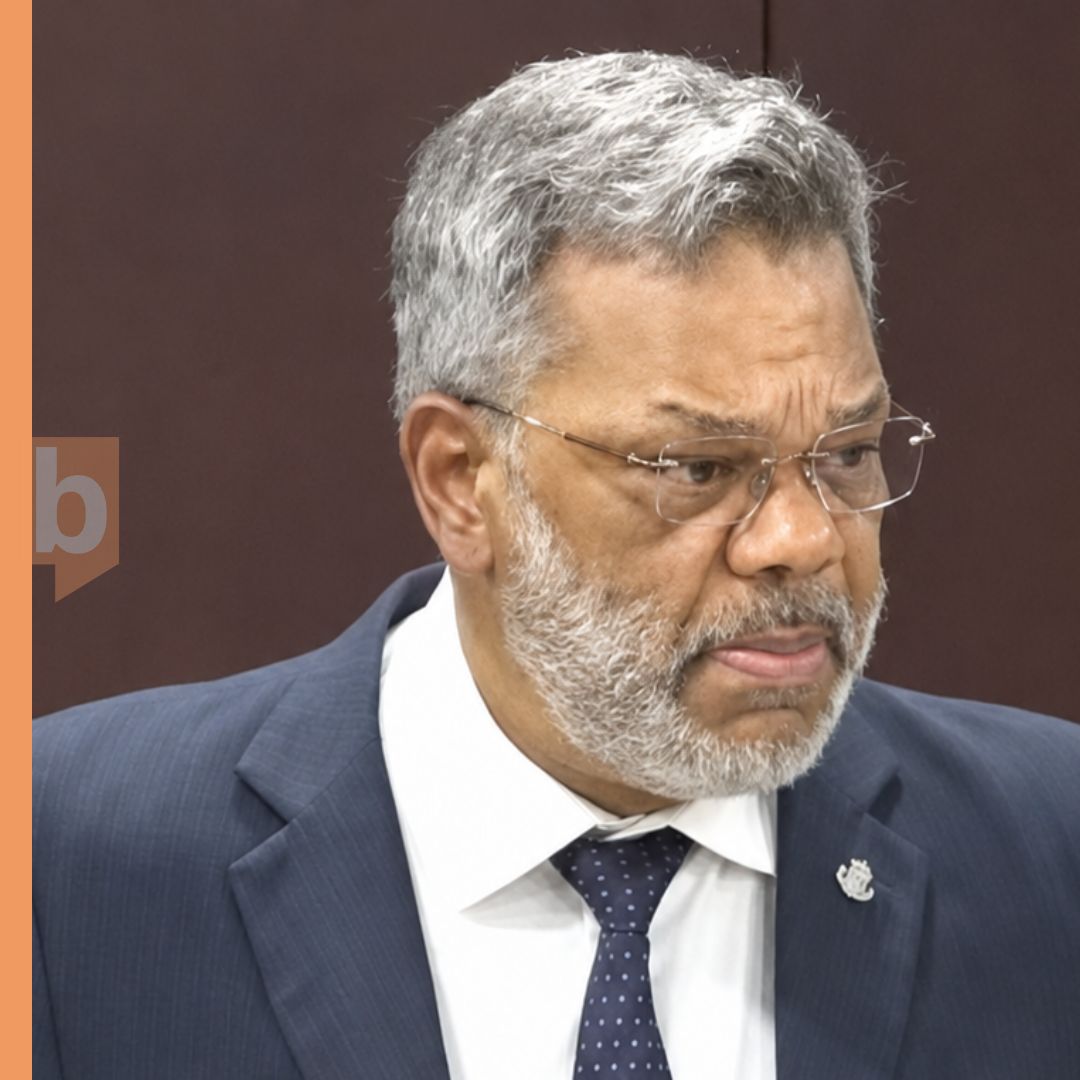
GREAT BAY--Prime Minister Dr. Luc Mercelina has cautioned against allowing St. Maarten’s cannabis legislation to move ahead of the country’s fundamental policy decisions, warning Parliament that Government must first determine what type of cannabis policy it actually wants before deciding how such a system should be regulated.
Mercelina said his concern is not whether cannabis legislation becomes an achievement of the current Government. His responsibility, he said, is to ensure that any major policy change is approached responsibly and with full consideration for public health, young people, the justice system and Government’s ability to regulate and enforce whatever system is eventually chosen.
The Prime Minister said St. Maarten should not begin from the assumption that establishing a commercial cannabis market is automatically the final objective. Government could ultimately decide to maintain the existing prohibition while strengthening prevention and enforcement, develop a framework limited to medical cannabis, or pursue a broader regulated model.
Mercelina argued that these policy choices must come before legislation. Government must first determine what cannabis-related activities it wants to permit, what should remain prohibited, who should be allowed to participate and whether commercialization should form part of the model at all.
He expressed concern that the legislative process may currently be moving ahead of those broader policy decisions. In his view, legislation should be designed to implement an agreed national policy rather than allowing the existence of draft legislation to determine what the policy eventually becomes.
The Prime Minister placed particular emphasis on public health and youth protection. He referred to concerns raised by the Mental Health Foundation regarding cannabis use, dependency and an association with psychosis, while also pointing to what he described as weaknesses in St. Maarten’s current prevention, treatment and public-awareness infrastructure.
Mercelina said St. Maarten presently lacks a structured outpatient treatment network specifically for cannabis dependency and does not have comprehensive prevention and public-awareness programs focused on cannabis use. Young people, he stressed, are particularly vulnerable and should be at the center of Government’s decision-making.
He said meaningful youth protection requires far more than simply placing a minimum age in legislation. St. Maarten would need prevention and education programs, accessible addiction and mental-health services, trained professionals, targeted youth programs, monitoring and systems capable of responding if cannabis-related problems increase.
From Mercelina’s perspective, Government should not expand legal access to cannabis first and only afterward attempt to build the public-health infrastructure necessary to manage the consequences. Those safeguards should be substantially in place before the relevant parts of a new cannabis framework become operational.
The Prime Minister acknowledged that regulation can bring potential benefits. These could include stronger product controls, reduced criminalization and greater Government oversight of an illegal market that already exists.
However, he warned that those benefits do not happen automatically. International experience, he said, demonstrates that cannabis regulation must be accompanied by clear objectives, effective supervision, controls on THC levels, limits on commercialization, youth protections and continuous evaluation.
Mercelina also argued that Government should begin cautiously because restrictions can be more difficult to tighten after a system has already been liberalized. A more restrictive framework could be adjusted later based on evidence and experience, while reversing an overly permissive system could prove significantly more difficult.
Another major concern is enforcement capacity. Mercelina questioned which authorities would issue licenses, inspect cultivation and production facilities, supervise retail outlets, test products, monitor THC levels and contamination, operate tracking systems and intervene when rules are violated.
Those responsibilities require more than simply passing a law. The institutions responsible for implementation would need adequate staff, expertise, resources and legal authority to properly supervise and enforce the system.
The Prime Minister also raised the legal relationship between any new cannabis legislation and St. Maarten’s existing criminal laws. Government would have to clearly establish which activities that are currently prohibited would become legal, what conduct would remain criminal and what exceptions would apply.
International treaty obligations would also have to be examined. Mercelina said Government must determine which international drug-control treaties apply to St. Maarten, what obligations arise from them and how much legal room exists for different cannabis policies, particularly where recreational and commercial activities are concerned.
The island’s unique cross-border reality adds another layer to the discussion. Mercelina said cannabis policy cannot be developed solely from the perspective of the Dutch side because Government also has to understand the legal framework and enforcement approach on the French side.
Government would have to consider the practical consequences if the two sides adopt substantially different approaches and determine whether additional agreements would be necessary for information sharing, supervision, cross-border cooperation and enforcement.
Mercelina stressed that legislation and regulation should also not be confused with commercialization. Legislation determines which cannabis-related activities that are currently prohibited would become permitted under law, while regulation establishes the conditions under which those permitted activities could take place.
Commercialization goes further, allowing businesses to produce, process, distribute or sell cannabis within a commercial market. The Prime Minister said that should remain a separate policy decision rather than being treated as the inevitable result of cannabis reform.
He told Parliament that Government should first establish the objective of its cannabis policy, resolve the legal and treaty questions, determine what activities should be permitted, establish whether institutions have the capacity to regulate the sector, consult the relevant stakeholders and ensure that public-health, youth-protection, supervision and enforcement safeguards are ready.
Mercelina said he would not support accelerating the legislation simply to ensure that cannabis reform can be counted among the accomplishments of the current term. If responsible implementation requires more time, he indicated that Government should take that time.
For the Prime Minister, the measure of success should therefore not be whether St. Maarten opens a cannabis market before the next election, but whether the country makes a decision it can legally, socially and institutionally manage while protecting the next generation.
Join Our Community Today
Subscribe to our mailing list to be the first to receive
breaking news, updates, and more.
