.jpg)


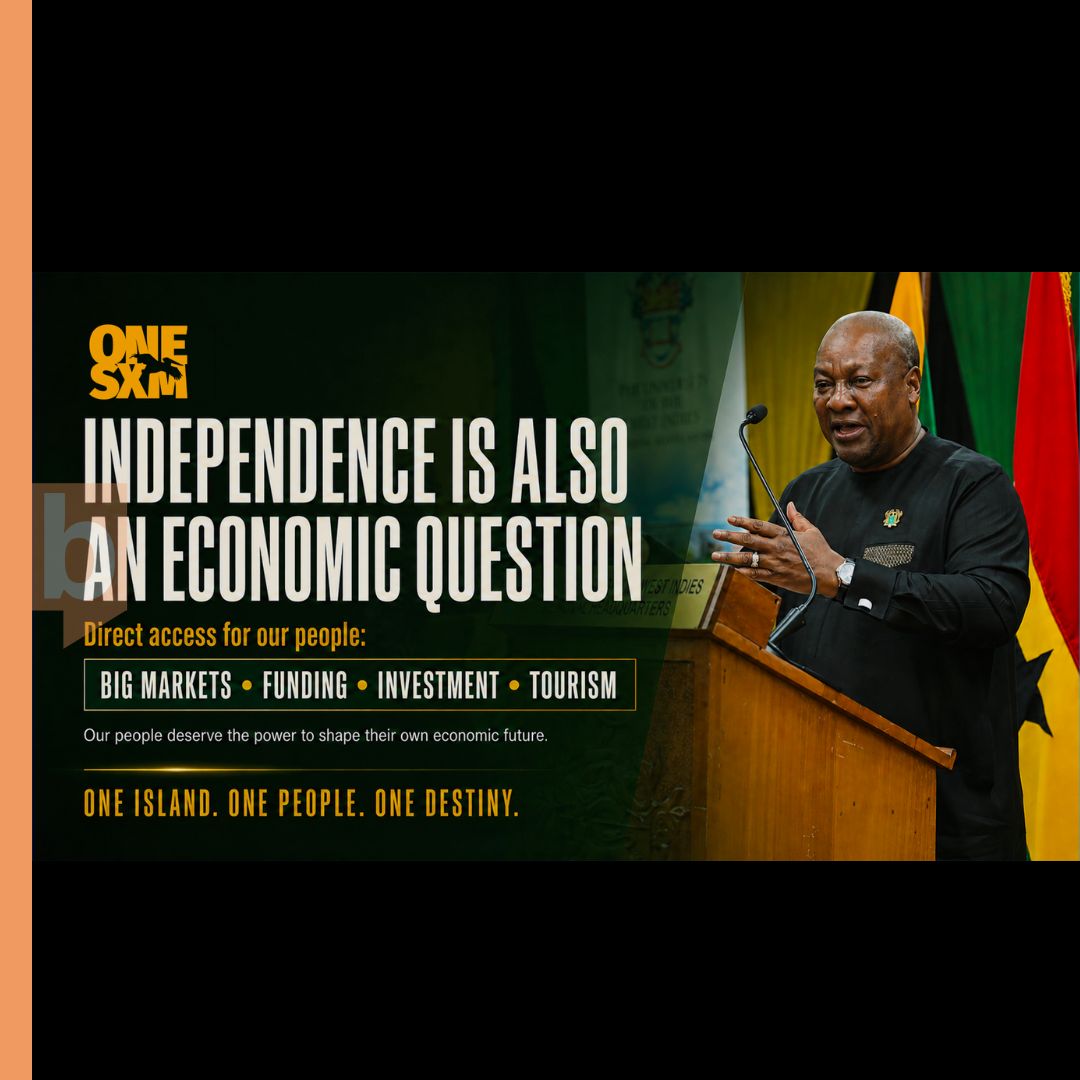
GREAT BAY--ONESXM is calling for a broader national discussion on the economic dimensions of independence, arguing that stronger cooperation between Africa and the Caribbean could open new opportunities in trade, investment, education, tourism and development for the people of St. Martin.
The organization welcomed recent remarks by Ghanaian President John Dramani Mahama calling for Africa and the Caribbean to strengthen their historic relationship and work together toward greater economic prosperity.
According to an August 6 article by the Jamaica Information Service, Mahama said that while Africa has largely achieved political independence, the present challenge is achieving economic emancipation through stronger partnerships.
ONESXM said the message should resonate throughout St. Martin, an island divided between the Kingdom of the Netherlands in the South and the Republic of France in the North, as well as throughout the remaining Dutch and French territories in the Caribbean.
According to the organization, discussions surrounding independence should not focus solely on political structures or constitutional arrangements. They must also consider the economic authority available to the people of St. Martin.
“Independence is also an economic question,” ONESXM said. “It concerns whether our people possess the authority to negotiate directly with major markets, access international funding, attract investment and build partnerships based on our own needs.”
ONESXM said closer engagement with African countries could create opportunities across several sectors, including tourism, trade, education, technology, agriculture, renewable energy and the creative industries.
The organization identified potential areas of cooperation that could include new employment and business opportunities, investment in tourism, housing and infrastructure, heritage and cultural tourism, scholarships and university partnerships, and expanded markets for music, film, media and other creative products.
It also pointed to opportunities for cooperation in food security, renewable energy, climate resilience and access to development and reparatory funding.
ONESXM argued that St. Martin's existing constitutional arrangements limit the extent to which the island can independently pursue certain international partnerships and economic opportunities.
“St. Martin cannot fully pursue these opportunities while its international affairs remain controlled or restricted by the Netherlands and France,” the organization stated.
ONESXM said similar questions should be considered throughout the other Dutch and French territories in the Caribbean, particularly whether lasting economic prosperity can be achieved while political and international decision-making authority remains limited.
The organization also said reparations must form part of any wider discussion about economic development and the future relationship between the Caribbean, Africa and former colonial powers.
According to ONESXM, reparatory justice should extend beyond apologies and commemorative activities to include economic repair, access to capital, land, education, technology and international markets.
The organization said both the Kingdom of the Netherlands and the Republic of France must be held accountable for colonial exploitation, slavery and what ONESXM describes as the continuing economic and social consequences of colonial rule.
ONESXM is consequently calling for the development of a St. Martin-Africa strategy centered on tourism, trade, investment, education and cultural cooperation.
The organization noted that many African countries were themselves subjected to colonization and exploitation by the Netherlands, France and other European powers and continue to address economic systems and relationships shaped during the colonial period.
For that reason, ONESXM said any modern partnership between St. Martin and African nations must be based on mutual ownership, fair trade, reparations and shared prosperity rather than reproducing unequal economic relationships of the past.
The organization believes such a strategy should form part of a wider national conversation about independence, reparations and the level of authority St. Martin requires to pursue international opportunities in the interests of its people.
“Shared history must now become shared prosperity,” ONESXM said.
ONESXM warned that failure to reconsider St. Martin's constitutional and economic position could result in the island missing opportunities to access emerging markets, international funding and investment.
“The longevity of our island and the destiny of our people depend on the decisions we make today,” the organization concluded.
Join Our Community Today
Subscribe to our mailing list to be the first to receive
breaking news, updates, and more.