

.jpg)


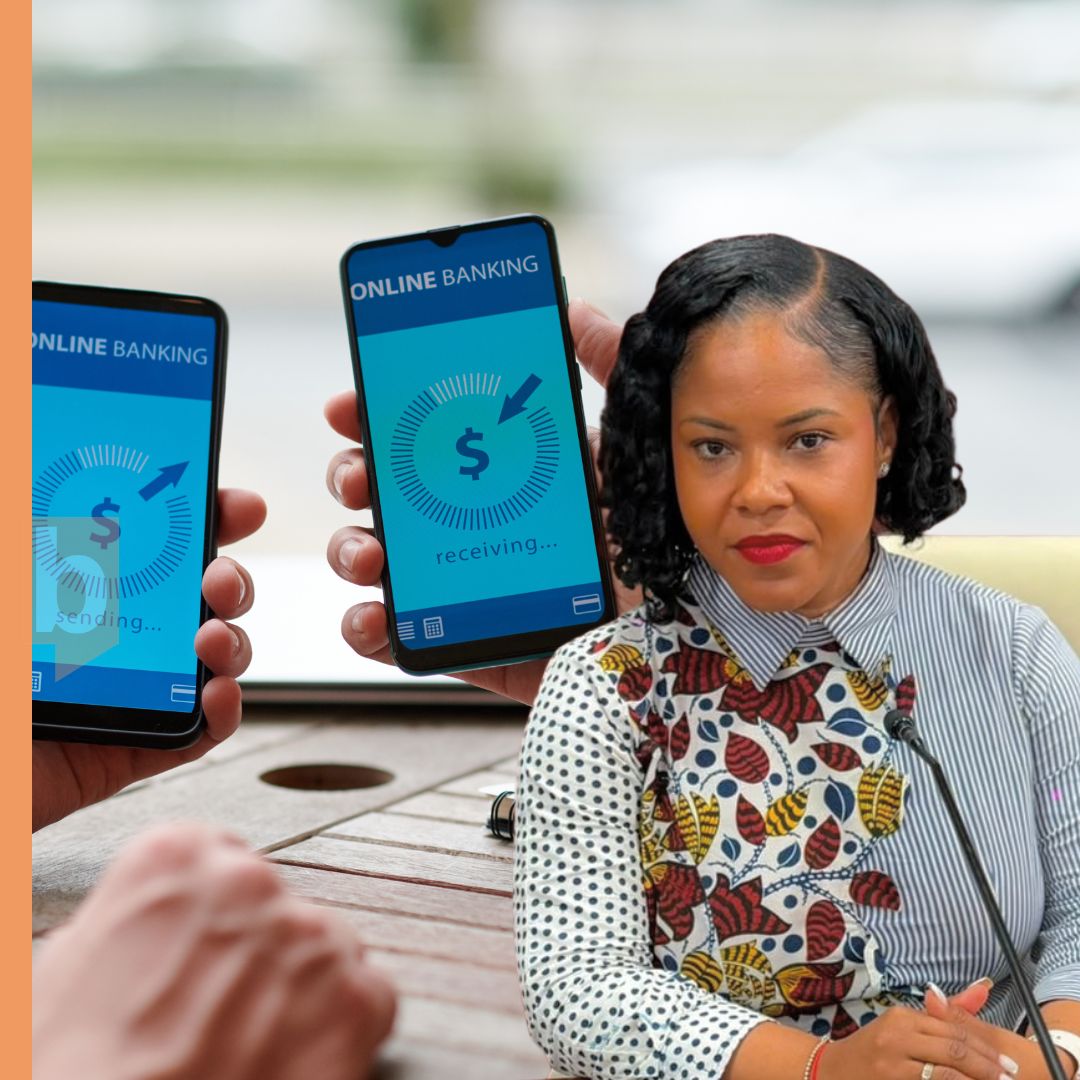
GREAT BAY--Member of Parliament Sjamira Roseburg is calling for instant bank transfers for individuals to become free, or at least significantly cheaper, following the publication of an overview by the Centrale Bank van Curaçao en St. Maarten showing wide differences in the fees charged by local banks.
Roseburg has written to the Minister of Finance with questions about the fees and says she is prepared to work with Government on any legislative changes required to reduce costs for consumers. She is also calling for fairer fees for seniors and others who depend on over-the-counter banking services.
Everyday transactions such as paying rent, sending money to a family member or paying a contractor can result in an additional bank charge. At the counter, some of those fees can exceed XCG 10.
“I pay a guilder every single time I transfer money, just like many of you,” Roseburg said. “We need a bank account to receive our salary, we pay to keep that account, and then we pay again to send our own money. In 2026, that makes no sense.”
Since 2022, the instant payment system has allowed customers to transfer money to accounts at other participating local banks within seconds, day or night. The Central Bank operates the system and charges banks XCG 0.35, approximately US$0.20, for each transfer. That charge was reduced by 30 percent in January 2026.
The amount ultimately paid by customers, however, is determined by their individual bank.
According to the Central Bank’s overview, using rates applicable as of September 10, 2026, Republic Bank charges nothing for an online instant transfer. ORCO Bank charges XCG 0.50, Windward Islands Bank XCG 1.05, Banco di Caribe XCG 1.06 and RBC Royal Bank XCG 6.27.
“A guilder does not sound like much,” Roseburg said. “But make twenty transfers a month and that is around XCG 250 a year. At the most expensive bank, it is more than XCG 1,500 a year. That is groceries. That is a GEBE bill. That is money that belongs in people’s pockets.”
Roseburg said the most significant concern is the amount charged to people who make transactions at a bank counter. Banco di Caribe lists a fee of XCG 15, approximately US$8.38, for an in-branch transfer, while Windward Islands Bank lists XCG 10.60.
Those amounts are approximately 30 to more than 40 times the XCG 0.35 charged by the Central Bank to process an instant payment. In addition, customers who mistakenly send money to the wrong account can face a fee of as much as XCG 54 to have the funds recalled.
Roseburg said those charges can disproportionately affect senior citizens and other people who are not comfortable using digital banking.
“Who still goes into the bank to make a payment? Our seniors. People who never learned online banking, who do not have a smartphone, or who simply trust a person more than an app,” Roseburg said. “They worked all their lives, many of them live on a small pension, and they are the ones paying the highest fees. That is not right.”
She pointed to Aruba as an example of how counter fees can be structured differently. Aruba Bank charges customers aged 65 and older a reduced counter fee of AWG 2, compared with AWG 5 for other customers.
Roseburg also noted that free online transfers are already available in several jurisdictions. Republic Bank offers them free in St. Maarten, while Aruba Bank provides free transfers for individual customers using online banking and its mobile application. Consumer transfers are free in the Netherlands, Barbados’ national instant payment system offers free transfers for individuals during its introductory period, and Brazil’s Pix system is free for individuals.
“If one bank here can do it for free, and our neighbours can do it for free, then so can St. Maarten,” Roseburg said.
She said banking has increasingly become a necessity rather than an optional service. Salaries are deposited into bank accounts, bills are increasingly paid electronically and Government itself encourages people to rely less on cash.
“We keep telling people that digital banking is faster, easier and cheaper to run,” Roseburg said. “Then people should feel that in their pocket.”
Roseburg said businesses are also affected. Minimarkets, contractors, taxi drivers and other businesses send and receive payments regularly, and banking costs can ultimately be reflected in the prices charged to consumers.
The issue has also been raised outside Parliament. In its editorial “Faster and still so expensive?”, The Peoples’ Tribune questioned what consumers are paying for and argued that banks charging substantially more than their competitors owe the public an explanation.
In her letter to the Minister of Finance, Roseburg is asking Government to explain the significant differences in bank fees, whether reductions in the underlying cost of instant payments are being passed on to customers, and what measures Government can and is prepared to take.
“The Central Bank has done important work by making these fees public. That gives all of us, government and Parliament, a solid basis to act,” Roseburg said. “If the Minister is already working on changes, I gladly offer my support and will work alongside her to get the necessary law amendments done. If not, then given how much this matters to our people, I will bring forward the amendments myself.”
Roseburg said her objective is for online and mobile instant transfers for individuals to become free, or at minimum substantially cheaper. She also wants seniors and others who depend on bank counters to pay a low and fair fee, businesses to face no more than reasonable transaction costs, customers not to be charged to recover their money when an error was caused by the bank, and all banking fees to remain publicly available and comparable so charges cannot simply be shifted elsewhere.
The Central Bank and commercial banks would be consulted as part of any changes, and banks would be given time to adjust.
“I am not against the banks. They have real costs and deserve a fair return,” Roseburg said. “But instant payments are part of our country’s infrastructure, like our roads. People should not pay a toll every time they use them. This is something we can fix together, and I am ready to do my part.”
Until changes are made, Roseburg is encouraging consumers to find out exactly what their bank charges for transfers both online and at the counter, use online or mobile banking where possible because it is generally cheaper, carefully verify account numbers before sending money, and compare the fees charged by different banks using the Central Bank’s published overview.
Join Our Community Today
Subscribe to our mailing list to be the first to receive
breaking news, updates, and more.
