

.jpg)


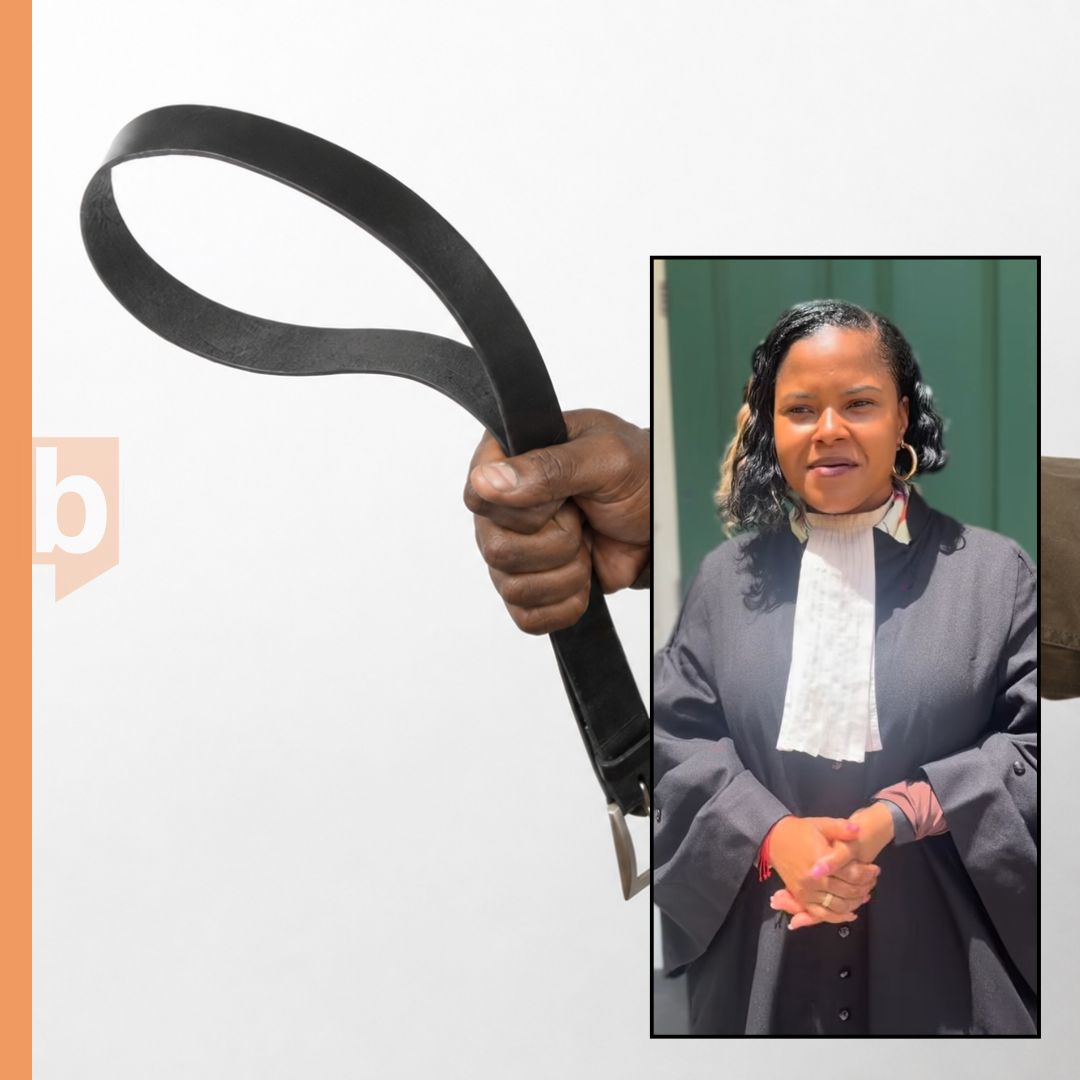
GREAT BAY-- Member of Parliament Sjamira Roseburg is urging parents and caregivers to understand that physically striking a child in the name of discipline can have serious legal consequences under St. Maarten’s Criminal Code, while also leaving children with lasting emotional and psychological harm.
Roseburg issued the public service message after recently assisting a victim in a criminal case involving a child who had reportedly been physically disciplined by a parent. Without discussing details of the case, the MP said the experience highlighted the need for greater public awareness about the limits of parental discipline and what the law considers mistreatment.
Roseburg acknowledged that she, like many people growing up in Caribbean households, received some “licks” as a child. However, she stressed that something being viewed as traditional or culturally familiar does not place it above the law.
The MP said it is still common to hear physical punishment defended as “a Caribbean thing,” but parents and caregivers should understand that hitting a child, including with objects such as a slipper or belt, can result in criminal consequences depending on the circumstances.
She stressed that parents should not wait until an incident has escalated into a police report, criminal investigation or court case before seeking another way to deal with difficult behaviour.
Roseburg encouraged parents and caregivers to place greater emphasis on communication, boundaries, age-appropriate consequences and, where necessary, professional guidance when they are struggling with a child’s behaviour.
She also warned that the impact on the child must not be overlooked. Physical punishment can extend beyond the immediate pain of an incident, and a child may carry the emotional consequences of such experiences long after the physical injuries have disappeared.
The MP said parents should make themselves familiar with the law, particularly because St. Maarten’s Criminal Code provides for increased penalties in certain mistreatment cases when the victim is the offender’s own child, a child over whom the offender exercises parental authority, or a child being cared for or raised as part of the household.
“Discipline should be about correcting and guiding a child, not creating a situation in which the child is traumatized and the parent ultimately has to deal with the consequences of the law,” Roseburg said.
What St. Maarten’s Criminal Code Says (read entire section)
Article 2:273 – Mistreatment
- Mistreatment is punishable by imprisonment for a maximum of four years or a fine of the fourth category.
- Mistreatment committed using weapons as referred to in Article 1, paragraph 2, of the Weapons Ordinance 1931 is punishable by imprisonment for a maximum of six years or a fine of the fifth category.
- If the act results in serious bodily injury, the offender is punishable by imprisonment for a maximum of nine years or a fine of the fifth category.
- If the act results in death, the offender is punishable by imprisonment for a maximum of twelve years or a fine of the fifth category.
- Intentional harm to a person’s health is considered equivalent to mistreatment.
- An attempt to commit the offence described in paragraph 1 is not punishable.
Article 2:274 – Premeditated Mistreatment
- Mistreatment committed with premeditation is punishable by imprisonment for a maximum of six years or a fine of the fifth category.
- Mistreatment committed with premeditation and using weapons as referred to in Article 1, paragraph 2, of the Weapons Ordinance 1931 is punishable by imprisonment for a maximum of nine years or a fine of the fifth category.
- If the act results in serious bodily injury, the offender is punishable by imprisonment for a maximum of twelve years or a fine of the fifth category.
- If the act results in death, the offender is punishable by imprisonment for a maximum of fifteen years or a fine of the fifth category.
Article 2:275 – Serious Mistreatment
- A person who intentionally inflicts serious bodily injury upon another person is guilty of serious mistreatment and is punishable by imprisonment for a maximum of fifteen years or a fine of the fifth category.
- If the act results in death, the offender is punishable by imprisonment for a maximum of twenty years or a fine of the fifth category.
Article 2:276 – Premeditated Serious Mistreatment
- Serious mistreatment committed with premeditation is punishable by imprisonment for a maximum of eighteen years or a fine of the fifth category.
- If the act results in death, the offender is punishable by imprisonment for a maximum of twenty-four years or a fine of the fifth category.
Article 2:277 – Increased Penalties in Certain Circumstances
- The terms of imprisonment referred to in Articles 2:273 through 2:276 are increased by one-third:
a. when the offender commits the crime against his mother, father, spouse or life partner, his child, a child over whom he exercises parental authority, or a child whom he cares for or raises as part of his household;
b. when the offence is committed against a person entrusted to the offender’s care, education or supervision;
c. when the offence is committed against a public official during or because of the lawful exercise of that official’s duties;
d. when the offence is committed through the administration of substances harmful to life or health.
- Where the offence carries a temporary term of imprisonment of twenty years or more, life imprisonment or a temporary term of imprisonment of up to thirty years may be imposed.
Roseburg said the provisions make clear why parents and caregivers should not assume that physical punishment within the home is automatically protected simply because it is described as discipline.
She encouraged families experiencing difficulties with discipline, conflict or behavioural issues to seek support before matters escalate, emphasizing that learning different ways to communicate and correct behaviour can protect both the child and the parent.
The MP said greater awareness of the law should form part of a broader community discussion about parenting, child protection and breaking practices that may have been normalized across generations but can have serious consequences under today’s legal framework.
Join Our Community Today
Subscribe to our mailing list to be the first to receive
breaking news, updates, and more.
