.jpg)


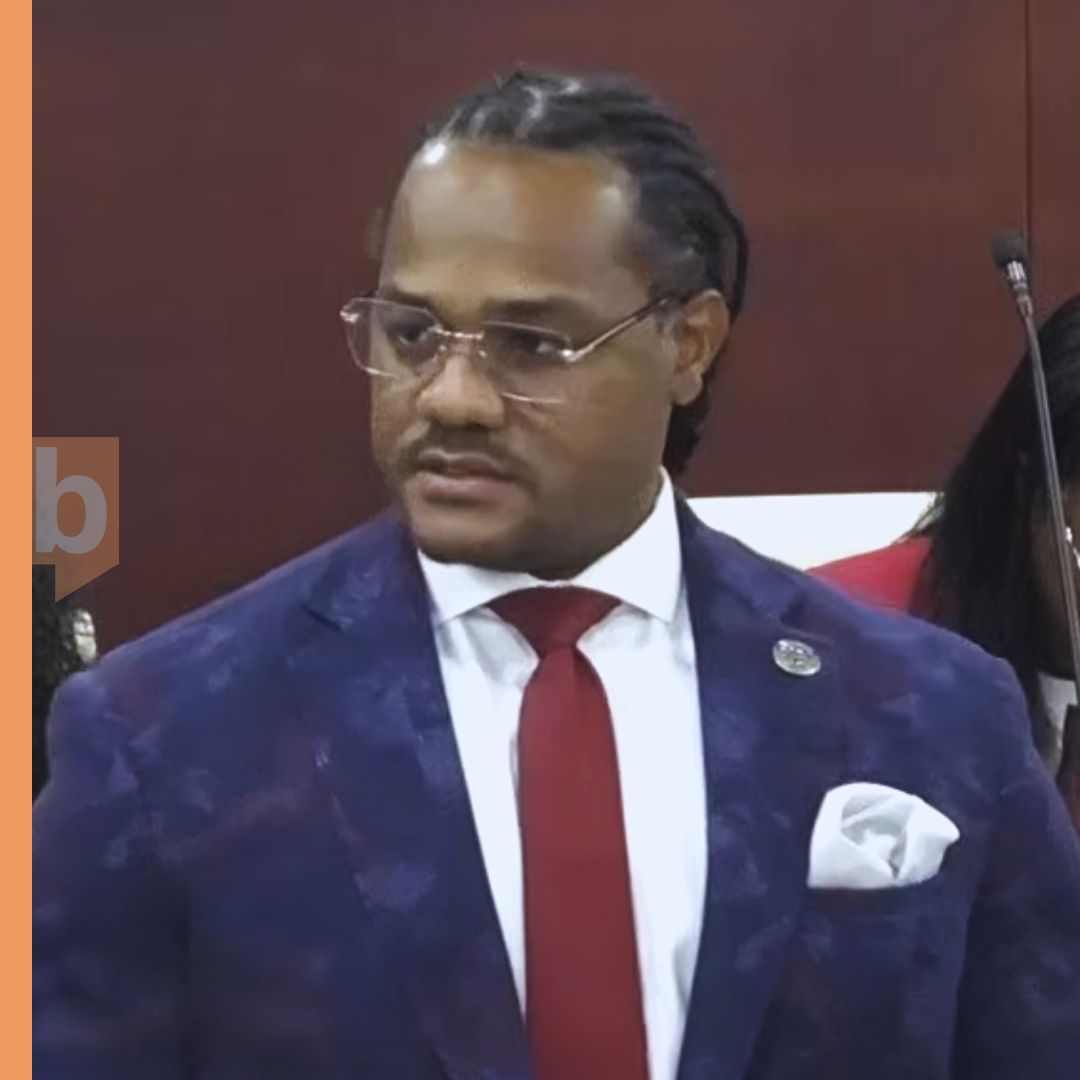
GREAT MAN--Member of Parliament Dimar Labega announced during the 2026 budget debate that he will bring forward motions focused on establishing a National Poverty Reduction Strategy, addressing government’s critical human-resource and salary challenges, and developing a National Sports Excellence Strategy to improve St. Maarten’s ability to compete regionally and internationally.
Labega said the motions stem from recurring issues identified throughout the budget documents and presentations, particularly government’s limited capacity to execute policies, the absence of a coordinated approach to poverty reduction and the need to make more strategic choices about the country’s development of sports.
National Poverty Reduction Strategy
Labega said his first motion will call for the development of a National Poverty Reduction Strategy, arguing that while individual ministries have programs and policies intended to reduce poverty or create economic opportunities, St. Maarten still needs one coordinated strategy that can be measured across government.
The MP said poverty reduction is referenced throughout the budget as a cross-ministerial priority, including support for small and medium-sized businesses, skills training and vocational education, restructuring of social assistance and affordable housing.
However, he warned that without a coordinated framework, proper data collection, adequate staffing and measurable targets, poverty reduction risks remaining a policy objective rather than producing results that can be tracked.
Labega said the national strategy should establish targets and provide a mechanism through which government can report annually on progress.
He stressed that vulnerable households cannot wait indefinitely for government’s capacity problems to be resolved.
“Poverty is not going to wait for government to get ready,” Labega said, asking how government intends to ensure that its policies translate into tangible improvements for vulnerable households and how their effectiveness will be measured.
Motion on Government Capacity and Salary Scales
Labega also announced a motion aimed at addressing what he described as the critical human-resource capacity challenges within government, including the need to adjust salary scales to attract and retain highly skilled local professionals.
The MP noted that virtually every ministry identified personnel shortages as an obstacle to implementing its plans.
He pointed to increasing human-resource allocations within the Ministry of General Affairs, saying the HR allocation grew from approximately XCG 3.2 million in 2024 to XCG 4.1 million in 2025 and XCG 5.8 million in 2026, yet government continues to struggle with recruitment and retention.
Labega said the trend indicates that the problem cannot be solved through higher budget allocations alone and requires changes in structure, prioritization and compensation.
He welcomed Prime Minister Dr. Luc Mercelina’s indication that discussions are taking place with unions concerning increases in civil-servant salaries, noting that his own motion had already been prepared around the same concern.
Labega said improved salary scales could help government compete for skilled workers and make returning to St. Maarten more attractive for students and young professionals currently living abroad.
He also argued that government should prioritize strengthening the Personnel Department and Legal Affairs, saying improvements in those two areas could create a “cascade effect” across ministries by accelerating recruitment, legislative work and the implementation of revenue-generating measures.
The MP questioned why government’s personnel situation continues to worsen despite increased HR spending and asked for an estimated timeline for implementing salary adjustments.
He said stronger compensation and recruitment policies should form part of a broader strategy to retain existing employees while attracting qualified St. Maarteners back home.
National Sports Excellence Strategy
Labega’s third motion will call on government to develop a National Sports Excellence Strategy aimed at making better use of limited public resources while improving St. Maarten’s performance in regional and international competition.
The MP said St. Maarten has no shortage of sporting talent, but lacks the infrastructure and development system necessary to consistently produce elite athletes and competitive national teams.
He pointed to an overall sports budget of approximately XCG 1 million, noting that portions of that amount are already committed to facilities, school sports, national team development, international events and institutional strengthening.
Labega said government therefore cannot realistically provide equal levels of financial support to every sporting discipline while also expecting top-level international results.
He argued that St. Maarten needs a national discussion about what it wants its sporting identity to be and how limited resources should be allocated.
The MP said the country should maintain broad participation opportunities while also identifying disciplines and athletes with the potential to reach elite levels and creating a development pipeline around them.
Labega referenced the international success achieved by other Caribbean countries and territories in particular sports, saying St. Maarten must determine where it can realistically build similar competitive strength.
“I believe there needs to be a healthy mixture of both, where extraordinary students, elite athletes can have the support to achieve their dreams and make St. Maarten proud,” Labega said.
He also called for clearer priorities when public officials and organizations are approached for financial assistance for sports travel.
Labega said that with limited resources, funding youth development and national priorities should generally take precedence over sponsoring adults participating recreationally or pursuing sports primarily as a hobby.
He stressed that this does not diminish the efforts of adults representing St. Maarten, but said government has to make difficult choices when resources are limited.
The proposed National Sports Excellence Strategy, he said, should provide the framework for making those decisions while concentrating public investment where it can produce stronger long-term results.
Labega said the common thread connecting all three motions is execution. Government, he argued, has presented numerous policies and ideas, but continued shortages in personnel and institutional capacity mean many plans are not translating into measurable outcomes.
His motions are intended to establish clearer strategies, targets and priorities in areas he believes require a more coordinated national approach.
Join Our Community Today
Subscribe to our mailing list to be the first to receive
breaking news, updates, and more.