.jpg)


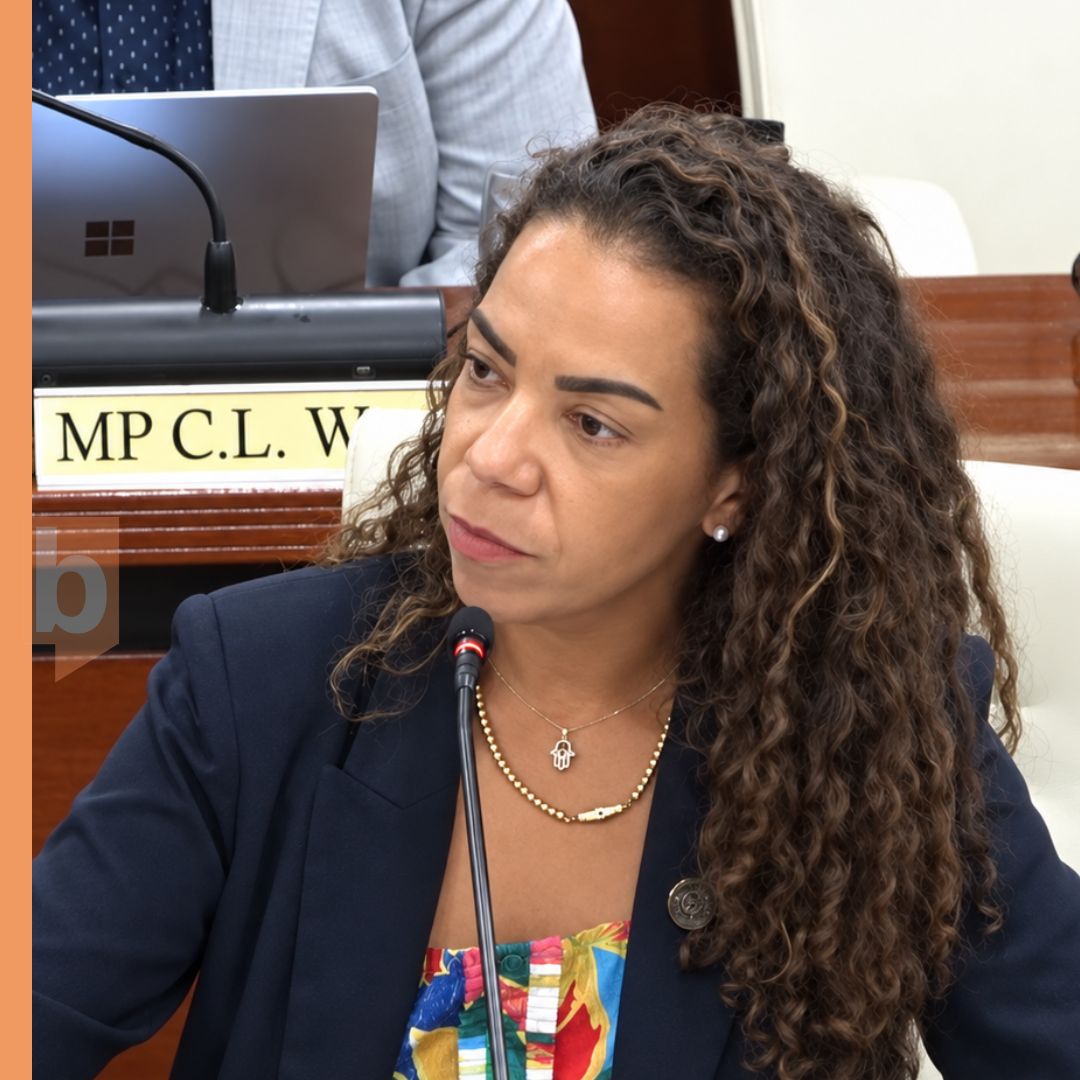
GREAT BAY--Member of Parliament Ludmila de Weever has called on Government to fully and separately disclose St. Maarten’s long-term financial obligations arising from the ENNIA agreement, questioning whether the draft 2027 budget gives Parliament and the public a sufficiently clear picture of the country’s exposure.
De Weever raised the matter during Parliament’s continuation of the Central Committee meeting on the draft 2027 national budget, returning to concerns she first expressed when Parliament considered the ENNIA agreement in 2024.
She reiterated that she did not support the agreement at the time because she did not believe the underlying figures had been sufficiently substantiated for her to support committing St. Maarten to a 30-year financial obligation.
De Weever said that regardless of the earlier political decision, the commitment now exists and must therefore be clearly and consistently reflected in the country’s budgets and financial documentation.
A central question raised by the MP concerned the approximately XCG 3 million included in the 2027 budget for ENNIA-related expenditure. She contrasted that amount with the approximately XCG 2.08 million annual contribution she said is specified for St. Maarten under the agreement.
De Weever asked Government to explain why the 2027 budget contains an XCG 3 million figure if the agreed annual contribution is XCG 2.08 million and requested a reconciliation showing exactly what the additional amount represents.
She also questioned why budget documentation reportedly continues to state that St. Maarten’s annual contribution is subject to actuarial calculation if an addendum to the agreement already establishes the XCG 2.08 million amount.
The MP asked whether the original 2024 outline agreement or subsequent addenda have since been amended, supplemented or replaced and, if so, requested that Parliament be provided with the updated arrangements.
Another area of concern is the role of dividends from the Central Bank of Curaçao and St. Maarten. De Weever asked how much Central Bank dividend income Government assumes it will receive in 2027, where that revenue is recorded in the budget and how much is expected to be used toward St. Maarten’s ENNIA contribution.
She questioned why a commitment extending over 30 years is not more clearly identifiable as a recurring long-term financial obligation and asked whether it appears within the country’s debt or loan schedules.
De Weever also focused on what she described as a second layer of potential exposure associated with the agreement.
She referred to a peak facility of up to XCG 32.4 million for St. Maarten and questioned where that contingent liability is disclosed in the draft budget, multi-year projections or Government’s financial-risk documentation.
According to De Weever, Parliament should be able to distinguish clearly between the annual contribution required under the agreement and the additional potential exposure that could arise if ENNIA’s financial performance does not develop as expected.
She urged Government to consider establishing a reserve or sinking-fund approach to prepare for that risk rather than waiting until a future obligation materializes before identifying the necessary financing.
De Weever pointed to Curaçao’s approach as an example Government could examine, arguing that future exposure should be visible in financial planning even when the full liability may not immediately become payable.
The MP also placed her ENNIA questions within a broader concern about the overall financial picture presented in the 2027 budget.
She asked Government to reconcile the projected 2027 result with significant financial risks, including ENNIA, SZV and social-fund obligations, healthcare deficits and exposure connected to government-owned companies.
De Weever questioned which of these risks have actually been incorporated into the projected budget result and which remain outside of it.
She argued that presenting a surplus without clearly showing substantial known and potential obligations could leave Parliament with an incomplete understanding of the country’s real financial position.
The MP also connected the ENNIA issue to concerns surrounding the sustainability of the social funds and Government’s outstanding obligations to SZV, saying these exposures should be presented in a way that allows Parliament to understand how the different liabilities interact.
De Weever requested projections for the financial position and reserves of the funds administered by SZV over the coming years, as well as an indication of when any fund could face depletion under current projections.
She also asked what portion of future healthcare shortfalls could ultimately become an obligation of Government and where that potential exposure is accounted for.
De Weever maintained that the purpose of her questions is to ensure that Parliament receives a complete financial picture before approving the 2027 budget.
She called on the Minister of Finance to review the ENNIA agreements and accompanying addenda and ensure that the XCG 2.08 million annual contribution, the 30-year commitment, the potential XCG 32.4 million exposure and any related risks are consistently and transparently reflected throughout the country’s financial documents.
Her position is that once the country has accepted a long-term financial obligation, that commitment should remain visible in the budget every year so that future governments, civil servants, Parliament and the public remain aware of the financial responsibilities St. Maarten has undertaken.
Join Our Community Today
Subscribe to our mailing list to be the first to receive
breaking news, updates, and more.