.jpg)


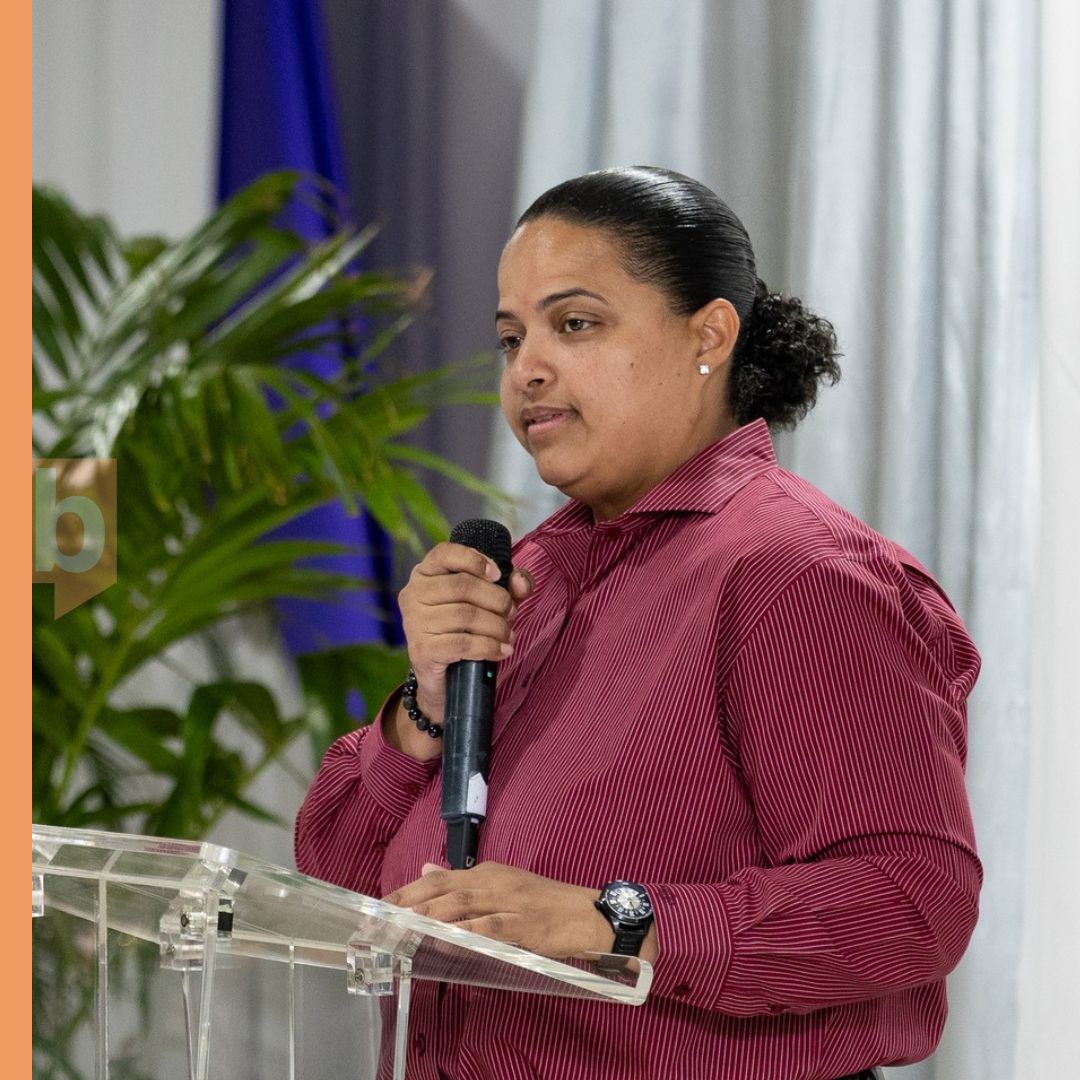
GREAT BAY--Minister of Education, Culture, Youth and Sport Melissa Gumbs has announced that her ministry will move toward a policy shift in how small, incidental subsidy requests are handled, indicating that government intends to phase away from processing these requests directly through the ministry and instead develop an external, non-governmental funding mechanism to address them. The intent is still very much in the preliminary stages.
Minister Gumbs explained that the longstanding policy has allowed individuals to approach government for an incidental subsidy to support a pursuit or initiative. She said these requests commonly range from approximately Xcg 3,000 to Xcg 5,000, and can extend to Xcg 10,000 to Xcg 15,000.
However, she noted that the administrative process and internal checks and balances required to approve a small subsidy are effectively the same as those required for substantially larger amounts. The Minister said this creates an inefficiency, because the same procedural route used for a large subsidy, including requests in the million-range, must be followed even for relatively small amounts.
She added that since taking office she has observed these low-amount advice requests occurring frequently.
The Minister said the incidental subsidy model may have been more workable when the population was smaller and requests were less frequent, and when government was using such subsidies to help kick start interest and participation in various industries and sectors. She said the increase in population and the growing frequency of requests, however, requires a model that better reflects current realities.
Minister Gumbs said she has been in discussions with private sector companies, as well as Aruba Investment Bank and the Smart Development Fund, to explore the creation of an external, non-governmental fund that could manage and support these types of smaller requests.
She said the intention is to develop a system that can address small funding needs through an external mechanism, and then phase this category of requests away from the ministry over time.
The Minister emphasized that the shift will not happen overnight. She said the change will be well discussed and clearly communicated to the public before implementation. She also stressed that the transition will include a separate “catch net” or fallback mechanism to ensure small requests continue to have a pathway for support and that gaps are avoided as the ministry moves away from administering incidental subsidies.
Minister Gumbs reiterated that the policy shift will be communicated publicly and will include measures to ensure continuity of support.
Join Our Community Today
Subscribe to our mailing list to be the first to receive
breaking news, updates, and more.