.jpg)


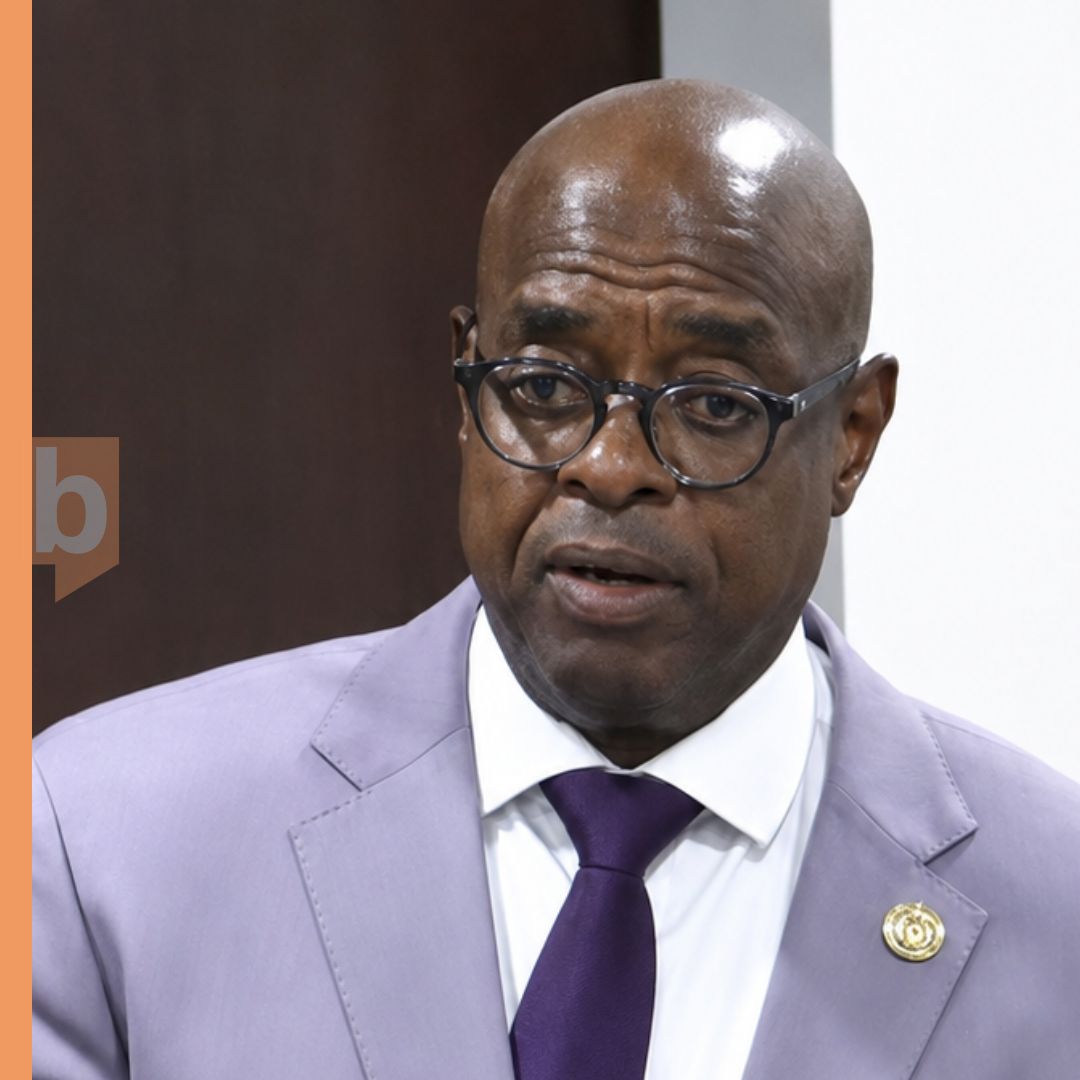
GREAT BAY--Member of Parliament Franklin Meyers says he is moving forward with the proposed Ryan Gumbs Law, including an amendment aimed at redirecting a portion of Parliament’s travel budget toward the legislative work needed to develop the law, while insisting that the initiative should be bipartisan and involve all Members of Parliament.
Speaking during the 2026 budget debate, Meyers returned to the proposal he first publicly raised during Parliament’s urgent meeting on road safety on July 7, 2026, following the death of Ryan Gumbs. At that meeting, Meyers called for gaps exposed by the case to be addressed through legislation bearing Gumbs’ name and suggested that Parliament reduce its own travel spending if funding was needed to complete the legislative work. The proposal was reported publicly the following day, July 8.
Meyers told Parliament during the current budget debate that he wants a percentage of Parliament’s travel budget directed toward the effort and indicated that the Ryan Gumbs Law will be scheduled for further work so MPs can contribute to its development.
He stressed that he does not want the legislation treated as the initiative of one politician, faction or side of Parliament.
“I would like this legislation to be bipartisan considering that it affects each and every one of us,” Meyers said.
When he first proposed the Ryan Gumbs Law in July, Meyers had before him draft driving under the influence legislation previously prepared by former MP Claude Peterson. He urged Parliament to use that work, along with other legal shortcomings identified following Gumbs’ death, as the foundation for broader legislation.
At the time, Meyers said St. Maarten should address weaknesses involving impaired driving legislation and other procedures brought into focus by the fatal case. He appealed to all 15 MPs to participate, saying stronger laws would come too late for Gumbs but could help prevent another family from facing similar circumstances.
His suggestion to use Parliament’s travel allocation also dates back to that July meeting. Meyers said then that if money was standing in the way of completing outstanding traffic legislation, Parliament should be prepared to examine its own spending and redirect some of its travel funds toward getting the necessary laws completed.
Meyers Says Priority Was Getting 2026 Budget Passed
Turning to the wider 2026 budget, Meyers acknowledged that Parliament was dealing with the budget eight months into the year and said MPs were within their rights to criticize government for bringing it late.
However, he said he deliberately chose not to submit a large number of questions because his priority was getting the 2026 budget approved and allowing government and Parliament to move on to the preparation of the 2027 budget.
Meyers said he regularly records questions and concerns raised during parliamentary meetings but did not believe there was value in overwhelming ministries with another extensive set of questions on a budget being handled so late in the financial year.
His approach, he said, was to focus on matters where Parliament could still take practical action, including funding the work needed for the Ryan Gumbs Law.
Aging Population Could Create Another Crisis
Meyers also warned that St. Maarten must begin preparing for the consequences of an aging population, saying Parliament had been informed that more than 13,000 people are over the age of 60.
He said the demographic shift will place increasing pressure on healthcare, elderly care and other public services.
Meyers pointed to the limited capacity available for elderly care and warned that St. Maarten is heading toward a situation in which demand could significantly exceed the facilities available to accommodate seniors.
“We’re heading to a crisis,” he said.
The MP said these are problems government cannot afford to wait until they become emergencies to address.
Cemetery Capacity Also Needs Long-Term Planning
Meyers raised similar concerns about cemetery capacity, noting that he had already brought the matter to Parliament previously.
He said St. Maarten should be developing a constructive long-term plan now rather than waiting until available burial space reaches a critical point.
Meyers argued that issues involving elderly care, cemeteries and healthcare may not always attract immediate attention, but failing to prepare eventually leaves government responsible for solving much larger and more expensive problems.
Hospital Capacity and Financing
The MP also raised concerns about the country's hospital and the growing demands that will be placed on healthcare as the population increases and ages.
Drawing on his previous experience as Commissioner of Public Health, Meyers said a hospital with roughly 84 beds serving a population estimated at around 60,000 people requires careful planning for both capacity and financing.
He warned that without sufficient supplemental revenue, the financial burden of maintaining healthcare services will eventually return to government.
Meyers said this is why Parliament and the Council of Ministers must start dealing with foreseeable problems before they become crises.
He argued that the public ultimately looks to government when essential services fail, regardless of whether the immediate responsibility rests with an institution, foundation, government-owned company or another organization.
Justice Finally Receiving Sustained Attention
Meyers also reflected on the level of scrutiny currently being directed toward the Ministry of Justice, saying that in his view Justice has never received this degree of attention during St. Maarten’s years as a country.
While acknowledging the pressure this places on Justice Minister Nathalie Tackling, Meyers said he considers the increased attention positive because it forces longstanding weaknesses to be confronted.
He recalled that Justice was fundamentally different from several other ministries when St. Maarten became a country, because there had not previously been an equivalent island-government Justice portfolio that could simply be converted into a ministry.
The Justice organization, he said, therefore had to be developed largely from the ground up.
Meyers said the criticism and scrutiny can ultimately contribute to strengthening the ministry if government responds by addressing the problems being identified.
“The harder the battle, the sweeter the victory shall be,” he said.
‘The Island Seems to Be Dirty’
Meyers also called attention to the physical condition of St. Maarten, saying government must improve its handling of basic matters residents see every day.
“If you look around, the island seems to be dirty,” he said.
He acknowledged that government faces financial limitations and that not every problem can be solved immediately. However, he said smaller matters that can be addressed should not be allowed to linger unnecessarily.
Meyers urged ministers to be more forceful with departments and personnel where necessary and to ensure that people responsible for execution are actually working to produce visible results.
He said government may need to “shake” parts of the organization and demand stronger execution, particularly on matters directly affecting neighborhoods and the appearance of the country.
Throughout his contribution, Meyers stressed that government has to balance financial limitations with the responsibility to deliver visible improvements for residents.
He closed with a broader message about how government should approach national development.
“To build a country, you must build it on the shoulders of the people, not on the backs of the people,” Meyers said.
Join Our Community Today
Subscribe to our mailing list to be the first to receive
breaking news, updates, and more.