.jpg)


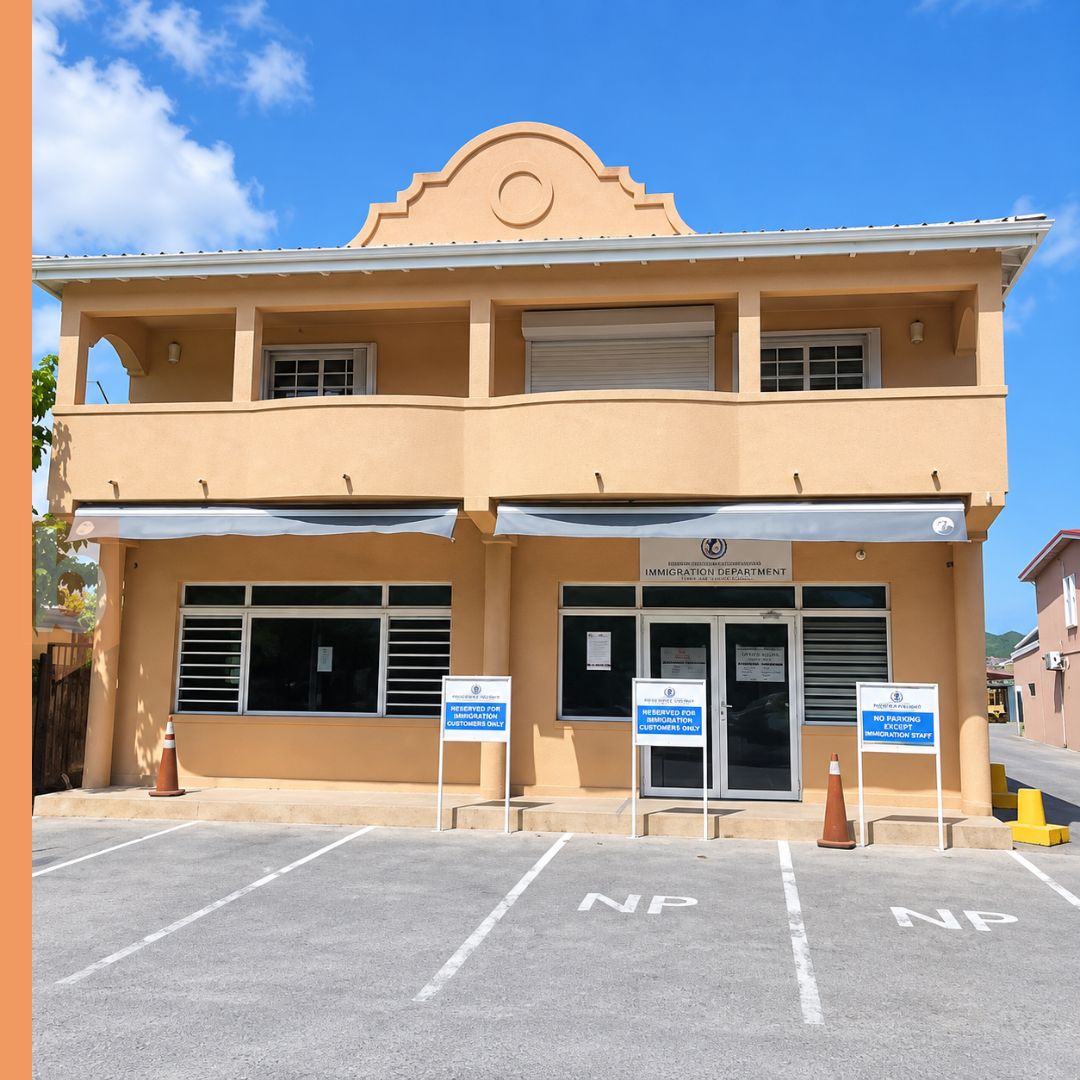
GREAT BAY--A shortage of available personnel at the Immigration and Border Protection Services office on A.Th. Illidge Road on Monday has left its public service kiosks closed, once again showing how limited government capacity can quickly translate into delays for residents, businesses and the wider country.
According to information received, two employees who normally provide service at the kiosks are already on long-term sick leave, while two additional employees called in sick. With too few personnel available to cover the operation, the kiosks could not open to the public.
The immediate cause is employee illness, but the situation comes against the backdrop of a staffing problem within Immigration that Minister of Justice Nathalie Tackling has already publicly acknowledged.
In May, Tackling told the public that the Admittance and Residence Division was handling a demanding workload with limited personnel. Immigration received 4,177 residence permit applications during 2025, of which 3,665 were approved, 288 were denied and 217 were still pending at the time the figures were presented.
The Minister was direct about the staffing challenge.
“I want to acknowledge their continued efforts under what is often a very demanding workload, with not enough individuals to do that work,” Tackling said at the time.
She subsequently announced several vacancies within Immigration, including management positions, and said additional vacancies would be advertised as part of efforts to strengthen the Immigration and Border Protection Services.
The problem is part of a much larger personnel shortage across the Ministry of Justice.
During the 2026 Budget debate, Tackling informed Parliament that the Ministry had 1,096 approved positions but only 591 employees, leaving 505 vacancies. Only 53 vacancies were funded to be filled during 2026. That means the Ministry was operating with roughly 54 percent of its approved staffing complement.
The Minister has acknowledged that staffing shortages affect the entire justice chain and limit how much the Ministry can deliver, including policing, border control, immigration, detention and other services.
The situation at the Illidge Road Immigration office demonstrates what those numbers can mean in practical terms.
When an operation is already working with limited personnel, the normal absence of several employees because of illness can become enough to interrupt an entire public-facing service. There may simply be too few people available to move into those positions and keep the service operating.
For members of the public, that means another trip to a government office, another delay and potentially more time away from work. For businesses dealing with residency and immigration matters involving employees, delays can also affect planning and operations.
Government's own description of IBPS shows that the department has extensive responsibilities. Its administrative arm handles residence admissions, naturalization, visas and legal representation in immigration matters, while its investigative arm is responsible for border controls, immigration enforcement and deportations.
The Ministry has been working to modernize immigration services. In July, Government launched its new Foreigners Management System online platform, describing it as a major step toward faster and more efficient immigration services.
That modernization is important, particularly because online applications can reduce some of the pressure placed on physical offices.
However, digital systems still require people to review applications, make decisions, assist applicants, handle exceptions and provide services that cannot be completed entirely online.
The Ministry itself experienced processing delays earlier this year during the transition to the new platform and said at the time that it was evaluating additional measures to address the affected backlog.
The current kiosk closure therefore raises the broader question of whether essential government departments have enough staffing depth to continue functioning when employees are absent through illness, vacation, training or other normal circumstances.
The issue is larger than Immigration.
Government capacity is often discussed in terms of vacancies, budgets, organizational structures and recruitment. For the public, however, capacity is much simpler: Can the government office provide the service when people show up?
A department can have policies, new systems and plans for modernization, but it also needs enough trained employees to operate those systems and provide the services residents require.
In Immigration, the Minister has already acknowledged that there are not enough people to handle the workload. The wider Ministry of Justice figures show that the problem is structural rather than limited to an isolated absence or one department.
The latest situation at Illidge Road brings that capacity problem directly to the service counter.
As Government prepares its 2027 spending priorities, the question is not only how many vacancies exist or how many positions are listed in the budget. The practical question is whether enough people are being recruited, trained and retained to ensure that essential public services continue functioning consistently.
For Immigration, where decisions can affect residency, employment, families and businesses, sufficient staffing is not simply an internal personnel matter. It directly affects the ability of Government to serve the public and keep important administrative processes moving.
Join Our Community Today
Subscribe to our mailing list to be the first to receive
breaking news, updates, and more.