.jpg)


GREAT BAY--Former Member of Parliament, former Minister, former Commissioner Theo Heyliger could become eligible for release anytime between this month and the coming three to four months, depending largely on how the time he spent in pretrial detention is calculated and credited toward his five-year prison sentence. His release is being eagerly anticipated by his family first and foremost, but the fervor among the general public is also unmistakable, reflecting the continued interest surrounding one of St. Maarten’s most prominent political figures.
Regardless of when his eligibility date is ultimately established, however, approval for release would not necessarily mean that Heyliger is immediately informed that he may walk out of the Pointe Blanche prison gates.
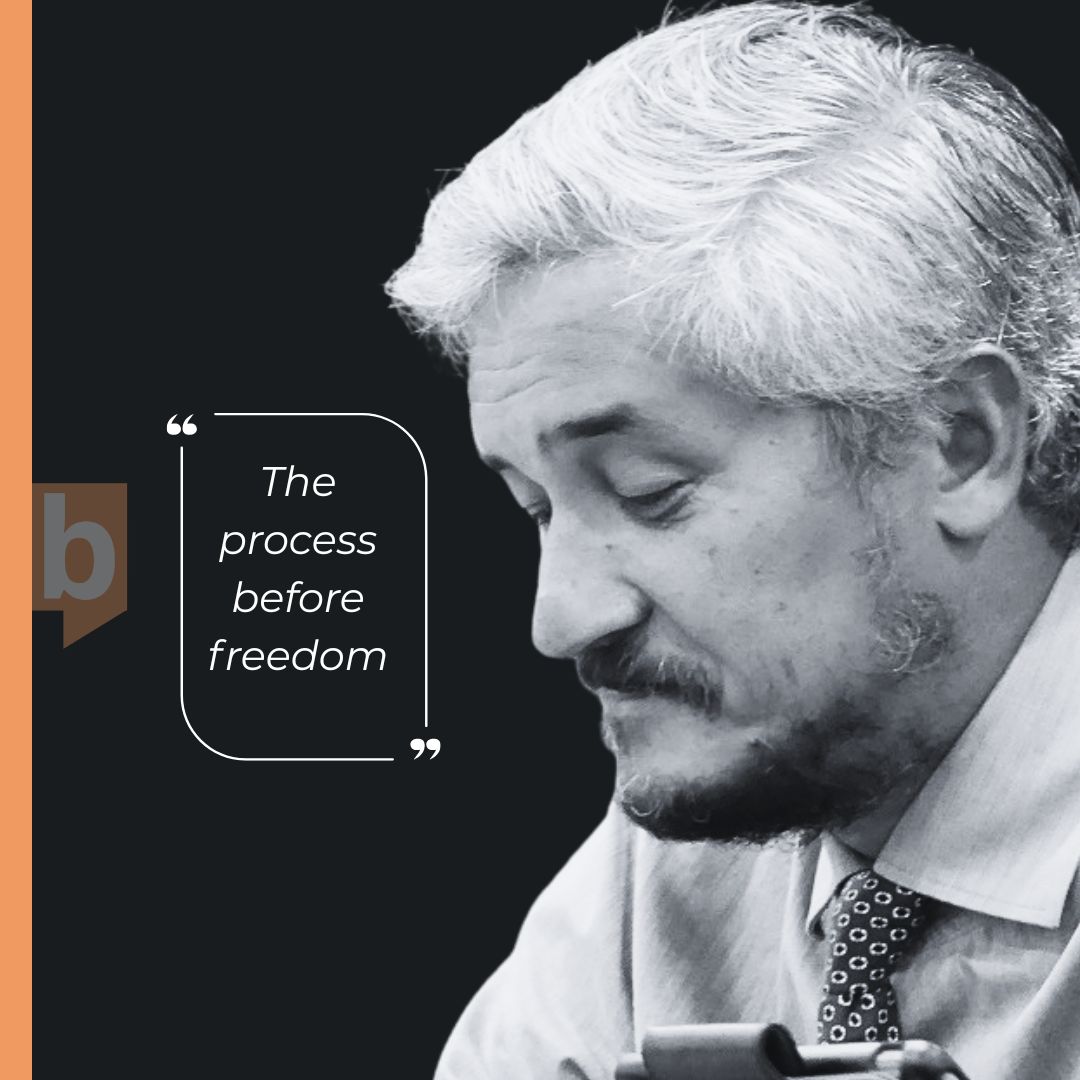
There is a formal process that must be completed before Heyliger, or any other prisoner seeking conditional release, is given official permission to return home. The process involves several justice agencies, the preparation and review of documents, an assessment of the prisoner’s conduct and circumstances, recommendations concerning supervision and conditions, and a final decision by the Minister of Justice.
Depending on how quickly the required information is assembled and reviewed, the procedure could take several weeks and could potentially extend to approximately two months. That would be far from ideal for a man eager to regain his freedom and for a large segment of the public eager to see him free.
But eligibility for conditional release and the formal authorization to leave prison are not necessarily the same moment. To be clear, no definitive public release date for Heyliger has been established. His precise eligibility date will depend on the official sentence calculation, including the amount of qualifying pretrial detention credited to his sentence, as well as the completion of the required review process.
What the law says about prisoners “going home”
Under Article 1:31 of St. Maarten’s Criminal Code, a person serving a temporary prison sentence of more than one year may become eligible for conditional release after serving two-thirds of the unconditional portion of the sentence.
The law specifically provides that time spent in police custody, pretrial detention or qualifying detention abroad before the sentence was enforced must generally be included in this calculation, unless that time was already deducted from another sentence. This provision is particularly relevant to Heyliger because he spent time in pretrial detention during the criminal proceedings against him.
However, reaching the calculated two-thirds date does not mean a prison gate automatically opens.
The prisoner’s file must be prepared and reviewed, and the Central Probation Board must provide advice before the Minister of Justice makes certain decisions concerning conditional release and any conditions attached to it.
The review can include the prisoner’s conduct while incarcerated, disciplinary information, criminal record, judgment, reintegration prospects and the proposed arrangements for life outside prison.
Probation authorities may also assess the prisoner’s proposed residence, family or social circumstances, need for supervision, risk factors and ability to comply with any conditions. Where appropriate, the process may involve verification of the proposed living arrangements and the development of a supervision or reintegration plan.
A drug test is not automatically required for every prisoner before release. However, the law allows the minister to impose a prohibition on alcohol or illegal drug use and to require cooperation with blood or urine testing when such a condition is considered necessary.
Conduct while incarcerated
Conditional release may be postponed or withheld in several circumstances.
The Minister of Justice may, following advice from the Central Probation Board, delay or refuse conditional release if a prisoner committed another qualifying offence during the sentence, seriously misbehaved while incarcerated, escaped or attempted to escape, or presents a safety risk that cannot adequately be managed through release conditions.
Release may also be delayed if the prisoner is unwilling to comply with the proposed conditions.
This means that a report on Heyliger’s conduct during his incarceration is likely to form an important part of the review. It does not mean that negative findings exist. Rather, conduct is one of the factors that authorities are legally permitted and practically expected to consider.
Conditions may continue after release
Conditional release does not mean the remainder of the sentence disappears. The prisoner serves the remaining portion outside the institution during a probationary period and must avoid committing another criminal offence.
The Minister of Justice may also impose special conditions based on advice from the Central Probation Board. These can include
- reporting to a designated agency;
- remaining at an approved address during specified hours;
- avoiding particular persons or locations;
- undergoing treatment;
- staying in supervised accommodation;
- participating in behavioural programs;
- avoiding drugs or alcohol;
- submitting to drug or alcohol testing;
- accepting electronic monitoring.
The Public Prosecutor’s Office is responsible for supervising compliance, while a probation organization may be assigned to guide and monitor the released prisoner. Failure to comply can result in conditional release being revoked, either fully or partially.
Minister signs at the end of the process
The final conditional-release decision must state the length of the probation period and any general or special conditions. The decision must be personally delivered to the prisoner before release.
If the required decision has not been delivered by the date on which the prisoner should legally have been conditionally released, the law treats the release as having been refused. The prisoner may then challenge certain decisions by submitting a reasoned objection to the sentencing court within 14 days.
The Minister of Justice therefore acts at the end of a broader administrative and advisory process. Before the minister’s decision, the relevant prison, probation and justice authorities must have completed the file and provided the information and recommendations needed for an informed determination.
Heyliger’s exact date remains dependent on calculation and process
Heyliger began serving his five-year sentence at the Pointe Blanche prison in January 2024 after being convicted of accepting bribes and money laundering. His expected conditional-release date cannot be determined solely by counting forward from the date he entered the prison because qualifying pretrial detention may be credited toward the sentence.
That calculation could place his eligibility date as early as this month or several months later, depending on the official records and how detention periods are applied.
Even after the eligibility date is identified, the prison and justice authorities must still ensure that the conditional-release file is complete, the required assessments have been conducted, any proposed conditions have been determined, and the ministerial decision has been formally issued and delivered.
Heyliger’s possible release is likely to attract significant public attention because of his former position in government and politics. Legally, however, he must be treated through the same conditional-release framework that applies to other prisoners serving qualifying sentences.
The key distinction is that eligibility places a prisoner at the beginning of the final release procedure. It does not, by itself, amount to an immediate authorization to leave prison.
Join Our Community Today
Subscribe to our mailing list to be the first to receive
breaking news, updates, and more.