





(𝘌𝘥𝘪𝘵𝘰𝘳𝘪𝘢𝘭 𝘤𝘭𝘢𝘳𝘪𝘧𝘪𝘤𝘢𝘵𝘪𝘰𝘯 𝘯𝘰𝘵𝘦: 𝘕𝘰 𝘥𝘦𝘤𝘪𝘴𝘪𝘰𝘯 𝘩𝘢𝘴 𝘣𝘦𝘦𝘯 𝘵𝘢𝘬𝘦𝘯 𝘸𝘪𝘵𝘩 𝘳𝘦𝘨𝘢𝘳𝘥𝘴 𝘵𝘰 𝘢 𝘍𝘪𝘯𝘢𝘯𝘤𝘪𝘢𝘭 𝘛𝘳𝘢𝘯𝘴𝘢𝘤𝘵𝘪𝘰𝘯 𝘛𝘢𝘹. 𝘛𝘩𝘦 𝘪𝘯𝘪𝘵𝘪𝘢𝘵𝘪𝘷𝘦 𝘪𝘴 𝘴𝘵𝘪𝘭𝘭 𝘪𝘯 𝘢𝘯 𝘦𝘹𝘱𝘭𝘰𝘳𝘢𝘵𝘰𝘳𝘺 𝘱𝘩𝘢𝘴𝘦.)
GREAT BAY--With approximately 11.816 billion guilders in financial transactions recorded in St. Maarten in 2022 alone, Minister of Tourism, Economic Affairs, Transport and Telecommunication (TEATT) Grisha Heyliger-Marten on Wednesday presented Parliament with a potential approach to restructuring the country's taxation system.
Applying an illustrative Financial Transaction Tax (FTT) of five percent to that amount would theoretically generate 590.8 million guilders in gross revenues, compared to actual government revenues of approximately 454.7 million guilders referenced in the Ministry's historical analysis.
The figures form part of an ongoing exploration by the Ministry of TEATT into expanding the country's tax base while substantially reducing the existing tax burden on residents and businesses. Among the scenarios being examined are a 50 percent reduction in wage tax and the possible reduction or elimination of turnover tax and profit tax.

Accompanied by TEATT Secretary-General Miguel de Weever, who is leading the initiative, Heyliger-Marten emphasized that the five percent rate is an illustrative modeling assumption and that the 590.8 million guilders does not represent a validated revenue forecast. No tax rate, exemptions or changes to existing taxes have been approved, and further research is required to establish how much of the recorded financial activity could realistically be taxed.
The presentation followed approximately two years of exploratory work under the Ministry of TEATT's legislative agenda in the governing program. Heyliger-Marten explained that the country's existing revenue structure leaves government with limited financial room to invest in infrastructure, education, healthcare, public safety and national development.
The Ministry identified six areas of concern within the existing taxation system: cash flow, compliance, collection, cost, confidence and complexity. These affect both taxpayers and government, with businesses required to devote resources to meeting their tax obligations while government must administer, monitor and enforce several different forms of taxation.
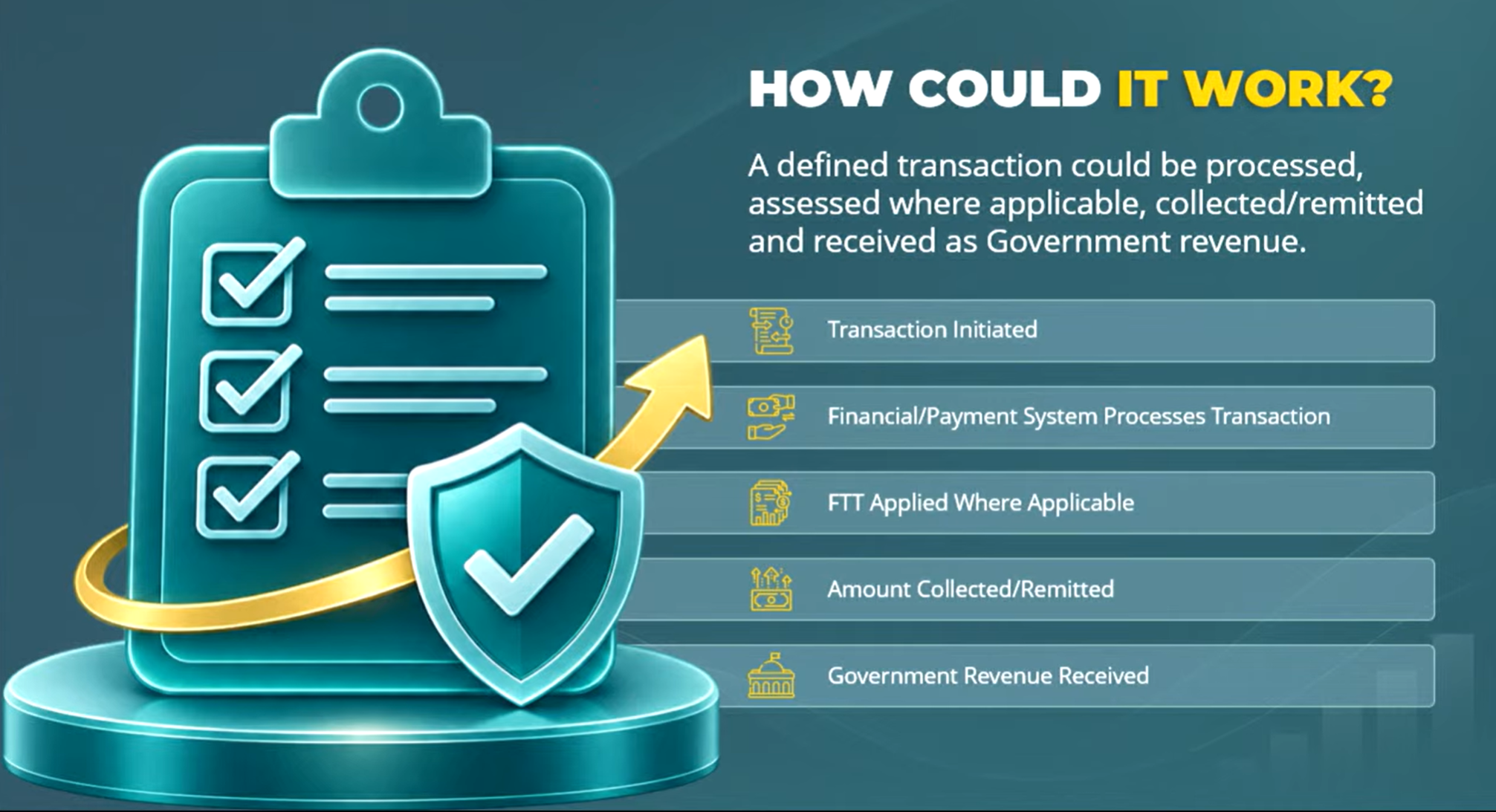
Under the concept being examined, a percentage would be charged on qualifying financial transactions processed through the financial system. These could include banking transactions, ATM transactions, point-of-sale payments, online payments and debit and credit card transactions. However, the Ministry has yet to determine which transactions would qualify, which would be exempt and which would require special treatment.
The Minister explained that further research must determine the composition of these transactions, identify possible duplication, establish exemptions and assess the impact of applying different tax rates. Collection costs, changes in economic behavior and revenues lost through reductions or elimination of existing taxes must also be factored into the calculations.
According to figures presented by the Ministry, five major existing revenue sources, including wage tax, turnover tax, the banking license fee, profit tax and transfer tax, collectively accounted for approximately 417.8 million guilders in 2024.
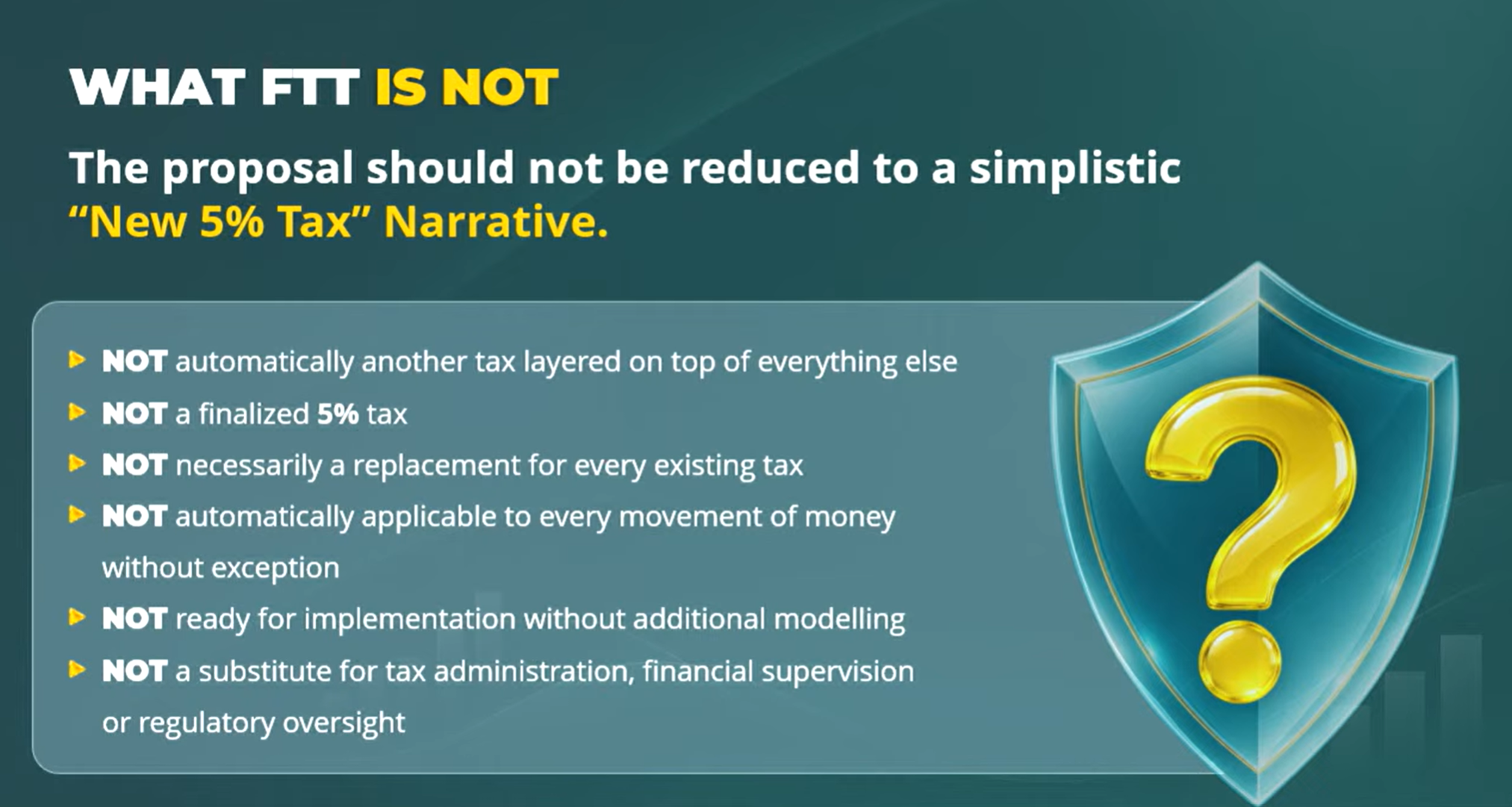
Heyliger-Marten stressed that the intention is to examine whether a transaction-based system could replace significant portions of existing tax revenues while leaving residents with more disposable income and businesses with improved cash flow. She acknowledged that the financial effects must be assessed using consistent and updated data, particularly since the financial transaction figures date from 2022 while the existing tax revenue figures relate to 2024.
Secretary-General De Weever expanded on the economic reasoning behind the proposal, explaining that St. Maarten's dependence on imported goods makes its economy different from larger countries with extensive manufacturing industries and lengthy supply chains.
He argued that even if some businesses or individuals increased their use of cash to avoid transaction charges, much of that money would eventually have to enter the banking system to facilitate payments for imported goods and services. This could allow government to collect revenue from financial activity that is difficult to capture under the existing system.

De Weever also pointed to the opportunity to generate revenue directly from visitors to St. Maarten through financial transactions, including credit card payments. This could reduce the country's dependence on taxation of its resident population and established businesses by expanding the number of people contributing to government revenues.
The Secretary-General explained that the introduction of an FTT would have to be accompanied by substantial tax relief. He said residents should have more money available after accounting for the new transaction charges, while businesses should benefit from reduced tax obligations and an improved investment environment.
De Weever further suggested that reductions in business taxation could create conditions under which government could consider additional minimum wage increases. Improved business cash flow, he argued, could help employers absorb higher labor costs, attract investment and create employment opportunities.
Another potential benefit identified by the Ministry is the collection of government revenues through financial institutions. De Weever referenced the existing one percent banking license fee as an example of how revenues can be collected through the financial system and transferred to government without depending on individual businesses to administer and remit the tax.

Heyliger-Marten cautioned, however, that further technical assessments would be necessary to determine whether the existing banking infrastructure could accommodate the proposed transaction tax. Legal authority, collection arrangements, reporting requirements, refunds and transaction reversals would also have to be addressed.
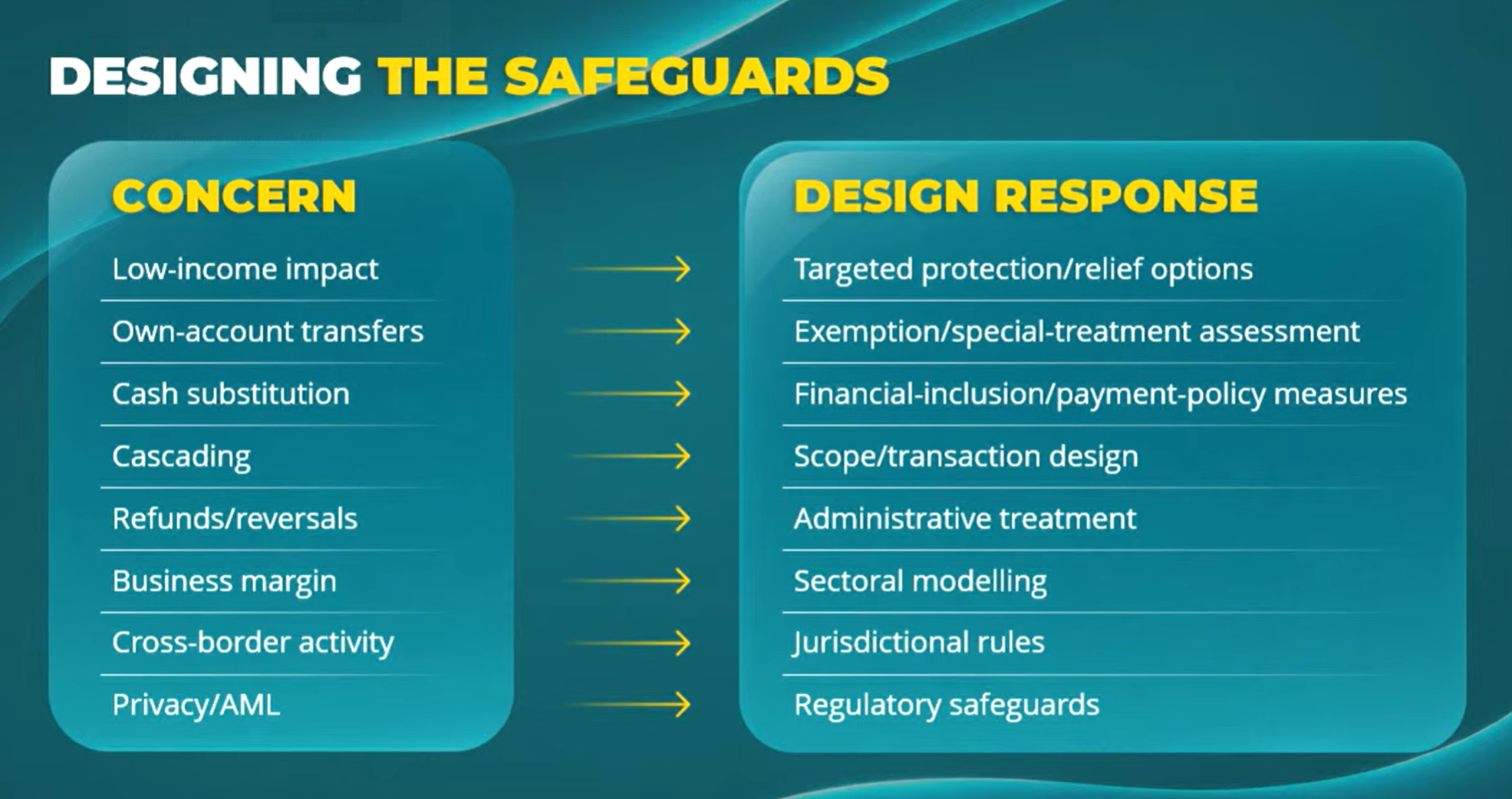
The Minister identified several risks requiring further examination, including the possibility of repeated taxation as goods move through supply chains, increases in consumer prices, a shift towards cash or foreign payment systems and the impact on businesses operating with narrow profit margins. Particular attention would also have to be given to lower-income households and residents who receive little or no benefit from wage tax reductions.
The treatment of transfers between personal bank accounts, loan transactions, refunds, cross-border payments and other financial activities remains among the questions to be addressed during the feasibility study.
The FTT forms part of a wider revenue strategy being explored by the Ministry of TEATT, which Heyliger-Marten previously indicated could help St. Maarten work towards a national budget of one billion guilders. The Minister envisions a combination of revenue-generating measures that would give government greater financial capacity to meet its responsibilities and finance national development.
Other measures under consideration include a potential tourist entry fee, an increase in accommodation tax from five to ten percent, extending accommodation tax coverage to qualifying short-term vacation rentals, tobacco excise duties, potential cannabis-related taxation and licensing, and additional registration and mooring fees within the maritime sector.
The next phase of the FTT initiative would involve updating financial transaction data, testing alternative tax rates, examining the impact on households and individual business sectors, developing safeguards and determining the appropriate legal and regulatory framework.
Consultations would also continue with the Ministry of Finance, financial institutions, businesses, labor representatives, professional organizations and civil society.
Heyliger-Marten clarified that she was seeking Parliament's support to advance the research, economic modeling and consultation process. The findings and preferred tax reform scenarios would subsequently be brought forward for further government and parliamentary consideration before any decision is taken on introducing a Financial Transaction Tax.
Join Our Community Today
Subscribe to our mailing list to be the first to receive
breaking news, updates, and more.