

.jpg)


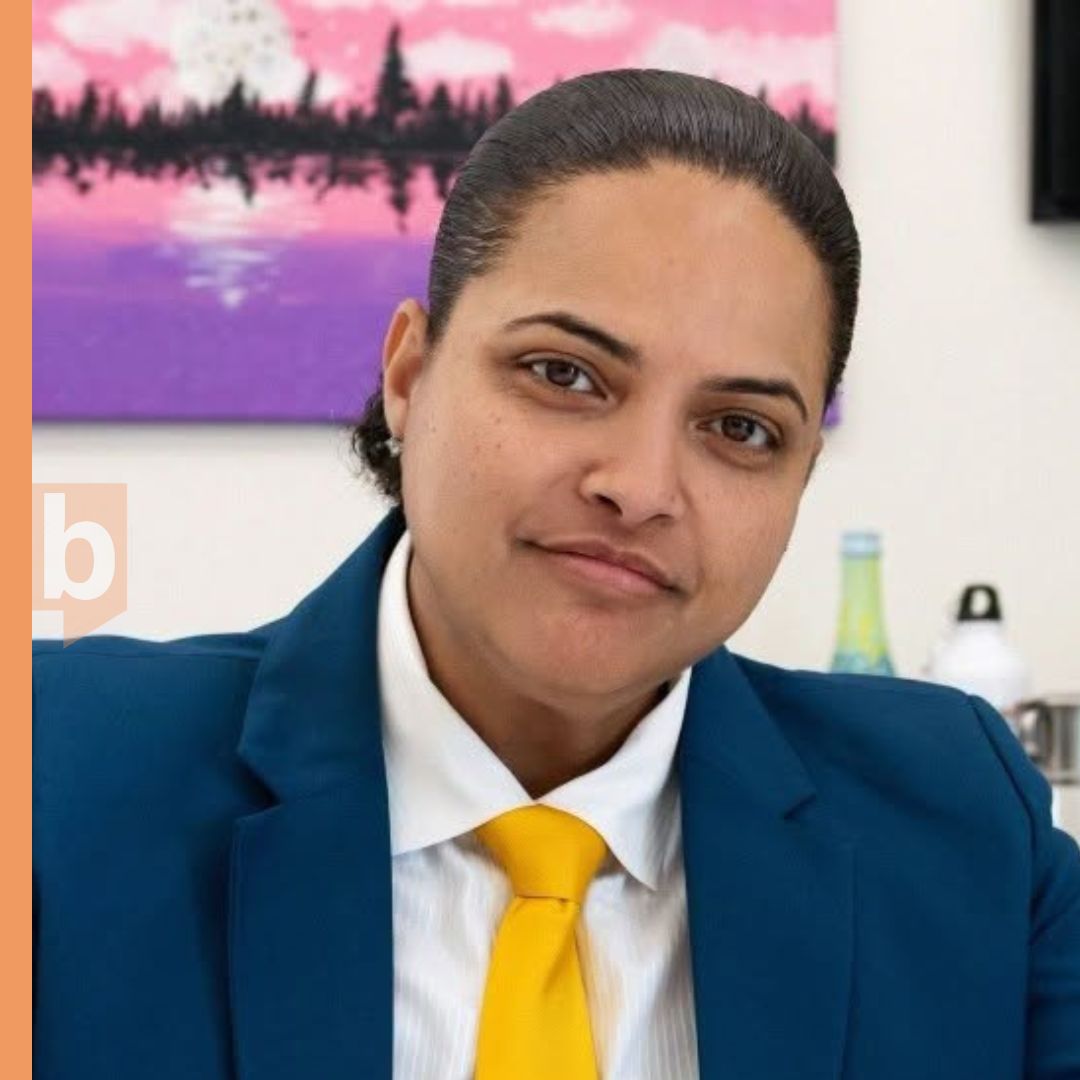
GREAT BAY--Minister of Education, Culture, Youth and Sport Melissa Gumbs used Sunday’s Back to School Expo to make a direct appeal to parents, teachers, businesses, community organizations and students to carry the spirit of cooperation displayed at the event into the 2026-2027 school year.
Gumbs asked attendees to keep the “village” represented at the Expo active beyond Sunday, to recognize education as a community-supported responsibility that extends outside school walls, and to work collectively to develop stronger readers, thinkers and citizens. She also directed a message specifically to students, reminding them that the adults who attended the event did so because they believe in their potential.
The Minister said the importance of the Back to School Expo was not limited to school supplies or information booths. For her, the gathering demonstrated what community involvement in education can look like when responsibility is shared among government, schools, families, businesses, sports organizations, cultural groups and other stakeholders.
She thanked organizer Bertaux “Rude” Fleming and his team at Aleeze for taking the initiative to stage the Expo, saying government should not be expected to do everything for a society.
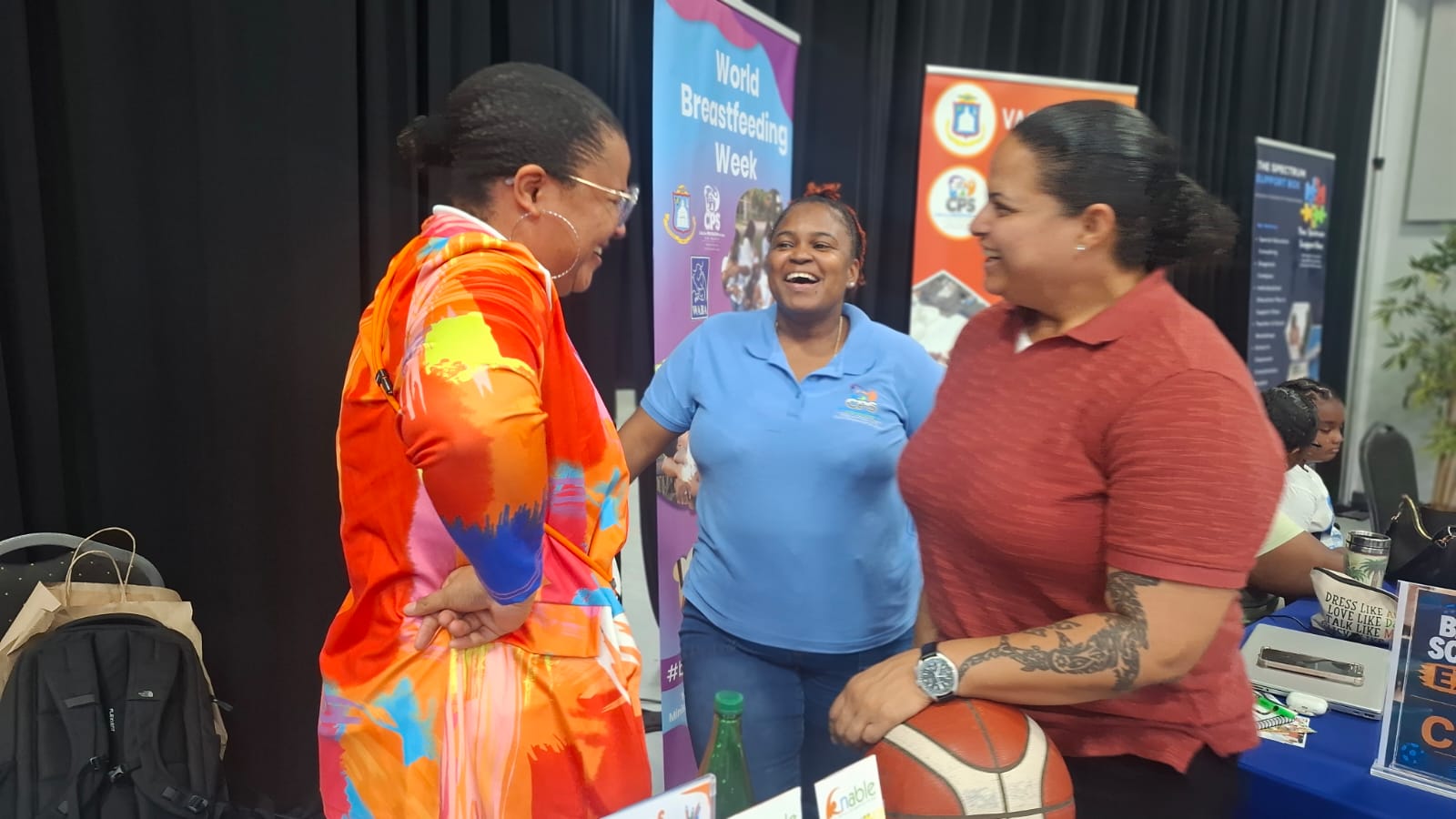
“When everyone is turning to look at who sits in this seat, we forget to look at each other. We forget the ways of the village,” Gumbs said. Looking around at the participating vendors, organizations and institutions, she said the event represented that village in action. “The village is choosing to be here on a Sunday, ready to support our young people as they gear up for the 2026/2027 school year,” she said, thanking vendors, teachers, school boards, sports clubs, artists and volunteers for contributing to the event.
Gumbs said education must also be understood as something larger than schools, budgets, curricula, examinations and degrees. She described it as the way one generation prepares the next to become independent and critical thinkers who remain connected to their community.
She said every child entering school for the new academic year carries part of St. Maarten’s future, and that the collective goal should be to ensure that children, regardless of where they live or which school system they attend, have the opportunity to read well, understand numbers, think critically and develop confidence in their abilities.
The Minister also restated three priorities that will continue to guide the Ministry’s education vision.
The first is for every child to experience a safe, inclusive and dynamic environment in school, regardless of the school system they attend. The second is for every child to become a confident reader before leaving primary school. Gumbs said stronger literacy improves vocabulary, self-expression and further academic development, while also strengthening critical-thinking skills.
The third priority is numeracy, with the Minister saying children should become comfortable enough with mathematics that it becomes a practical tool rather than something they fear.
Gumbs acknowledged that literacy and numeracy remain areas of concern, not only in St. Maarten but throughout the Caribbean and internationally. She stressed that the growing use of artificial intelligence does not eliminate the need for fundamental abilities such as reading, writing and critical thinking.
She said improving those areas requires investment, but argued that the conversation around educational resources should not be limited to books, technology and other physical materials. Time, she said, is also a critical educational resource.
Gumbs pointed to concerns she has heard from several sides of the education system. Parents have raised concerns that their children do not receive enough reading time at school. Teachers have complained that some parents do not attend report card meetings or parent-teacher conferences, often because they cannot obtain time away from work. Employers have raised concerns about potential employees who struggle with reading, writing and recognizing basic words and numbers, while students have said questions about the relevance and value of their education are not always adequately answered.
The Minister said several of those issues can be addressed without waiting for government action.
Schools, she said, can make deliberate decisions about reading time. Employers can assist parents by allowing them time to attend important school meetings, while parents must then make use of that opportunity. Schools should also be willing to answer students’ questions openly and honestly. “Critical thinkers ask questions; yes men do as they’re told,” Gumbs said.
She rejected the idea that improvement in education can be delivered by a ministry acting alone. “Education has to be a team sport. Literally, and figuratively,” she said.
Gumbs said lasting improvement in literacy, numeracy and child development happens not only in classrooms, but in homes, libraries, businesses, community spaces and sporting environments.
She described parents as a child’s first teachers, educators as the next layer of support, and sports clubs, dance schools, cultural organizations, churches, after-school programs and other groups as another important part of the development structure around children.
Businesses, government, investors, extended families, community leaders and advocacy organizations also have roles to play through financial support, responsible use of public resources, mentorship, participation and simply being present.
Gumbs also challenged what she described as an outdated separation between academics and activities such as sports and the arts.
She argued that music, dance and athletics contribute directly to learning. Reading sheet music involves mathematics, choreography develops sequencing and memory, and participation in team sports teaches discipline, cooperation and how to handle both success and disappointment.
“A child who is confident on a stage or on a court walks a little taller, engages with their community a little differently,” she said.
Gumbs said investment in youth sports and arts programs should therefore be viewed as investment in education rather than as funding for activities that sit outside it.
The Minister also encouraged parents and educators to rethink how they view reading for pleasure, play and video games. She noted that children can develop literacy by reading comics, joke books and other material they genuinely enjoy, while some video games require players to read instructions, solve problems, manage resources and work with others.
Rather than dismissing those interests, Gumbs said adults should guide young people toward using them in ways that contribute to development. “Let us meet our students where they already are, instead of insisting that they meet us where we used to be,” she said.
Gumbs concluded by returning to the community spirit she said was evident throughout the Back to School Expo. She urged those present not to allow that cooperation to end when the booths close, but to carry it into homes, schools, workplaces, sports clubs and community organizations throughout the coming school year.
Her final message to students was equally direct: the presence of so many adults at the Expo on a Sunday was evidence that the community believes in them and is willing to invest time in their future.
“That’s not nothing; that’s everything,” Gumbs said.
Join Our Community Today
Subscribe to our mailing list to be the first to receive
breaking news, updates, and more.
