.jpg)


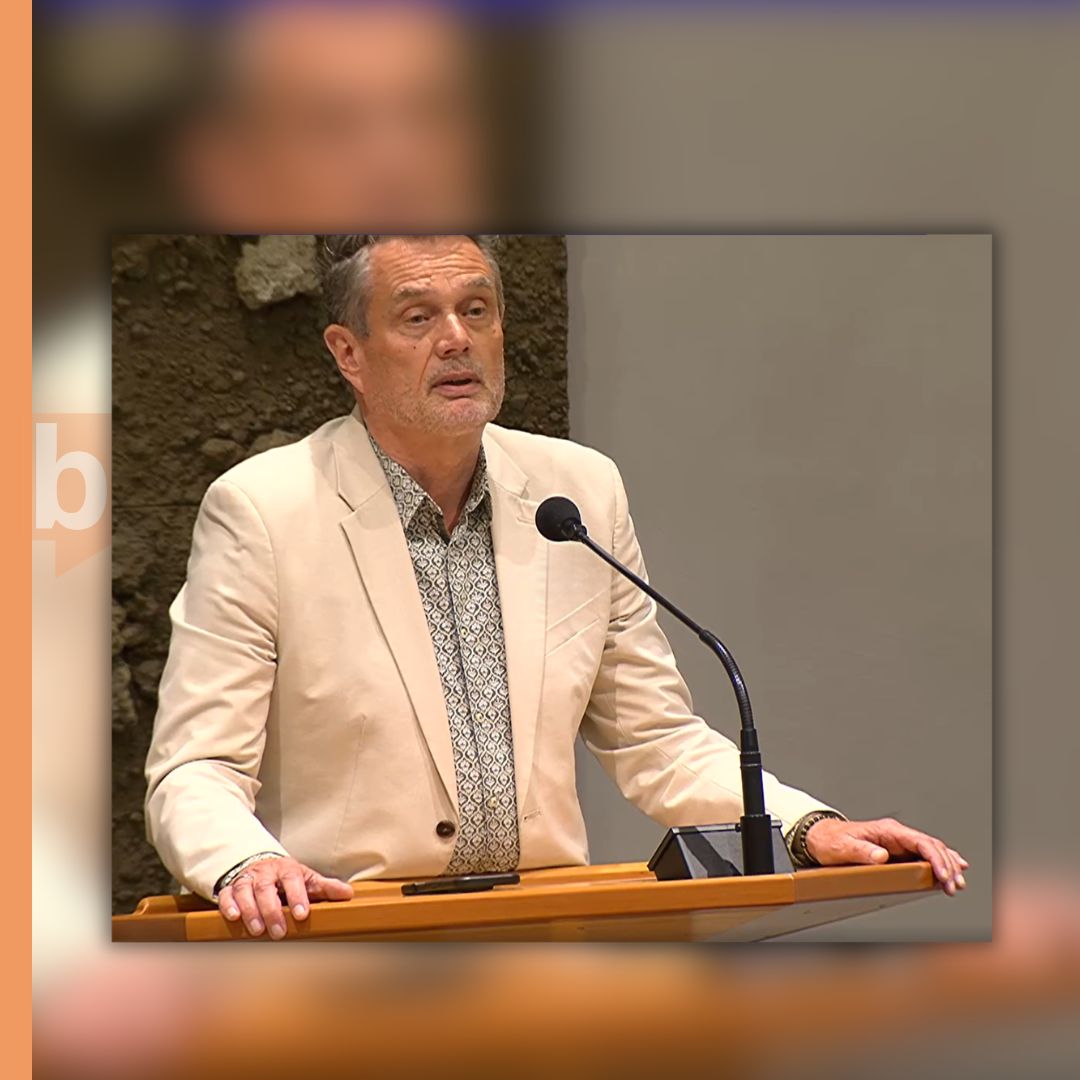
THE HAGUE--Former Attorney General of Aruba and former Chief Public Prosecutor for Bonaire, Statia and Saba Bote ter Steege told IPKO on Saturday that politicians and ministers in small island societies must understand that their behavior has consequences far beyond politics, warning that poor examples from leaders can create a form of rot in public life.
Ter Steege made the comments during the IPKO panel discussion on cooperation within IPKO and within the Kingdom. Drawing on his six years of experience working in the Caribbean part of the Kingdom, including on Bonaire, Saba, St. Eustatius and Aruba, he spoke about the rule of law in practical terms, focusing on integrity, environmental responsibility and language in the justice system.
He said he would not discuss specific investigations involving politicians, but he did want to address what he sees as the wider effect of political conduct on society. According to Ter Steege, leadership by example matters in small communities where everyone knows each other, knows each person’s role and often lives close to those holding public office.
Ter Steege acknowledged that politics on the islands is complicated because voters are close to their representatives, sometimes living nearby or approaching them directly. However, he said this closeness makes it even more important for politicians and ministers to understand the example they set.
He shared an example from Aruba involving a vehicle inspection. According to Ter Steege, his partner took their car to be inspected and was told that a broken light would prevent the car from passing. The inspector then allegedly suggested that the matter could be resolved with a payment of 25 dollars.
For Ter Steege, the example illustrated a larger issue. When questionable conduct is normalized, he said, citizens may ask why they should behave better than those in positions of authority. He warned that if leaders fail to model integrity, the result can become like rot in the foundation of society, slowly weakening confidence in rules, institutions and public behavior.
He said public officials must realize that their actions influence the standards people accept around them. In small societies, where the public and political world are closely connected, the example set by ministers, parliamentarians and other public figures can either strengthen or weaken the rule of law.
Ter Steege also addressed environmental issues, saying the environment is not only a problem on Bonaire, but also on Aruba and, for many years, St. Maarten. He said that when residents feel no one else is acting to make their surroundings safer or cleaner, they often turn to the Public Prosecutor’s Office or the Attorney General for help.
However, he warned that criminal law cannot solve major environmental problems on its own. According to Ter Steege, the justice system is sometimes forced to disappoint people because criminal prosecution is not designed to fix large structural environmental issues.
He said those problems require broader governance, policy and enforcement solutions. While the Public Prosecutor’s Office can act in certain cases, it cannot replace the work of government, regulators and responsible institutions in addressing long-standing environmental challenges.
Ter Steege’s comments placed environmental protection within the wider discussion on the rule of law. His point was that people often look to the justice system when other systems appear not to work, but criminal law should not become the last resort for every governance failure.
He also reflected on the small-scale nature of island societies and how that affects the rule of law. Ter Steege said he valued his six years in the Caribbean, but also noted that returning to the anonymity of the Netherlands had its advantages. On the islands, he said, everyone knows one another, which can make the administration of justice both challenging and complicated.
In the final part of this section of his remarks, Ter Steege turned to language in the justice system. He said criminal law in the Caribbean part of the Kingdom is still largely written and administered in Dutch.
While many prosecutors can speak sufficient English during hearings on Saba and St. Eustatius, and interpreters or local prosecutors may assist in places such as Bonaire and Aruba, Ter Steege said the preparation of criminal cases is still done in Dutch.
He said that during his time in the Caribbean, he was able to encourage staff members of the Public Prosecutor’s Office on Bonaire, Saba, St. Eustatius and Aruba to take Dutch language courses, without creating too much resistance.
Ter Steege emphasized that this was not meant to diminish anyone’s mother tongue or local language. He said people should be proud of their own language. However, he also said island residents must recognize that Dutch remains the language of criminal law and the courts.
He warned that if young people from the islands are not supported to reach a sufficient level of Dutch, they may be shut out of opportunities in the justice system, including good jobs within the Public Prosecutor’s Office.
His remarks added a practical dimension to the IPKO discussion on cooperation within the Kingdom. Ter Steege’s message was that the rule of law is not only shaped by laws and institutions, but also by political example, environmental responsibility, access to justice and language skills.
He urged representatives to understand that small island societies face unique challenges, but also that public leadership, clear governance and serious investment in people remain essential to protecting the rule of law.
Join Our Community Today
Subscribe to our mailing list to be the first to receive
breaking news, updates, and more.