.jpg)


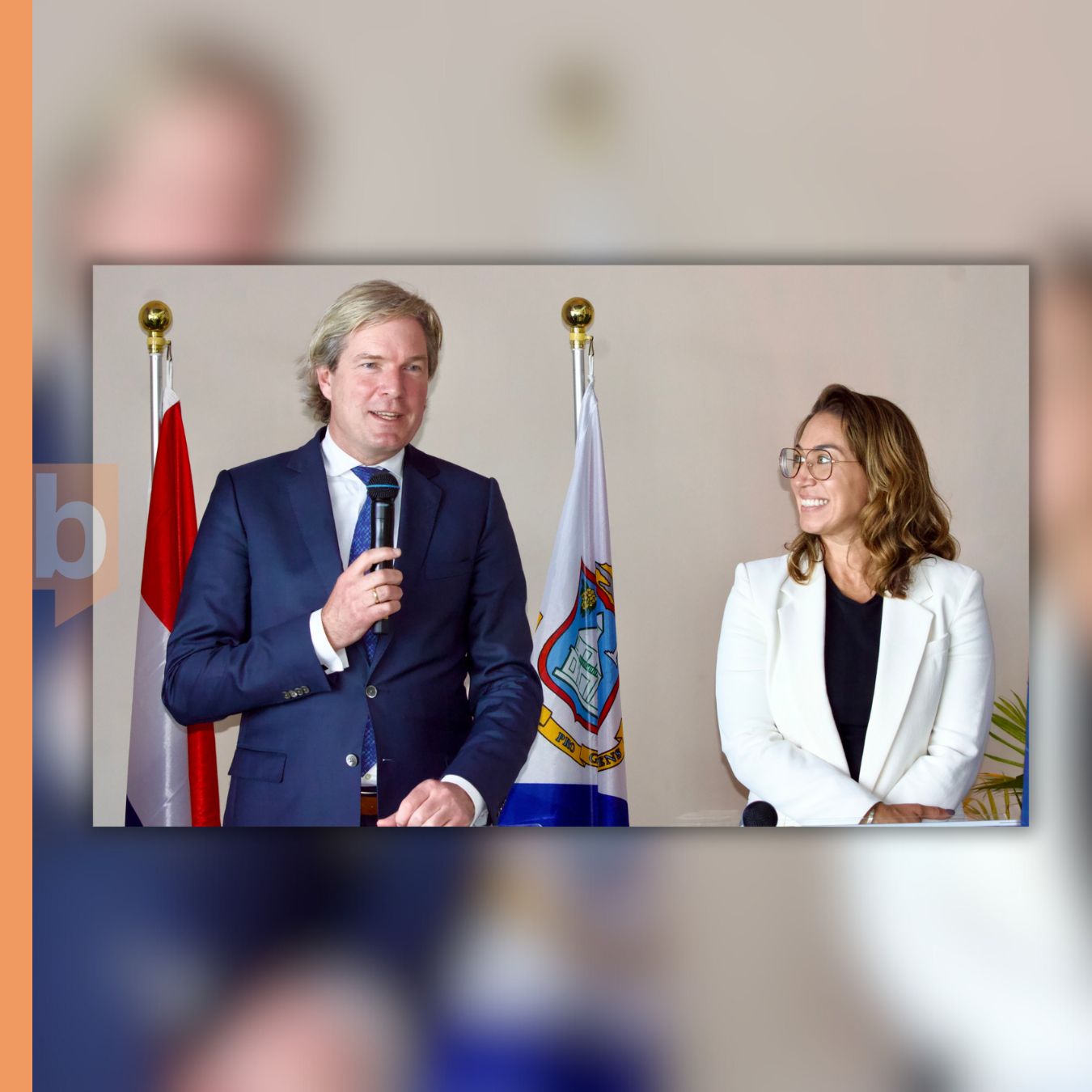
THE HAGUE--The Netherlands’ Minister of Justice and Security Foort van Oosten has reinforced the same central warning previously raised by St. Maarten’s Justice Minister Nathalie Tackling following the January Judicial Four-Party Consultation, that tackling organized crime in the Kingdom requires more than arrests, it requires a stronger, better balanced justice chain across the Caribbean countries.
In a report sent to the Dutch House of Representatives, Van Oosten stated that “crime should never pay,” and argued that a Kingdom-wide approach to organized subversive crime is the most effective response to criminal networks. He added that the Netherlands will seek strong partners in Aruba, Curaçao and St. Maarten, while acknowledging that the challenges in the Caribbean part of the Kingdom remain substantial.
The “capacity imbalance” diagnosis
The JVO, held on January 16, 2026, in St. Maarten and chaired by Minister Tackling, is the six-monthly consultation between the justice ministers of Aruba, Curaçao, St. Maarten and the Netherlands. Van Oosten framed the meeting as a governance exercise aimed at aligning how the four countries manage justice priorities and the shared institutions that support them.
A major theme of his report is what he described as the “capacity issue” or imbalance inside the justice chain: stronger investigative and border capacity does not automatically translate into successful outcomes if follow-up steps, prosecution, detention, rehabilitation, and institutional capacity are uneven. He pointed to differences between joint services such as the Criminal Investigation Cooperation Team and the Royal Netherlands Marechaussee, versus local police and penitentiary institutions, warning that the result can be a higher chance of being caught without the necessary downstream capacity to complete the chain.
To address this, the ministers agreed to produce a shared, evidence-based picture of bottlenecks and shortages across the four countries. A mapping exercise will be conducted through an existing JVO working group, with the Netherlands responsible for inventorying common services, a step intended to convert a long-running political concern into measurable operational gaps that can be prioritized.
Detention cooperation, and a financial signal on Point Blanche
Van Oosten’s report treats detention as a practical pressure point for the wider justice system. While detention remains a national responsibility, he said cooperation is being pursued where possible, and he described current efforts as aimed at building a safer, more humane, and future-proof detention system.
As a concrete signal of intent, he cited the start of the new construction of Point Blanche Prison and reported Dutch contributions via Ministry of the Interior and Kingdom Relations: €20 million toward construction and €10 million for broader detention-system improvements. The report also notes continued support for the detention task force as a standing vehicle for knowledge exchange, plus a new writing group to coordinate a joint response to the evaluation of the Mutual Detention Regulations.
Forensic care, treatment pathways, and youth placement
The report frames enforcement as incomplete without treatment and reintegration capacity, particularly where mental health and forensic care are concerned. Van Oosten said the Caribbean part of the Kingdom lacks sufficient treatment options, including appropriate placement pathways for young people.
He referenced a multi-year program approved at the June 2024 JVO covering forensic care, treatment, tbs, and youth placement, and said the priority now is implementation. The Netherlands will fund an overarching program manager tasked with establishing cross-country improvement processes and helping local project teams identify which bottlenecks to tackle first, taking account of regional differences. He also reaffirmed ongoing Dutch support, including financial support, for the broader multi-year program.
Undermining, the administrative approach, and structural funding
Van Oosten emphasized that organized subversive crime is being approached both through criminal law and administrative measures. He highlighted developments around the multidisciplinary Undermining Platform Caribbean, noting a €500,000 structural provision from the Netherlands’ Directorate General for Undermining to support the platform’s objectives, strategic partnerships, and network coordination.
He also reported that the JVO working group on the administrative approach evaluated the protocol on administrative action against undermining at the end of 2025, producing an amended decision approved by the ministers, which he described as an optimization that reinforces government-wide commitment.
Coast Guard, regional cooperation, and sustaining institutions
Van Oosten described the Caribbean Coast Guard as a core link for early detection of drugs and weapons, illegal migration, illegal fishing, and environmental pollution. He noted a visit ahead of the JVO and said ministers took note of regional developments, including a briefing from the deputy director. He also pointed to 2026 as the organization’s 30th year.
He further highlighted police and fire brigade cooperation as part of resilience across the region, and stated that the Netherlands will continue a structural contribution of €3.5 million from 2026 onward to support regional cooperation, including the College of Chiefs of Police. Fire brigade cooperation is described as becoming more concrete, with work underway on a renewed cooperation agreement and a proposed supporting secretariat, with a decision expected during the next JVO.
Data exchange and Certificate of Good Conduct
The report also addresses the Kingdom’s push toward harmonizing personal data protection, described as urgent but complex. Van Oosten said discussions covered the coordination and use of judicial data for the Certificate of Good Conduct (VOG). He intends to submit a bill for consultation in the Netherlands in early 2026 to enable transfer of judicial data between the European Netherlands and the Caribbean part of the Kingdom for VOG purposes, while other countries are preparing amendments to their national ordinances.
Van Oosten said the addition of a strategic session alongside the JVO created room for more open discussion and he credited Minister Tackling with facilitating that format. He reported that the next JVO will take place on September 3, 2026, in Curaçao, and noted Curaçao’s intention to organize a strategic session on the margins of that meeti
Join Our Community Today
Subscribe to our mailing list to be the first to receive
breaking news, updates, and more.