.jpg)


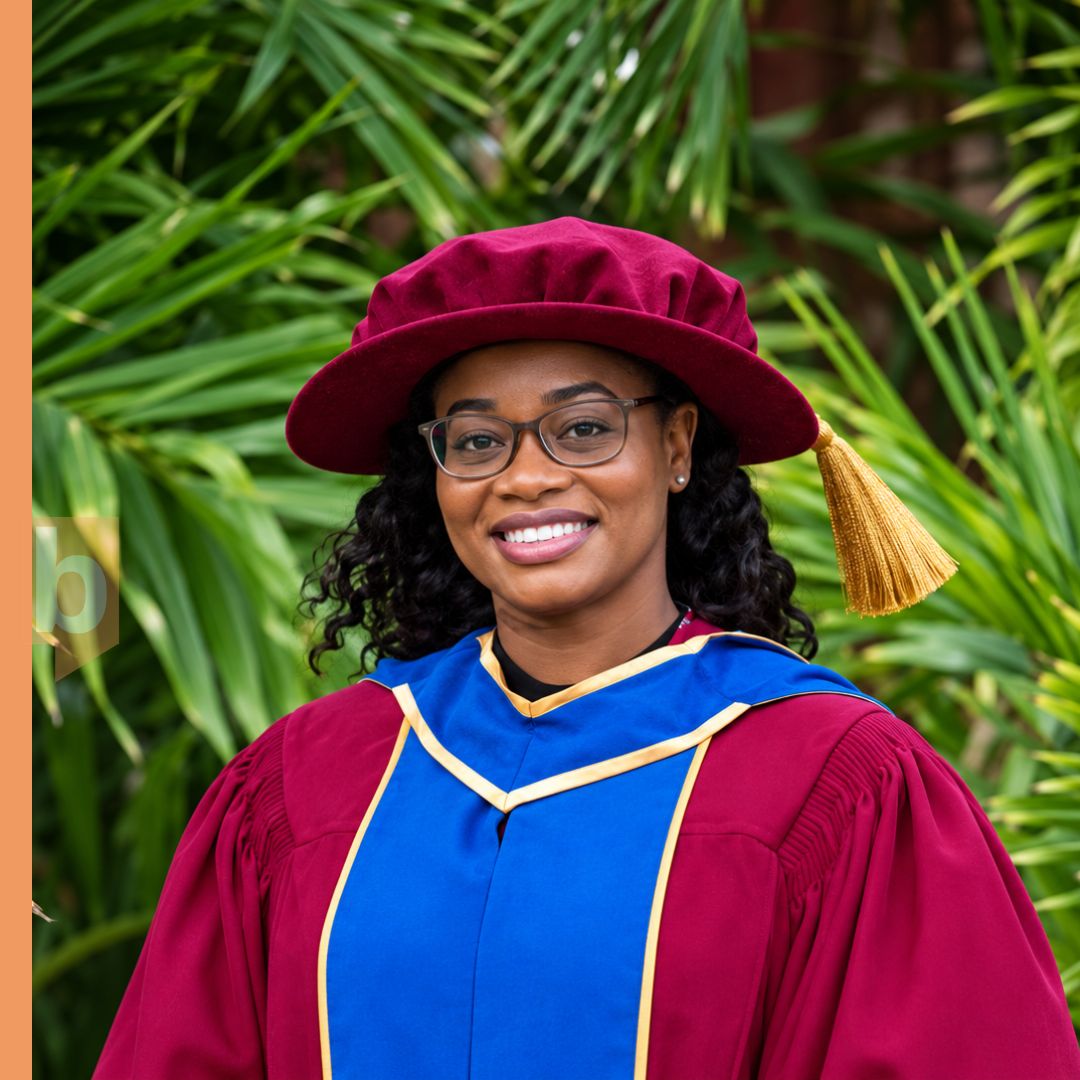
GREAT BAY--When Dr. Rolinda Carter takes office as President of the University of St. Martin in January 2027, she will arrive in the position by a route that is unusually connected to the institution she is being asked to lead.
Carter did not first encounter USM as an administrator, lecturer or outside academic recruited to St. Maarten. She began there as a student in the university’s GED program, continued to an Associate degree, left the island to pursue higher education abroad, earned a Bachelor’s degree and doctorate in Canada, returned to St. Maarten, eventually became USM’s Dean of Academics, moved into laboratory medicine and quality management, and remained active in science education and youth development.
The presidency of USM is not simply another academic appointment. The person occupying the position must understand what the institution means to students who may not follow a traditional educational path, while also being able to deal with academic standards, partnerships, research, government, funding, institutional development and the expectations placed on St. Maarten’s principal local institution of higher education.
On paper, Carter’s career touches several of those areas.
From GED to doctoral research
Her academic path itself is likely to become one of the strongest parts of the story USM can tell about its new president. After beginning through the GED program, Carter earned an Associate of Arts in General Liberal Arts from USM. She later earned a Bachelor of Science in Biochemistry and Molecular Biology, with a specialization in Health Sciences, from Trent University in Canada, before completing a PhD in Pathology and Laboratory Medicine at the University of British Columbia.
Her time in Canada was not simply about accumulating degrees. Carter worked within a serious scientific research environment. Her name appears in published work related to blood coagulation and fibrinolysis, and she was part of research connected to the University of British Columbia, the Centre for Blood Research and Canadian Blood Services.
That background gives her something USM has long been seeking to strengthen: familiarity with research culture.
For a small university in a small island country, that is important. USM is increasingly expected to be more than a teaching institution. St. Maarten needs locally grounded research in education, public health, economics, climate resilience, social development, history, technology and other areas directly connected to national development. A president who understands research from inside the laboratory, rather than only administratively, enters the job with a useful perspective.
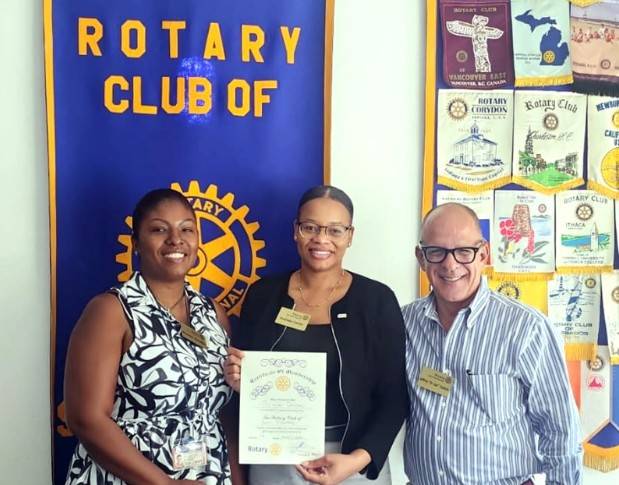
She has already sat on the other side of the USM desk
Carter is also not entering the institution without administrative experience. In 2018, she returned to USM as Dean of Academics. That put her inside the university’s academic machinery, dealing with programs, faculty, students, curriculum and institutional partnerships.
During her tenure, USM expanded aspects of its continuing education offering. Among the programs introduced in 2022 were courses in Geographic Information Systems and the History and Cultural Heritage of St. Martin, developed through collaboration involving local professionals, civil servants and university faculty.
She was also part of USM’s institutional relationships with organizations including the American University of the Caribbean and the National Institute for Professional Advancement. A 2019 partnership between the three institutions was designed to strengthen collaboration in education, research, community service, public policy and sharing of resources.
These may seem like routine responsibilities of a dean, but they are relevant to the presidency. USM's future will almost certainly depend heavily on partnerships. St. Maarten does not have the population or financial resources to build every possible university program independently. Strategic relationships with regional and international universities can allow USM to expand what it offers without attempting to recreate entire institutions from scratch. Carter has already worked in that environment.
Leaving academia may have strengthened her management credentials
Perhaps one of the more interesting aspects of Carter’s career is what happened after she left USM in 2022.
Rather than remaining exclusively within academia, she returned more deeply to laboratory medicine and became Quality Manager at Health Care Laboratory St. Maarten. That move could prove significant to her new role.
Quality management in a medical laboratory operates in an environment where procedures, documentation, audits, measurable standards, corrective actions and accountability matter. Health Care Laboratory subsequently achieved international accreditation under ISO 15189, the international quality and competence standard for medical laboratories.
Public accounts of Carter’s work credit her with helping guide that accreditation process.
For USM, that experience could be particularly relevant. Universities also live and die by standards. Academic quality assurance, program review, documentation, institutional processes, accreditation and measurable performance all require a culture in which policies are not simply written but followed and demonstrated.
The presidency therefore requires more than being an accomplished academic. It requires someone capable of building systems. Carter’s laboratory experience suggests that she has operated in precisely that type of standards-driven environment.
Her work with young people never stopped
Leaving USM also did not mean leaving education. As President of the St. Maarten Science Fair Foundation, Carter has remained directly involved in developing young people’s interest in science, technology, engineering, arts and mathematics.
Under her leadership, the Foundation expanded the traditional science fair concept into Science Week, involving students, educators, businesses and professionals. St. Maarten also became involved in regional robotics initiatives, and Carter was appointed the territory’s representative to the OECS Robotics Association.
In 2026, St. Maarten students participated in the OECS Super Regional Robotics Challenge, giving local students exposure beyond the island.
This part of her record matters because one of USM’s biggest challenges is convincing young people that there is a meaningful future for them in education and professional development connected to St. Maarten.
Carter has been working at that point where education meets aspiration.
Her own life also gives that message credibility. She can speak to a student entering through a non-traditional route without doing so theoretically. She was that student.

She understands the institution, but that does not remove the challenges
None of this means the presidency will be an easy transition. Being Dean of Academics is not the same as being president of an institution. A university president must deal with finances, fundraising, government relations, organizational culture, staff management, strategic planning, enrollment, international partnerships, infrastructure and the sometimes competing demands of students, faculty, boards, government and the wider community.
The publicly available record provides considerably more evidence of Carter’s academic, scientific, quality-management and community leadership experience than it does of her managing a university-wide budget or leading major institutional fundraising. Those will be areas to watch.
USM itself is entering an important period. The university has been conducting surveys and focus groups to shape its new strategic direction, seeking input from students, educators, civil servants, faculty and the wider community. The institution continues to sit at the center of longstanding national discussions about higher education, funding, accreditation, research and how St. Maarten develops more of its own professional workforce.
The incoming president will therefore inherit much more than classrooms and degree programs.
She will inherit the question St. Maarten has wrestled with for years: what exactly does the country want its national university to become?
A teaching institution primarily serving the local population? A research institution? A regional university? A partner university delivering internationally accredited programs? A workforce-development engine? In reality, USM is increasingly expected to perform elements of all of these roles. That requires priorities, money and institutional discipline.
An appointment with symbolism, but also substance
There is an obvious symbolism in Carter’s appointment. A woman who entered USM through the GED route will become the institution’s President. A former student will lead the university that helped provide the first steps in her own academic advancement.
But focusing only on that symbolism risks overlooking the more substantive argument behind her appointment.
She has experienced USM as a student and administrator. She has completed doctoral-level scientific training at a major Canadian university. She has participated in published research. She has managed quality processes in healthcare. She has helped lead a laboratory operating under international accreditation requirements. She has developed academic programs, worked in institutional partnerships and remained involved in youth science and regional STEAM initiatives.
That combination does not guarantee a successful presidency. No résumé does. What it does provide is a background unusually aligned with several of the challenges confronting USM: academic standards, quality assurance, research development, partnerships, youth engagement and connecting education to the needs of St. Maarten.
The more difficult test begins in January. Carter will have to convert those experiences into institution-wide leadership, demonstrate that she can manage not only academics but the financial and organizational demands of the university, strengthen USM’s relationship with Government and external partners, and help define what the institution should look like five or ten years from now.
Her journey from GED student to President will inevitably be celebrated. Her presidency, however, will ultimately be judged by what happens after the homecoming.
Join Our Community Today
Subscribe to our mailing list to be the first to receive
breaking news, updates, and more.