.jpg)


GREAT BAY--Government is targeting the first quarter of 2027 for the rollout of a new generation of digital public services that will allow residents and businesses to use a government-issued digital identity, access services through a redesigned online portal and move between several government systems without repeatedly submitting the same information.
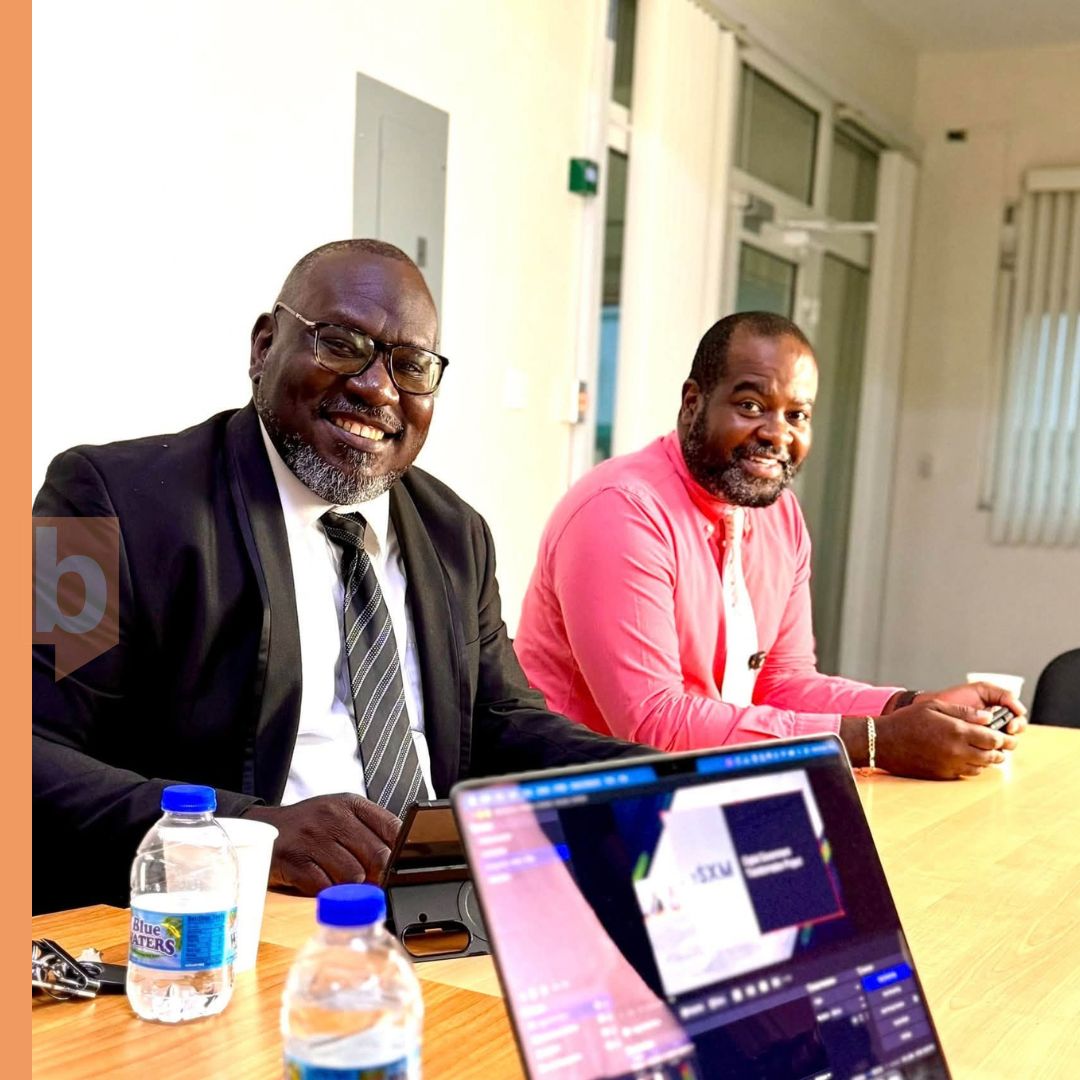
The update was provided during a Facebook Live presentation on the Digital Government Transformation Project by Femi Badejo, head of Government’s Department of ICT and the Digital Leadership Team, and senior policy officer and project manager Chard Charles. The team said the project has entered what it described as its “last mile,” with development and testing now underway ahead of the planned launch.
The initiative is intended to reduce long lines, repeated visits to Government offices, paper-based applications and the need for residents to move from one department to another to complete a single service. The longer-term objective is to connect government systems so information can move securely between authorized departments while residents interact with Government through fewer steps.
Badejo explained that the transformation goes beyond simply putting existing forms online. Government is attempting to change how services are organized internally, particularly where ministries and departments have historically operated through separate systems that do not communicate with each other.
The project has its roots in the period following Hurricane Irma, when the challenges of delivering public services after a major disaster reinforced the need for stronger digital government infrastructure. The project formally became effective in 2022 and has since moved through assessments, procurement and implementation.
One of the largest milestones announced during the presentation was the digitization of more than 300,000 government records. The records can contain numerous pages, meaning the exercise involved scanning and organizing a substantially larger number of individual documents and adding information needed to make the records searchable.
Government launched work on the new online services component during the first quarter of 2026 and began the electronic identification, or eID, component during the second quarter. The remaining months of 2026 are being used for building, integration and testing, with the intention of completing preparations during the first quarter of 2027.
Six services to form initial rollout
The redesigned services portal will initially focus on six selected services to demonstrate how connected government systems can work in practice. The initial rollout includes services involving civil registry information, driver’s licences, national identification, business registration and address-related requests.
The project team explained that the first group will serve as a pilot from which Government can evaluate public usage, identify problems and gather feedback before adding more services.
Among the services discussed was the ability to request certificates based on existing Civil Registry information, including records related to births, deaths, marriages and divorces. Registration of life events will be treated separately from requests for existing certificates.
Driver’s licence issuance and renewal and national ID issuance and renewal are also among the areas being incorporated.
The Chamber of Commerce and Industry is involved through a service for establishing a sole proprietorship, while the National Address Registry will allow businesses to request address-related services through the new platform.

One login across several Government systems
A central feature of the new model will be the introduction of a government-issued digital identity. Residents will be able to enroll online or receive assistance through Public Service Center locations.
Once a person has been electronically verified against Civil Registry information, the digital ID will be used to confirm their identity when accessing Government services. This is expected to reduce the need to repeatedly upload copies of identification documents.
The system is also being designed around a “once only” principle. Under that approach, Government should not repeatedly ask residents to provide information that Government already holds and is legally authorized to use for the requested service.
Basic information such as a person’s name, date of birth and registered address could eventually be automatically filled into applications after the resident logs in with the digital ID.
Single sign-on technology will also allow users to move between participating Government systems without creating separate usernames and passwords for each service.
Officials used the establishment of a business as an example. A person could eventually begin the process through the Chamber of Commerce and Industry, have verified information transferred securely from Civil Registry, proceed to the Tax Administration for the required tax registration and continue to Economic Licences without starting a separate process from the beginning at each department.
The objective is for much of the information required at each stage to move securely between authorized systems in the background.
Verified address information is also expected to reduce situations in which residents are required to submit utility bills simply to prove where they live.
Six major registries being connected
The project is creating a data exchange platform to connect six base registries that currently operate largely independently.
These include systems containing population information, business information, address information, economic licensing information, tax information and land or parcel information.
Government officials stressed that each organization remains responsible for its own official data. The new platform is intended to allow the appropriate information to be exchanged securely when it is required to complete an authorized public service.
Digital signatures are also being developed so residents can eventually sign documents electronically with the same legal effect intended for physical signatures. Supporting legislation is being prepared alongside the technological changes.
Online payments, secure cloud infrastructure, improved connections between Government offices and upgraded cybersecurity are also part of the wider project. Government said next-generation firewalls, monitoring systems and other security measures have been incorporated as the digital infrastructure is developed.
Online does not mean eliminating in-person service
The project team stressed that moving more services online does not mean residents will be forced to use digital channels.
People who are elderly, have limited digital experience or simply prefer in-person assistance will still be able to receive Government services through physical locations. Public Service Center personnel will also be able to assist people with obtaining their digital identity.
Electronic ID enrollment is expected to be available from age 12.
Government also intends to introduce supported self-service kiosks, creating another option between completing a transaction independently online and receiving assistance at a service counter.
Officials said the benefits of the transformation should also be experienced by people who continue visiting Government offices. Because participating systems will be connected behind the scenes, residents should eventually have fewer reasons to move from desk to desk or make multiple appointments to complete one process.
The redesigned online portal will also include features allowing users to view requests, track their status and manage aspects of their profile from one location.
The September 30 presentation was described as the first in a planned series of monthly Facebook Live sessions intended to explain different components of the transformation as Government approaches the 2027 rollout.
The project team said further demonstrations are planned, including showing residents what the new digital identity, online portal and connected services will look like before they are launched.
Join Our Community Today
Subscribe to our mailing list to be the first to receive
breaking news, updates, and more.