.jpg)


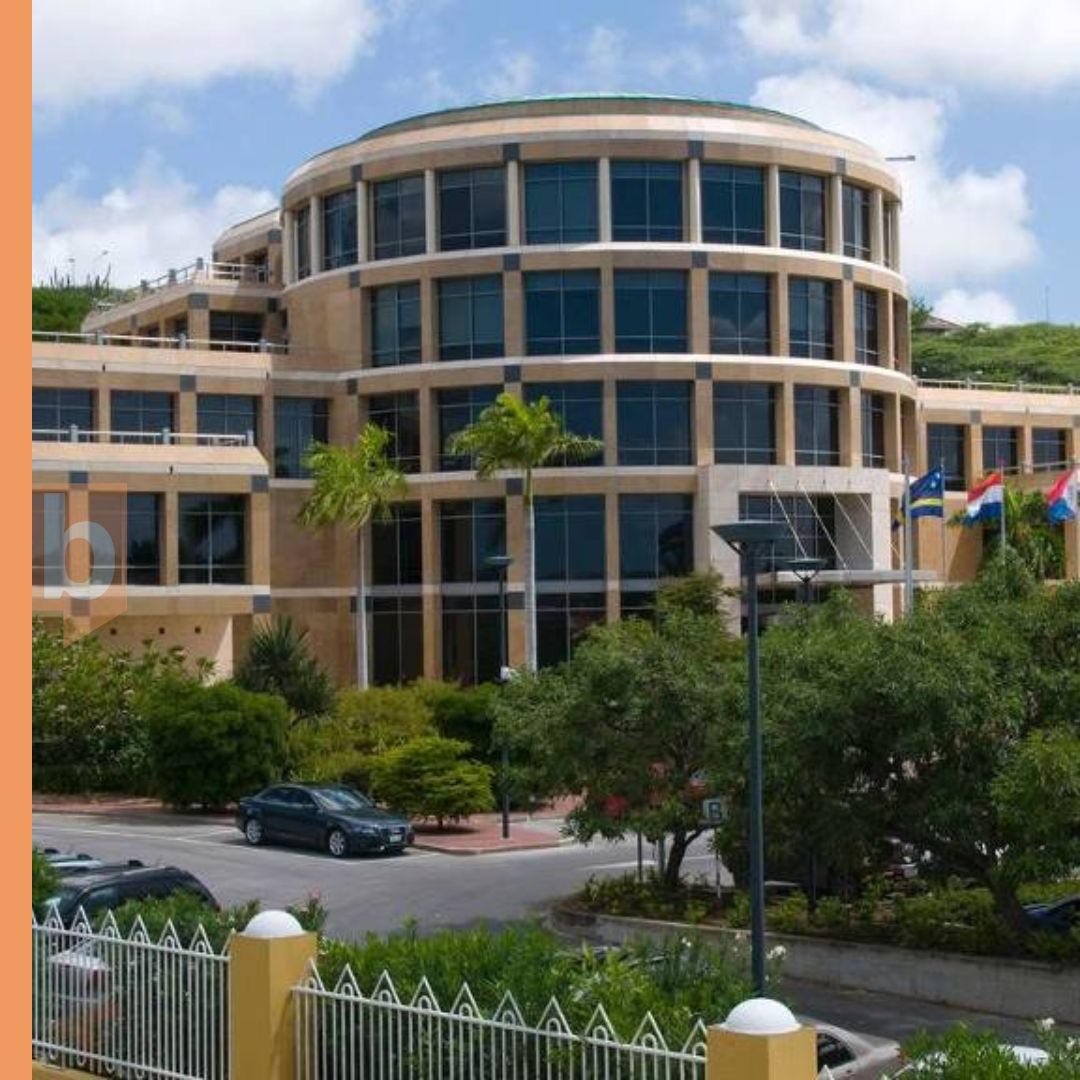
GREAT BAY--The Central Bank of Curaçao and St. Maarten, CBCS, is considering requiring commercial banks to build an additional financial safety cushion during stable economic periods, money that could later be freed up to help banks continue lending during hurricanes, economic downturns or other major shocks.
The proposal is outlined in a new August 2026 Financial Stability note on what is technically known as the Countercyclical Capital Buffer, or CCyB, for the monetary union of Curaçao and St. Maarten. In simple terms, the measure would require banks to keep some additional capital in reserve when economic conditions are relatively good, so that the reserve can be released when conditions worsen.
The CBCS has not yet imposed the new buffer. The Central Bank said the publication represents a first step toward putting such a system in place. A draft regulation is being prepared and will be discussed with the banking sector before implementation.
The Central Bank’s current assessment is that the banking system remains broadly stable, but there are some signs that deserve continued monitoring. Based on figures through December 2025, banks in the monetary union had a capital adequacy ratio of 22.2 percent, a liquidity ratio of 38.9 percent and a return on assets of 2.3 percent. At the same time, the share of non-performing loans increased in 2025 compared with 2024, pointing to some emerging risk in the quality of loans on banks’ books.
The CBCS concluded that keeping the extra buffer at zero would mean there would be no additional capital specifically available for release if an unexpected financial or economic shock occurs. It therefore said current conditions provide a basis for considering a buffer above zero, while stressing that any future level should depend on changing economic and financial risks.
The importance of having such a reserve was illustrated by the impact of Hurricanes Irma and Maria and the COVID-19 pandemic.
Following Hurricanes Irma and Maria in 2017, the banking sector across the monetary union recorded losses of approximately Cg 192.4 million, largely because banks had to make greater provisions for loans that could potentially go unpaid. Credit extension also declined by 0.3 percent that year. During the COVID-19 pandemic, banks recorded losses of Cg 101.4 million at the end of 2020, while credit growth slowed from 2.3 percent in 2019 to 1.1 percent in 2020.
The CBCS calculated that, had a 1.5 percent buffer been in place during the pandemic, releasing it could have provided approximately Cg 129 million in additional financial room, enough in nominal terms to cover the Cg 101.4 million loss recorded by the sector. Similarly, a 2 percent buffer during the period following Hurricanes Irma and Maria would have provided approximately Cg 198 million, slightly more than the losses recorded after the storms.
The buffer would essentially work like a financial reserve that can be built when conditions are stable and reduced when the economy is under severe pressure. Under the framework being considered, the rate could range from zero to 2.5 percent of a bank’s risk-weighted assets. Banks would generally receive 12 months’ notice before an increase takes effect, while the buffer could be released more quickly during a crisis to support continued lending.
The Central Bank also carried out a severe stress test to determine how banks might perform under difficult conditions. The test assumed that 30 percent of loans currently being repaid normally suddenly became non-performing. Under that scenario, the banking sector’s capital ratio would fall from 22.2 percent to 12.3 percent. Despite the significant decline, it would remain above the CBCS minimum requirement of 10.5 percent. The Central Bank said this indicates that the sector could withstand a major shock without immediately disrupting lending.
Going forward, the CBCS plans to review financial risks every quarter before deciding whether a buffer should be introduced, maintained, increased or released. Factors to be considered will include lending growth, property prices, bad loans, bank profitability, liquidity, economic conditions and financial stress-test results.
If implemented, the CBCS said it will publicly disclose the applicable buffer rate, the information used to determine the rate, the reasons behind the decision and when any change will take effect.
The Central Bank said the objective is not to restrict lending during normal periods, but to ensure banks have additional financial strength available when unexpected events place the economy and financial system under pressure. The experiences of major hurricanes and the pandemic showed that such shocks can weaken lending, increase bad loans and reduce bank profitability, making an additional reserve potentially useful in helping banks continue supporting households and businesses during difficult periods.
Join Our Community Today
Subscribe to our mailing list to be the first to receive
breaking news, updates, and more.