

.jpg)


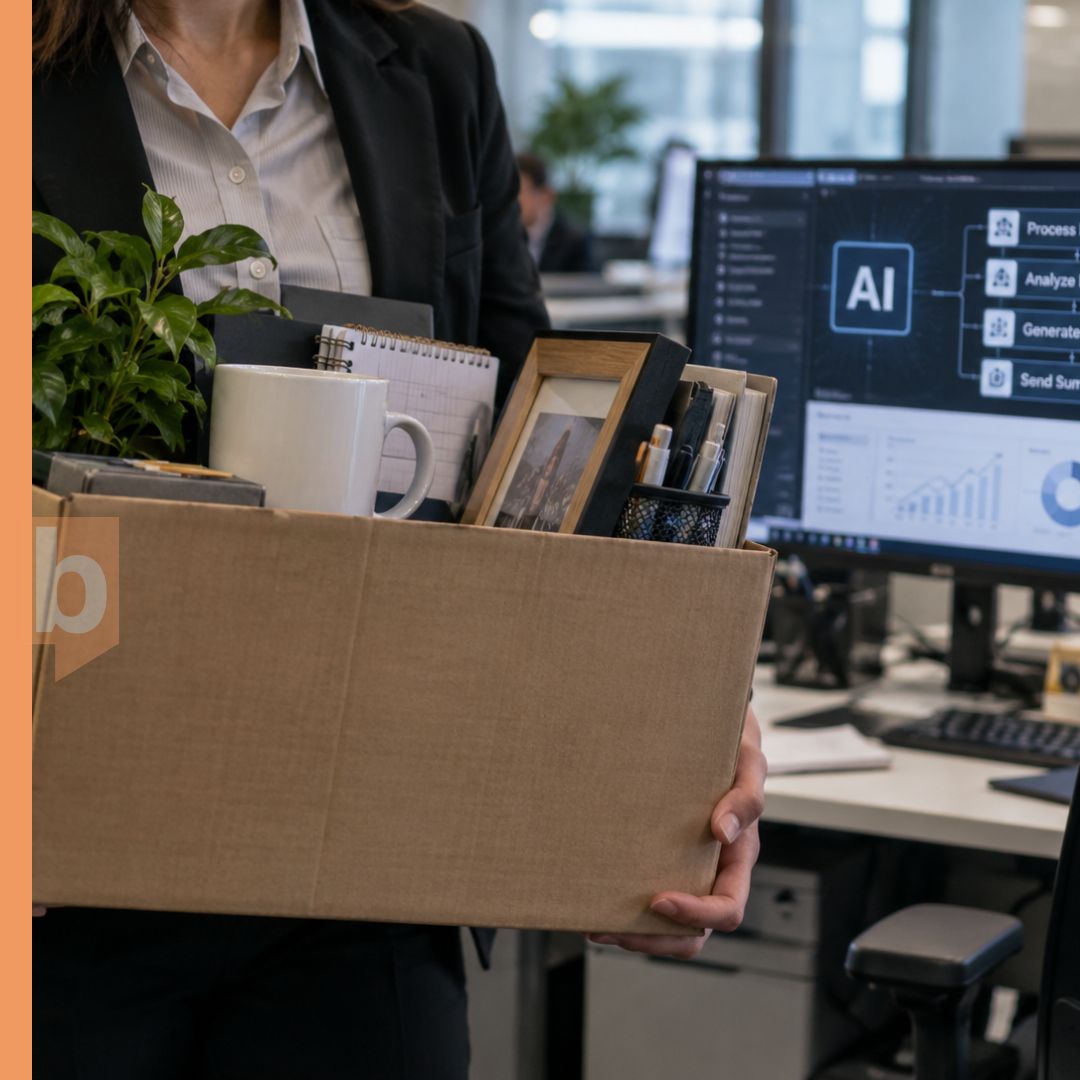
GREAT BAY--As St. Maarten begins shaping a policy for the responsible use of artificial intelligence in Government, much of the discussion has focused on efficiency, security, privacy and human oversight. Those are necessary concerns. But another consequence of AI deserves equal attention: what happens when technology allows Government to perform the same amount of work with fewer people?
It is a question governments around the world are confronting, although often cautiously. AI is already being used to draft correspondence, summarize documents, answer routine questions, route applications, analyze large volumes of information and automate administrative work. The immediate argument is that this frees employees to handle more complex tasks. In many cases, that is true. But if technology continues improving, some functions will inevitably require fewer workers than they do today.
The issue is particularly important for a small country where Government is one of the major employers and where displaced public servants cannot simply move into an unlimited private-sector labor market. And, lest we forget, the private sector will be even more aggressive with its implementation of AI, with a direct goal to reduce employees. As such, together with possible displaced civil servants, the unemployed workforce might grow, creating another societal problem altogether.
The OECD has acknowledged this directly. Its work on AI in government warns that while artificial intelligence can move public employees away from repetitive work, governments have paid less attention to the possibility of job displacement and declining job quality. The organization says the ultimate employment effect remains uncertain because AI can eliminate some tasks while simultaneously increasing productivity and creating different kinds of work.
The most exposed positions are likely to be administrative and clerical roles built around repetitive information processing. G7 guidance on artificial intelligence in the public sector has also identified clerical support work as comparatively exposed to generative AI and has urged governments to focus on reskilling workers whose traditional functions may be automated.
That does not mean mass layoffs are around the corner. In fact, most governments currently speak about AI as a tool to augment workers rather than replace them. The United Kingdom, for example, has tested AI across parts of the civil service and reported significant time savings in routine work. Similar government projects have reduced time spent on transcription, consultation analysis and other administrative functions. Authorities there have nevertheless acknowledged that the long-term employment effect remains uncertain.
But there is an unavoidable arithmetic behind those efficiency gains. If work that once required ten employees can eventually be performed by six employees using AI, Government must decide what happens to the remaining four. They can be retrained, redeployed, moved into vacancies created by retirement, shifted toward public-facing functions, or eventually become redundant. That workforce question cannot be separated from the technology policy.
Some governments are beginning to address it directly. Canada’s federal AI strategy recognizes that artificial intelligence will reshape the workforce and has committed to working with employees and bargaining representatives on retraining. Canada is also assessing existing skills and future talent needs so training and recruitment can better match how public-service jobs are expected to change.
Singapore has gone further in spelling out what workforce transition could look like. Its Government has said transformation should generally be managed through reskilling, redesigning jobs, redeployment and natural attrition. Where restructuring becomes unavoidable, agencies are expected to first try to move affected employees elsewhere in the public service. Only where redeployment is not possible would transition assistance become necessary.
Singapore has also publicly addressed the possibility that advanced AI systems could make certain public-service functions redundant. Its response has been to invest in skills that allow officers to work alongside AI and move toward higher-level responsibilities such as analysis, problem solving and designing services for citizens.
This may be where St. Maarten’s next AI conversation needs to go.
The proposed Government policy presented to Parliament places considerable attention on which AI tools may be used, what information they may access, security controls, approval procedures and the requirement that humans remain responsible for important decisions. What is less developed so far is a long-term workforce strategy tied specifically to AI adoption.
That does not mean Government should resist AI to protect every existing job. Doing so could eventually leave the public sector more expensive, slower and less capable than the private sector and governments elsewhere. But efficiency should not be pursued without planning for its human consequences.
For St. Maarten, this could mean identifying now which Government jobs contain the largest amount of repetitive work, determining which occupations are likely to change rather than disappear, examining where future staffing shortages will occur and developing retraining pathways before displacement becomes a problem. Natural attrition could also play an important role. If AI reduces the need for certain functions, Government does not necessarily have to replace every employee who retires or leaves.
AI may well make Government faster, cheaper and more responsive. It may also create new jobs that do not exist today. But it would be unrealistic to assume that every existing position will survive unchanged.
The countries taking the issue most seriously are not simply accepting job losses as inevitable. They are trying to manage the transition through retraining, redeployment, workforce planning and attrition.
As St. Maarten works to catch up with the AI transformation already underway elsewhere, its policy conversation should therefore include a second question alongside how Government will use AI responsibly: what will Government do with the people whose work AI eventually no longer requires?
Join Our Community Today
Subscribe to our mailing list to be the first to receive
breaking news, updates, and more.
